

“In the end, we will remember not the words of our enemies, but the silence of our friends”. – MLK. “If you want peace ... You talk to your enemies.” – D. Tutu
Shrewsbury, England
Joined May 2011
- Tweets27.6K
- Following3.3K
- Followers3.4K
- Likes61.5K


Pinned Tweet
Now take a flight of fantasy and imagine for a minute if the U.S. took all those hundreds of billions of dollars for the last 60 years from "defence" (umm war), to actually building their infrastructure, road, rail, schools, homes, helping the poor etc.
Instead of endless wars.

Martin L. Zinn retweeted

Our new media alert is now available:
‘Mediacide’: The ‘Killing Machinery’ Of BBC News
A recent edition of BBC Newsnight once again highlighted a persistent and pernicious feature of BBC journalism. Presenter Victoria Derbyshire was interviewing Bernie Sanders, the veteran US Democrat politician. He was discussing the US mid-term elections in which the Republicans under Donald Trump had suffered serious losses to the Democrats in Congress:
‘The American people want us to address those issues [such as the cost of living and lack of healthcare] and the stupid endless war of Trump in Iran. No more military aid to the extremist government in Israel. That is what the American people want. That’s what we’ve gotta do.’
Derbyshire responded:
‘Okay, and the Israeli government would deny that they are extremists.’
Sanders immediately replied:
‘Well, I think most people in America and around the world do believe they’re extremists and what they’ve done to the Palestinians, in my view, is genocidal.’
Over the three years of the genocide, BBC presenters have regularly used the phrase ‘Israel denies’ or ‘Israel says’ or ‘Israel would say’ whenever an interviewee rightly points out that Israel is responsible for war crimes, genocide and apartheid.
/ More here:
medialens.substack.com/p/med…

Martin L. Zinn retweeted
The @SkyNews interviewer @WilfredFrost says here that the ICC (he presumably means the ICJ) has not definitely concluded that Israel is committing genocide.
As noted by @FranceskAlbs, the UN Special Rapporteur on Palestine, this point is regularly misrepresented by establishment media.
In January 2024, in response to a detailed submission from South Africa, the International Court of Justice issued a landmark preliminary ruling that there was a ‘plausible risk’ of genocide.
Albanese has consistently explained that the 1948 Genocide Convention establishes three obligations that derive from such a ruling: to prevent, halt and prosecute the crime of genocide.
In other words, states must *immediately* take all measures possible to stop genocide from occurring on receiving notice of the risk that it is happening.
medialens.substack.com/p/med…

.@ZackPolanski says the word genocide
Frost intervenes & later in the interview he intervenes again
So Zack says: "We do say Russias committing war crimes, we say that all the time & no-one pushes back.."
According to Frost thats because Russia has been more closely monitored
Martin L. Zinn retweeted

OK, Senator Cotton, fair enough: explain to us *how* we can “win“ a war against Iran?
You don’t want to “surrender“? OK, fair enough there too: provide your execution plan, based on a militarily plausible and adequately resourced criteria that has a shot at being logically successful?
But of course you never provide such detail. Because there is no such plan. I remain disgusted that senior members of our United States Senate seem to have such elementary knowledge about war and peace, who don’t understand the first thing about balance of power calculations, and apparently don’t even know tactics.
There is no military solution that leads to an American victory here. To continue to ignore that reality, and plunge ahead as you suggest with more military action, will result not in a “surrender,“ but in a military *defeat*. That’s most likely what we’ll get if the president listens to your advice and returns us to war.

Martin L. Zinn retweeted

The U.S. Secretary of State has warned against “quoting laws to men with swords.”
Humanity has already paid a heavy price for its indifference toward such a destructive arguement. Following the Reichstag fire, Hitler invoked national security to declare a state of emergency, suspend fundamental rights, and pave the way for dictatorship. He did not abolish the law outright; he hollowed it out from within, invoking necessity as a justification for dismantling the very principles it was meant to uphold.
Today, as the war against Iran is justified through claims of morality and national security, while the very power advancing those claims exempts itself from accountability, the international community should not imagine that it is insulated from the consequences. If the United States believes that wielding the sword places it above the law, what meaningful distinction remains between this logic and the one employed by ISIS?
The international order begins to unravel precisely when the powerful claim rights for themselves that they refuse to recognize in others.
James Madison, one of America's Founding Fathers, wrote in The Federalist No. 51: "First, you must enable the government to control the governed; and in the next place, oblige it to control itself.”
The American people should regard Rubio's words as a serious cause for alarm. The principle Madison articulated is not merely a constitutional ideal; it is a warning against unchecked power. A government that refuses to restrain itself cannot indefinitely guarantee the freedom of others.
Martin L. Zinn retweeted

It is absolutely wrong that people can be subjected to life crippling sanctions with no notice, no charges, no evidence, no hearing and no trial.

Today the authoritarian EU sanctioned me, no recourse to defend myself, no hearing, no evidence.
They want to bully me into silence, they want to deny you your God-given right to hear dissenting opinions, they want to kill freedom of speech.
Their allegations against me are utterly baseless, their insinuations are false, they are terrified of the Truth
I will fight this assault on our right to dissent with every fibre of my being, I will not be silenced, I will not take the knee for the enemies of free thought, reason and Democracy
Martin L. Zinn retweeted

The elephant in the room you won’t hear about at the COP Climate Summit or mainstream media coverage of the summit:
The US military’s carbon emissions is larger than 150+ countries COMBINED.
But remember, you can plant a tree to offset your carbon footprint!


Abby Martin: COP is just a farce for business lobbyists and fossil fuel corporations.
‘The largest delegation at these COP climate conferences are fossil fuel lobbyists. They outnumber any country’s delegation, so it’s really just a corporate trade show.
Since the first COP Summit, no country has been mandated to put forward their military emissions.
So every single COP conference where they agree on net zero or carbon caps or any of these schemes, no one’s talking about the elephant in the room, which is militarism, which together accounts for more than 150 countries, and that’s just US-led military missions.
So there’s a huge problem, and it’s just being obfuscated intentionally by the people who are destroying the planet.’
Watch the full interview in the quoted post below 👇
@AbbyMartin
Martin L. Zinn retweeted

This is the biggest irony of the whole Alice Huang / Nvidia saga: the Chinese government actually doesn't want Nvidia chips and is actively keeping them out of the country.
Last year it even ordered Alibaba and ByteDance to cancel their Nvidia orders (bloomberg.com/news/articles/…) and sent customs teams to the ports to check every advanced chip coming in (ng.investing.com/news/stock-…).
And right now 600,000 Nvidia H200s are stuck in Hong Kong because Beijing won’t let them into the country (reuters.com/world/china/nvid…)👇
Nvidia also explicitly frames this as a threat to its business in its latest annual report to the SEC: "The Chinese government has encouraged customers to purchase from our China-based competitors and discouraged customers from purchasing, importing, or using our data center products" (sec.gov/Archives/edgar/data/…).
Why does China do that? Because every Nvidia chip a Chinese company buys is one that Huawei or Cambricon doesn’t sell, and domestic chips can only catch up if people actually buy them (which means money for R&D, etc.).
Which means that the notion that Chinese intelligence was running honeytraps to get more Nvidia chips into China gets the whole thing exactly backwards.
In fact, it looks like Megaspeed - Alice Huang's company - was a counter-reaction to official Chinese policy: a private sector workaround to these efforts by the Chinese government to curtail Nvidia.
As was widely reported - including by Western media - Megaspeed built data centers in Southeast Asia and rented their computing power to Alibaba, which the New York Times called "a backdoor way of getting access" to Nvidia chips (nytimes.com/2026/11/06/us/po…).
That is a backdoor not only - allegedly - around Washington’s export controls, but also around China's own efforts to wean its companies off Nvidia.
I can’t believe the Chinese government was too thrilled about it: it'd make just about zero sense for it to run countless domestic measures to prevent Alibaba from using Nvidia chips, yet at the same time have its top spy agency help the same Alibaba get Nvidia chips through the back door in Southeast Asia 🤷
At the end of the day, as with all such stories, you always need to look at "cui bono?": who benefits? Who benefitted is pretty clear:
- Nvidia itself: it's in the business of selling chips so a customer willing to spend billions of dollars on chips in Southeast Asia is a godsend. Again, as they themselves state in their SEC filings, not being able to tap into Chinese demand would have "a material and adverse impact on our business" (sec.gov/Archives/edgar/data/…).
- Chinese companies like Alibaba: facts are, 1) Chinese chips haven't yet caught up, 2) Chinese chip companies' production capabilities are still limited and 3) Chinese tech firms' historical tech stack runs on Nvidia’s CUDA ecosystem, and rewriting years of code for Huawei chips is painful. Renting Nvidia chips in Southeast Asia is the easy way to stay competitive and serve customer demand in the meantime.
- The US, according to core members of the Trump administration: back in July last year, US Commerce Secretary Howard Lutnick explained that the point of letting Nvidia sell more chips to China was to get Chinese developers "addicted to the American technology stack" (techradar.com/pro/china-coul…).
Who does NOT benefit, according to official Chinese policy, is the Chinese state, which has made tech self-reliance one of its foremost priorities.
Which means that, to believe the spy story, you have to believe that a person - Alice Huang - was effectively a spy paid by her own government while simultaneously sabotaging its tech self-reliance drive, which it has spent years and trillions of dollars on - pretty senseless.
Stranger things have happened, I guess, but it doesn't pass the smell test.
And there is another absolutely major contradiction in the media story. According to a Financial Times article published yesterday (ft.com/content/3238d92b-4074…), "a person who knows [Alice Huang] said they had been asked by MSS for information about her earlier this year after news emerged that Singapore was investigating the company in relation to chip-smuggling allegations. The agency wanted to find out more information about Huang, including the nature of her business and connections, the person said."
Which raises a damn obvious question: if she were indeed an MSS asset, why on earth would the MSS need to ask the people around her who she was and the nature of her business?
It's a complete contradiction with the spy story - but very much not a contradiction with what I described above: a private businesswoman running a workaround to Beijing’s own policy, which the Chinese security apparatus would naturally want to look into.
Especially since, around about the same time, Shanghai police detained her business partner, reportedly her husband, in a stock manipulation case (caixinglobal.com/2026-11-10/…): also coherent with Chinese authorities looking into her network, and much harder to square with her being a prized MSS asset.
And, to top it all, there is - to this day - not a shred of evidence that's been published that she is, in fact, a Chinese spy: just anonymous intelligence officials, repeated by journalists who never verified it, as I detailed here (teapawt.net/RnaudBertrand/status/2…) and here (teapawt.net/RnaudBertrand/status/2…) with one of the key FT journalists on this story actually admitting that he has no idea what evidence US intelligence actually has.
So the claim went to print without anyone seeing the evidence, without anyone being able to check it, and without anyone knowing whether it even exists.
And given everything above, from Beijing blocking the very chips she was supposedly recruited to help get into China, to the MSS asking around about her, to her partner being detained in Shanghai, my bet is that the evidence doesn’t exist at all. If anything, everything we can check points the other way.


Martin L. Zinn retweeted

The Democrats may have taken control of the House and the Senate, they may have humiliated Donald Trump and the Republican Party, but the real fight is only beginning. It is not simply a battle to hold the corrupt Trump regime to account, something that can only be done if the Democrats are willing overcome their reluctance to carry out impeachment proceedings against the president. It is also a battle to sweep away the corporate-indentured hierarchy of the Democratic Party, including Chuck Schumer and Hakeem Jeffries.
The Democratic Party since the presidency of Bill Clinton, who gave us the North American Free Trade Agreement (NAFTA), the greatest betrayal of the working class since the 1947 Taft-Hartley Act, and gutted New Deal-era welfare programs such as the Aid to Families with Dependent Children, is a more polished version of corporate and oligarchic rule, abjectly subservient to the war machine, the Israel lobby and their funders in the billionaire class.
The country is broken. Corruption, in both parties, is endemic. Federal agencies have been hollowed out and destroyed. The courts, including the Supreme Court, have been handed over to right-wing ideologues. The working class is crippled with debt peonage and substandard wages. Constitutional norms and protections have been erased. Billionaires, including Trump, pay little to no income tax. The 2010 Citizens United Supreme Court ruling, which allows big business to fund their hand-picked candidates, sustains a system of legalized bribery.
The public may clamor for a raise in the minimum wage, Medicare for All, regulation of the big banks and private equity firms, an end to arms shipments to Israel and campaign finance reform, but no one in the leadership of the Democratic Party listens or cares. They serve their paymasters.
Will cutthroat capitalism, sold to us under the sanitized name of neoliberalism, be allowed to continue to impoverish the citizenry and funnel wealth upwards into the hands of the 1 percent? Will corporations be regulated and policed? Will corporate criminals be brought to trial? Will our democracy be restored? Or will the grotesque sight of a trillionaire, Elon Musk, gutting federal agencies and pouring hundreds of millions into elections to try and control the outcome be normalized?
The handful of politicians who attempt to confront the corruption and the devastation visited on the American working class through deindustrialization and deregulation, such as Bernie Sanders, see their campaigns sabotaged by the Democratic Party leadership, including Barack Obama.
We must demand that progressive candidates, including Michigan senator-elect Abdul El-Sayed and Maine’s Troy Jackson, build coalitions to oust the Democratic Party leadership, raise the minimum wage, enact universal health care, prosecute corporate crime and impeach Trump. It will be up to us.
The Democratic Party hierarchy will see the results not as a repudiation of Trump, but an endorsement of the flaccid and ineffectual position of a party that stands for little and fights for less. This would be yet another betrayal by the Democrats of voters. It would keep alive the very real prospect of another fascist, one better organized and more intelligent, taking the White House in two years.
Of course, this fight will mean not only jettisoning a corrupt Democratic Party leadership, but turning on the mega-donors, lobbyists and corporations that fund and control the Democratic Party.
The effort to wrest the party back from the hands of corporations and oligarchs will be vicious and difficult. It will require us to rely on the power of mass movements to sever these bonds. Nothing else will work.
If we fail, our anemic democracy will not be saved by these midterm elections, but doomed.

You’re a war criminal who launched an unprovoked, illegal war on behalf of an apartheid regime, and now you’re expressing surprise that voters have punished you. They’re simply not interested in fighting endless wars in foreign countries.

One of the things the data analysts on our side obsessed over was "composition"—whether the electorate looked close enough to 2024 for Republicans to win. And despite polls that showed a Democrat blowout, the data kept on telling us the same story: in some states turnout was merely OK, in other states it was downright amazing, and in no state was it catastrophic. There was a genuine sense of optimism on our team: our people were showing up.
So, I asked the smartest data guy I know, does that mean we're going to shock the world? "No," he told me. "We might do better than the polls suggest. But the data is telling us that a lot of Trump/Vance 2024 voters are pissed and planning to vote for the other guys. Our voters are turning out, but they may not vote for us."
Well, that looks prophetic now. Our voters did show up. In Florida, for example, the electorate was 9 points more Republican than Democrat, just a couple points worse than 2024. Undoubtedly there were places we could have done better on turnout. But the main problem is not turnout. The main problem is that many people who voted for Trump/Vance in 2024 voted for Democrats in 2026.
There will be a lot of infighting and arguing over what happened and why that is. One of the pollsters I really respect told me that our economic messaging wasn’t sharp enough down the stretch. I’m sure that’s true.
But the real reason we lost is obvious to almost everyone.
Another pollster—one of the smartest people I know in politics, told me yesterday we’d lose the generic ballot by 13 points. I felt negative going into Tuesday, but even I was shocked by this. In his polling, he saw that a lot of Trump 2024 voters were angry and planning to vote for Democrats. He asked those voters who had abandoned us what would cause them to come back on our team. The top four answers, accounting for nearly all of the responses were:
1) End the war
2) Focus on cost of living/inflation
3) Put America First
4) Change our relationship to Israel
Our voters showed up. And the above four reasons are why many of them voted for Democrats. This is according to a pollster who nailed the results. While many spent Monday attacking Rachel Campos Duffy for calling for a diplomatic resolution to the conflict, it turns out her political advice was sound. (She’s also a great person.)
In the next few months, there's going to be a lot of gaslighting. Expect to hear any number of establishment politicians say the solution to our woes is amnesty. I'm open to the idea that we should change enforcement—by focusing more on businesses that hire illegal labor, for instance. But anyone pushing amnesty is lying to you.
The reason we lost is the war. The president himself said so last night.
If you'd like to argue it was worth it, that losing the Senate for the next 6 years was worth it, then do so. Argue it was a worthwhile cost to pay. Agree or disagree, that's at least honest.
But everyone knows why we lost. And any honest conversation about where we go from here must start there.
I remain hopeful about our country. To the people who are pissed off and want to say, “I told you so”: you’re right, you did tell us so. Take that energy into electing Republicans who share your worldview. To the people who are just pissed at the results, you should be. Let’s take that anger and get back to the work of saving our country.
1
43
And the irony of it all boils down to just one reason: fighting an illegal war on behalf of an apartheid regime; That war has contributed to the cost-of-living crisis, was never in America’s interests, and put the interests of an apartheid regime ahead of its own. Had America maintained a less subservient relationship with that regime, it wouldn’t find itself in this mess today.

Wow!!!
The Vice President of the United States just did the strangest thing a serving VP can do.
He wrote a public autopsy blaming his own administration's war for a historic defeat.
By the time I read it, it had 38 million views.
If you read it as "venting" then you missed the whole point. But if you read it as positioning and it snaps into focus.
A loyal number two eats a loss like this quietly. You do NOT go out in public and pin the worst night your party has had in years on the signature policy of the president @POTUS you serve.
@JDVance did exactly that, and he gave himself cover doing it, "the president himself said so last night."
He is using Trump's own words as a shield while making Trump's war THE reason the GOP lost the SENATE for six years.
Call that what it is, a man building distance and making sure he cannot be blamed for building it...
Now look at his four reasons, the ones he hangs on the base.
1. End the war.
2. Cost of living.
3. America First.
4. And then, change our relationship to Israel.
Three of those are safe populist lines any Republican can shout.
The fourth is the one that ends careers in this party and this America, and instead of saying it in his own voice, he put it in the mouths of the voters.
That is how you float the most dangerous position in the GOP without owning it. I am only telling you what the base wants.
So the real signal is underneath all of it.
Vance is reading where the Republican coalition is GOING, well ahead of where it is today.
He is planting a flag in the anti-war lane while the war is still on, because if it goes badly through 2027 every I-told-you-so compounds in his favour.
And he is loosening the one tether, Israel, that a post-war base may punish hardest.
He is buying a cheap option on 2028 and letting the party's own anger pay for it.
The order of effects runs outward from there.
1. First he boxes Trump, who cannot disown the war-cost-us line without contradicting his own mouth.
2. Second he claims the restraint wing of the party before any rival moves into it.
3. Third, and the region is reading this too, the second most powerful man in Washington just told the world that the American appetite for this war is cracking.
4. Allies and adversaries both price that in.
This is what the opening of a succession looks like.
A weakened principal, a war that split the coalition, and a VP who is first into the crack. None of that was a slip. He drew a map for his own career.
I fear for his safety.
𝗦𝗜𝗚𝗡𝗔𝗟, 𝗡𝗢𝗧 𝗡𝗢𝗜𝗦𝗘!

1
33
Martin L. Zinn retweeted
What an outrageous distortion. You have to be asleep or deeply dishonest to argue that Corbyn was merely 'claiming to be persecuted by the media' as a 'distraction tactic'. Numerous careful media studies have shown that Corbyn was indeed persecuted right across the supposed media 'spectrum'. The Guardian and BBC led the way:
'She [Kuenssberg] deconstructs the techniques Farage has developed to dodge questions he dislikes: expressing total conviction even when he doesn’t know the facts; turning questions back on his interviewer; and claiming to be persecuted by the media when cornered – an incendiary tactic Corbyn also adopted and which Zack Polanski is beginning to use, though Kuenssberg says at least Polanski has a “swagger and a bluntness” which means he’ll usually answer a straight question. When a politician lashes out at the mainstream media, she argues, pay extra attention to what they’re actually doing: often it’s a distraction tactic.'
theguardian.com/books/2026/n…


Martin L. Zinn retweeted

baby giving a kiss to a golden street performer and then getting a magical "life" reaction is everything you need to see today. ✨💛
Readers added context they thought people might want to know
This video matches a common AI-generated template of a baby kissing a gold-painted living statue rather than real footage.
alici.ai/formulas/media…
x.com/buzzpark/statu…
Martin L. Zinn retweeted

The sanctions on Iran have lasted decades.
Iran developed domestic production capacity it would never have built if it could have simply imported.
The sanctions on Russia accelerated the development of Russian alternatives to Western financial infrastructure.
The sanctions on North Korea isolated its economy for generations. They did not prevent the country from developing its own nuclear deterrent.
The sanctions on Cuba failed to produce regime change. Cuba nevertheless built one of the most extensive public healthcare systems in the world, alongside a domestic pharmaceutical and biotechnology sector.
There is a pattern here that Washington seems constitutionally incapable of learning:
Economic pressure forces adaptation.
Adaptation builds capacity.
Capacity reduces dependence.
Reduced dependence undermines the next round of pressure.
Every sanction regime that fails to produce submission produces, instead, a more self-sufficient adversary with less exposure to the next sanction.
The weaponization of the dollar is the most powerful sanction tool available.
It is also accelerating, faster than any other single factor, the construction of alternatives to the dollar.
The weapon is sharpening the shield.
The idea of using nuclear weapons as part of an unprovoked war of aggression against Iran, solely to benefit Netanyahu and merely delay his inevitable day in court, is utterly immoral and repugnant.

Under pressure from Israeli prime minister Benjamin Netanyahu, the Trump administration may be within days of launching a nuclear strike on Iran. The target would be Pickax Mountain in central Iran, where Israeli intelligence claims the Iranian government has restarted its nuclear enrichment program. No conventional weapon in the American arsenal can penetrate 300 feet of solid granite to destroy the tunnels where enrichment is supposedly taking place. The only military option is a nuclear strike. Netanyahu has been pushing hard for one. “Bibi calls Trump about it every day,” says an informed observer.
Netanyahu is cornered and desperate. After last week’s election results, he can’t form a government unless Trump intervenes directly in Israeli politics and brokers a deal with other parties that gives Netanyahu 61 seats in the Knesset. Otherwise, he is out as prime minister and on his way to ignominy, investigations and possibly jail. Netanyahu must stay close to Trump. He needs this war.
To that end, he’s applied maximum pressure to his closest allies in the administration, including Secretary of Defense Pete Hegseth and CENTCOM commander Brad Cooper. Both oppose a negotiated settlement to the war they’ve so grievously mismanaged; both are pushing to restart major combat operations. Secretary of State Marco Rubio and CIA director John Ratcliffe are also following Netanyahu’s lead, as are leaders of the Democratic Party. In a recent meeting on the subject, former president Barack Obama said he opposes the current Iran peace deal being drafted in Doha.
The rest of America’s longtime allies in the Middle East are terrified by the prospect of more war. On September 27th, Netanyahu flew secretly to Abu Dhabi to enlist the UAE in his lobbying effort for a final attack on Iran. The Emiratis refused. After eight months of conflict, Gulf economies are teetering. So are global energy and fertilizer markets. They won’t recover soon. Globally, there are a total of about 850 supertankers used to transport oil from producers to the rest of the world. In October alone, 11 of them were badly damaged in Hormuz. At this pace, a global depression is imminent. A nuclear strike would radically accelerate the destruction. Fallout from a ground explosion at Pickax Mountain would contaminate the Persian Gulf, poisoning the water supply for 100 million people.
And those are just some of the immediate consequences for the region. The rest of the world is every bit as exposed. No country other than the United States has ever used a nuclear weapon in war. Some would like to. An American nuclear attack on Iran would set a new precedent. The Russians have already told at least two other governments that an American nuclear strike on Iran would free them to use nuclear weapons against Ukraine. Pakistan and India would be tempted to do the same against each other, as would North Korea against Seoul. After the first nuclear strike, World War Three is inevitable. That war would be short and final.
We’ve been sleepwalking toward this moment for months. Since February, the administration has quietly rewritten America’s nuclear doctrine to make first use of so-called “battlefield nukes” easier and therefore more likely. No one in Washington in either party seems bothered by this. Now we’re on the brink of it.
Close observers say Trump is likely to decide by next weekend whether or not to use nuclear weapons. That would be November 7, six days from now. To his credit, he’s hesitating. At the moment, Trump is listening to his vice president, JD Vance, and to his envoy and friend Steve Witkoff, both of whom argue a deal with Iran can be made.
They’re right, though it won’t be simple. The Iranians are famously frustrating to negotiate with under any circumstances, and elements of that government have become more radical since Ayatollah Ali Khamenei and his family were killed in February. After decades of isolation, even relatively moderate Iranian leaders seem confused by how decisions are made in the West. (There is a widespread belief in Tehran, for example, that the United States government controls Israel.) But overall, people who have spoken to decision-makers in Iran say there is consensus there that more war is bad for everyone and a deal is worth making.
One group that hasn’t been consulted so far is the global population — the hundreds of millions of people who will be killed along with their children if Trump is pushed by Netanyahu into launching a nuclear strike next week. Now would be the time for them to speak up.
Martin L. Zinn retweeted
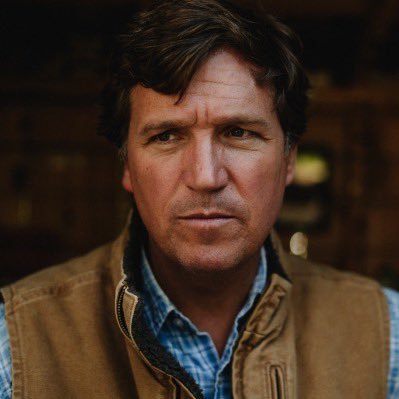
Under pressure from Israeli prime minister Benjamin Netanyahu, the Trump administration may be within days of launching a nuclear strike on Iran. The target would be Pickax Mountain in central Iran, where Israeli intelligence claims the Iranian government has restarted its nuclear enrichment program. No conventional weapon in the American arsenal can penetrate 300 feet of solid granite to destroy the tunnels where enrichment is supposedly taking place. The only military option is a nuclear strike. Netanyahu has been pushing hard for one. “Bibi calls Trump about it every day,” says an informed observer.
Netanyahu is cornered and desperate. After last week’s election results, he can’t form a government unless Trump intervenes directly in Israeli politics and brokers a deal with other parties that gives Netanyahu 61 seats in the Knesset. Otherwise, he is out as prime minister and on his way to ignominy, investigations and possibly jail. Netanyahu must stay close to Trump. He needs this war.
To that end, he’s applied maximum pressure to his closest allies in the administration, including Secretary of Defense Pete Hegseth and CENTCOM commander Brad Cooper. Both oppose a negotiated settlement to the war they’ve so grievously mismanaged; both are pushing to restart major combat operations. Secretary of State Marco Rubio and CIA director John Ratcliffe are also following Netanyahu’s lead, as are leaders of the Democratic Party. In a recent meeting on the subject, former president Barack Obama said he opposes the current Iran peace deal being drafted in Doha.
The rest of America’s longtime allies in the Middle East are terrified by the prospect of more war. On September 27th, Netanyahu flew secretly to Abu Dhabi to enlist the UAE in his lobbying effort for a final attack on Iran. The Emiratis refused. After eight months of conflict, Gulf economies are teetering. So are global energy and fertilizer markets. They won’t recover soon. Globally, there are a total of about 850 supertankers used to transport oil from producers to the rest of the world. In October alone, 11 of them were badly damaged in Hormuz. At this pace, a global depression is imminent. A nuclear strike would radically accelerate the destruction. Fallout from a ground explosion at Pickax Mountain would contaminate the Persian Gulf, poisoning the water supply for 100 million people.
And those are just some of the immediate consequences for the region. The rest of the world is every bit as exposed. No country other than the United States has ever used a nuclear weapon in war. Some would like to. An American nuclear attack on Iran would set a new precedent. The Russians have already told at least two other governments that an American nuclear strike on Iran would free them to use nuclear weapons against Ukraine. Pakistan and India would be tempted to do the same against each other, as would North Korea against Seoul. After the first nuclear strike, World War Three is inevitable. That war would be short and final.
We’ve been sleepwalking toward this moment for months. Since February, the administration has quietly rewritten America’s nuclear doctrine to make first use of so-called “battlefield nukes” easier and therefore more likely. No one in Washington in either party seems bothered by this. Now we’re on the brink of it.
Close observers say Trump is likely to decide by next weekend whether or not to use nuclear weapons. That would be November 7, six days from now. To his credit, he’s hesitating. At the moment, Trump is listening to his vice president, JD Vance, and to his envoy and friend Steve Witkoff, both of whom argue a deal with Iran can be made.
They’re right, though it won’t be simple. The Iranians are famously frustrating to negotiate with under any circumstances, and elements of that government have become more radical since Ayatollah Ali Khamenei and his family were killed in February. After decades of isolation, even relatively moderate Iranian leaders seem confused by how decisions are made in the West. (There is a widespread belief in Tehran, for example, that the United States government controls Israel.) But overall, people who have spoken to decision-makers in Iran say there is consensus there that more war is bad for everyone and a deal is worth making.
One group that hasn’t been consulted so far is the global population — the hundreds of millions of people who will be killed along with their children if Trump is pushed by Netanyahu into launching a nuclear strike next week. Now would be the time for them to speak up.
Amazing how nearly 40 years of unbridled neoliberalism has destroyed the manufacturing industries in Western countries in pursuit of maximising profits and “shareholder value”.
Now, as the consequences of the economic policies ushered in by Thatcher and Reagan come home to roost, the very people who championed this model want us to believe it’s all China’s fault, due to its “overcapacity”.

The Curious Case of China's Dangerous Ability to Manufacture Things at Scale
China's Greatest Crime: Making Stuff People Want
The West has discovered a shocking new law of economics:
If China produces something successfully, it's overcapacity.
Let's review the official terminology.
•Britain flooding the world with textiles in the 19th century = Comparative Advantage™
•America dominating global manufacturing after WWII = Industrial Leadership™
•Japan exporting millions of cars = Economic Miracle™
•South Korea conquering shipbuilding = National Competitiveness™
China exporting EVs, batteries, solar panels and industrial equipment?
Overcapacity.
It's a fascinating scientific phenomenon. The exact same activity changes its name depending on who is doing it.
Imagine if Olympic commentary worked this way:
Michael Phelps wins eight gold medals.
Headline:
"Remarkable swimming competitiveness."
Chinese swimmer wins eight gold medals.
Headline:
"Concerning overcapacity in gold medal winners. Are they doping?"
Calls grow for World Anti-Doping Agency to specifically investigate Chinese swimmers.
The funniest thing about the argument is that it can't decide whether China is a communist command economy or a capitalist free-for-all.
When Chinese firms succeed:
"Beijing controls everything!"
When Beijing tries to slow down local investment:
"Look, Beijing can't control anything!"
Pick a lane.
According to the latest theory, Xi Jinping wakes up every morning and personally approves every exported toaster.
"Comrades, after careful consultation with Marx, Engels, and the Central Committee, I have authorized the production of 37 additional air fryers."
Meanwhile, nobody asks the forbidden question:
If China has overcapacity, does somebody else have undercapacity?
Perhaps spending three decades shutting factories, outsourcing production, neglecting infrastructure, and convincing an entire generation that making PowerPoint slides is more important than making machine tools was not the master plan everyone imagined.
But that's a dangerous line of inquiry.
Much safer to blame the country that still manufactures things.
Notice how nobody complains about overcapacity in consulting.
Nobody says:
"The United States has produced 400,000 surplus management consultants and over 1,000,000 hedge fund managers"
"Europe suffers from excess capacity in regulatory paperwork."
"There are too many think tank reports and not enough washing machines."
No, only physical products count.
The truly remarkable achievement of modern economics is turning consumer preference into evidence of wrongdoing.
People buy Chinese EVs?
Suspicious.
People buy Chinese solar panels?
Very suspicious.
People buy Chinese batteries?
Extremely suspicious.
At no point does anyone consider the radical possibility that customers might simply like the products.
In the end, "overcapacity" increasingly sounds less like an economic diagnosis and more like emotional damage.
For decades economists taught:
Competition is good.
China took notes.
Now the lesson has been updated:
Competition is good, unless you're winning.
Coming soon to a newspaper near you:
•China has too many engineers.
•China has too many factories.
•China has too much electricity.
•China has too much high-speed rail.
•China has too many products people keep insisting on buying.
The horror.
Not since the invention of affordable consumer goods has humanity faced such a grave threat.
foreignpolicy.com/2026/10/26…

Martin L. Zinn retweeted
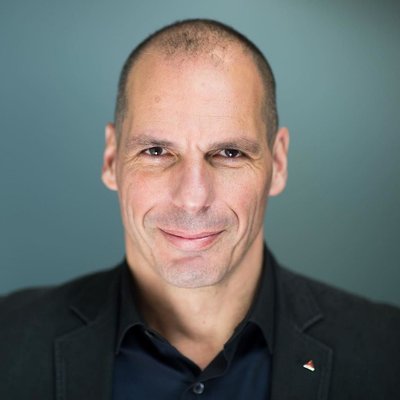
WHAT LULA’S RE-ELECTION TELLS US: The Class War Need Not End in Fascism
On Sunday, Brazilians did something that the commentariat had told us was a lost cause. On the eve of his eighty-first birthday, Luiz Inácio Lula da Silva, a former metalworker, turned the Trumpist, evangelical, neofascist, Zionist tide in Latin America to get re-elected President of Brazil.
Three weeks earlier, he had come second in the first round, behind Flávio Bolsonaro, son and political heir of the man who trumpeted the merits of fascism, who had embraced Trump as his lord and master, who plotted a cynical coup against Brazilian democracy – moreover, the main candidates that were eliminated were rightists whose voters were meant to move to Bolsonaro. Yesterday, Lula overturned this deficit and won with a margin of nearly four and a half million votes.
I want to use Lula’s victory to tell a broader story. A story about a war, the class war that the few are waging against the many across the Western world. And a story about how that war need not end, as so many now fear, in a neofascist revival.
THE HIDDEN CLASS WAR
“There’s class warfare, all right,” Warren Buffett once said, “but it’s my class, the rich class, that’s making war, and we’re winning.” Mr Buffett was not exaggerating. For almost four decades, Western governments and central banks have pulled every policy lever in the same direction: to make the assets of the few burgeon at the expense of the incomes of the many.
Consider the numbers. Between 1952 and 1988, economic growth explained nearly all the gains of the West’s stock market. From 1989 onwards, growth explains only about a quarter. The largest share, around 40 per cent, came from income diverted from workers to shareholders. Another third came from cheaper money and lower perceived risk. That is not wealth creation. It is wealth extraction: a transfer from those who work to those who own, inflated by cheap money and paraded on the evening news as “a strong economy”.
Then look at the rescues. 2001, 2008, 2020, the British gilt crisis of 2022, Silicon Valley Bank in 2023: each time, the state rushed in to save the asset holders. Together they reveal the rule: to save the economy, you must save the wealth of those who own it – not those who produce stuff, not even productive companies. In the United States, the top tenth own almost 90 per cent of all shares. The Fed and the US federal government insure it for them, doing ‘whatever it takes’ to prop them up whenever their prices tank. The rest of us in the West pay the premium, in the form of the austerity that always follows the bailout.
And the owners need never sell. Why do billionaires pay so little tax? Because they do not earn incomes - they accumulate capital gains, taxed only when sold. So they borrow against their soaring assets at 1 or 2 per cent and live on the loan. Then they die and pay no tax on their capital gains, passing on the loot to their kids at ridiculously low inheritance taxes. Meanwhile, to pay bills and put food on the table, the worker borrows on a credit card at 20 per cent, her debts the mirror image of their fortunes.
Then, a large chunk of these accumulating assets seek even higher rents in places like Brazil where the US government intervenes to ensure that the local governments will also place the defence of these assets’ values above all else.
CAPITAL IS NOT A THING, NOT MERELY AN ASSET
Why does austerity keep returning, even though it is economically self-defeating? Marx tells the story of Thomas Peel, who in 1829 sailed to Western Australia’s Swan River with £50,000 of provisions and three hundred working-class men, women and children. On arrival, his workers walked off into the bush and worked for themselves. Peel had brought money, tools and labour, but he could not bring capitalism along, because his workers had an alternative.
Capital, Marx concluded, is not a thing but a social relation: the power of those who own to get those who don’t own to do things they’d rather did not do. Austerity is not an economic policy. It is a disciplinary device, keeping the many sufficiently insecure and indebted to accept whatever is on offer. The ruling class’s deepest fear is not inflation or debt. It is to end up like Peel: rich, but without the power to compel.
IS FASCISM INEVITABLE?
Here is the part of the story that keeps so many of us awake at night. When centre-left politicians, from Bill Clinton, Barack Obama and Tony Blair to Gerhard Schröder, Francois Hollande and Andy Burnham abandoned the language of class, a void opened up in the working-class heartlands of the West. Into that void stepped a venomous storyteller with a century of experience in filling such voids: the recalcitrant far right, the rebranded fascists. They offer left-behind workers a story of dignity, then redirect their fury away from the owner who shipped their factory abroad or sold their council house to some fund and towards the migrant next door. It does not end the class war. It merely divides one side – the workers – to rule over them. It camouflages it.
From the red suburbs of Paris to south Piraeus, from England’s red wall to Italy’s rust belt in Taranto, from the American rust belt to eastern Germany, the pattern seems relentless. And so, a fatalism has set in: the class war waged from above, we are told, must inevitably end in a neofascist, racist, misogynist revival.
Brazil has just refuted this fatalism. Brazil knows the monster intimately. It lived through four years of Jair Bolsonaro, with his nostalgia for the military dictatorship. On 8 January 2023, his followers stormed the Congress, the Supreme Court and the presidential palace. Brazil’s far right is not a fringe. Unlike Trump’s rag tag storm troopers, they had years of running a dictatorship. It won the first round of this election. They had the White House fully behind them, while the US Democrats, once again demonstrating their irrelevance, stayed mute. And yet, yesterday, they were defeated.
How? Not by hand-wringing about “populism”, nor by a centrist promise to manage the status quo more efficiently. Lula won because he did what the Western centre-left forgot how to do: he spoke the language of class, and backed it with policies that shifted power, however modestly, from the few to the many. His government exempted those earning up to five thousand reals a month from income tax and paid for it with a minimum tax on the very richest. During Brazil’s G20 presidency, it proposed a global minimum tax on billionaires. When Lula tells Brazilian workers that the elites have rigged the game, he points his finger upwards, at the rentier and the speculator, not sideways, at the migrant or the poor.
PIX – AN EXAMPLE OF AN ANTI-OLIGARCHY DIGITAL TOOL
But the most innovative weapon in Brazil’s arsenal is one that few outside Latin America have heard of. It is called Pix.
Every time you tap a card to pay for a coffee, a toll is levied. Visa, Mastercard and the banks take a cut, often 2 or 3 per cent, from every transaction. Multiply this by billions of purchases a day and you grasp one of the most lucrative rent-extraction machines ever devised. These are not profits made in competitive markets but rent extracted by those who own the digital rails on which our economic lives now run. It is part of what I call technofeudalism.
Unlike Britain, Europe or, of course, America, Brazil’s central bank moved to limit this rabid exploitation. It launched an alternative: a public, instant payment system, free for individuals and with capped fees for merchants. A Brazilian pays a street vendor in Salvador or sends money to her mother in Recife, instantly, using Pix from her phone, with no card company or bank taking its slice. Brazilians took to it with astonishing enthusiasm. Last year, Pix processed almost 80 billion transactions and overtook credit cards as the most popular way to pay online.
Pix is, in effect, the Swan River of the digital age. It gave tens of millions of Brazilians, including the poorest, who had never had a bank card, an alternative to the toll booths of Big Finance. And, like Peel, the toll collectors did not take it lying down. This summer, Washington imposed 25 per cent tariffs on most Brazilian exports, and its trade representative explicitly named Pix as a grievance, complaining that it “unfairly disadvantaged” American payment companies! The most powerful government on Earth deployed its trade arsenal against a free public service for being too successful at denying rents to Visa and Mastercard.
Lula did not blink. He defended Pix as a Brazilian public good, and Brazilians rewarded him for it. Here, at last, is a concrete example of limiting the power of Big Business, Big Finance and Big Tech: not with slogans, but by building public digital infrastructure that removes the opportunity to extract rent in the first place.
NOT A REVOLUTION, BUT AN AUSPICIOUS PORTENT
Let me not romanticise. Lula is no revolutionary. His margin was narrow. Brazil’s Congress remains in the grip of agribusiness and evangelical blocs. Its central bank still keeps interest rates punishingly high, a weapon of the class war if ever there was one. Lula himself has compromised much too much with these vested interests, and lost support as a result.
But Brazil has shown three things the rest of us must learn. First, the class war waged against the many does not have to end in fascism. Fascism wins only when the left vacates the battlefield of class. Second, a progressive government can win by pointing upwards, at those who extract rent, rather than downwards, at those who suffer. And third, Big Business can be defeated, at least forced to lose some battles, by building public alternatives to its rent-extracting machines.
So, here is the challenge to Britain, to Europe, to the people of the United States.
-Build your own Pix: public payment rails that end the tolls of Visa and Mastercard.
-Tax capital gains, ill-gotten wealth that is, not just income.
-Make every rescue conditional, with the public receiving real, permanent equity in return.
-Create a public investment bank as an alternative to the bond markets. Restore the bargaining power of the workforce. And give working people what Peel’s workers found at Swan River: an alternative, and the freedom to say no.
Buffett was right. There is a class war, and his class has been winning hands down. But yesterday, in Brazil, it lost a battle though not the war. It lost because a working-class president dared to name the war and fight it using weapons fashioned to defend the many.
unherd.com/2026/10/why-lula-…

Martin L. Zinn retweeted
In 1835, a British colonial administrator named Thomas Macaulay wrote a document known as the Minute on Indian Education.
He did not hide what he was doing.
He wrote, in plain language, that the goal was to create "a class of persons Indian in blood and colour, but English in tastes, in opinions, in morals and in intellect."
Not educated Indians.
Not Indians with expanded access to knowledge.
Indians who had been replaced, from the inside, with something more governable.
He put it in an official document.
He signed it.
It became policy.
And yet somehow, when people describe the colonial education project as a deliberate instrument of cultural erasure, they are accused of being dramatic.
The man wrote it down.
The drama is his, not ours.

