

The Department of Economics at George Mason University
Fairfax, VA
Joined June 2015
- Tweets1.7K
- Following148
- Followers2.9K
- Likes236







James Buchanan and Vernon Smith Seminar:
Dr. Oded Galor, Brown University
Thursday, November 5, 2026 5:00 PM to 7:30 PM EST
Johnson Center, George's (third floor)
economics.gmu.edu/events/183…
George Mason Economics retweeted

Opening night of the Public Choice Outreach Conference. @ATabarrok introduces the foundations of Public Choice! Here’s to an incredible few days ahead!

George Mason Economics retweeted

Send your students to the Public Choice Outreach Conference, a crash course in public choice!

George Mason Economics retweeted

Kenneth Boulding as an enchanting, encouraging and engaging professor | The Review of Austrian Economics | Springer Nature Link … Please read Boulding link.springer.com/article/10…

George Mason Economics retweeted
When I had the honor of being selected President of MPS, it was during a particularly intense period of the scholarly critique of neoliberalism. In that critique, imho, there were serious misunderstandings about the purpose and history of MPS. I went back to the founding documents and read the history, and drew on my own experiences. The MPS in the neoliberal critique didn’t match any of this: not intent, not history, not practice. At the same time, my study gave me a deeper appreciation both of Lionel Robbins’s work, and the argument being made for true radical liberalism in the aftermath of WW2. I decided to write about this for the opportunities I was given … these talks were published in a variety of outlets and can be found in my Struggle for a Better World. Bottom line, the MPS vision was to create a community of accomplished scholars and intellectuals freely discussing the refinements and reconstruction of the case for cosmopolitan liberalism in the world of the 20th and now 21st century. Cosmopolitan liberalism NOT conservatism; scholarship and dialogue NOT activism was the purpose of MPS.
Critics should always make sure to criticize in a way that those being criticize can actually recognize themselves in the narrative being constructed. If critics impose on those being criticized positions and intentions which those who are the subject of the study do not recognize as their position let alone their intentions the critic runs the risk of working with a confirmation bias that blocks understanding and thus cannot achieve what they think they can. We just preferred narratives, not intellectual history.
George Mason Economics retweeted
My first thought on getting a letter from the University President, "oh god, what have I done now."
Turned out to be a Presidential Medal for Faculty Excellence.
George Mason Economics retweeted

Spring is in full bloom on the @GeorgeMasonU Fairfax Campus! 🌸
#AllTogetherDifferent #MasonNation 💚💛
📷: OUB


George Mason Economics retweeted
James Buchanan and Vernon Smith Seminar - Dr. Charles Manski, Northwestern University
Thursday, March 19, 2026 5:00 PM to 7:30 PM EDT, Johnson Center, George's (third floor)
economics.gmu.edu/events/176…
George Mason Economics retweeted
Wealth of Nations 250: The Long Arc of Smithian Economics
Wednesday, February 18, 2026 5:00 PM to 7:30 PM EST
Merten Hall, 1204
economics.gmu.edu/events/176…
Wealth of Nations 250: The Long Arc of Smithian Economics
Wednesday, February 18, 2026 5:00 PM to 7:30 PM EST
Merten Hall, 1204
economics.gmu.edu/events/176…
James Buchanan and Vernon Smith Seminar - Dr. Charles Manski, Northwestern University
Thursday, March 19, 2026 5:00 PM to 7:30 PM EDT, Johnson Center, George's (third floor)
economics.gmu.edu/events/176…

George Mason Economics retweeted

"Hayek stressed that his argument was never against planning per se; [...] The problem with the planning Hayek was critiquing was about who was doing the planning, and for whom they were planning."
—@PeterBoettke via @thedispatch
loom.ly/Wh_QXLk

George Mason Economics retweeted
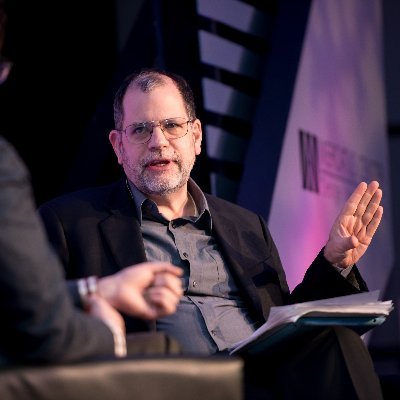
My very fun Conversation with Blake Scholl, conversationswithtyler.com/e…, @bscholl, how to make everything faster, supersonic transport as well.


George Mason Economics retweeted
My colleague Natalya Naumenko presenting her work on humanitarian aid to the USSR during the early 1920s. TLDR: the aid saved a significant number of lives in large part because no government officials could control the allocation

George Mason Economics retweeted

.@GeorgeSelgin) has spent over four decades thinking about money, banking, and economic history, and @tylercowen has been swapping ideas with himsince George was a grad student at NYU.
In George’s new book, he explains why the New Deal was neither what its champions nor critics think it was. For one, it was hardly a spending spree—Roosevelt largely ignored Keynes's "very sound" advice on recovery, and fiscal stimulus would've worked far better than the hodgepodge of programs that he ended up pursuing. For another, it wasn’t WWII military spending that finally cemented recovery, but a big post-war private investment boom thanks to a friendlier climate towards business.
Timestamps for the conversation, which was recorded live at @CatoInstitute:
0:00:57 – A simple summary of New Deal
0:06:39 – Rundown of which New Deal policies helped, hurt, or didn’t matter
0:13:52 – What better fiscal policy would’ve looked like
0:16:34 – Causes of the Great Depression
0:22:02 – Keynes’s sound but unheeded advice, Hayek’s miss
0:32:04 – Whether fewer, bigger banks is better
0:38:36 – How the quantity theory of money holds up
0:43:18 – Central bank independence
0:46:56 – How many countries should dollarize
0:49:31 – Stablecoins
0:52:07 – George Selgin production function
01:00:10 – Q&A
Watch the full episode here or follow the links in the next tweet.