

Sr. #AI Research Scientist @IBM | Taming LLMs | Ph.D. #CS @bengurionu
Joined January 2022
- Tweets358
- Following390
- Followers55
- Likes512




Pinned Tweet
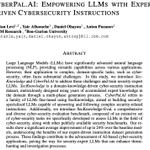
We just released our preprint "CyberPal. AI: Empowering LLMs with Expert-Driven Cybersecurity Instructions." by @IBMResearch.
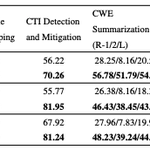
Check out how our approach improves cybersecurity AI performance by up to 24% across a variety of tasks: arxiv.org/pdf/2408.09304v1
#IBM #LLMs
🧵 >>

Matan Levi retweeted

OpenAI CEO Sam Altman: "I don't even know a dramatic enough word to use… models can find bugs that are outside of the normal threat model of what we think a hacker can do… hardware-level, insane stuff… I no longer think we're gonna be able to just patch all the bugs."
It's over.
Matan Levi retweeted

Dusting off this tweet from April because this gap in shared understanding of LLM capability is *widening*. It's now less "two groups of people speaking past each other" and more a sharp funnel.
- Napkin math somewhere around 6B people (~75% of the population) have barely come in contact with LLMs at all.
- Around 1-2B (~20%) are casual and infrequent users of free-tier ChatGPT-like products. This group sees derpy chatbots and treats them a bit like a better Google search, a writing aid, or etc. Maybe an agent tries to book you a flight. I have non-tech friends who (reasonably, imo) say they have not much use for it at all. Even many professionals outside of math&code are in this tier. For example, execs and many other functions spend a lot of their time talking to other people, so while they understand what is happening intellectually, it is still second-hand and a bit abstract.
- Now we get to professional use of frontier-grade LLMs in math&code. Somewhere around 20M people (0.2%) see first-hand that large, complex projects that used to take them weeks/months can now be completed by agents with a prompt. Building apps, copying apps, translating apps, decompiling apps from binaries... This has all happened very quickly and recently - less than 1 year ago, I was writing code manually by hand, typing memorized computer code commands into a code editor character by character, occasionally pressing Tab to autocomplete a little chunk of code.
- And finally we get to the ~5,000 people (~0.00006%) with access to frontier-grade systems internally. The external world has seen the preview. It looks like swarms of thousands of agents collaborating over weeks on software mega projects: minting zero days, running cyber attacks and defenses at machine speeds, discovering new science, advancing the frontier of mathematics. Things that would have taken top professionals in the industry years of work. Meanwhile, human review and comprehension are starting to fall behind. For example, people are still involved in the "archeology" of the OpenAI-HF incident from many months ago. Mathematicians may be poring over the 722 manuscripts on frontier mathematics for a while.
The funnel is driven by a combination of factors:
1. The impact scales with ambition, problem size, and horizon. A question with a paragraph answer barely stresses the system. You need a reservoir of big, difficult problems that you really care about. This aspect drives the consumer / professional dimension of the funnel.
2. The jaggedness of the system (which I have written about a lot separately). Capability peaks in domains that are digital, verifiable and economically valuable. This is because LLM capability emerges from reinforcement learning on verifiable rewards on a curated environment mixture driven by revenue potential. This aspect primarily drives the area (e.g. math&code) dimension of the funnel.
3. Access. Free-tier, paid-tier, internal.
So this is the weirdness of the moment. The general public has mostly not interacted with these systems. When they have, it looks like a derpy chatbot. The majority of professionals still see only a modest uplift. And a small sliver of professionals are experiencing the vertigo of the curve going vertical. And it is all happening at the same time.

Judging by my tl there is a growing gap in understanding of AI capability.
The first issue I think is around recency and tier of use. I think a lot of people tried the free tier of ChatGPT somewhere last year and allowed it to inform their views on AI a little too much. This is a group of reactions laughing at various quirks of the models, hallucinations, etc. Yes I also saw the viral videos of OpenAI's Advanced Voice mode fumbling simple queries like "should I drive or walk to the carwash". The thing is that these free and old/deprecated models don't reflect the capability in the latest round of state of the art agentic models of this year, especially OpenAI Codex and Claude Code.
But that brings me to the second issue. Even if people paid $200/month to use the state of the art models, a lot of the capabilities are relatively "peaky" in highly technical areas. Typical queries around search, writing, advice, etc. are *not* the domain that has made the most noticeable and dramatic strides in capability. Partly, this is due to the technical details of reinforcement learning and its use of verifiable rewards. But partly, it's also because these use cases are not sufficiently prioritized by the companies in their hillclimbing because they don't lead to as much $$$ value. The goldmines are elsewhere, and the focus comes along.
So that brings me to the second group of people, who *both* 1) pay for and use the state of the art frontier agentic models (OpenAI Codex / Claude Code) and 2) do so professionally in technical domains like programming, math and research. This group of people is subject to the highest amount of "AI Psychosis" because the recent improvements in these domains as of this year have been nothing short of staggering. When you hand a computer terminal to one of these models, you can now watch them melt programming problems that you'd normally expect to take days/weeks of work. It's this second group of people that assigns a much greater gravity to the capabilities, their slope, and various cyber-related repercussions.
TLDR the people in these two groups are speaking past each other. It really is simultaneously the case that OpenAI's free and I think slightly orphaned (?) "Advanced Voice Mode" will fumble the dumbest questions in your Instagram's reels and *at the same time*, OpenAI's highest-tier and paid Codex model will go off for 1 hour to coherently restructure an entire code base, or find and exploit vulnerabilities in computer systems. This part really works and has made dramatic strides because 2 properties: 1) these domains offer explicit reward functions that are verifiable meaning they are easily amenable to reinforcement learning training (e.g. unit tests passed yes or no, in contrast to writing, which is much harder to explicitly judge), but also 2) they are a lot more valuable in b2b settings, meaning that the biggest fraction of the team is focused on improving them. So here we are.
Matan Levi retweeted

Today we are open-sourcing 🥕Karotte, our framework for building RL environments.
We've used it for the past year to build MLE RL environments for frontier labs, and it's been hardened through 1M+ evaluation runs and red-teaming.

Matan Levi retweeted

SFT is not dead! 🥳
We found a way to make SFT rival current prevailing posttraining methods, often generalizing better and forgetting less than RL and OPSD. 🤯
Following our prior work on reasoning with sampling, we now introduce sampling to the posttraining stack.
1/n
Poor #Jev

13k+ open RL tasks with environments came out this week.
Xiaomi MiMo open-sourced ~7.8k tasks with verifiers, their training environments, and the verl training code (code, webdev, cyber, music, general), and HF released SmolDataEnvs, a 5.5k verifiable tasks for hill-climbing small models in code and data science.
A year ago this was the scarcest resource in post-training.
github.com/XiaomiMiMo/verl
huggingface.co/datasets/Xiao…
huggingface.co/datasets/Fine…

So cool to see they’ve released an agentic environment for every task.
Although the dataset is small in size, every person working in post training can appreciate the effort taken to generate this dataset.

Super happy to release SmolDataEnvs: 5,000 verifiable RL environment tasks for hill-climbing small models in code and data science by @adithya_s_k
100% open source: environments, evals, training!
huggingface.co/datasets/Fine…

Good old 2010s 🥹
Nice to see we stopped throwing LLMs on every task

Introducing Contrastive Language Model (CLM): an ultra-fast System One Model trained with a contrastive learning objective that connects states and actions.
CLM-8B is pre-trained on internet-scale data and delivers up to 9× faster inference than Jev ⚡ while achieving comparable performance across computer-use, gaming, and tool-calling tasks.
With lightweight fine-tuning, CLM-8B sets a new SOTA on challenging agentic coding benchmarks, such as DeepSWE (81.6%) and Terminal-Bench 2.1 (87.6%). In contrast, Jev fails to serve as an effective verifier for these long-horizon tasks.
We also build an efficient training and serving infra for CLMs by disaggregating states and actions, allowing their embeddings to be cached and reused independently. This substantially reduces inference latency in settings where the state evolves continuously while the action set remains fixed.
Finally, we establish scaling laws for CLMs and show that the test contrastive loss decreases predictably as a power law in training compute, model size, and dataset size.
📄 Blog: contrastive-lm.notion.site
💻 Code: github.com/Contrastive-LM/CL…
🗣️ Discord: discord.gg/5dAQEDJBs
🤗 Data & Models: huggingface.co/Contrastive-L…
More details on CLM’s architecture, data recipe, and scaling laws in the thread below 🧵
Matan Levi retweeted

Introducing PC-ALM, a local-learning alternative to backpropagation.
Our method trains 1000-layer neural nets using only local dynamics, and without backprop.
Blog: pub.sakana.ai/pc-alm/
Standard deep learning relies on backpropagation. The brain, however, cannot implement backpropagation, at least not exactly. How can a physical system, such as the brain, solve multilayer credit assignment without explicit use of backprop?
We look for inspiration in two related fields: distributed optimization and NeuroAI.
In NeuroAI, predictive coding asks each neuron activation to solve an energy-based inference problem instead of using a standard forward pass. That inference step can be implemented as energy-minimization dynamics on local prediction errors.
This perspective -- each layer as a dynamical system -- has proven promising, but performance of predictive coding hasn't scaled well with depth. Credit signals at far ends of the network struggle to diffuse into internal layers.
We turn to distributed optimization, generalizing predictive coding to use an augmented Lagrangian instead of energy. This motivation stems back to a classic 1988 paper by LeCun, showing that the Lagrange multipliers of a deep network can be identified with gradients of a supervised loss. The augmented Lagrangian then bridges LeCun's perspective to the standard predictive coding that is used in NeuroAI.
We find that this new perspective yields a natural PC-like alternative to backpropagation, resulting in a method we call PC-ALM. PC-ALM differs from PC in that it introduces dual neurons (Lagrange multipliers) as part of the layer-local dynamics, resulting in each layer acting as a PI feedback control system to minimize local prediction errors.
We find that PC-ALM is capable of propagating signals to seemingly arbitrary depth, especially in deep narrow networks where standard PC struggles to learn.
Ultimately, our motivation here is to understand how distributed physical systems, such as the brain, can compute credit signals using only local coupling and local dynamics.
PC-ALM may also inform deep learning in neuromorphic hardware, where dynamics are cheaper than on GPUs.
Paper: arxiv.org/abs/2605.31022
Code: github.com/SakanaAI/pc-alm
Matan Levi retweeted

The prevailing view of so much of the young left in America is that we’re the worst country ever, so if someone attacks us, they can’t be all bad.
Matan Levi retweeted

"But here is what we found when we tested: We took the specific vulnerabilities Anthropic showcases in their announcement, isolated the relevant code, and ran them through small, cheap, open-weights models. Those models recovered much of the same analysis. Eight out of eight models detected Mythos's flagship FreeBSD exploit, including one with only 3.6 billion active parameters costing $0.11 per million tokens. A 5.1B-active open model recovered the core chain of the 27-year-old OpenBSD bug." aisle.com/blog/ai-cybersecur…

Matan Levi retweeted

אחד הסרטונים האהובים עליי של ביל אקמן.
הקרן שלו ירדה ביותר מ30%
הוא נתבע על ידי משקיעים
היה באמצע גירושין
וקרן אקטיביסטית ניסתה להשתלט על פרשינג
מה השיטה שלו לצאת ממצבים כאלו. ריבית דריבית עובדת בכל אספקט בחיים שלנו
I tested how vulnerable my ClawdBot (by @openclaw) is to indirect prompt injection (via email).
It’s powerful — but if you connect it to inbox/WhatsApp/Telegram, you must harden it.
Self-check your setup before someone else does.
medium.com/p/one-email-is-al…
#Clawdbot #MOLTBOT
Matan Levi retweeted

New IBM paper builds small security expert language models that beat bigger ones on key threat tasks.
The authors build SecKnowledge 2.0, a dataset with expert formats and grounded evidence.
They fine tune CyberPal 2.0 models from 4B to 20B on that data.
The models learn to answer fast for simple prompts and show steps for harder ones.
Tests cover core threat knowledge and mapping bugs to the right weakness category.
The 20B model ranks 1st on root cause mapping, and the 4B model is close behind.
Average gains over their baselines are 7-14% across security benchmarks.
Most gains come from stronger formats and evidence grounding rather than more compute.
8-bit and 4-bit versions keep most quality, which helps on prem deployments.
The idea is that step-by-step, evidence-backed workflows let small models make reliable calls.
----
Paper – arxiv. org/abs/2510.14113
Paper Title: "Toward Cybersecurity-Expert Small Language Models"

Matan Levi retweeted
I quite like the new DeepSeek-OCR paper. It's a good OCR model (maybe a bit worse than dots), and yes data collection etc., but anyway it doesn't matter.
The more interesting part for me (esp as a computer vision at heart who is temporarily masquerading as a natural language person) is whether pixels are better inputs to LLMs than text. Whether text tokens are wasteful and just terrible, at the input.
Maybe it makes more sense that all inputs to LLMs should only ever be images. Even if you happen to have pure text input, maybe you'd prefer to render it and then feed that in:
- more information compression (see paper) => shorter context windows, more efficiency
- significantly more general information stream => not just text, but e.g. bold text, colored text, arbitrary images.
- input can now be processed with bidirectional attention easily and as default, not autoregressive attention - a lot more powerful.
- delete the tokenizer (at the input)!! I already ranted about how much I dislike the tokenizer. Tokenizers are ugly, separate, not end-to-end stage. It "imports" all the ugliness of Unicode, byte encodings, it inherits a lot of historical baggage, security/jailbreak risk (e.g. continuation bytes). It makes two characters that look identical to the eye look as two completely different tokens internally in the network. A smiling emoji looks like a weird token, not an... actual smiling face, pixels and all, and all the transfer learning that brings along. The tokenizer must go.
OCR is just one of many useful vision -> text tasks. And text -> text tasks can be made to be vision ->text tasks. Not vice versa.
So many the User message is images, but the decoder (the Assistant response) remains text. It's a lot less obvious how to output pixels realistically... or if you'd want to.
Now I have to also fight the urge to side quest an image-input-only version of nanochat...

🚀 DeepSeek-OCR — the new frontier of OCR from @deepseek_ai , exploring optical context compression for LLMs, is running blazingly fast on vLLM ⚡ (~2500 tokens/s on A100-40G) — powered by vllm==0.8.5 for day-0 model support.
🧠 Compresses visual contexts up to 20× while keeping 97% OCR accuracy at <10×.
📄 Outperforms GOT-OCR2.0 & MinerU2.0 on OmniDocBench using fewer vision tokens.
🤝 The vLLM team is working with DeepSeek to bring official DeepSeek-OCR support into the next vLLM release — making multimodal inference even faster and easier to scale.
🔗 github.com/deepseek-ai/DeepS…
#vLLM #DeepSeek #OCR #LLM #VisionAI #DeepLearning


Matan Levi retweeted

BOOOOOOOM!
CHINA DEEPSEEK DOES IT AGAIN!
An entire encyclopedia compressed into a single, high-resolution image!
—
A mind-blowing breakthrough. DeepSeek-OCR, unleashed an electrifying 3-billion-parameter vision-language model that obliterates the boundaries between text and vision with jaw-dropping optical compression!
This isn’t just an OCR upgrade—it’s a seismic paradigm shift, on how machines perceive and conquer data.
DeepSeek-OCR crushes long documents into vision tokens with a staggering 97% decoding precision at a 10x compression ratio!
That’s thousands of textual tokens distilled into a mere 100 vision tokens per page, outmuscling GOT-OCR2.0 (256 tokens) and MinerU2.0 (6,000 tokens) by up to 60x fewer tokens on the OmniDocBench.
It’s like compressing an entire encyclopedia into a single, high-definition snapshot—mind-boggling efficiency at its peak!
At the core of this insanity is the DeepEncoder, a turbocharged fusion of the SAM (Segment Anything Model) and CLIP (Contrastive Language–Image Pretraining) backbones, supercharged by a 16x convolutional compressor.
This maintains high-resolution perception while slashing activation memory, transforming thousands of image patches into a lean 100-200 vision tokens.
Get ready for the multi-resolution "Gundam" mode—scaling from 512x512 to a monstrous 1280x1280 pixels!
It blends local tiles with a global view, tackling invoices, blueprints, and newspapers with zero retraining. It’s a shape-shifting computational marvel, mirroring the human eye’s dynamic focus with pixel-perfect precision!
The training data?
Supplied by the Chinese government for free and not available to any US company.
You understand now why I have said the US needs a Manhattan Project for AI training data? Do you hear me now? Oh still no? I’ll continue.
Over 30 million PDF pages across 100 languages, spiked with 10 million natural scene OCR samples, 10 million charts, 5 million chemical formulas, and 1 million geometry problems!.
This model doesn’t just read—it devours scientific diagrams and equations, turning raw data into a multidimensional knowledge.
Throughput? Prepare to be floored—over 200,000 pages per day on a single NVIDIA A100 GPU! This scalability is a game-changer, turning LLM data generation into a firehose of innovation, democratizing access to terabytes of insight for every AI pioneer out there.
This optical compression is the holy grail for LLM long-context woes. Imagine a million-token document shrunk into a 100,000-token visual map—DeepSeek-OCR reimagines context as a perceptual playground, paving the way for a GPT-5 that processes documents like a supercharged visual cortex!
The two-stage architecture is pure engineering poetry: DeepEncoder generates tokens, while a Mixture-of-Experts decoder spits out structured Markdown with multilingual flair. It’s a universal translator for the visual-textual multiverse, optimized for global domination!
Benchmarks? DeepSeek-OCR obliterates GOT-OCR2.0 and MinerU2.0, holding 60% accuracy at 20x compression! This opens a portal to applications once thought impossible—pushing the boundaries of computational physics into uncharted territory!
Live document analysis, streaming OCR for accessibility, and real-time translation with visual context are now economically viable, thanks to this compression breakthrough. It’s a real-time revolution, ready to transform our digital ecosystem!
This paper is a blueprint for the future—proving text can be visually compressed 10x for long-term memory and reasoning. It’s a clarion call for a new AI era where perception trumps text, and models like GPT-5 see documents in a single, glorious glance.
I am experimenting with this now on 1870-1970 offline data that I have digitalized.
But be ready for a revolution!
More soon.
[1] github.com/deepseek-ai/DeepS…


Matan Levi retweeted

🚨Reasoning LLMs are e̵f̵f̵e̵c̵t̵i̵v̵e̵ ̵y̵e̵t̵ inefficient!
Large language models (LLMs) now solve multi-step problems by emitting extended chains of thought. During the process, they often re-derive the same intermediate steps across problems, inflating token usage and latency.
Metacognitive Reuse: turn recurring LLM reasoning into concise, reusable “behaviors”. The model learns named skills from its own chains-of-thought and reuses them to think faster & cheaper.
Arxiv 🔗 - arxiv.org/abs/2509.13237

