

Life is nonlinear. So handle it using Math.
Joined June 2020
- Tweets20.2K
- Following31
- Followers226K
- Likes72.1K




Listen to the full 78-minute interview:
podcasts.apple.com/us/podcas…

A mathematician who bet $100,000 that AI would not produce top-level mathematics by 2030 now says he has effectively lost the bet, four years early.
In March 2025, Daniel Litt made a bet with Tamay Besiroglu concerning whether AI could autonomously produce a research paper worthy of the Annals of Mathematics by 2030.
Now, in this new interview, Litt acknowledges that AI systems have advanced far faster than he expected.
Although the precise conditions of the wager have not formally been satisfied, he believes AI has already demonstrated the ability to produce genuinely interesting new mathematics.
He explains that machines have become extraordinarily capable at surveying mathematical literature, applying existing methods and carrying out technically demanding arguments.
But he still distinguishes these skills from deciding which questions are important and developing genuinely new mathematical perspectives. Litt discusses the future of recognition in mathematics:
“I think prestige and credit are dead.”
His argument is that the publication of a sophisticated proof may no longer provide reliable evidence of a researcher's individual mathematical abilities.
He suggests that departments may increasingly evaluate mathematicians through seminars, thesis defenses and sustained mathematical conversations rather than papers alone.

2 + 1 = 3 ✓ Prime
2 × 3 + 1 = 7 ✓ Prime
2 × 3 × 5 + 1 = 31 ✓ Prime
2 × 3 × 5 × 7 + 1 = 211 ✓ Prime
2 × 3 × 5 × 7 × 11 + 1 = 2311 ✓ Prime
2 × 3 × 5 × 7 × 11 × 13 + 1 = 30031 Not Prime
A young man visits his girlfriend's father, who is a mathematician.
Father: “My daughter says you're good at mathematics.”
Young man: “Absolutely! I can multiply 73 × 59 in my head in just three seconds.”
Father: “You have exactly two seconds to leave my house.” 😂
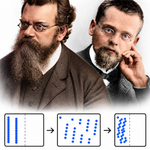
In 1896, a 24-year-old mathematician challenged Ludwig Boltzmann with a remarkable theorem.
Ernst Zermelo argued that a mechanical system could eventually return arbitrarily close to its original state.
But if entropy always increases, how could that happen?
Boltzmann accepted the mathematics. His answer was probability: such returns may be possible, but for ordinary gases the waiting time would be unimaginably long.
Their disagreement helped clarify why the second law of thermodynamics is statistical rather than absolute.


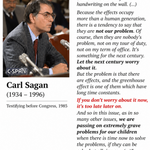
In 1985, Carl Sagan warned the US Senate that increasing greenhouse gases could transform Earth's climate.
He used Venus, with its surface temperature near 470°C, to explain the physics.

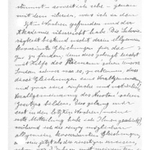
Postcard from Albert Einstein to David Hilbert, Berlin, 18 November 1915
Dear Colleague,
The system of equations you have presented agrees, as far as I can see, exactly with what I have found in recent weeks and submitted to the Academy.
The difficulty was not in finding generally covariant equations for the g₍μν₎, since this can easily be accomplished using the Riemann tensor.
Rather, the difficulty was in recognizing that these equations represent a generalization, indeed a simple and natural generalization, of Newton's law.
I succeeded in recognizing this only in the last few weeks (I sent you my first communication), although three years ago, together with my friend Grossmann, I had already considered the only possible generally covariant equations, which have now proved to be the correct ones.
We abandoned them only with great reluctance, because my physical analysis had apparently indicated that they were incompatible with Newton's law.
The important thing is that these difficulties have now been overcome.
Today I am presenting to the Academy a paper in which, using general relativity and without any auxiliary hypothesis, I quantitatively derive the perihelion motion of Mercury discovered by Le Verrier.
No theory of gravitation has succeeded in doing this until now.
With best regards,
Yours, Einstein

“Mathematics Is a Subject for the Young”
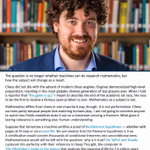
In a new essay published on Terence Tao's blog, NYU mathematician Tristan Buckmaster offers a notably optimistic perspective on the future of mathematics after recent breakthroughs in AI-generated proofs.
His central argument is that the next generation of mathematicians, particularly graduate students and postdoctoral researchers, will shape the future of AI-assisted mathematics.
Buckmaster compares this moment with IBM's Deep Blue defeating Garry Kasparov in 1997. Chess did not disappear when computers became stronger than humans. Instead, powerful engines transformed how people studied and played it.
He believes something similar could happen in mathematics, although mathematical understanding presents a different challenge.
He also raises concerns about the concentration of advanced AI capabilities inside a handful of corporations and argues for wider access, better attribution, and stronger protection of researchers' work.
An interesting observation from the essay:
"Mathematics has never been a list of true statements. Certifying a result settles the question, not the search for understanding."


On July 17, 2014, a 67-year-old retired mathematician was brushing his teeth when an idea suddenly struck him.
Thomas Royen had found a proof of the Gaussian correlation inequality, a problem that had resisted mathematicians for decades.
He wrote the proof in Microsoft Word and published it.
Almost nobody noticed.
It took years for the mathematical community to fully recognize what he had accomplished.


In July 1986, Terence Tao represented Australia at the International Mathematical Olympiad in Warsaw.
He was just 10 years old. He earned 19 out of 42 points and received a bronze medal, becoming the youngest IMO medalist.
He earned full marks on Problems 1 and 2, although he received only one point on the final problem.
Tao returned in 1987 to win silver with 40 points, and in 1988 he won gold at age 13, becoming the youngest gold medalist in IMO history.

A prime number that survives being erased from either end.
739397 → 39397 → 9397 → 397 → 97 → 7
739397 → 73939 → 7393 → 739 → 73 → 7
Every number shown is prime.
Even more remarkable: 739397 is the largest prime with this property. Only 15 such primes exist.
A number that attracts almost every four-digit number.
Start with 3524. Arrange its digits in descending and ascending order, then subtract.
5432 − 2345 = 3087
8730 − 0378 = 8352
8532 − 2358 = 6174
Now something remarkable:
7641 − 1467 = 6174
Every four-digit number containing at least two distinct digits eventually reaches 6174 by repeating this procedure, always within seven steps.
A numerical curiosity discovered by Indian mathematician D. R. Kaprekar.