
Web3 | Longevity | Systems biology | Cognitive science
Joined May 2018
- Tweets730
- Following154
- Followers43
- Likes1.6K







Someone tell this to the $CC simps

Vitalik ain't no suit simp, as this post makes clear.
But ironically, there's a lot in his argument that will resonate with TradFi types the most, for the TradFi mind understands the importance of operational resiliency far better than a memecoin-aping tenant of the trenches.
Vitalik says: "Resilience is the game where it’s not about 4.5% APY vs 5.3% APY - rather, it’s about minimizing the chance that you get -100% APY."
The suits hear: "The return of your money is always more important than the return on it."
And they agree. Lord do they agree.
That's why the various permissioned corpo chains that are all the rage right now will fail to achieve significant adoption, particularly from major financial institutions ran by tall dudes wearing tailored suits.
For a corpo chain offers none of the operational resiliency (or peace of mind) of a permissionless one. It can always be halted, reverted, censored, or rent-sought by the corporation that runs it and acts as gatekeeper.
And the suits hate being rent-sought by some dinky startup run by bros in branded vests and hoodies.
Lord do they hate this.
125


Since Pectra upgrade on May 7, Ethereum has now passed 4 blobs per block. With this tempo, we can expect that the target of 6 blobs/block will be reached in the second half of June.
After that, congestion pricing will cause submission fees paid by L2s to L1 to resume.

171


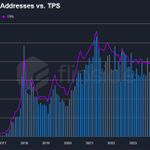
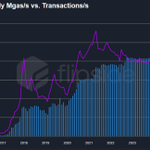
In March and April, transaction fees on Ethereum reached the lowest levels in the network's history.
But the question is, is this good or bad for Ethereum?
Let's see some onchain data! A short🧵

Addendum: The Pectra update appears to have a direct effect on gas price, increasing gas fees. The primary cause seems to be EIP-7623, which increased the gas cost of calldata from 16 to 42 gas per byte.

1
1
62

Delete your blockchain.
- EU

The EU is increasingly focused on control, especially as we shift from a welfare state to a warfare state, where controversial decisions can be pushed through in the name of "security," "stability" etc.
The EU is not prioritizing crypto and sees it as a threat. Just a few recent headlines from the EU:
- “ECB flags risk of financial contagion from US crypto push”
- “EU to ban anonymous crypto accounts and privacy coins by 2027”
- If blockchain data can't be deleted individually, "this may require deleting the whole blockchain."
- “EU watchdog to set punitive capital rules for insurers holding crypto”
We need to evaluate attitudes toward crypto in relation to the general political situation.
And the broad trend is deglobalization and countries closing down doors to enter and leave. A few more headlines:
- "EU moves closer to visa-free ban for citizenship by investment countries."
- European Court slaps down Golden Visa schemes"
- China's exit bans multiply as political control tightens under Xi
- Spain will introduce a €150K penalty for failing to report cash withdrawals of over €3,000 with 24h notice.
The major unknown is the role crypto will play in the new world order and during the transition period.
Will crypto serve as a tool for capital freedom especially if/when capital controls start?
Or will countries try to crack down on crypto by making it comply with increasingly restrictive regulations?
31


