
A podcast hosted by Scott Yarbrough and guest Cormackians on the works, themes, and backgrounds of writer Cormac McCarthy.
Charleston, SC
Joined February 2021
- Tweets1.3K
- Following202
- Followers413
- Likes1.2K





Reading McCarthy retweeted

“Great works of Literature neither ‘harm’ nor ‘help’ Readers, but rather allow them to enjoy their solitude. Art isn’t trauma or therapy, but a third secret thing.”


Reading McCarthy retweeted

They ate and moved on, leaving the fire on the ground behind them, and as they rode up into the mountains this fire seemed to become altered of its location, now here, now there, drawing away, or shifting unaccountably along the flank of their movement.
Reading McCarthy retweeted
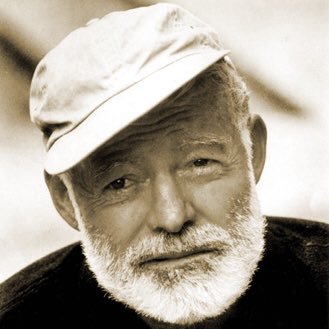
The best people possess a feeling for beauty, the courage to take risks, the discipline to tell the truth, the capacity for sacrifice. Ironically, their virtues make them vulnerable; they are often wounded, sometimes destroyed.
Reading McCarthy retweeted

Ernest Hemingway’s book recommendations:
The Blue Hotel – Crane
The Open Boat – Crane
Madame Bovary – Flaubert
Dubliners – Joyce
The Red and the Black – Stendhal
Of Human Bondage – Maugham
Anna Karenina – Tolstoy
War and Peace – Tolstoy

Reading McCarthy retweeted
If you are none of these you can be sure it will kill you too but there will be no special hurry.
Reading McCarthy retweeted

Finally, my favorite quote from the book: "To prepare for any struggle is largely a work of unburdening oneself. If you carry your past into battle you are riding to your death. Austerity lifts the heart and focuses the vision. Travel light. A few ideas are enough."
Reading McCarthy retweeted
The judge placed his hands on the ground. He looked at his inquisitor. This is my claim, he said. And yet everywhere upon it are pockets of autonomous life. Autonomous. In order for it to be mine nothing must be permitted to occur upon it save by my dispensation.
Reading McCarthy retweeted
I know the night is not the same as the day: that all things are different, that the things of the night cannot be explained in the day, because they do not then exist, and the night can be a dreadful time for lonely people once their loneliness has started.
Reading McCarthy retweeted

Ernest Hemingway's 7 Tips for Writing:
1: To get started, write one true sentence.
"Sometimes when I was starting a new story and I could not get it going, I would sit in front of the fire and squeeze the peel of the little oranges into the edge of the flame and watch the sputter of blue that they made. I would stand and look out over the roofs of Paris and think, 'Do not worry. You have always written before and you will write now.'"
2: Always stop for the day while you still know what will happen next.
"The best way is always to stop when you are going good and when you know what will happen next. If you do that every day when you are writing a novel you will never be stuck."
3: Never think about the story when you're not working.
"I had learned already never to empty the well of my writing, but always to stop when there was still something there in the deep part of the well, and let it refill at night from the springs that fed it."
4: When it's time to work again, always start by reading what you've written so far.
"When it gets so long that you can't do this every day, read back two or three chapters each day; then each week read it all from the start."
5: Don't describe an emotion-make it.
"When writing for a newspaper you told what happened and, with one trick and another, you communicated the emotion aided by the element of timeliness which gives a certain emotion to any account of something that has happened on that day; but the real thing, the sequence of motion and fact which made the emotion and which would be as valid in a year or in ten years or, with luck and if you stated it purely enough, always, was beyond me."
6: Use a pencil.
"If you write with a pencil you get three different sights at it to see if the reader is getting what you want him to. First when you read it over; then when it is typed you get another chance to improve it, and again in the proof."
7: Be Brief.
"It wasn't by accident that the Gettysburg address was so short. The laws of prose writing are as immutable as those of flight, of mathematics, of physics."

Reading McCarthy retweeted
Only nature can enslave man and only when the existence of each last entity is routed out and made to stand naked before him will he be properly suzerain of the earth.


Reading McCarthy retweeted
People were always the limiters of happiness except for the very few that were as good as spring itself.
Reading McCarthy retweeted
The desert wind would salt their ruins and there would be nothing, nor ghost nor scribe, to tell to any pilgrim in his passing how it was that people had lived in this place and in this place died.
Reading McCarthy retweeted

I've probably read this poem 100 times, but when the world seems particularly gone to hell, it still brings me to tears.

Reading McCarthy retweeted

@MccarthyReading Another great episode! Your comment on Billy bringing John Grady water in the end made me think about the other "water bringing" moments in McCarthy. I just read one in The Crossing — Billy bringing the wolf water. Of course Llewelyn and the guy in the truck...
Reading McCarthy retweeted
The best people possess a feeling for beauty, the courage to take risks, the discipline to tell the truth, the capacity for sacrifice. Ironically, their virtues make them vulnerable; they are often wounded, sometimes destroyed.