

marketing with ai. I believe distribution is the only moat left. https://teapawt.net/t.co/1kKIYKaYkG
Joined April 2024
- Tweets3.1K
- Following279
- Followers430
- Likes3K






asking ai for "10 viral posts" is the worst move in marketing.
you give claude a one-line prompt and no buyer context.
it gives you generic copy that fits any product on earth.
ai isn't bad at marketing. your input is just too thin.
use it as a researcher and a critic first, not a writer.
here are 5 copy-paste marketing prompts that actually pull buyers:
1. the complaint miner
> "read these 20 reddit threads or reviews [paste]. list the exact words buyers use for their problem, what they already tried, and what made them angry. don't summarize, keep their exact phrases."
2. the winning format teardown
> "break down this post or ad that got real traction [paste]. name the hook trigger, the proof used, the enemy it calls out, and where the product first appears. give me 3 angles for my product using that same structure."
3. the skeptical buyer audit
> "read my landing page [paste] like a tired buyer with 10 tabs open. mark every line where you feel confused, bored, or skeptical. rewrite only those lines in plain language."
4. the zero-cringe rewrite
> "rewrite this post [paste] for someone who scrolls past anything that sounds like an ad. cut every hype word, open with a real number or mistake, and put the product at the end."
5. the objection killer
> "list the top 5 reasons a buyer reads my page [paste] and still closes the tab without paying. write one short reply or proof line to answer each one."
save these for your next launch or post.
2
22
THE GAME changed. 36% of x impressions now go to video and you're still typing.

Video is the fastest growing format on X. Posts with video get 5x the reach and engagement, and 36% of all impressions now go to video.
We've been building tools to help you create better videos without leaving X. Here's a recap of what we've shipped recently 🧵
29
26 claude features. only 5 parts matter for getting customers.
i spent ~$4,000 on ai plans to figure this out.
1. pick the right brain
> haiku for quick hooks and replies
> sonnet 5.5 for posts, emails and ad copy
> opus 5.5 + /advisor for strategy and offers
> 1m context window: paste every review, call note and competitor page at once
> watch /usage so you don't run out mid-campaign
2. where you do the work
> chat for ideas and drafts
> co-work for full campaigns
> split sessions: write the ad in one, the landing page in another
> side chats (/btw) to check a claim without losing your draft
3. what it makes for you
> landing pages and ad mockups as artifacts
> pitch decks and one-pagers
> dashboards from your sales and ads data
> short motion videos for ads and reels
4. teach it your brand once
> memory: your offer, your buyer, your voice
> skills: turn your best hook formula into a reusable command
> connectors: plug in gmail, notion, your crm
> plugins for the tools you already pay for
5. let it work while you sleep
> sub-agents: one researches competitors, one writes, one checks
> projects: one per client or campaign
> /goal: "find me 20 lead ideas this week"
> scheduled routines: daily trend scan, weekly content plan
part 1 is where everyone starts.
the customers are in parts 4 and 5.
save this for later.
which part are you still doing by hand?

49
claude is cooking WAY too hard.
i found 100+ accounts already posting these claude-generated videos.
so i decided to join the wave.
now my claude generates 12 videos every single day.
but here's the interesting part:
i use epidemic sound for sound effects, and they have an MCP integration.
which means my claude just unlocked another superpower.
it can find and use sound effects directly in its workflow.
ai content creation is getting crazy.
comment "skill" and i'll send you the claude skill.

2
97
human attention is THE MOST valuable currency right now.
and most people spend hours guessing what to post.
use grok bot to do 80% of your content research instead.
here's the exact setup:
1. a creator scanner
give it 15 to 25 creators you love.
every monday it finds their posts that did 2x their normal views.
it saves the hook, the format and why it worked.
2. a hook library
save hooks you like while scrolling.
once a week it pulls them into notion and sorts them by type.
contrarian, question, comparison, relatable.
3. a trend radar
connect your newsletters and x.
it tracks which topics keep showing up and flags the ones rising.
4. a group chat
put your trend bot and your writing bot in one chat.
every morning they score new post ideas out of 10.
5. skills for your taste
turn your hook rules and script feedback into skills.
now every draft gets checked against what already worked for you.
mistakes to skip:
> running everything daily. it eats your usage fast. weekly is enough
> letting ai pick your creators. it drifts away from your taste
attention is the currency.
ai just tells you where to spend it.
LIKE + repost this and comment "bot"
i'll send you all my grok bot templates
34
2026 was the year of VIBE CODING.
2027 could be the year of VIBE MARKETING.
and I think we're about to witness the next BIG millionaire wave.
most people are still sleeping on it.
40% of my feed is already flooded with AI-generated content.
and no, I'm not saying it's bad content.
some of it has genuinely impressive storytelling, editing, and hooks.
AI content is getting GOOD. REALLY GOOD.
but here's what caught my attention:
→ Instagram is pushing Reels.
→ YouTube is doubling down on Shorts.
→ X is pushing short-form video.
→ LinkedIn is getting deeper into video.
every major platform is fighting for the same asset:
HUMAN ATTENTION.
and attention is becoming one of the most valuable currencies on the internet.
think about what happened in 2026.
ai made building software ridiculously easy.
anyone could vibe code a SaaS in a few hours.
but there was still one massive bottleneck:
DISTRIBUTION.
you could build the best product in the world and still struggle to get your first 100 users.
because building is one thing.
getting attention, acquiring customers, and converting traffic into revenue is another.
but now there's a new opportunity.
ai is making content production ridiculously cheap and accessible.
you can create:
→ scroll-stopping videos
→ high-retention storytelling
→ viral-style content
→ entire content production pipelines
and here's where the real opportunity lies:
CONTENT → ATTENTION → AUDIENCE → DISTRIBUTION → REVENUE.
imagine building an entire media operation without hiring a production team.
no expensive equipment.
no massive editing team.
no traditional content studio.
just ai, creativity, and distribution.
I believe the next wave of internet millennials won't vibe coders.
they'll be people who understand how to capture attention and turn it into a business.
2026 was about building faster.
2027 could be about distributing faster.
and the people who master both might have an unfair advantage.
do you think 2027 will be the year of ai content?

5
3
197
CHATGPT might recommend your competitor over you just because someone asked from a different city.
a University of Toronto study tested ChatGPT and Gemini across 31,200 answers.
and the results are WILD.
here's what they found:
→ same question, same city: only 32% of businesses overlap.
→ ask from a different US city: only 8% overlap.
→ 96% of recommended businesses appeared in just 1 of 15 cities.
→ checking from 1 city found only 9% of all recommendations.
think about that.
you could be checking whether ChatGPT recommends your brand while completely missing what customers in other cities are seeing.
here's what you should do:
> test your brand from the cities where your customers live.
> don't rely on one ChatGPT screenshot.
> track AI visibility city by city.
ai visibility is becoming local SEO all over again.
have you ever checked what ChatGPT recommends about your business?

23
INVENTING viral content is a superpower.
ai can generate content in seconds now.
only 1% content actually works.
claude has roughly 171M weekly active users.
IF ai could actually make content go viral, everyone would be a multimillionaire BY NOW.
because generating content and inventing viral content are two completely different skills.
the real superpower is understanding:
> what makes someone stop scrolling.
> what makes them curious.
> what keeps them watching.
> what makes them share.
> what makes them come back for more.
ai can help you produce 100 videos.
but knowing which one deserves to exist?
that's the real skill.
the future doesn't belong to people who can generate more content.
it belongs to people who know how to make content people can't ignore.
save this playbook for future.


2
1
48

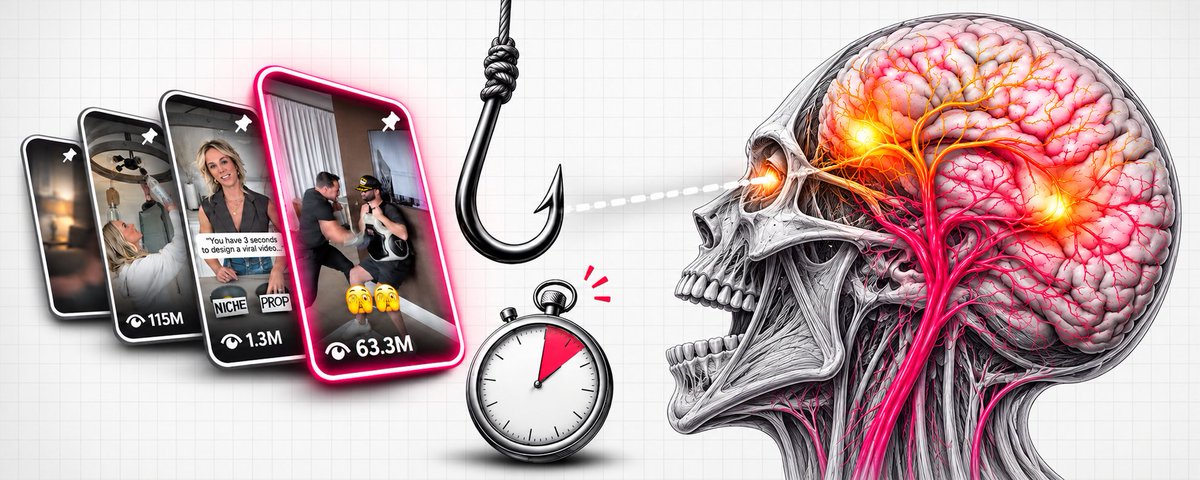
going viral is the ONLY skill ai CAN'T replace.
we're seeing more companies hire for roles like:
→ head of content
→ creative strategist
→ content producer
→ UGC creator
why?
short-form videos are the easiest and cheapest way to get attention.
attention = $$$$
marketing and distribution are the moat now.

50
if you're still VIBE CODING, you're COOKED.
some smart people are literally pulling MILLIONS of views using Claude.
look at these pages.
ALL these videos are made with Claude.
even the so-called AI slop videos are pulling 100K+ views.
Claude is your cheapest video editor.
your cheapest employee.
and probably one of your biggest opportunities right now.
want me to convert this into a Claude skill?
comment "SKILL" and i'll send it to your DMs.


1
2
182
82% of ChatGPT advertisers got ZERO sales.
imagine paying for ads on the world's most popular AI chatbot and getting absolutely nothing. 💀
i came across some interesting research that tracked 10 billion website visits across 1,898 online shops.
and the numbers surprised me.
here's how much each platform generated for every $1 spent:
google ads: $3.40
chatgpt ads: $0.52
but this is the part that really caught my attention.
out of 102 advertisers, 82% made zero sales from ChatGPT ads.
now look at what happened when AI recommended a product for free.
free ChatGPT mention: 2.21% conversion
paid ChatGPT ad: 0.37% conversion
that's roughly 6x higher.
and honestly, this makes a lot of sense to me.
i've always believed that getting attention is one thing, but earning people's trust is a completely different game.
we got 117 paying customers for an app without spending a single dollar on ads.
67% came from Instagram.
we didn't buy attention. we focused on getting people interested in what we were building.
my takeaway?
stop trying to buy everyone's attention.
build something people actually want to recommend.
because being recommended by someone people trust is powerful.
would you spend $100 on ChatGPT ads right now?
78
$89 billion in one quarter from data center sales.
the marketing started in 2006, with a free toolkit for developers.
back then nvidia was a gaming company doing $3.07 billion a year.
then they opened their chips to any developer, not only game makers.
here's what they did:
they launched cuda in november 2006. it was a free toolkit, so you could use an nvidia gpu for science, research, and other hard computing work.
they taught it at universities and trained people through their own courses.
they let a community grow on it for years.
in 2012 a model called alexnet was trained on two nvidia gaming gpus.
it won the imagenet contest. nvidia still calls this the "big bang" moment of ai.
the result, latest quarter ended july 26, 2026:
$96.2 billion total revenue
$89.0 billion from data centers
over 7.5 million developers on cuda and nvidia's other tools
and the companies behind meta ads and google ads are now huge nvidia customers.
nvidia even announced a deal with meta for millions of gpus.
3 takeaways if you want customers:
1. a free tool, a course, or a community can compound. a meta ad or google ad stops when you stop paying.
2. if people build on you, you own the channel. if you only rent attention, someone else owns it.
3. go where your customers already are and stay for years. nvidia went after developers long before ai was a market.
if you cut meta ads and google ads tomorrow, how would people still find you?
37
117 people paid for an app we market.
we spent $0 to get them, and x brought almost none.
67% came from instagram.
most devs with 0 customers are making the same 10 mistakes:
1. posting only on x, where other devs hang out. your buyers scroll somewhere else.
2. launching once and waiting. one launch is a day. distribution is every day.
3. posting features. nobody wants your features. they want the result.
4. waiting for the app to be "ready" before posting. you'll be ready with 0 users.
5. thinking views = customers. a video can do 1M views and sell nothing.
6. talking to everyone. if your post is for everyone, it's for no one.
7. skipping short videos because "my app isn't visual." your users' problem is.
8. building feature #47 instead of talking to user #1.
9. giving up after 10 posts. most people quit right before it starts working.
10. buying ads before you know which post works for free.
the code was never the hard part.
getting people to care is.
which one are you guilty of? reply with the number.
reply "REELS" and i'll DM you the exact way we make instagram reels with claude.

2
52
chegg had 8.2 million paying users in 2022.
in 2026 a judge told them google never owed them a single one.
chegg's growth engine was simple:
a student googles a homework question, lands on a chegg page, hits a paywall, pays.
2022 numbers:
• 8.2M paying subscribers
• $766.9M revenue
• a big chunk of new customers found them on google (their own words in court)
then AI hit.
may 2023: the ceo said chatgpt was hurting new sign-ups. the stock fell 48% in one day.
then google started putting AI answers on top of search.
students got the answer without ever clicking chegg.
>jan 2025: chegg said non-subscriber traffic was down 49%.
>feb 2025: chegg sued google.
>oct 2025: chegg cut 388 jobs. 45% of the company.
>2025 revenue: $376.9M. half of 2022.
sept 2026: the judge threw the lawsuit out.
he said chegg only had an "expectation" that google would keep sending traffic.
my takeaways if you're growing an app:
1. if one channel brings most of your users, you don't own your growth. that channel does.
2. if AI can answer your product in one line, your search traffic is on borrowed time.
3. collect emails, build a community, get people who know your name. nobody can switch that off.
4. start your second channel now, while the first one still works.
be honest: if google or x cut your traffic in half tomorrow, how many users would you still have?
34


in 2025, i got banned by Fiverr. almost lost everything.
but it also brought me a great network.
i worked with a billionaire whose net worth is $4 billion.
i lost almost everything because i was using my Fiverr profile as proof to generate leads through outreach.
i didn't have a big social media account.
i was all in on Fiverr and freelancing at that time.
so, throughout 2025, i just focused on completing my freelance projects.
then 2026 came, and people started talking about vibe coding, SaaS, etc.
i got excited and made a BET.
i burned $5,000 on vibe coding SaaS and marketing it using Meta Ads.
guess what happened after 2 weeks?
$000,00 MRR.
i got only 25 signups from Meta Ads.
the results broke me so hard.
i had never spent this kind of budget on Meta Ads before.
Meta burned $4,000 of my money and gave me only 25 signups.
i didn't just build one SaaS, either.
after that failed idea, i built 4 more.
3 failed, but one of them actually TOOK OFF.
i got my first $300 MRR from one of those SaaS products, and i sold it.
i never got paying users from ads.
but i got 5 paying users in 3 days from Reddit.
yes, Reddit.
from ONE single post.
that actually blew my mind because i burned $4,000 on Meta Ads and got 0 paying users.
but one single post gave me 5 paying users without any audience.
that felt unreal to me.
so, i went ALL IN on organic marketing.
Reddit is now my main channel for getting users.
within the last 30 days:
53 paying users from Reddit alone.
14 paying users from X...
i'm Meris.
i believe distribution is one of the only moats left.
if you want to grow your app or brand organically, it's totally worth following me.
thanks for reading.❤️

1
85
