

Everybody deserves good Health
Joined November 2021
- Tweets3.3K
- Following125
- Followers5.2K
- Likes9.3K




Pinned Tweet
"To see a World in a Grain of Sand
And a Heaven in a Wild Flower
Hold Infinity in the palm of your hand
And Eternity in an hour..."
— William Blake

ALT Rosa Celeste by Gustave Doré: Dante and Beatrice gaze upon the highest Heaven

Ray Peat on the proper mindset:
"[The] excitedly expectant state of consciousness of a child on Christmas morning is a model of the way the mind should function throughout life."
#mindset
Interestingly, the researchers suspect that this almost complete absence of tumor growth was due to the microbiome.
"They created a type of Yakult from the faeces the mice that had received oleocanthal, administered it to cancer mice, and observed that the drink provided even better protection than oleocanthal itself."
The amount of olive oil you'd have to ingest for this amount of oleocanthal would be around 40ml/day (I used high polyphenol Pamaka oil for my calculation).
And a lot less if you use the method I previously mentioned to increase polyphenol content. I'll post that in the comments.
Another study showing strong anti -cancer effects of oleocanthal in a different type of cancer
teapawt.net/i/status/2088713083594…
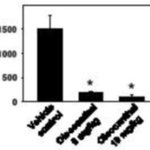
In this study oleocanthal caused a 97% decrease in breast cancer growth.

A high-polyphenol olive oil is one of the highest-ROI investments in health.
Here are a few of its constituents and some of their potential benefits:
1. Oleocanthal
- Anti-cancer effects; inhibits breast cancer growth by 97%.
PMID: 28625568
2. Oleuropein
- Increases testosterone and lowers cortisol.
PMID: 22901687
- Inhibits carbonic anhydrase and increases CO2.
PMID: 34483220
3. Hydroxytyrosol
- Increases dopamine via MAO-B inhibition, similar to the well-known anti-aging drug selegiline.
PMID: 33882412
4. Oleacin
- Has neuroprotective effects and strongly increases BDNF via TrkB. It has a stronger affinity for TrkB than the well-known nootropic 7,8-dihydroxyflavone.
PMIDs: 38835076, 27470063
5. Oleic acid
- Olive oil consists primarily of oleic acid, which may help deplete PUFA by competing with it for absorption and utilization.
- Oleic acid is also a precursor to Mead acid, an anti-inflammatory fatty acid.
PMIDs: 5900628, 6039027
6. Policosanol
- Helps the liver detoxify PUFA, lowers aldosterone, increases Klotho, has antiviral effects, and many other benefits.
- Some olive oils contain large amounts of policosanol—almost 1,000 mg/100 g.
DOI: 10.1002/ejlt.200900076
Another study showing strong anti -cancer effects of oleocanthal in a different type of cancer
teapawt.net/i/status/2088713083594…

Oleocanthal, a phenol in olive oil, inhibits an aggressive type of colon cancer in a way that left us speechless. It is extremely rare for a nutrient to reduce tumor growth by nearly 99 percent in laboratory animals. ergo-log.com/oleocanthal-col…


Aspirin and DNP as thyromimetics?
This old study compared the effects of thyroid hormone to salicylic acid and DNP.
They found that all of these substances share a lot of similar effects, for example the increase of metabolic rate or goiter prevention.

2
21
977
The dosage of salicylic acid they used back then was sometimes very high (5-10g) so take that with a grain of salt.
Also salicylic acid and DNP could not mimic all of the effects of thyroid hormones; they couldn't reverse myxedema for example.
1
3
437
Metabolic M retweeted
Peat's newsletter on addiction is one of his best ones.
That's real body positivity.
wiki.chadnet.org/biological-…

A high-polyphenol olive oil is one of the highest-ROI investments in health.
Here are a few of its constituents and some of their potential benefits:
1. Oleocanthal
- Anti-cancer effects; inhibits breast cancer growth by 97%.
PMID: 28625568
2. Oleuropein
- Increases testosterone and lowers cortisol.
PMID: 22901687
- Inhibits carbonic anhydrase and increases CO2.
PMID: 34483220
3. Hydroxytyrosol
- Increases dopamine via MAO-B inhibition, similar to the well-known anti-aging drug selegiline.
PMID: 33882412
4. Oleacin
- Has neuroprotective effects and strongly increases BDNF via TrkB. It has a stronger affinity for TrkB than the well-known nootropic 7,8-dihydroxyflavone.
PMIDs: 38835076, 27470063
5. Oleic acid
- Olive oil consists primarily of oleic acid, which may help deplete PUFA by competing with it for absorption and utilization.
- Oleic acid is also a precursor to Mead acid, an anti-inflammatory fatty acid.
PMIDs: 5900628, 6039027
6. Policosanol
- Helps the liver detoxify PUFA, lowers aldosterone, increases Klotho, has antiviral effects, and many other benefits.
- Some olive oils contain large amounts of policosanol—almost 1,000 mg/100 g.
DOI: 10.1002/ejlt.200900076
Shout out to @texugodum3l for your posts on oleic acid. And to @dolphin_order for posting about Oleacin.
3
388
Brown fat produces significant amounts of T3 helps T4 to T3 conversion.
"Brown adipocytes are known to produce biologically active molecules that modulate thermogenesis, such as thyroid hormone (triiodothyronine, T3), retinaldehyde, and retinoic acid. Thyroid hormone has been recognized as an important regulator of thermogenesis. The expression of type II thyroxine 5′-deiodinase (Dio2), which converts thyroxine to T3, is restricted to BAT and strongly induced during BAT activation [87]."
cell.com/trends/endocrinolog…
Most of the T3 in BAT is produced locally (55%), hence BAT seems to be a significant source of T3.
Comparable to the liver in terms of numbers of the receptor.
"Fifty-five percent of the nuclear T3 was generated locally, and 45% was derived from circulating T3. BAT is, hence, comparable to the liver in number of receptors (-5000/ cell) and to the pituitary with regard to saturation and relative contributions of locally generated T3 and plasma T3 to nuclear T3. These results suggest that BAT may be an important target for thyroid hormones and, along with other data, that alterations in the activity of the type II 5′-deiodinase of this tissue may influence the saturation of nuclear T3 receptors. (Endocrinology120: 55–62,1987)"
academic.oup.com/endo/articl…
"These results indicate that BAT can be a major source of plasma T3 under suitable circumstances such as acute or chronic exposure to cold."
jci.org/articles/view/112239
--> The fact that BAT can strongly increase overall plasma T3 levels for significant spans of time is remarkable.
And, it can also be increased/activated by certain supplements. It doesn't necessarily have to be cold exposure.
If one finds a benign supplement that does that, I could see that replacing a thyroid supplement for people that can't access it or can't make it work.
BAT activation also increases liver health and insulin sensitivity, which complements increased T3 and should make people more thyroid sensitive/less thyroid resistant.

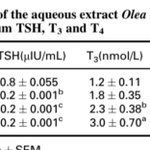
A small dose of Olive leave extract
Increased T3 by more than 2.5-fold, while strongly lowering TSH.
This indicates a strong thyroid stimulating effect that is not reliant on pituitary hormones.
PMID: 12164280

Olive oil is a superfood.
"... participants who consumed 2 or more tablespoons of olive oil daily were 31 percent less likely to die than participants who did not consume olive oil."

I suspect it's mostly due to the polyphenol content of olive oil. Oleocanthal, hydroxytyrosol and others oppose aging in a variety of ways.
Source:
ergo-log.com/this-daily-amou…
1
7
1,049
Etifoxine - interesting pharmaceutical that activates a certain subunit of the GABA-A receptors.
Most importantly it strongly increases (neuro-)steroids like pregnenolone, progesterone and 5aDHP.
Has anybody tried it ?


3
19
1,302
Metabolic M retweeted
"Three important kinds of enzymes that are activated by stress and radiation are phospholipases (that release fatty acids), tryptophan hydroxylase (that controls the conversion of tryptophan to serotonin), and aromatase (estrogen synthetase, that converts androgens to estrogen). The products of these enzymes stimulate cell division, and produce features of the inflammatory process, including the leakiness of capillaries. "
-Ray Peat
How to make a more satured, high polyphenol olive oil 🫒:
1. Place oil in the fridge at 3–4°C for one to two days, until part of it crystallizes or becomes solid.
2. While it's still cold, separate and discard the remaining liquid fraction.
That's it.

You have to find to right moment to discard the oil, when you wait too long its solidified.
But it won't get completely solid. I think that's because there's unsaturated fatty acids
trapped between the "crystals" and probably also because some triglycerides contain more UFAs.
How to make a more satured, high polyphenol olive oil 🫒:
1. Place oil in the fridge at 3–4°C for one to two days, until part of it crystallizes or becomes solid.
2. While it's still cold, separate and discard the remaining liquid fraction.
That's it.
1
15
1,519
"Three important kinds of enzymes that are activated by stress and radiation are phospholipases (that release fatty acids), tryptophan hydroxylase (that controls the conversion of tryptophan to serotonin), and aromatase (estrogen synthetase, that converts androgens to estrogen). The products of these enzymes stimulate cell division, and produce features of the inflammatory process, including the leakiness of capillaries. "
-Ray Peat