

Economist & engineer; Asst Dir & Policy Fellow, State & Local Gov Init @HooverInst; Prev: JEC, Mercatus, OSU; Views expressed are mine & you can't have them.
Stanford University
Joined May 2012
- Tweets10K
- Following591
- Followers1.2K
- Likes20K




Pinned Tweet
File this under "Yet more evidence that firm location decisions are based on region-specific advantages, not economic development subsidies"
wral.com/why-geography-doome…

Michael D. Farren retweeted

Allowing market-rate housing makes rent cheaper.

A relaxation of zoning restrictions in Raleigh, North Carolina, led to a surge in construction, which reduced inflation-adjusted rents by 15% between 2022 and 2025.
Low-income renters benefited the most.
pew.org/en/research-and-anal…

Michael D. Farren retweeted

Applications are now open for the Hoover Institution's Congressional Leadership Accelerator for Biotechnology (C-LAB). This two-day bio boot camp at Stanford University brings together leaders from industry, academia, and government to explore key issues in emerging biotechnologies.
Designed for mid- to senior-level congressional staff, C-LAB offers an opportunity to engage directly with experts shaping biotechnology policy, innovation, and governance. Applications close December 4, 2026.
Learn more and apply here: hoover.org/events/bio-strate…

Michael D. Farren retweeted

I am sharing a new paper today with Dario Caldara: “Can Peer Review Survive AI-Generated Text?”
sas.upenn.edu/~jesusfv/Peer_…
Dario and I, as editors, are increasingly getting papers submitted to our journals that are 99 percent AI-generated. Even worse, we are also receiving many AI-generated referee reports, both as editors and, more frustratingly, as authors.
And we cannot emphasize this enough: the real problem is not that the papers and reports were AI-generated; it is that no one had done the thinking behind them, and you can so easily tell. The papers were eminently forgettable, and the referee reports were disappointingly uninsightful. We have seen too many reports of the form: “The paper is well-written and addresses an important problem. However, the authors should consider additional baselines.”
This deluge of AI-generated text puts peer review in jeopardy: journals will be flooded with low-quality submissions, economists will decline requests to referee papers or routinely use AI to referee them, and which papers get published will become less and less linked to their quality.
We do not want to defend the status quo entirely. Peer review is slow, many reports are poor, and editors (including us!) make bad calls all the time. Still, well-executed peer review remains the best system we have for assessing each other’s work and advancing the profession. AI could improve peer review if used deliberately for that purpose, for instance, to check proofs and code. That is not what we are seeing.
The difficulty is that readers, including editors and referees, cannot see how AI was used. As a result, in practice, the burden of verification shifts from the author to the reader.
Since we reject this shift, Dario and I did what economists always do when something bothers us: we wrote a paper.
So, what do we do in it? First, we check whether AI detectors such as Pangram get this right: is a referee report flagged as AI-generated indeed AI-generated? Or is Pangram just flagging proofreading and editing? No. We run an experiment with 25 referee reports from the pre-AI era. Proofreading and editing do not trigger AI-generated flags. Only when we ask the LLMs to substantially rewrite the referee report or to generate a new report do we get the AI-generated flags. Pretty compelling evidence, if I may say so.
Second, we build a theoretical model to explore who should bear the burden of verification: the author or the reader? (Yours truly always enjoyed the courses on the rules of evidence in law school; yes, as Billy Wilder would say, nobody is perfect.)
The answer is that it is much more efficient for the author to do it, because the author can verify at a much lower cost and only needs to do it once (rather than each reader repeatedly). Before AI, the authors more or less had to verify the results, even if only because they had to type them in. This was not perfect (and all papers ever published in economics probably have at least one mistake). But the problem is that, with AI, the author does not even need to read the text. Or can just skim it. Writing is thinking, and without writing there is usually not much thinking.
So, a paper flagged as AI-generated is prima facie evidence that the author has not verified it. Should this lead to an automatic rejection? No. But there should be a zero-tolerance policy for serious mistakes. The first serious mistake we find in the paper, and it is out! In comparison, for a non-flagged paper, a serious mistake is something that the editor might determine it can be fixed in a revision.
We are stricter with referee reports. There is absolutely no point in the referee generating a report using an LLM. As an editor, I can do that directly and save myself the trouble of asking you for it. Now, of course, you can use the LLM to help you with the report (if the journal allows it! Many journals do not allow you to upload the paper to an LLM, and you need to follow the rules). For example, you can use the LLM to search for existing results in the literature.
But peer review is not about finding one sentence that is not entirely precise or a slightly sloppy mathematical proof. Referees are asked: “Is this idea important despite its flaws?” And, relatedly: “Is the paper a good fit for the journal in terms of quality and focus?” That judgment is the task for which you are selected as a subject expert.
We also propose that journals require that, before a paper is submitted, the author submit it to an LLM using an approved prompt and include the LLM report and a discussion of what was and was not fixed. That way, the referee would not need to check (or at least not check so carefully) every technical detail, and they could focus on the big picture: Is this a good paper? Is this a good fit for this journal? What is fundamental for this paper to become publishable at this journal?
Anyway. The paper has many other arguments, and we try to be nuanced. So, before ferociously typing the first complaint that crosses your mind, would you consider reading it? Chances are that we have already discussed your objection. We have been thinking about this for a long time.
But by all means, leave good comments!


Michael D. Farren retweeted

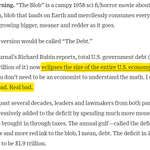
You'll never believe it, but Spain did rent controls and now there's a housing shortage.

Michael D. Farren retweeted

As Joel Mokyr once said: "The responsibility of economic historians is to remind the world what things were like before 1800."
Read this review to see how bad it was . . .
Spoiler: really bad!
Plague, gruel and bad teeth: why do people idealise the olden days? economist.com/culture/2026/1…

Michael D. Farren retweeted

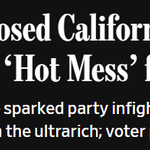
UC Berkeley imported French inequity economists who nearly tanked California's venture capital economy, and Robert Reich was there to help.
nationalreview.com/article/a…


Michael D. Farren retweeted

The monopsony argument is the biggest motte and bailey in the minimum wage debate.
"Maybe firms are slightly monopsonistic in general"
"This can be solved by a blanket $25 minimum wage in every industry and locale across the country with no disemployment effects"
Michael D. Farren retweeted

The large decline in NVIDIA's stock price suggests that the marginal product of at least some CEOs is extremely high--often well above their compensation which can be restrained by norms.
Michael D. Farren retweeted

Very glad to see the NYT editorial board endorse BAAJA, the bipartisan permitting reform bill.
Key points from the article:
1. "Democrats who call climate change an emergency should not defend a permitting system too slow to build the clean energy that would address it."
2. "[BAAJA] would make it easier to build solar energy farms, battery storage, power lines and more. As a result, it would reduce energy prices. The status quo is expensive, dirty and unstable. The country needs to build a lot of big, new things to make its future cheaper and cleaner."
3. "The bill’s Democratic skeptics are making a mistake. President Trump would almost certainly veto a follow-up bill next year. And time matters, especially for the climate. Congress should pass this bill now. It can then return next year and pass other bills that would do even more good."
4. "Today, it typically takes between 5 and 13 years to build a long-distance power line, like the one that transports clean hydropower from Quebec to New England. That line took about a decade to finish, and opened in January. It has enough capacity to meet about one-fifth of Massachusetts’s electricity demand, and it’s projected to save consumers $50 million a year."
5. "A more robust, cleaner grid would make American energy more reliable and less dependent on hostile foreign nations. No country can embargo the wind."
6. "[BAAJA] would force data center operators to pay the full costs of the electricity they use, protecting the average electricity consumer."
7. "On net, the bill would cut greenhouse gas emissions from power plants by as much as 18 percent by 2040. It would do so in part by nearly tripling the construction of high-voltage transmission lines."
8. "Anyone who cares about climate change should cheer this bill. And a party that just won an election on affordability should not pass up a chance to start delivering immediately."

Michael D. Farren retweeted
In an imagined letter penned by Hoover Senior Fellow Ross Levine, Adam Smith recalls his treasured intellectual friendship with David Hume, and what it taught him about cherishing our worthy opponents.
Read the full piece in Freedom Frequency: thefreedomfrequency.org/p/le…

Michael D. Farren retweeted

So much disaffection that leads to economic populism would go away if people understood this simple fact. Housing costs are high when the government doesn’t give enough permits or allow building. Emphasizing any other explanation is scapegoating and a political diversion tactic.

A 🧵 on housing construction and rent data. Across the 100 largest U.S. metro areas, the 25 metros that permitted the most new homes from Jan 2024 through Sept 2026 saw rents rise a median 3.2%, while those that permitted the fewest saw rests rise 13.1%! Austin, with the sixth-most permits per resident, saw rents fall 6.6%. San Francisco, among the lowest permitters, had the biggest increase in rents at 19.7%. 1/3 @ReasonFdn

Michael D. Farren retweeted
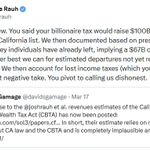
California voters have rejected the Billionaire Tax Act, which would have imposed a one-time 5 percent tax on residents holding more than $1 billion in assets.
A team of Hoover Institution scholars who studied the measure's flaws, including Senior Fellow @JoshRauh and Research Fellow Benjamin Jaros, welcomed the decision.
They found that the proposal had already pushed several billionaires out of California and that the tax would have raised far less than its proponents claimed.
Read more here: hoover.org/news/hoover-schol…


Michael D. Farren retweeted

One alarming dynamic in U.S./China relationship is the absence of moderating voices on the Chinese side. There are only “America hawks” in the Chinese system, Matt Turpin of @HooverInst told me—“no ‘America doves.’” That’s even more pronounced under Xi’s consolidation of power, where the internal incentive is always to be tougher on the U.S., never softer. Read more in today’s WSJ China newsletter
wsj.com/world/china/beijing-…

Michael D. Farren retweeted
Thirty-nine years after Ronald Reagan challenged Mikhail Gorbachev to tear down the Berlin Wall, Hoover Distinguished Policy Fellow @P_M_Robinson reflects on the address he wrote as a White House speechwriter and sets out to trace its influence on the democratic movements that outlasted the Cold War.
Read more in Freedom Frequency: thefreedomfrequency.org/p/th…

Michael D. Farren retweeted
With government spending reaching 57% of GDP in France and approximately 45% in the US, Hoover economist @JohnHCochrane argues that high taxes, extensive regulation, and social benefits that discourage work contribute to economic stagnation.
Watch more: thefreedomfrequency.org/p/ca…

Michael D. Farren retweeted

This textbook has the correct take on price gouging and responding with moral outrage isn’t a counterargument.

