

Love helping great people who want to build Transformative and Future Proof businesses. AI infused - Low-Code No-Code - @the_spicex
Fort Lauderdale, FL
Joined February 2009
- Tweets3.5K
- Following2.2K
- Followers743
- Likes15.7K


Pinned Tweet
In the few hours since I posted this three things happened:
Sequoia Capital published that the next trillion-dollar company sells outcomes, not tools — $16T services TAM vs. $1T software TAM
UPenn proved mathematically that replacing workers with AI collapses demand — the only model that survives is augmenting workers, not firing them
Dharmesh Shah (HubSpot CTO) said "you don't have to be a coder to be an agent builder"
All three are describing the same thing: the enterprise needs an orchestration layer that connects systems, governs AI agents, and lets non-technical people build.
That's not a prediction. That's what @the_spicex does in production today. Patented. HIPAA + SOC 2 certified. 18 years of building.
The agent era isn't coming. It's here. The question is who builds the highway.

Every CIO Aaron Levie talked to is trying to solve the same problem: AI agents are ready but the enterprise isn't wired for them.
Legacy systems don't talk to each other. Workflows aren't agent-ready. Change management is a nightmare.
The missing piece isn't a better model. It's the substrate layer, the infrastructure that connects every system, governs every agent, and lets non-technical teams build without writing code.
We've been building that layer for 18 years. It's called SpiceX. US patent granted 2025.
The chat era needed a chatbot. The agent era needs a superhighway.

Michael Ryan retweeted

😂

Ten million people have watched a comedian accidentally destroy the entire TED talk industry.
He filmed the talk once at TEDxNewYork in 2014 and openly admitted he had nothing to say.
Speaking coaches charge $5,000 to teach the exact tricks he used in 6 minutes to say nothing at all.
His name is Will Stephen. He is a comedian from Late Night with Seth Meyers who was invited to give a real TED talk and used it to prove the format is a costume anyone can wear.
Every TED speaker opens with a question, tells a personal story, cites a scientist, and shows a chart. Stephen did all four in six minutes with zero content.
His entire formula fits on a napkin.
Gesture with both hands. Ask the audience a question anyone can answer. Tell a mildly embarrassing story so they say aww. Point to a stranger on a slide and call them important. Flash a chart of random numbers. Wear glasses with no lenses. The audience will think you are brilliant.
That last trick alone has probably cost the public speaking coaching industry a hundred million dollars in sessions clients should have skipped.
"If you watched me on YouTube with the sound off, you would think I was a genius."
That is Will Stephen on the TED stage, three minutes into the talk he was paid to give. He wasn't lying.
Executives pay $15,000 for a keynote coach and still open with a joke the room never laughs at. Founders rehearse their pitch for weeks and still sound like Stephen at minute four, saying "wagga wah, gabba gabba" with authority.
The talk is free on YouTube. The method is written across every TED speaker's playbook for ten years.
Stephen still writes for Seth Meyers. Almost none of the ten million viewers have stopped nodding at empty slides since.
The formula is free. The willingness to actually say something before your next keynote, pitch, or townhall is the entire edge.
I agree with Andrew's observations.

Andrew Ng (@AndrewYNg) says CEOs privately plan AI-driven growth but tell investors mostly about cost savings.
"I've had CEOs tell me they actually have huge ambitions for growth using AI, but when they talk to the stock market, they will talk mostly about cost savings because they don't want to set expectations they can't deliver to."
- Andrew Ng, Google Brain co-founder, at the NDTV World Summit 2026
Well done!

Here’s the full Tesla Roadster unveiling event.
0:15 – Crazy Tesla + SpaceX collab preview
2:25 – Last manually driven Tesla car
2:53 – Taking it way past the limits
3:15 – Countdown & first flight works
5:38 – Flying cars are real
5:41 – Peter Thiel flying cars quote
6:02 – Fan suction system (up to 2G)
6:16 – Downforce & crushing track records
7:08 – Starman appearance
7:52 – Rocket thrusters & full gymnastics
8:52 – Kickflip demo (Tony Hawk approved)
9:32 – Real road car + rocket car future
9:56 – Air tanks, nozzles & specs
10:14 – Rechargeable ultra-high pressure air
10:36 – Car reveal & aerospace design
12:50 – Fan modes
13:37 – Variable pitch rear wing
13:50 – 0-60 goal under 1 second
14:21 – Acceleration demo
16:22 – 0.81s 0-60 achieved
16:26 – Production car will be even quicker
17:05 – World’s quickest production car
17:28 – Top speed & Snake River Canyon teaser
18:26 – Mach 0.5+ goal
18:52 – First best flying car + last best driver’s car
19:04 – Production starts 2028
Michael Ryan retweeted

The most successful drug advert in history said Lipitor cuts the risk of heart attack by 36%, and the truth was in the footnote.
What the headline said:
- 36% fewer heart attacks
What the asterisk said:
- On the sugar pill, 3 people in 100 had a heart attack
- On Lipitor, 2 people in 100 had a heart attack
Both statements describe the same trial. 3 down to 2 is a drop of about a third. It is also a difference of 1 person.
What that means for the 100:
- 1 avoided a heart attack
- 2 had one anyway
- 97 were never going to have one
- 100 took the tablet every day for over three years
- 100 were exposed to the side effects
Nobody sat in a surgery was ever told "this will help 1 in 100 of you." They were told 36%, by a doctor who had been told 36%, by a rep who was paid on it.
Lipitor went on to sell well over $100 billion.
That asterisk is the most expensive piece of punctuation ever printed.

Michael Ryan retweeted

🚨 JOE ROGAN’S “SCARIEST EPISODE YET” — HIS GUEST JUST BLEW THE LID OFF WHY SO MANY PEOPLE UNDER 50 ARE GETTING SICK
Joe Rogan’s guest Dr. Zach Bush just went down a disturbing rabbit hole about what he believes is happening to human health.
And he says gluten isn’t the real problem.
Bush points directly at glyphosate, arguing that what people call gluten sensitivity can actually be part of a much bigger metabolic breakdown.
His words:
“We don’t have gluten sensitivity. We have a metabolic collapse that’s called glyphosate poisoning.”
Then it gets darker.
Bush argues that chemical exposure is connected to rising allergies, autoimmune disease and neurological conditions... and says the damage eventually reaches fertility itself.
Then the conversation turns to pesticides and PFAS “forever chemicals” entering the food supply, substances that can persist in the environment and human body for years.
If this many people are getting sick before 50, what the hell are we being exposed to every single day?
Michael Ryan retweeted

Motherhood is one of the most important roles in society.
You are not just raising a child. You are shaping the person they will become.
That is leadership.
That is responsibility.
That is legacy.
Michael Ryan retweeted
A marriage needs more than love. It needs a purpose.
Who are we?
Where are we going?
What are we building together?
Marriage is no longer just about “me.” There is now an “us.”
Stay strong in who you are, but make sure you are aligned on who you are becoming together.
Michael Ryan retweeted

💥BOOM!
🚨IT'S OFFICIAL: The Florida legislature has approved the ABOLITION of statewide PROPERTY TAXES.🔥
This is worth a follow. Truly a model for redevelopment and revitalization of dormant downtown corridor's.

FOR THE FIRST TIME IN 50 YEARS, CLEVELAND STREET IS FILLED WITH CONSTANT CONSTRUCTION.
FOX 13 Tampa Bay went behind the scenes on the $200 million redevelopment taking shape in downtown Clearwater, where new restaurants, retail and entertainment are part of the vision for Cleveland Street.
Among the first new tenants is restaurateur Nick Reader, whose new concept will open inside the restored Telephone Building—a rare opportunity, as he puts it, to bring a restaurant into a historic property that has been carefully renewed while honoring its original character.
See @FOX13News's story: fox13news.com/news/church-sc…
Michael Ryan retweeted

Robotaxis won’t just kill short haul flights. Once you can sleep in them, they’ll cannibalize long routes too.
Imagine getting into your Tesla in Austin at 10 PM, make the lie flat seat/bed comfortable, and going to sleep.
While you sleep, the car drives, charges itself, and keeps going.
You wake up at 9 AM in Aspen, refreshed.
The key is perceived travel time.
A 10-hour robotaxi trip where you sleep for 8 hours may feel shorter than a 3-hour flight that requires an Uber to the airport, arriving early, security, boarding, the flight, baggage claim, and another Uber.
Autonomous cars won’t just compete with driving.
They turn sleep into transportation.

Michael Ryan retweeted

🚨 THEY'RE BURYING THE CURE — AND IT'S WORKING.
The medical establishment has been deliberately suppressing a proven way to reverse Type 2 diabetes, heart disease, and severe mental illness for over a decade. Not manage. Reverse. In weeks.
Investigative journalist Nina Teicholz just dropped the evidence from multiple randomized clinical trials: Type 2 diabetics reversed their disease in 10 weeks — including people who had it for an average of 8 years.
Cardiovascular risk factors dramatically reversed in the vast majority of patients.
Schizophrenia and bipolar symptoms reversed.
Depression and anxiety reduced by 79%.
38 million Americans have Type 2 diabetes.
How many headlines have you seen about reversing it with food? Now count how many times you’ve seen ads for Ozempic, Wegovy, and endless new drugs. This is not ignorance. This is profitable silence.
They would rather you stay sick, medicated, and dependent for life than admit the cure has been on your plate the entire time. The data is there. The results are documented. They just refuse to talk about it.
Michael Ryan retweeted

Something I realized when I became a parent is there's a window of time when your parents are healthy, your kids are little, and everyone gets to experience multiple generations of family spending time together. Cherish this time and don’t take a single moment of it for granted.
Michael Ryan retweeted

This made my Mother in law tear up. She said "Please send that to me".
I hope you enjoy it - never give up 🙏 🇺🇸

Michael Ryan retweeted
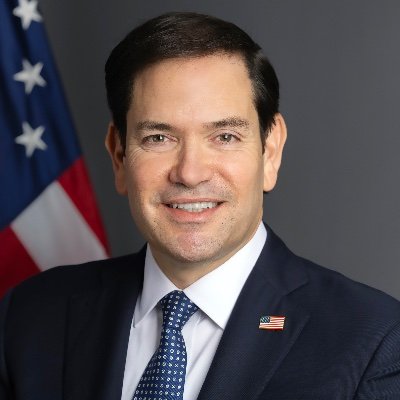
For 250 years, America has been the greatest nation on Earth — and with God’s grace, it will be for 250 more.
Happy Independence Day!
Michael Ryan retweeted

I've only listened to this like 400 times. Holy shit she's gorgeous but the song is THAT much more 🇺🇸🇺🇸🇺🇸🇺🇸🇺🇸🇺🇸
Michael Ryan retweeted

This just gave me chills!!
Happy 250! Happy 4th of July!!
🇺🇸🇺🇸🇺🇸🇺🇸🇺🇸🇺🇸🇺🇸🇺🇸🇺🇸🇺🇸🇺🇸🇺🇸🇺🇸🇺🇸🇺🇸

Respect! Happy 250th, 4th of July!

In September of 1814, America was once again in trouble.
The young republic was only thirty-eight years old. The War of 1812 had gone badly. British troops had marched into Washington, burned the Capitol, set the White House ablaze, and now turned their sights toward Baltimore. If Fort McHenry fell, the harbor would be open, the city would likely follow, and another devastating blow would be dealt to the fragile nation.
Amid this uncertainty, a young American lawyer named Francis Scott Key sailed under a flag of truce to the British fleet. He had come to negotiate the release of a friend, a physician the British had captured.
He succeeded.
The British agreed to free the doctor.
But there was a catch.
Because Key and his companions had seen too much of the British fleet and learned too much about its plans, they were not allowed to return to shore. Instead, they were detained aboard a ship in the harbor and forced to watch the coming battle from behind enemy lines.
On the morning of September 13, the bombardment began.
For the next twenty-five hours, British warships unleashed somewhere between 1,500 and 1,800 bombs and rockets upon Fort McHenry. These were the “bombs bursting in air” and the “rockets’ red glare” of the song—not poetic embellishments, but terrible realities.
Key stood on the deck through the endless day and the long, terrifying night. Every explosion lit the darkness for a fleeting instant before the smoke swallowed everything again. Somewhere beyond that wall of fire stood the fort. Somewhere beyond it flew an American flag if it still flew at all.
He could not see.
He could only listen.
As long as the guns continued firing, there was reason to hope. The British would not waste ammunition on a fort that had already surrendered.
Then, just before dawn…
The guns fell silent.
For the first time all night, there was only stillness.
It was the most frightening sound of all.
Had the fort finally fallen? Had the defenders surrendered? Had the flag been torn down in the darkness while no one could see?
There was nothing to do but wait.
As the first light of September 14 slowly pushed back the smoke, Francis Scott Key strained his eyes toward the distant fort.
Then he saw it. Not a British flag.
The American flag. Still there. Still flying.
That flag was no ordinary banner. Months earlier, the fort’s commander had commissioned a Baltimore flagmaker, Mary Pickersgill, to sew a flag so enormous “that the British would have no difficulty seeing it from a distance.” It measured roughly thirty by forty-two feet, carried fifteen stars and fifteen stripes, and was so large it had to be assembled on the floor of a brewery because no ordinary room could contain it.
That was the Star-Spangled Banner.
The very flag Key saw through the morning mist.
The very flag that still survives today in the Smithsonian.
Overcome by what he had witnessed, Key reached into his pocket, pulled out an envelope, and began writing. The words came from a heart that had spent an entire night fearing his country might disappear with the dawn.
He first titled the poem Defence of Fort M’Henry.
Within days it was printed and circulating throughout the country. Before long, people began singing it to a melody they already knew—an old British tune called “To Anacreon in Heaven,” originally written for a London social club. There is something beautifully ironic in that: America’s most beloved patriotic song borrowed the melody of the very nation it had just survived. It also explains why the anthem is so notoriously difficult to sing. It was never written for ordinary voices gathered in stadiums or school assemblies.
The song spread quickly and became one of America’s favorite patriotic hymns, but it would wait more than a century before receiving official recognition. Not until 1931 did Congress declare “The Star-Spangled Banner” the national anthem of the United States.
