

Sociologist & demographer at RAND. Research mostly on social relationships and health behaviors, but with many tangents. Opinions = my own, RTs ≠ endorsements.
Santa Monica, CA
Joined August 2009
- Tweets1.2K
- Following498
- Followers661
- Likes3.6K






Pinned Tweet
I’m happy to announce a new paper! We identify trajectories of health-related social control over 4 years for U.S. adults 30-80 and link them to trajectories of binge drinking and alcohol problems. doi.org/10.1016/j.socscimed.… 1/6
Michael S. Pollard retweeted

Prof @JesusFerna7026 has the chance to do the scariest thing ever


In a March survey by the U. of Massachusetts, 70% of respondents had a favorable impression of Dolly Parton. Only 5% had an unfavorable impression , giving her a net favorability of 65%.
Barack Obama had the poll’s next highest net favorability at 14%.
uml.edu/docs/archive/2026-Na…
2
102
Wild new study. (not mine). On top new album streaming release days, the risk adjusted number of US traffic fatalities was 18.2 higher than on surrounding days (15.1% higher).

📈 Major #MusicStreaming album release days were associated with higher US #TrafficFatalities than surrounding days, suggesting that streaming media use through #Smartphones may represent an underrecognized road safety risk. ja.ma/3Up1kkR

1
87
Late in the chat @DKThomp posits a question about cannabis & the selection of, and influence on, social ties. In older work with colleagues, we consistently show adolescents choose friends with similar cannabis use, but find less consistent evidence of peer influence to start.
1
41

Here's an interesting and engaging 67 minutes on a wide range of topics under this umbrella, not just for academics and policy wonks.

Frequent alcohol use among Americans is declining. Meanwhile, frequent use of cannabis is on the rise.
Why, exactly? And where could drug trends go from here?
🎧 Listen to RAND's @BeauKilmer and Jonathan Caulkins of CMU discuss with @DKThomp: youtu.be/Qn5Idv-tjRE?si=9rGT…

1
1
102
Michael S. Pollard retweeted

We surveyed hundreds of people in their mid-20s who reported drinking alcohol.
Nearly one-quarter reported also having a low- or no-alcohol drink—beer, wine, or spirit—in the past month. bit.ly/4pEes1a

This interesting paper links loneliness to engagement with financial fraudsters. Lonely adults are more than twice as likely to engage with fraudsters than those who aren't lonely, though there were not significantly more likely to lose money to fraud. onlinelibrary.wiley.com/doi/…
Michael S. Pollard retweeted
China has worked hard to convince more people to want children. That hasn't worked. The U.S. can learn from China's missteps. bit.ly/4u89AlW

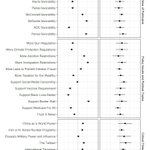
I'm happy to share a new article: "“Population, Power, and Security: Demographic Pressures Shaping U.S.-China Strategic Competition.” 1/3 yalejournal.org/publications…

Using demographic, economic, and health data, we developed a framework to examine how the U.S. and China compare across population health, demographic composition, and each country’s ability to turn people into long-term strategic advantage. 2/3

ALT A figure that compares the United States and China on measures of population health, demographic composition, and demographic power, as they relate to strategic competition. Key takeaways include the China's population health advantage provides a larger and healthier population base for sustained national strength, but the China's population is shrinking, aging, and more imbalanced than the US, creating long-term economic and fiscal headwinds. However, the US converts its demographic assets into greater economic, technological, and diplomatic influence.
1
1
38
Michael S. Pollard retweeted

Great news for Demography and for all who now have open access to the articles!

Big news: Demography met its 2026 funding goal! 🎉 Thanks to institutional subscriptions, all articles published in @ReadDemography this year will be Open Access—free for everyone. buff.ly/VkahO1e
#OpenAccess #Demography


In earlier work with @klkuzminski we showed that older recruits were promoted more quickly and re-enlisted at higher rates than recruits under 20. This change brings the Army's age requirements more in line with other branches of the military. nytimes.com/2026/03/25/us/ar…

Our report is here: rand.org/pubs/research_repor…

Michael S. Pollard retweeted
Just how significant is the population upheaval facing China? How might Beijing react? And what are the implications for China's future, regional stability, and the global economy?
This new research brief explains: bit.ly/4sLrzho

The Los Angeles Central Library is a beautiful, fantastic resource, celebrating its 100th anniversary. They opened a time capsule placed in the walls when it was built. Inside that time capsule was another from the school that stood in that spot before. youtube.com/watch?v=CcT-wPhs…
42
Michael S. Pollard retweeted

Can we reduce bias in nonprobability samples of social media users?
In POQ, Pollard et al. show that propensity score weighting can reduce differences between samples of X users and the general population.
Read now: doi.org/10.1093/poq/nfaf071


A research brief based on our report on China's rapidly aging population and the implications for their national security has just been published. If you've just got a few minutes but are curious about the topic, now's your chance! rand.org/pubs/research_brief…

1
48