

GTM @ AWS, Stanford GSB, SCU Mathematics
San Francisco, CA
Joined December 2012
- Tweets153
- Following958
- Followers171
- Likes747






Philip Kiely’s “Inference Engineering” provides a great overview of this exciting area of AI infrastructure. Not only useful for engineers entering the space, but also a valuable reference for investors and GTM leads learning about the landscape. It’d be great to get an iteration of this book as a narrative like “The Phoenix Project.”
The book deepened my understanding of industry nomenclature such as accelerated compute, parallelism, and disaggregation. Kiely highlights interesting nuances including the use of frontier models for experimentation and open-weight models for production to reduce latency and cost with high volume workloads.
Other great insights include techniques for optimizing GPU usage, the challenges with edge inference (important for robotics), and PyTorch’s role in the software stack for training and inference.
I was particularly interested in the growing need for control-plane capabilities as customers deploy inference workloads across multiple clouds for capacity, redundancy, latency, and compliance.
Working on Cloud Operations with Amazon CloudWatch and AWS CloudTrail, I’m excited about the potential for AWS to support inference operations through:
Model quality: CloudWatch Omni has 17 pre-built evaluators and comparison modes to manage quality over time
GPU utilization: Monitoring memory and compute constraints, resource utilization, and token throughput.
Latency: Identifying anomalies related to cold starts, token generation, and multi-geo load balancing.
Governance: Leveraging AWS CloudTrail to manage user and agent access with alerts for associated changes.
Cost monitoring: create calculated cost widgets with token count metrics and token price
Inference is an exciting area of the technology space, with significant opportunities for AWS Cloud Operations to help customers manage performance, cost, and governance as they move AI workloads into production.
@awscloud @baseten @philipkiely

1
67
C.S. Lewis’ The Screwtape Letters (TSL) is a timely read for today. I wish I read his books sooner, but better late than never.
For context, TSL’s a collection of letters from the fictional demon Screwtape to his nephew Wormwood, advising him on how to corrupt a young Englishman during WWII. The book covers themes around what it means to be virtuous, with courage as the foundation; the importance of being present instead of over-indexing on the potential future; how to live a meaningful life with joy and intention; and an argument for allowing individuals to excel.
My first takeaway was how easily you can be corrupted by focusing on the future and daydreams rather than the present and your actions. Lewis shares a framework based on three concentric circles. The innermost and most important circle is the Will and what you actually do. The next circle is your Intellect and what you hold to be true. The outermost is your Fantasy: what you imagine, feel, or wish for.
Lewis prioritizes the innermost circle because what you actually do in the present is what makes you virtuous. It’s not enough to know what’s true or wish for how things should be. Furthermore, courage is foundational to virtue because there’s little point in claiming a virtue if you abandon it when things are hard. Lewis prefers those who treat others kindly in their day-to-day lives over those who tout philanthropic causes or wishes but don’t express common courtesy to the people immediately around them.
The warning about focusing too much on the future ties into Lewis’ second theme: anxiety over the worst possible outcome can be worse than confronting reality. Lewis’ portrayal of the bombing of England emphasizes this idea. War is horrific, but when the protagonist finds himself facing it, he turns to his duty and navigates the challenges immediately in front of him. How to weigh between present and future concerns feels particularly relevant today as we evaluate AI policy.
Lewis warns about a life of comfort because it causes you to forget mortality and purpose. Spoiler alert: while the protagonist dies in the end, Screwtape sees that as a loss for his demons because, in death, the protagonist finally sees God and recognizes the spiritual beings who had been helping him. Lewis’ point is that living too long without adversity can leave you susceptible to the temptations, or gradual compromises, that Screwtape and his demons put in front of you.
The last major theme I took from TSL, particularly Screwtape Proposes a Toast, was how Hell feasts on mediocrity and seeks to inhibit the individual.
Screwtape shares how conformity can happen: wanting to blend in with friends you seek to impress, treating important things or customs as a joke, passively filling your time with meaningless activities you don’t enjoy, or overanalyzing to the point of inaction.
The pinnacle of this thought for me was how envy can become a root cause of mediocrity. Instead of seeing someone exceptional and aspiring to become more like them, envy makes you want to bring that person down.
Screwtape even discusses an educational system that holds back gifted students to prevent them from making others feel inferior. He describes how the idea of “democracy” can be corrupted from political equality into an attitude of “I’m as good as you,” discouraging excellence and exceptional achievement. Lewis establishes that everyone has equal dignity, but we should celebrate those with impressive ability or achievement. This topic hit close to home for me given SF had to vote on whether to provide the opportunity to take Algebra 1 for middle schoolers in the last election cycle.
Lewis made some other great points: Frustration comes from an illusion of ownership; the importance of Joy for a meaningful life; it’s not worth being unselfish for the sake of it.
Was impressed to see how relatable TSL was 80 years later and worth a read. C.S. Lewis would have been a great commentator on the world today.

3
149
The book Dune Messiah is a fun sequel taking place over ten years after Dune. Paul’s jihad has taken over space and it deals with the challenges he now has to grapple with. Won’t give spoilers with the movie coming out but the book does a great job covering themes around human agency as seen with Hayt and Duncan, the skills and challenges needed to govern are different from those needed to take power, and how campaigns pursued by individuals can become their own institutions with unintended consequences as seen with Paul.
Excited for the movie. Really keen to see if and how Bijaz is portrayed given his scene with Duncan could be the most interesting and jarring. It’d be amazing if Peter Dinklage makes a cameo. Also excited to see what Alia’s role is given the timing of her birth delineates from the previous movies.
2
90
Big fan of the first Dune book. Started reading to prep for the upcoming movie. Some great themes about power, strategy, and interpersonal dynamics that one can learn from it. Shout out to the SF library for having it in stock.
Importance of recognizing chokepoints and how that impacts power and influence. Paul recognized the role spice plays for space travel, Bene Geserit practices, and general consumption. He was able to hold leverage as a desert planet against the other houses, the transportation guild, and the emperor. This aligns with Liebig’s Law of the Minimum where the scarcest indispensable input determines the behavior of the system. Something we see today with the Hormuz strait and GPUs for AI development.
Long term thinking and control of emotions is rewarded. Bene Geserit think in generations with their breeding programs while leveraging techniques to not betray their feelings to others. Duke Atreides and Baron Vladimir Harkonnen demonstrated similar long term thinking. This theme culminates in Paul who’s obtains the ability to see across time and control his emotions during the Gom Jibbar test. When it comes to your profession, the ability to think long term provides great advantage by giving optionality on the kind of career switches you can make. Managing your emotions is best practice when handling difficult conversations at work to ensure personal branding and control.
Institutions are powerful but can be upended by individuals who are unpredictable and have different incentives. Jessica and Paul going against the wishes of the Bene Geserit breeding program. Yueh getting exploited by the Harkonnens despite being a Suk doctor who’s branded as someone that would do no harm. It’s critical to understand the incentives of the individual rather that painting a broad brush. This goes well in sales, interpersonal dynamics, and politics.
Lastly the theme of ensuring your power comes from traits that are transferable. Arrakis destroyed Paul’s inherited status (family name, wealth, military), but he regained influence via his intelligence, self-control, combat ability, and ability to understand other people and anticipate events. Additionally, his ability to rally the support of the Fremen was driven by his leveraging their stories and myths. This aligns with lessons from Rudyard Kipling about the importance of competence and the ability to rebuild after loss. Also the effectiveness of storytelling and having a vision to recruit and build organizations.

2
122
Michael Steinberger’s Philosopher in the Valley provides a worthwhile biography of Alex Karp and a well-researched case study on @PalantirTech
I learned new things about Karp despite all the publicity he received. He came from a Jewish-African American family, studied at Haverford and pursued a PhD in Germany after Stanford Law with Thiel. As a leader Karp had strong EQ, ability to read the room, excellent communication skills, and leveraged humor to earn trust. He cared about his employees and knew to give engineers space to be creative. Karp wasn’t a fan of traditional sales orgs given he thought it may stymy innovation or pressure products to get rolled out, but he was great at selling to execs himself. A longtime progressive, Karp became more supportive of Trump given the admins stance on national security issues with the border and geopolitics.
Palantir was born out of the 9/11 tragedy to counter terrorism and support the West’s intelligence efforts. Thiel saw from his PayPal days battling fraud an opportunity to help the government better assemble their disparate data sources. Unlike other tech companies, Palantir was adamant about not storing or collecting personal data, and allowed for functionality (audit logs) to monitor data access. The book acknowledged Palantir’s platform could allow for governments to have greater surveillance but I don’t recall examples demonstrating that behavior. In twenty years, Palantir became a consequential platform across government (Afghanistan withdrawal, Covid vaccine rollout, Ukraine and Iran conflicts, and counter-terrorism) and commercial (BP, Airbus) while attracting talented people who started their careers there (@JTLonsdale, @garrytan).
Its success was a 20 year overnight story. Palantir had to navigate the government bureaucracy, handle skepticism from the Army to the point of taking legal action, manage employee morale during politically divisive issues, and make difficult decisions on sunsetting products previously invested in like Metropolis. The company navigated this by gathering champions in the government, making timely bets with Foundry and AIP, establishing a strong culture with a following among retail investors, and having a product that won over customers by being designed for their needs ie Gotham providing a map view.
The book is interesting for anyone curious to learn more about Karp and Palantir along with leadership, tech, and geopolitics. It was well researched and an easy but comprehensive read. My only critique was that I felt it would go out of its way to make political comments detracting from the great research. The author would describe the current admin as authoritarian multiple times which seemed unnecessary. I also felt the book made critiques about Palantir based on opinions or circumstantial evidence (highlighting worst case scenarios with LAPD’s use of Palantir that didn’t happen, correlating Thiel’s personal endeavors with what Palantir’s values may be).
Despite my gripes, a great book altogether and highly recommend. I was also a fan of Karp’s Technological Republic where Karp focuses more on the importance to bridge government and Silicon Valley, working on the right problems, org building (allow for decisions to be made at the periphery), and professional development (fox vs hedgehog).

4
323
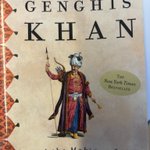
Jack Weatherford’s Genghis Khan and the Making of the Modern World was an illuminating read about the Mongol Empire. Weatherford demonstrates how Khan and his descendants were more than a ruthless conquerors as they laid much of the foundation for the interconnected world that followed. While the book doesn’t ignore the brutality of Mongol warfare, it highlights how Mongolian institutions and ideas influenced governance, commerce, diplomacy, and cultural exchange across Eurasia.
The story begins with Temujin’s unlikely rise from poverty, betrayal, and slavery to becoming Genghis Khan. What stood out most was his emphasis on merit over inheritance. Loyalty and ability mattered more than noble birth, and he promoted talented people regardless of their social status. The Mongols also practiced an unusual degree of religious freedom, protected merchants and diplomats, invested heavily in trade infrastructure, expanded public education, standardized administration, and encouraged the exchange of knowledge across their vast empire. At its height, the Mongol Empire spanned from the borders of Poland and Egypt to the edges of Japan and Southeast Asia.
Weatherford does not shy away from the Mongols’ military methods. Their campaigns were often terrifying, relying on deception, psychological warfare, propaganda, feigned retreats, and overwhelming violence to force cities into surrender. Yet he argues these tactics were frequently employed after diplomatic efforts had failed, particularly when ambassadors were murdered or humiliated, and that the reputation for brutality often convinced later cities to surrender without prolonged sieges. An interesting contrast the author draws is that while Mongol warfare could be extraordinarily ruthless, they generally avoided institutionalized torture and many of the forms of persecution that were common in parts of medieval Europe and the Middle East.
Perhaps the book’s most compelling argument is that the Mongols served as the great connectors of Eurasia. They expanded and protected international trade routes, built relay stations and transportation networks, encouraged the spread of printing, astronomy, mathematics, medicine, and engineering, and exposed Europe to technologies and ideas that had developed elsewhere. Weatherford also credits the Mongol era with accelerating the diffusion of innovations used by modern society such as paper currency, diplomatic immunity, international law, freedom of religion, and the concept that the state should stand above religious authority.
The empire’s decline is fascinating and tragic. Ironically, the same commercial networks that enriched the Mongols also helped spread the Black Death, devastating the population and weakening the economic and military foundations that held the empire together. As trade collapsed, Genghis Khan’s descendants lost leverage and increasingly assimilated into the cultures they once ruled, while rising powers such as Ming China and Russia gradually squeezed Mongolia at home.
Overall, I thoroughly enjoyed this book. Weatherford occasionally adopts a tone that feels unnecessarily critical of Western civilization, drawing broad contrasts between European and Mongol societies that at times seem overstated. He used Cain and Abel as metaphors for civilization and nomadic cultures for example. But even with that caveat, the book succeeds in its central mission: shining new light on the Mongol Empire by demonstrating how it was one of history’s most important catalysts for globalization, innovation, and the exchange of ideas. A great read for those who enjoy history.

1
147


Finished Hugh Wilford’s The CIA: An Imperial History.
Interesting and insightful read. I thought Wilford had some political bias, but overall I found it a valuable historical lens on the Central Intelligence Agency.
My biggest takeaway is that the CIA is best understood not simply as a Cold War institution, but as part of a longer history of informal western “empire” and statecraft: using intelligence, local intermediaries, media, economic influence, and covert action to shape outcomes abroad. Serendipitously it was interesting to learn about the impact Rudyard Kipling’s “Kim” had on the early members of the CIA after having just read the Jungle Book.
A few lessons that stood out:
1. Intelligence is never fully objective
Sherman Kent tried to bring scientific rigor to intelligence analysis (avoiding “weasel words” and encouraging the scientific method). Yet the CIA can face challenges from bias driven by:
• Mirror imaging, assuming foreign actors think like Americans (Bay of Pigs, Cuba)
• Ideological overfitting, seeing communism where nationalism may have mattered more (Vietnam)
• Elite echo chambers, over-reliance on candidates from similar backgrounds and assumptions
• Political incentives, intelligence shaped by the priorities of policymakers
Even elite institutions struggle to separate analysis from historical context and incentives.
2. Regime change can be easier than regime maintenance
Wilford’s examples in Iran and Vietnam suggest that early tactical success doesn’t guarantee long term strategic stability.
The CIA often succeeded when there was strong local support already present; unlike what happened with the Bay of Pigs. But once “their guy” gained power, local leaders have shown to have agency and pursued their own interests. This shows the ability of foreign stakeholders to influence a system without “controlling” it which may have been under appreciated.
3. Soft power matters as much as hard power
One of the most interesting sections covered the CIA’s work with:
• media and storytelling (Cord Meyer)
• universities and research institutions
• psychology and anthropology
• international development (schools, hospitals, policing)
The U.S. didn’t just project power through military force, but through institutions, narratives, and culture. Even Disney was shown to be a useful tool for winning the hearts and minds
4. Empire creates unintended consequences
Interventions don’t stay overseas illustrating the challenges associated with managing complex systems and societies. Wilford argues they often come home through:
• migration and cultural exchange (Cuba, Vietnam, Iran)
• distrust in institutions and conspiracy theories
• long-tail geopolitical issues
What made the book most relevant to me is how applicable these lessons feel today with the geopolitical events in Ukraine, Venezuela, Iran, and potentially Taiwan. I’ll be looking at the developments here with the following questions in mind… 1/ what agency is being demonstrated by country leaders where conflict is occurring; 2/ what blind spots may the US (and other superpowers) have when getting involved; 3/ how is the US exerting soft power along with hard power in these regions; and 4/ when these conflicts eventually reach a steady state what risks are there to the long term stability of the region.
Let me know if you have a recommendation for another book covering the CIA with a more favorable history of successes or Cold War intelligence to provide a counter balance

1
137
3 observability trends with the growth of AI:
In May, we’ve hosted a series of customer discussions in the Bay Area with leaders from some of the world's largest and most innovative organizations. The conversations reinforced the following trends we're seeing and inform how we design observability at AWS.
We're continuing these conversations in NYC and DC in June. If you're an engineering executive or IC who wants to engage with AWS Observability leadership, shoot me or your AWS representative a note.
1️⃣ Observability optimization at scale
As environments grow more complex, teams need better insights as they drown in telemetry from disparate sources. Customers are seeking ways to cost-effectively manage their data as they modernize and deploy AI into production.
At AWS, this is core to how our observability services across CloudWatch, Managed Prometheus, and OpenSearch were built: enterprise grade, cost-efficient, and scalable by design. For example, CloudWatch’s new Unified Data Store for logs and native OTel metrics experience (in preview) provides customers with a single place for their telemetry data.
2️⃣ Observability for AI workloads
Observability for AI ML workloads (token usage, latency, GPU performance, cost, etc) becomes increasingly important as customers deploy agents and LLMs into production.
We’ve made significant headway here with CloudWatch’s integration with Bedrock AgentCore providing teams with real-time insight into agent performance. Also, Amazon Managed Prometheus is becoming a builder’s go-to for GPU monitoring during model training.
3️⃣ AI-powered observability
It’s an exciting time for observability as AI transforms how customers identify and resolve issues; AI has a great opportunity to optimize the user experience with alarms and dashboards.
CloudWatch Application Signals with Investigations, OpenSearch's integration with Managed Prometheus, and our DevOps Agent are already helping customers reduce MTTR.
—
This space will evolve rapidly, and we look forward to sharing more soon. Like I said, if you are in NYC or DC this month and want to be part of the conversation please reach out to me or your AWS representative.
@awscloud #aws #awsdcsummit #awsnycsummit @AWS_Gov
53
I was surprised by how much I enjoyed Rudyard Kipling’s The Jungle Book. TJB provides a collection of stories layered with realism, myth, and moral philosophy. I first got exposed to Kipling by my Dad who gifted the poem If-; it’s great to rediscover his work. I got the book at Livraria Lello book shop in Porto. They make custom covers for classics and have cool aesthetics as a store - one of many reasons to check out Porto.
Kipling’s writings are great for both kids and adults. A few themes stood out across TJB’s stories that are foundational lessons:
1. The importance of order and discipline
Kipling repeatedly argues that discipline enables freedom. Baloo’s “Law of the Jungle” stands in sharp contrast to the chaos of the Bandar-log monkeys. Even in Her Majesty’s Servants, the military animals reveal how systems only function when each member fulfills their role.
2. Acting despite fear
Courage in Kipling is rarely fearless. Rikki-Tikki protects his adopted family from cobras despite concern for his safety. Likewise, the military animals openly acknowledge fear while still doing their duty. Kipling’s demonstrates his preference for people that are capable instead of flashy, and suggests to fall back on structured thinking and action when faced with fear.
3. Curiosity and knowledge matter
Mowgli defeated Khan the Tiger because he understands both the jungle and the village. Kotick the White Seal refuses complacency with the brutal hunters, and searches for sanctuary for his herd. Little Toomai discovered the elephants dancing which eluded adults for decades.
4. Accountability and ownership
One line that stuck with me: Baloo telling Mowgli that “sorrow doesn’t save punishment.” It’s not good enough to express regret, you must own your mistakes and learn in order to move forward.
While reading TJB, it was fun to learn more about how Kipling’s experiences across India, the UK, and the US along with second hand research of global affairs inspired his stories.
Let me know if there are writings by Kipling or others you recommend. Looking at you @atheneumbookclub !


1
110
Shoutout to the @TheGuardsmen for putting on a great half marathon. Great SF weather sans @KarlTheFog


2
191


Demonstrating leadership and class since day 1 @MarkFarrellSF
Disappointed it didn’t go our way but still excited for SF’s future. Thank you for setting the example for us to rally around SF’s next leader. I hope you’ll continue to play a role in our city’s turnaround

In the face of early results, @MarkFarrellSFencourages San Franciscans to unite for the future of the city. “Let's make sure as San Franciscans that whoever the next mayor is, we all get behind him or her, it is the right thing to do.”
2
199
Vote Mark Farrell for #1 as SF Mayor @MarkFarrellSF
While in the Midwest I’ve been asked multiple times if SF is as bad as it looks. The city’s brand is damaged and I’m excited for Mark to bring us back. Check out this great interview to learn more
open.spotify.com/episode/0lf…

1
99
Excited to have @MarkFarrellSF as my #1 for mayor of San Francisco! I hope you’ll consider him too. It’s clear he has the vision & capability to tackle our city’s challenges across public safety, housing, economic vitality, education, etc starting on day 1.

2
104
San Franciscans are frustrated with open drug use, poor street conditions, an economically impotent downtown, etc. I’m optimistic we’ll rebound. We had great turnout for SF mayor candidate @MarkFarrellSF who shared in detail how he’ll handle these challenges and move SF forward


Excited to share thoughts on how Amazon CloudWatch can provide a single pane of glass visibility for Bedrock’s generative AI workloads
aws.amazon.com/blogs/machine…
1
160