
Financial Markets | Business | Politics | Commodities 20+ years in global financial markets. Breaking down markets, geopolitics, business and the forces shape
📍Belgrade, London, Moscow
Joined April 2025
- Tweets3.2K
- Following2.4K
- Followers1.7K
- Likes1






Pinned Tweet
😂 @MarioBojic blocked me? So much for the Student List’s grand commitment to the “freedom of the press” and open debate. Apparently, freedom of expression is sacred right up until someone expresses an opinion you can’t handle.
Imagine wanting to lead a country but being unable to handle a comment on social media. If you can’t survive a disagreement on X, how exactly do you plan to survive parliamentary scrutiny, hostile interviews, or the responsibility of governing Serbia?
You don’t defend democracy by blocking criticism. You demonstrate that your commitment to free speech comes with conditions.
The Student List wants the keys to Serbia, but its representatives can’t even handle the comments section. Imagine handing them the country. 🇷🇸

My text to xitter.cf/georgegallowaym , xitter.cf/GeorgeSzamuely following their interview together on George show xitter.cf/moatstv, about the Serbian Elections.
xitter.cf/MiloshOffical/status/2…

George, you describe the Student List’s victory as a “masterful” example of winning with a contentless campaign and the creation of “fake populism.” But Serbia’s history makes this far more than an interesting political observation. It raises serious questions about how movements are built, how political change is organised, who supplies the resources, and what happens after power changes hands.
2026 is just another sequel to a film Serbia has watched before. And the history is considerably more complicated than the slogans.
Consider three moments: the Kosovo student protests of 1981, the overthrow of Slobodan Milošević in 2000, and the Student List’s electoral victory in 2026. These were different events with different causes. But each illustrates why political mobilisation needs to be examined in its full historical context.
First, 1981--Kosovo Yr after Tito Death.
Following Tito’s death in 1980, Yugoslavia faced mounting economic difficulties, political uncertainty and unresolved national tensions. Student protests in Pristina began over poor living conditions and escalated into demonstrations demanding that Kosovo become a republic within Yugoslavia. Kosovo Albanians Demonstrators demanded for unification with Albania. The authorities responded with force, and the unrest intensified existing tensions over Kosovo’s constitutional status and the future of the federation.
This was not simply a story of students protesting and everything remaining the same afterwards. The demonstrations exposed deep divisions that would continue to shape Yugoslav politics for the next 20 yrs. They did not single-handedly cause the country’s later collapse, but they demonstrated how student mobilisation intersect with much larger national and political conflicts.
Oct 5th, 2000- Fall of Milosevic: Otpor.
This is where the documented evidence of direct foreign assistance becomes particularly important.
On 11 December 2000, 3 months after Milosevic Coup by the Student Protest and there hand pick Pro EU Politiciansm The Washington Post published Michael Dobbs’s investigation, “U.S. Advice Guided Milosevic Opposition.” It described a sophisticated American effort to help Serbia’s opposition defeat Milošević through political consulting, voter research, activist training and election monitoring.
Here are some of the details-Otpor.
• $41 million: The approximate US democracy-building effort in Serbia described in the December investigation, including support channelled through organisations such as the National Democratic Institute and the International Republican Institute.
• $77.2 million: The broader three-year US assistance effort reported in September 2000. This covered democracy and civil-society programmes across multiple organisations; it was not money paid to Otpor alone.
• 2.5 million “Gotov je” stickers: Millions of stickers bearing the slogan “He’s finished” were printed using USAID-funded resources and distributed as part of the opposition mobilisation.
• 5,000 cans of spray paint: US taxpayers funded materials used by student activists to spread anti-Milošević graffiti.
• Approximately 400 election monitors trained: The December investigation reported that US-funded training prepared hundreds of monitors, who then trained around 15,000 more.
• A strategic meeting in Budapest in October 1999: American pollster Doug Schoen presented Serbian opposition leaders with research showing Milošević’s vulnerability and the importance of opposition unity.
• Training for Otpor activists: In March 2000, the International Republican Institute funded a Budapest seminar where approximately two dozen Otpor leaders received instruction in nonviolent resistance from retired US Army Colonel Robert Helvey. They studied how to organise strikes, communicate through symbols, overcome fear and undermine a regime’s authority.
These details come from contemporary reporting, not speculation invented decades later. <Cite refs={["turn112224search0","turn112224search1"]} />
Let that sink in, really think about it Critically!
The American effort was not limited to applauding Serbian protesters from a distance. It included campaign research, communications materials, organisational support, activist training and the preparation of election monitors. These were practical interventions intended to improve the opposition’s capacity to defeat Milošević.
Foreign assistance was a direct and documented component of the political campaign to remove him.
That does not mean the United States single-handedly overthrew Milošević. Serbian citizens, opposition parties, mass protests, electoral mobilisation and the decisions of domestic institutions were indispensable. But to explain the outcome without examining the foreign assistance would be to leave out a substantial part of the historical record.
And there is another important point: the support was politically consequential precisely because it was connected to a real domestic movement. Otpor already had Serbian activists, genuine grievances and a domestic audience. External assistance helped strengthen an existing political force; it did not need to manufacture every grievance or every protester.
That is the distinction people miss when they insist that a movement must be either completely spontaneous or entirely foreign-created. Political reality can be more complicated.
Now, George, bring that history forward to November 1m 2024 to Oct 25th 2026.
The Student List emerged from protests following the Novi Sad railway-station canopy collapse, which killed 16 people. It subsequently won Serbia’s October parliamentary election, receiving approximately 52.7% of the vote according to preliminary official results. Reuters reports that the movement’s victory left Serbia facing questions about its future government, its leadership and its international direction.
The public grievances that gave rise to the movement needs to be taken seriously. But so must the questions that arise when a protest movement transforms into a governing force.
Before the election, the Centre for Eastern Studies described the Student List as a decentralised, anti-corruption, catch-all movement represented by 250 independent candidates. Its programme contained 11 broad points, while its candidates often spoke in general terms about major issues. The analysis also highlighted the lack of a clearly defined foreign-policy position. That raises legitimate questions, questions that a new political establishment should answer openly and honestly.
Who finances the movement’s infrastructure? Where does the $ come from. Which organisations have provided it with money, technical support, training or strategic advice. What relationships does its leadership maintain with foreign governments, political foundations and international organisations? The Student leaders have extemely impressive CVs and where all hand picked by EU Members Germany, Croatain Serbian Diaspora along with major money from in coming EU Member Montenegro- Should be noted majority of Student List Leaders are of Montenegrin ethnicity not Serbian. Now ethnicity is not direct evidence but it does deserve question and scurnity especially if you understand the history between Serbians and Montenegrin- just cause we share same Reglious Christian Orthodox faith doesnt mean we are one and same. Never have been and never will be.
For the Student Leaders, What are there actual position on EU accession, Kosovo and Metohija, relations with Russia and China, energy security, defence and Serbia’s independent foreign policy? They have never fully gone into details about their plans just glazed over with to appease working class Serbian voters who are frustrated with Vucic due to cost of living crisis.
And when candidates with different political outlooks are brought together under one electoral banner, what programme will determine the decisions of the government they form?
These are questions of transparency and sovereignty. They should not be dismissed as conspiracy theories, but neither should allegations of foreign direction be presented as facts without evidence.
The 2000 precedent makes scrutiny reasonable. It does not establish that the Student List has received the same kind of assistance. That must be established through documents, financial disclosures, credible reporting and verifiable institutional links.
But surely, after Serbia’s own experience, nobody should be asking the public to accept a new political establishment on trust alone.
George, you have identified the apparent paradox of a movement winning with a campaign you describe as “contentless.” The next step is to investigate the machinery behind that success and the political programme that will follow it.
Who built the organisational capacity? What resources were available? What relationships helped the movement develop? And what concrete policies will its leaders implement now that they have won?
Serbia has already experienced a major political transformation in which foreign governments openly invested money, expertise and organisational resources to help achieve a desired outcome. That history is not proof of a repeat—but it is a compelling reason to demand transparency before the next chapter unfolds.
The lesson of Otpor is not that Serbian protesters were somehow unreal, or that foreign assistance automatically invalidates an electoral victory. The lesson is that political movements can have domestic roots while also benefiting from outside support, and that understanding a political transformation requires examining both.
The lesson of 1981 is different but equally important: student protests can expose deeper national tensions whose consequences extend well beyond the original demands.
And the lesson for 2026 is that winning an election does not end the questions. It makes them more urgent.
We have seen student mobilisation. We have seen political upheaval. We have seen foreign governments provide documented assistance to Serbian opposition movements. What we have not yet established is whether the Student List has comparable foreign relationships today—and that is precisely why its funding, institutional connections and political programme deserve transparent scrutiny.
George, Serbia has watched this film before. The cast has changed, the political circumstances are different, and the outcome is not predetermined.
But this time, before the credits roll, the Serbian public deserves to know who financed the production, who helped write the script, and what the people taking power intend to do with the country.
🇷🇸 Because democracy means more than choosing who governs. It means having the information necessary to hold those who govern accountable.
archive.ph/UubU#selection-32…

🇷🇸 THE STUDENT LIST, MONTENEGRO AND SERBIA’S FUTURE: ANSWERS, NOT SLOGANS (4/4)
Let me make my position clear.
I am not claiming that Milo Đukanović controls the Student List. The evidence publicly discussed so far does not establish that. I am not claiming that every person named in the Montenegro controversy has a relationship with the movement. And I will not present disputed messages as proven facts.
But I will insist on transparency.
If allegations concern the lead candidate’s reported contacts with figures from Montenegro’s political establishment, those claims should be examined properly.
If a relationship can be documented, explain what it is.
If an allegation is false, provide evidence that helps demonstrate that.
If there is no financial, political or organisational connection, say so clearly.
And if the Student List wants to govern Serbia, it should welcome legitimate questions about the backgrounds and interests of its candidates rather than expect voters to suspend their judgment.
The Serbian people are not obliged to choose between believing every accusation and refusing to investigate anything.
They have the right to ask who their political representatives are, what they stand for, whose interests their policies serve and whether their promises can withstand scrutiny.
That standard must apply to everyone—from the established political class to the newest movement claiming to replace it.
Serbia is not a political experiment for elites to conduct at the expense of ordinary citizens. Its future belongs to its people.
🇷🇸 WHO KNOWS WHOM? WHAT CAN BE VERIFIED? WHO FUNDS WHOM? AND WHO ANSWERS TO THE SERBIAN PEOPLE?
THOSE ARE EXACTLY THE QUESTIONS THAT NEED TO BE ASKED — AND NO POLITICAL LABEL SHOULD PUT ANYONE ABOVE SCRUTINY!
History has already shown us what can happen. Just look at 5 October 2000, when prominent Otpor! activists and student-movement figures, including Srđa Popović, Ivan Marović, Slobodan Homen, Nenad Konstantinović, Ivan Andrić, Slobodan Đinović, Jovan Ratković and Srđan Milivojević, were directly associated with the 2000 Student movement that helped overthrow Milošević. The 12 years that followed brought political infighting, economic hardship, controversial privatisations and institutional instability, culminating in the assassination of Prime Minister Zoran Đinđić on 12 March 2003 by a conspiracy involving organized crime figures and members of the security apparatus all of whom were all created by the new political elites. Foreign governments also exerted significant influence over Serbia’s post-Milošević transition.
We’ve seen this chapter before, and now we’re watching it unfold all over again — only this time, wrapped in fancy new slogans and presented under the guise of academic and professional elites, many of whom have extensive political and financial connections.
NEW BRAND, NEW SLOGANS, SAME QUESTIONS: WHO REALLY STANDS BEHIND THEM, AND WHOSE INTERESTS WILL THEY SERVE? 🇷🇸
🇷🇸 THE STUDENT LIST: A NEW GENERATION OR A NEW POLITICAL BRAND? (3/4)
Here is the question Serbian voters should be asking.
A political movement does not become independent simply because it calls itself a student movement. It does not become incorruptible because its candidates have university degrees. And it does not automatically serve ordinary working people because it promises change.
Every political movement should be examined through its people, relationships, funding, policies and record.
That includes the Student List.
The public controversy surrounding Ilija Srdanović has raised allegations about possible contacts with people from Montenegro’s political establishment. Those allegations remain disputed, and they do not prove that Milo Đukanović or the DPS directs the Student List.
But they provide a reason to demand clarity about the specific claims.
Who are the people surrounding the movement’s leading candidates? What are their professional and political backgrounds? Have any relevant relationships been documented? What are the candidates’ positions on foreign policy, economic reform, EU integration and Serbia’s national interests?
And most importantly, what concrete policies would improve the lives of ordinary Serbian workers, pensioners, students and families?
A movement can be full of highly educated and successful professionals and still fail to deliver for ordinary citizens. Qualifications are not a substitute for accountability, and opposition to an incumbent is not a complete governing programme.
Serbia must not confuse the promise of political change with proof of better outcomes.
Ask the hard questions of the Student List "trust us" doesn't work!!!
No one should be exempt.
Part 4: the questions Serbian voters deserve answered. 🇷🇸
And suddenly, the Student List is talking about criminal clans and Montenegro. Convenient timing, isn't it? 🇲🇪
I’ve been raising questions about the Montenegro connections in my previous posts, and now Jovo Bakić himself is talking about those relationships.
Investigating alleged criminal links is legitimate, but will the Student List scrutinise its own political allies with the same enthusiasm as its opponents?
Or is the focus on Vučić a way of diverting attention from uncomfortable questions about the Student List’s own connections with Montonegro Politicians and there Criminal Klans?
I’m not claiming guilt. I’m asking questions. There’s a difference. 🇷🇸
More to come on the Montenegro connections. I’m only getting started. 👀🇲🇪
xitter.cf/Bcenzure/status/211542…

Profesor Jovo Bakić: Najpre otkriti sve veze Vučićeve vlasti s kavačkim i škaljarskim klanovima
Profesor Filozofskog fakulteta u Beogradu i kandidat za poslanika Studentske liste Jovo Bakić izjavio je da će mu, ako bude ministar unutrašnjih poslova u novoj vladi Srbije, prioritet biti da utvrdi šta se zbivalo između režima Aleksandra Vučića i onog nekadašnjeg u Crnoj Gori, odnosno da dokuči veze Vučićeve vlasti s „kavačkim“ i „škaljarskim“ kriminalnim klanovima.
Bakić je rekao da misli da Crna Gora i Srbija nemaju otvorenih pitanja, a da odnosi nisu kakvi bi trebalo da budu zbog toga što su bivše vlasti dveju država igrale na kartu „zavađanja naroda“, dodajući da sadašnja vlast u Crnoj Gori ima simpatije Studentske liste, te da on predsednika i premijera Crne Gore doživljava kao braću.
On je istakao da nijedna zemlja neće biti ugrožena od Srbije i njene nove vlade, da će joj cilj biti dobrosusedski odnosi.
„Odnosi nisu bili onakvi kakvi treba da budu. Bio sam, kao čovek koji voli i Srbiju i Crnu Goru, jako razočaran svime što se dešavalo. Ubeđen sam da ćemo mi sa Studentske liste vrlo brzo popraviti te odnose i dovesti ih na nivo na kom moraju da budu. Jer mi smo istinski braća, nezavisno od toga ko se identifikuje kao Crnogorac, a ko sebe prepoznaje kao Srbina. Mi smo braća i ništa drugo ne možemo biti do braća. U svojoj porodici imam i Crnogorce i Srbe, i volim i jedne i druge. To ne sme da bude klica razdora. Moramo da budemo dve normalne države, koje imaju najbolje moguće odnose, jer sve drugo nije normalno“, kazao je on.
Opširnije na: bezcenzure.rs/vesti/politika…
Izvor: Beta

🇷🇸 THE STUDENT LIST AND THE MONTENEGRO CONNECTIONS: WHAT DOES THE EVIDENCE ACTUALLY SHOW? (2/4)
One of the most controversial elements of the allegations surrounding Ilija Srdanović involved purported Sky ECC messages attributed to Vesna Medenica.
In the messages reported by Serbian media, Srdanović was described as a doctor treating Milo Đukanović and as someone trusted by Medenica’s circle.
That would be significant if the correspondence were authentic and independently verified.
But there is a serious problem: the messages were allegedly dated March 2022, while Sky ECC was shut down in March 2021. Fact-checkers have highlighted this discrepancy, and the authenticity of the messages has not been established.
That is not a minor detail. It goes directly to whether the material can be trusted.
There have also been public denials:
• Milo Đukanović denied knowing Srdanović and rejected the allegations.
• Ivan Vuković denied knowing Srdanović.
• Andrijana Marković rejected the claims and said the displayed messages were not hers.
These denials must be reported alongside the accusations.
So what should Serbian voters conclude?
Not that a conspiracy has been proved. Not that every allegation is true. And not that every question should be abandoned simply because the evidence presented so far is disputed.
The appropriate conclusion is that the central claims require independently verifiable evidence.
Where are the authenticated messages? Where is the independently corroborated record of meetings or communications? Where is the documentary evidence of any financial relationship?
If the allegations are false, evidence should help establish that. If genuine connections exist, their nature should be explained.
Serbia deserves facts—not manufactured certainty from either political camp.
The question is not whether we can create the most dramatic story. It is whether we can establish what actually happened.
Part 3: the bigger political question. 🇷🇸
🇷🇸 THE STUDENT LIST, MONTENEGRO AND MILO ĐUKANOVIĆ: THE NAMES SERBIAN VOTERS SHOULD KNOW (1/4)
Before anyone declares the Student List Serbia’s democratic salvation, perhaps we should examine the Student List Leaders, the very cream of crop, their backgrounds and the questions surrounding their reported direct connections to Montenegro.
At the centre of this controversy is Ilija Srdanović, the cardiologist placed first on the Student List’s parliamentary candidate list.
Srdanović has openly acknowledged his family roots in Montenegro. His father and grandfather were born in Donja Bukovica, near Šavnik, and he has close relatives there. That is not evidence of wrongdoing. But his family background is only one part of a wider public controversy.
A September 28 report in Politika discussed allegations raised by the Centre for Social Stability concerning possible contacts between Srdanović and figures associated with Montenegro’s political establishment.
The names mentioned include:
• Milo Đukanović — former president of Montenegro and longtime leader of the Democratic Party of Socialists (DPS).
• Vesna Medenica — former president of Montenegro’s Supreme Court, whose purported correspondence became central to the controversy.
• Miloš Medenica — Vesna Medenica’s son, also mentioned in the documentary’s account.
• Ivan Vuković — DPS vice-president, whom the documentary alleged was connected to the purported network.
• Andrijana Marković — associated with Đukanović’s former presidential circle and named in allegations concerning possible financial or logistical links.
• Ivica Janović — director of Montenegro’s National Security Agency (ANB), mentioned in claims about possible security-service contacts.
• Selena Tasić — identified by the documentary’s producers as a possible link between Vienna, Novi Sad, Belgrade and Podgorica.
• Gojko Perović — an Orthodox priest whose alleged connections to people in the wider circle were also raised.
Let’s be precise: these names do not establish that a coordinated political operation exists. Several people have rejected relevant allegations, and the purported correspondence has not been authenticated.
But the list raises legitimate questions about the claims being made—and those questions deserve answers.
Who actually knows whom? Which relationships can be independently verified? And what, if anything, connects these individuals to the Student List as a political organisation?
Serbian voters deserve answers before they are asked to put their trust in any movement.
More in Part 2. 🇷🇸
REMEMBER WHAT I RAISED ABOUT DUBAI? NOW LET’S TALK ABOUT BELIVUK—AND WHY THESE QUESTIONS DESERVE ANSWERS.
I previously posted on X, raised footage allegedly showing Radoje Zvicer, the Montenegrin fugitive identified by law-enforcement authorities as the alleged leader of the Kavač organized-crime clan, celebrating the Student List’s victory from a Dubai nightclub, alongside an offensive message directed at Aleksandar Vučić.
Now another video is circulating social media, Veljko Belivuk’s wife Bojana Belivuk reportedly celebrating the Student List’s victory and sending him the message, “Darling, freedom!”
But before anyone dismisses the significance of these names, let’s establish exactly who we are talking about.
WHO IS VELJKO BELIVUK?
Known as Velja Nevolja, Belivuk is a Serbian organized-crime figure and former leader of the Principi group, which emerged from the football-hooligan scene surrounding Partizan Belgrade. Serbian prosecutors have accused him and his associates of multiple murders, kidnappings, drug trafficking and other serious crimes. The case against his group has included allegations of extreme violence at a house in Ritopek, near Belgrade. These are criminal allegations and proceedings; Belivuk has denied criminal guilt.
AND WHO IS RADOJE ZVICER?
Zvicer is a Montenegrin fugitive identified by law-enforcement authorities as the alleged leader of the Kavač criminal clan, associated with international cocaine trafficking and a violent feud with the rival Škaljari clan. Investigators have reported links between Belivuk’s group and the Kavač network.
These are not obscure names in the history of organized crime in the Balkans. Their alleged criminal networks have been the subject of major investigations across the region.
NOW HERE IS WHERE THE POLITICAL CONTROVERSY BEGINS.
For years, anti-Vučić critics have alleged that Belivuk worked for Aleksandar Vučić. Belivuk himself made allegations about contacts with people in Serbian political circles, including claims involving Vučić. Vučić has denied allegations of improper links.
Those claims must be examined on the evidence. An allegation is not a conviction, and Belivuk’s statements alone do not establish that Vučić directed his criminal group.
But if critics insist that these alleged connections deserve investigation, then surely they should be willing to apply the same standard when footage reportedly shows Belivuk’s wife celebrating the Student List’s victory.
WHY IS ONE SET OF QUESTIONS ACCEPTABLE, WHILE THE OTHER IS TREATED AS OFF-LIMITS?
Let me be absolutely clear: neither the Dubai footage nor the video involving Belivuk’s wife Bojana Belivuk, even if authentic, proves that the Student List has any connection to organized crime. A celebration is not evidence of coordination, financing or political control. The footage and its context must be independently verified.
But the questions surrounding these figures do not exist in a vacuum. There is also the wider Montenegro angle I have raised concerning Milo Đukanović, Ilija Srdanović and the political connections worth examining around the Student List. Documented relationships should be investigated; speculation about who controls whom must not be presented as established fact.
The principle is simple: if you demand transparency from Vučić, you must be prepared to demand transparency from everyone else, too.
You cannot treat allegations against one political camp as unquestionable truth while dismissing every uncomfortable question about another camp before the evidence has even been examined.
Serbian voters deserve facts, not selective outrage. They deserve answers, not political narratives that change depending on whose interests are at stake.
Verify the footage. Examine the connections. Follow the evidence. Apply one standard to everyone.
And this is only the beginning.
The Montenegro connection is the next part of this discussion. More shortly. 🇷🇸
🇷🇸 WHO REALLY STANDS BEHIND THE STUDENT LIST? THE MONTENEGRO CONNECTIONS SERBIAN VOTERS SHOULD EXAMINE
🇷🇸 I've been looking closely at the questions surrounding the Student List, its leading leaders, and the reported connections to Montenegro's political establishment.
There are names, disputed allegations and some serious questions that deserve to be examined properly.
Tonight, I'm putting the facts, the denials and the unanswered questions together.
No blind accusations. No blind faith. Just questions Serbian voters have every right to ask.
Who knows whom—and what does the evidence actually show?
More tonight. 🇷🇸
SERBIA, HAVE YOU FORGOTTEN WHAT HAPPENS WHEN IDEOLOGUES DECIDE THAT THE CHURCH IS THE ENEMY? 🇷🇸
The communist regimes of the 20th century understood something very clearly: if you want to reshape a nation, you first weaken the institutions that preserve its identity, traditions, history and values. Across communist Eastern Europe, churches were subjected to persecution, religious property was confiscated, clergy were imprisoned, and faith was pushed out of public life.
Now consider the statement attributed to Student Leader and Ellite Dinko Gruhonjić: “The Serbian Orthodox Church is our enemy and we will destroy it!”
If that quotation is accurate and presented in its proper context, Serbians deserve to know exactly what he meant and whether the Student List shares that view.
Because this is about far more than one political figure. It raises a fundamental question about the ideological direction of a movement asking Serbians to entrust it with their country's future.
The Serbian Orthodox Church survived Ottoman rule, foreign occupation, war and decades of communist pressure. It has preserved religious traditions, monasteries, historical records and cultural heritage across generations. Millions of Serbians regard it as an inseparable part of their national and spiritual identity.
And now we're supposed to believe that a political project associated with hostility towards the Church represents a better future for Serbia?
THIS IS HOW THE OLD COMMUNIST MINDSET WORKED: INSTITUTIONS THAT STOOD OUTSIDE ITS IDEOLOGICAL CONTROL WERE TREATED AS OBSTACLES TO BE WEAKENED, SUBORDINATED OR ELIMINATED.
Criticise the Church's leadership? Absolutely. Demand accountability? Of course. But threatening to destroy an institution because it represents a competing source of authority is not democratic reform. It is a warning sign that deserves serious scrutiny.
And to every Serbian who voted for the Student List believing you were simply voting for better wages, affordable housing and a brighter future: did you examine the ideological baggage that might come with that vote?
You may have thought you were electing a group of highly educated professionals to improve your standard of living. But academic qualifications do not guarantee respect for Serbia's history, traditions, religious institutions or national identity.
So where are the answers? Does the Student List reject this alleged position unequivocally? Will it defend the Church's right to exist freely, without political intimidation? Or will its supporters remain silent because acknowledging the problem would undermine the narrative they sold themselves?
SERBIA HAS ALREADY LIVED THROUGH AN ERA WHEN THE STATE TRIED TO PUSH RELIGION ASIDE IN THE NAME OF A NEW IDEOLOGY. THE SERBIAN PEOPLE SHOULD NOT HAVE TO LEARN THAT LESSON TWICE.
You voted for political change. That does not mean you voted to wage war on the institutions that helped preserve Serbian identity through generations of hardship.
A BETTER FUTURE FOR SERBIA SHOULD NOT REQUIRE SERBIA TO DISOWN ITS PAST. 🇷🇸
SERBIA DIDN'T JUST VOTE FOR CHANGE. IT MAY HAVE OPENED PANDORA'S BOX FOR A NEW ELITE.
Since election night, I have been flooded with angry texts, DMs and messages from Student List supporters and voters who clearly don't appreciate my questions about what comes next for Serbia. Many insist that I simply don't understand the movement, that I should give them time, or that the highly educated professionals behind the Student List will inevitably make life better for ordinary Serbians.
Fine. So let's have this conversation.
But if you voted for the Student List because you genuinely believe it will improve your living standards, I want you to consider one very important question:
WHAT IF THE PEOPLE YOU ELECTED TO IMPROVE YOUR LIFE ARE BETTER POSITIONED TO IMPROVE THEIR OWN?
Think about it.
Regular Serbian Workers wanted better wages. Students wanted affordable housing and a future they could build in Serbia. Pensioners wanted to afford food, heating and medicine. Families wanted a higher standard of living and some security about tomorrow.
They were promised change. Many believed that replacing the existing political leadership under Vucic will bring them closer to that future.
But the Student List is associated with a highly educated professional elite, including academics and people with qualifications that could open doors to international careers, research opportunities and professional networks across Europe.
Their CVs are quite impressive. But a PhD is not a guarantee that someone understands the struggles of an ordinary Serbian family, and academic success does not automatically mean that someone's interests align with yours.
And this is where European integration becomes central to the debate.
Closer integration with the EU will create opportunities for professionals, academics, businesses and people with the qualifications, contacts and resources to take advantage of a larger European labour market.
Those opportunities are not inherently bad. But the question is who is best positioned to benefit from them — and whether ordinary Serbians will see meaningful improvements in their own lives.
A highly qualified professional will be able to pursue international opportunities. A well-connected businessperson will be positioned to benefit from new investment and market access. People with established professional networks may find it easier to navigate the opportunities that integration brings.
But what about the factory worker? The pensioner? The young couple who cannot afford an apartment? The student who wants a decent job without having to leave Serbia?
WHERE IS THE GUARANTEE THAT THEIR LIVES WILL IMPROVE?
There is none simply because a new political movement has won an election.
And there is certainly no guarantee that a new elite will govern differently merely because its members hold academic titles or promise European progress.
This is why I believe the comparison with October 5, 2000 (fall of Milosevic), misses the most important question facing Serbia in 2026.
Removing one political leadership is not the same as securing a better future for ordinary citizens. The danger is that people who voted for change may have opened the door to a new political and professional elite whose priorities differ substantially from their own.
I am not claiming that every member of the Student List is motivated by personal gain. My concern is about incentives, accountability and who is best positioned to benefit when the political and economic landscape changes.
If the Student List wants to prove that it represents ordinary Serbians, it needs to explain precisely how its policies will improve household incomes, housing affordability, employment and public services.
It needs to explain its approach to Kosovo and Metohija, its foreign policy, and the compromises it would be prepared to make in pursuit of EU membership.
And it needs to explain how it intends to prevent political connections and professional privilege from determining who benefits from new opportunities.
Instead, too often, asking these questions provokes anger rather than clear answers.
But anger is not a policy. Academic credentials are not a governing programme. And promises of a better future are not evidence that one will materialise.
THE WORKING CLASS DID NOT VOTE FOR A NEW ELITE TO PROSPER WHILE THEY CONTINUE TO STRUGGLE. STUDENTS DID NOT DEMAND A BETTER FUTURE JUST TO DISCOVER THAT THE BIGGEST OPPORTUNITIES WERE RESERVED FOR PEOPLE WHO WERE ALREADY WELL POSITIONED TO TAKE ADVANTAGE OF THEM.
Serbia's future will not be measured by how enthusiastically the new leadership is welcomed in Brussels, how many academics occupy positions of influence, or how quickly European integration advances.
It will be measured by whether ordinary Serbian families can afford to live, work and build a future in their own country.
That is the test the Student List must pass.
So, to everyone flooding my inbox with angry messages, I have one final question: DID YOU VOTE FOR A BETTER LIFE FOR YOURSELF AND YOUR FAMILY, OR DID YOU HELP OPEN THE DOOR TO A NEW ELITE WHOSE OPPORTUNITIES AND PRIORITIES MAY BE VERY DIFFERENT FROM YOUR OWN?
I am not asking you to agree with me. I am asking you to demand answers from the people you elected.
Because if the Student List truly intends to put ordinary Serbians first, it should have no difficulty explaining precisely how it plans to deliver.
THEY THOUGHT THEY WERE OPENING THE DOOR TO A BETTER LIFE. MY CONCERN IS THAT THEY MAY HAVE OPENED PANDORA'S BOX — AND THAT THE PEOPLE BEST POSITIONED TO BENEFIT WILL NOT BE THE PEOPLE WHO VOTED FOR THEM. 🇷🇸
xitter.cf/EEAS_SecGen/status/211…

🇷🇸 THE STUDENT LIST FAN CLUB WANTS CHANGE. FINE. BUT CHANGE TO WHAT, EXACTLY?
I’ve spent 2 yrs and the past 48 hours questioning the Student List, and the reaction from some of its supporters has been absolutely fascinating.
Apparently, asking questions about the small but Highly Education elite group of people (150 PHD holders and awarding winning Movie Stars, Play writes, Ex Sports Stars) who want to govern Serbia is somehow controversial. Ask about their economic programme, their political priorities, their leadership, or their plans for ordinary working-class Serbs, and suddenly you’re accused of defending the status quo.
So let me make this very painfully simple.
I do not owe the Student List my blind trust. And neither does Serbia.
You keep telling me the status quo wasn’t working. Okay. Then tell me precisely what wasn’t working for you. Was it employment? Wages? Living standards? Public services? The cost of living?
And once you’ve identified the problem, explain how the Student List intends to fix it.
Because shouting “change” is easy. Campaigning is easy. Promising a better future is easy.
Governing a country like Serbia is where the slogans meet reality.
Since everyone seems determined to dismiss Serbia’s economic record since 2012 under Vucic, let’s look at some actual numbers.
Unemployment fell from around 26% in 2012 to 8.6% in 2024, according to the figures previously cited from the IMF.
Average net monthly wages rose from 41,377 RSD in 2012 to 98,143 RSD in 2024 an increase of 137% in nominal terms. Yes, inflation matters. Yes, purchasing power matters. Nobody serious disputes that. But pretending there has been no economic change whatsoever is not an argument; it is selective memory.
Serbia attracted foreign investment, expanded employment, and recorded economic growth. There are still serious problems, and accountability must never be optional. But a fair assessment recognises both progress and shortcomings.
Now comes the part the Student List cheerleaders seem reluctant to discuss.
What is their alternative economic model?
What are their concrete plans for wages, jobs, investment, living costs, and the long-term prosperity of Serbia?
And how will a movement featuring highly educated, internationally connected professionals ensure that its policies benefit ordinary Serbian workers rather than primarily serving the interests of another well-connected elite?
A university degree does not make someone a champion of the working class. International connections do not automatically make someone a champion of national sovereignty. And being against Vučić does not magically qualify someone to govern Serbia.
If the Student List has brilliant answers, let its leaders & supporters present them.
I’ll happily examine the proposals. But I will not substitute celebrity endorsements, emotional speeches, or promises of a brighter future for a serious economic programme.
And before somebody starts screaming that I’m accusing the Student List of wrongdoing, read carefully: questioning a movement is not accusing it of a crime. It is holding it to the same standard we should apply to anyone seeking power.
That is what accountability means.
You cannot spend years demanding that Vučić answer difficult questions and then suddenly declare those same questions unacceptable when they concern your preferred political movement.
That is not consistency. That is a double standard.
And to those who keep telling me to stop questioning the Student List, here is my professional advice: if your political movement cannot withstand scrutiny from ordinary citizens before taking power, perhaps its supporters should spend less time policing criticism and more time explaining what it actually intends to do.
Serbia is not a university project. Its working-class families are not laboratory subjects. And the future of an entire country should never rest on the assumption that whoever promises change must automatically be better.
I support asking difficult questions. I support examining evidence. I support holding political leaders accountable.
And yes, I support Vučić, and I oppose the Student List. I have no reason to disguise my position.
But my political position does not excuse me or anyone from answering legitimate questions — and neither should yours.
So let’s end the slogans and have an adult conversation.
What exactly is not working for you? What will the Student List do differently? And where is the evidence that its proposed solutions will deliver a better standard of living for ordinary Serbs?
No deflection. No personal attacks. No accusations of being an apologist simply because you dislike the questions.
POLICIES. NUMBERS. ANSWERS.
If the Student List wants the keys to Serbia, it can start by explaining what it intends to do with them.
🇷🇸 Because replacing a government is one thing. Proving you can govern better is another entirely.
🇮🇱 NETANYAHU WRITTEN OFF AGAIN? DON'T COUNT HIM OUT JUST YET.
For months, Netanyahu has faced predictions of political defeat. Yet the first exit polls have delivered a result that makes the next phase far more complicated than many expected.
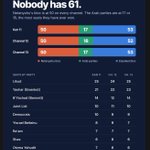
Likud is projected to finish as Israel’s largest party, with 24–25 seats, ahead of Gadi Eisenkot’s Yashar party at 21–23. But Eisenkot’s broader bloc leads Netanyahu’s bloc by roughly 52–53 seats to 50.
Neither has the 61 seats needed for a majority.
So where does Netanyahu go from here?
🔹 Coalition mathematics: Netanyahu needs to find a path to 61 seats, potentially through negotiations with parties whose support cannot be taken for granted.
🔹 Bennett's position: With a projected 12–14 seats, Naftali Bennett will become pivotal to the negotiations.
🔹 The Arab parties: Their projected 17–18 seats could prove decisive, but securing their support is not straightforward, given the objections of some potential coalition partners.
🔹 The opposition's dilemma: Being ahead in the projected bloc count is not the same as being able to form a government. Eisenkot faces his own difficult negotiations, including whether an arrangement involving Arab parties is politically viable.
Netanyahu has spent decades navigating Israeli coalition politics. Whether that experience will produce another unexpected outcome remains to be seen.
The most important point is this: the exit polls have not settled who will govern Israel. They have opened another political battle.
Before declaring Netanyahu finished or Eisenkot victorious, watch the official results, the coalition negotiations, and the decisions of the smaller parties.
In Israeli politics, the seat count tells only part of the story. The real test is who can assemble a government.
🇮🇱 Never confuse an election-night headline with the final outcome.
#Israel #Netanyahu #IsraeliElections

Let me tell you what I believe many ordinary students and working-class Serbians are failing to consider: the Student List’s highly educated elites will have very different interests from the very people who voted for them.
You voted for them believing that their PhDs, professional qualifications, and European connections would somehow translate into better wages, affordable housing, higher living standards, and a brighter future for ordinary Serbian families. But having an impressive CV is not the same thing as understanding the economic reality facing an ordinary Serbian household.
Look closely at who stands to benefit most from deeper EU integration. Highly educated professionals, internationally connected academics, NGO circles, consultants, and people already positioned to access European institutions, funding, professional networks, and career opportunities may be particularly well placed to benefit. That doesn't automatically mean ordinary workers will share those gains.
What about the factory worker whose wages barely cover the bills? The young couple who cannot afford an apartment? The student who graduates only to discover that a degree doesn't guarantee a decent job? The pensioner watching the cost of living rise? Who is guaranteeing that their lives will improve?
EU integration will create opportunities, but those opportunities are not distributed equally or automatically. Economic restructuring will also expose certain workers and industries to greater competition, while skilled professionals will have more options to move abroad for better-paid employment. When the benefits and costs are unevenly distributed, who will stand up for those left behind? Believe me it will not be the Student List Elites Leaders.
And this is where the ordinary students who voted for the Student List need to be warned. You all believe you're joining forces with people who share your economic struggles, but political cooperation does not mean your interests are identical. A highly successful professional and a struggling student can both oppose the same government while having completely different ideas about what Serbia's future should look like.
Don't assume that because these elites oppose Vučić, they will automatically defend your interests once they gain influence. Don't assume that European credentials guarantee higher Serbian wages, cheaper housing, or better opportunities for working-class families.
Ask them specific questions. What will they do about wages? What is their housing policy? How will they protect workers during economic restructuring? What will they do to prevent young, educated Serbians from feeling that emigration is their only path to a decent life? And how will they ensure that the benefits of economic development reach ordinary citizens rather than remaining concentrated among those who are already well positioned?
Because the ultimate betrayal would be this: ordinary Serbian students and working people provide the votes, the enthusiasm, and the political momentum, only to discover that the people they elevated have priorities very different from their own.
Don’t vote on the assumption that you’re all in this together. Demand proof that you actually are.
A PhD, professional credentials, and academic prestige are no guarantee of solidarity with ordinary working people. European integration is no guarantee of prosperity, and removing Vučić is not an economic plan.
Just look back at October 5, 2000, and the fall of Milošević. Many students and ordinary citizens believed they were ushering in a brighter future. What followed was a turbulent period of economic and political upheaval between 2000 and 2012, including the assassination of Prime Minister Zoran Đinđić in 2003.
History doesn’t repeat itself in precisely the same way, but it certainly offers lessons worth remembering.
Serbia cannot afford to confuse the removal of one leader with a guarantee of a better future. Before putting your faith in the Student List and their Ellite Leaders, ask yourselves one simple question: what, specifically, will they deliver for ordinary Serbians once the slogans fade and the realities of governing begin?
Don’t just take their word for it. Demand answers.
The real test of the Student List will not be how many highly educated people stand behind it. It will be whether ordinary Serbians are materially better off because of the policies it pursues.
🇷🇸 A REALITY CHECK FOR EVERY ORDINARY SERBIAN STUDENT AND WORKER FLOODING MY DMs AND TEXT MESSAGES TELLING ME THE STUDENT LIST ELITES ARE GOING TO MAKE YOUR LIFE BETTER. BOOKMARK THIS.
I'm being bombarded with DMs, texts and messages from Serbians insisting that the Student List is going to deliver a better future.
So let me address the "Elephant in the room" directly, because too many of you are all overlooking one very important question.
WHY DO YOU ASSUME THAT THE INTERESTS OF THE HIGHLY EDUCATED ELITE ARE THE SAME AS YOURS?
The Student List includes around 150 PhDs and other highly educated professionals. Their qualifications will open doors to international careers, research opportunities and professional networks across Europe, once they integrate into EU Union, and yes Student List number 1 desire is full integration cause the Students Leaders are the ones who get full access to all be EU benefits!
Meanwhile, YOU, regular Serbians, they majority who voted in such elite's, are going to be left hoping for better wages, affordable housing, cheaper groceries, secure employment and a future where you can actually afford to live in your own country.
Do you see the difference?
YOU ARE EXPECTING THEM TO LIFT YOU UP, WHILE THEY MAY BE THE VERY PEOPLE BEST POSITIONED TO LEAVE YOU BEHIND.
We've heard grand promises of equality, prosperity and a better future before. The communist experience taught us that political movements can promise ordinary people everything while the reality turns out very differently.
And now you're telling me to wait six months?
Fine. Let's wait six months.
But don't confuse a highly educated political elite promising you a better life with proof that your interests align with theirs. A PhD or highly qualified professional doesn't automatically mean someone understands the struggles of a worker living paycheck to paycheck.
YOU VOTED FOR A BETTER LIFE. BUT DID YOU EVER STOP TO ASK WHETHER THEIR VISION OF A BETTER LIFE IS THE SAME AS YOURS?
For the Student List's professional elite, European integration will mean greater career opportunities, international mobility and access to a much larger labour market.
For you, it means waiting to see whether your wages rise, whether you can afford a home and whether your family can enjoy a better standard of living.
And when those Student List elites gain opportunities while ordinary Serbian workers are still struggling, what exactly will you have achieved?
You wanted to build a better life in Serbia. Their qualifications will give them the option to build theirs somewhere else.
THAT IS THE REALITY CHECK.
So yes, let's talk in six months. I'll gladly revisit every one of these questions.
But when the political slogans meet reality, remember this post and ask yourself:
DID YOU ACTUALLY VOTE FOR A BETTER FUTURE FOR YOURSELF AND YOUR FAMILY — OR DID YOU JUST HELP OPEN THE DOOR FOR A NEW POLITICAL ELITE WHOSE OPPORTUNITIES AND PRIORITIES MAY BE VERY DIFFERENT FROM YOUR OWN?
BOOKMARK THIS. WE'LL TALK IN SIX MONTHS.
slobodnaevropa.org/a/ilija-s…

FUNNY HOW THE EU BECOMES THE PROMISED LAND THE MOMENT THE STUDENT LIST ARRIVES. 🇷🇸🇪🇺
For 14 years, Vučić’s opposition accused him of being pro-EU, adopting European laws and steering Serbia towards Brussels. Yet Serbia is STILL not a member of the European Union.
Now, less than 48 hours after the Student List’s victory, its representatives are already promoting that same European dream.
But let's talk about the people selling it.
THE STUDENT LIST ELITES VS. THE ORDINARY SERBIAN WHO VOTED FOR THEM.
The Student List includes around 150 PhDs and highly educated professionals. These are people whose qualifications will open doors to European universities, research institutions, specialist careers and professional opportunities across the EU.
For these small highly educated elites, European integration will mean greater professional mobility, access to a much larger labour market and opportunities to advance their careers abroad.
But what about the ordinary Serbian worker? The factory worker. The construction worker. The shop assistant. The delivery driver. The young student struggling to afford rent or living in multi generational home. The family living paycheck to paycheck.
They will not get better wages because Serbia adopts European laws thorough EU Membership. They won't get affordable housing, cheaper groceries or better healthcare because politicians promise closer ties with Brussels.
And while the Student List's professional elite will be well positioned to take advantage of opportunities across Europe, ordinary workers who voted for the Student List on the promise of better life will be left struggling to make ends meet in Serbia.
Look at Croatia. EU membership has brought opportunities, but ordinary Croatians still face serious housing affordability pressures and high costs in popular coastal areas. Membership did not magically make life affordable for everyone.
The Student List elites see Europe as a gateway to greater careers, mobility and opportunity. But the ordinary Serbian who voted for them wants to know something much simpler: WILL I EARN MORE, WILL I AFFORD A HOME, AND WILL MY FAMILY LIVE BETTER?
Because if the biggest winners from European integration are the politicians, academics and professionals who will capitalise on opportunities abroad, while ordinary Serbian workers are left behind at home, then the people who voted for change deserve to ask:
DID WE VOTE FOR A BETTER LIFE FOR ORDINARY SERBIANS, OR DID WE JUST HELP OPEN MORE DOORS FOR THE ELITES?
slobodnaevropa.org/a/ilija-s…
🇷🇸 SERBIA IS A REPUBLIC. WHY ARE THE STUDENT LIST AND ITS SUPPORTERS CELEBRATING ROYALTY? This post comes from
Here's @MarioBojic. one of the most vocal supporters and characters of the Student List. Since he has blocked me, I’ll put the question here for everyone else to consider. Prince Filip Karađorđević is the grandson of King Peter II, the last king of Yugoslavia, whose monarchy was abolished in 1945.
Yet here we have a prominent Student List supporter celebrating the heir to a dynasty whose return would mean restoring hereditary privilege to Serbia.
And the family’s wartime history cannot simply be brushed aside. In March 1941, Prince Regent Pavle Karađorđević signed Yugoslavia’s accession to the Tripartite Pact alongside Nazi Germany and the other Axis powers.
Days later, a coup overthrew the government, and Germany invaded Yugoslavia the following month.
The question is why those claiming to represent Serbia’s future are celebrating a royal dynasty whose family history direct ties to Hitler’s Nazi Germany.
So, @MarioBojic , here is the question Is this the future the Student List represents—a republic in name, but a return to hereditary privilege in spirit?
Serbia has its own history, identity and sovereignty.
It does not need a crown to prove its national pride. 🇷🇸
NO CROWN. NO HEREDITARY RULE. SERBIA BELONGS TO ITS PEOPLE.


Just look at the Student List celebrating Prince Filip Karađorđević and his wife as “our beloved Prince and Princess.” This is a dynasty whose family history includes Prince Regent Pavle signing Yugoslavia’s 1941 pact with Hitler’s Nazi Germany. Is this really the future the Student List represents—a republic in name, but a return to hereditary privilege in spirit? 🇷🇸
🚨 SERIOUS QUESTIONS FOR SERBIA’S STUDENT LIST. 🇷🇸
Did one of World's most wanted International organized-crime figures, Radoje Zvicer (leader of Kavač clan in Montenegro) really celebrate the Student List’s victory in Serbia from a nightclub in Dubai?
A video circulating across social media allegedly shows Radoje Zvicer displaying an offensive message directed at Aleksandar Vučić. But the question remains unavoidable: what exactly is being celebrated, why and what's the connection between Radoje Zvicer & Student List.
The Student List and its supporters have accused Vučić’s government of running a “mafia state,” portraying Vučić as the man at the top. So if the claims about this video are accurate, why is a figure associated with highest of International organized crime celebrating the blockaders’ victory whose slogan was to fight Mafia State and Corruption?
Who is celebrating, why are they celebrating, and what exactly are they celebrating?
The Student List cannot spend 2 years accusing Vucic of connection to organized crime with no evidence and then expect people not to ask questions when controversial footage like this emerges.
If the Student List claims to represent a new political culture, transparency must apply to everyone — including those celebrating its victory. 🇷🇸
occrp.org/en/people/radoje-z…
xitter.cf/NikolinaKaplar/status/…

RADOJE ZVICER U DUBAIJU SLAVIO POBEDU BLOKADERA U SRBIJI
Na drustvenim mrezama pojavio se video-snimak iz kluba u Dubaiju, na kojem je, prema navodima koji prate snimak, Radoje Zvicer istakao uvredljivu poruku upucenu Aleksandru Vucicu. Ako je autentican, ovaj snimak otvara ozbiljna pitanja: da li se pobeda studenata u blokadi slavi uz poruke coveka koji se povezuje sa organizovanim kriminalom i za kojim se traga?
Gradjani zasluzuju odgovore, a ne zastradivanje i uvrede. Ovakve tvrdnje moraju se proveriti, a svaka eventualna pretnja mora biti ozbiljno shvacena.
🇷🇸 STUDENT LIST, YOU WON THE ELECTION. NOW TELL SERBIA WHAT YOU INTEND TO DO WITH THE COUNTRY.
Student List Candidate #1 Ilija Srdanović says the victory must be “confirmed.” Fine. But what exactly does he mean? Serbia has a legal process, not an open-ended political transition.
HERE IS THE CONSTITUTIONAL SEQUENCE:
1️⃣ FINAL RESULTS: The Republic Electoral Commission must establish and proclaim the final election results, taking account of the applicable legal procedures and any outstanding complaints.
2️⃣ CONSTITUTE PARLIAMENT: Under Article 101 of Serbia’s Constitution, the first sitting must be held no later than 30 days after the final results are proclaimed. MPs’ mandates must be verified, and at least two-thirds of the 250 mandates — 167 — must be confirmed for the National Assembly to be constituted.
3️⃣ FORM THE GOVERNMENT: The President of Serbia consults representatives of the elected lists and proposes a candidate for prime minister. That candidate presents the government programme and proposed cabinet to parliament.
4️⃣ WIN THE PARLIAMENTARY VOTE: The proposed government needs at least 126 votes in the 250-seat National Assembly. The prime minister and ministers then take their oath of office.
5️⃣ RESPECT THE 90-DAY DEADLINE: The new government must be elected within 90 days of the Assembly’s constitution. If it is not, the Constitution requires the Assembly to be dissolved and new parliamentary elections called.
These are constitutional procedures — not optional formalities and not grounds for inventing a crisis where none has been established.
So, Srdanović, be specific: Have the final results been proclaimed? What formal steps remain? When will parliament convene, and when will your proposed government present its programme for a vote?
If the transition is proceeding lawfully, explain the timetable. If you allege obstruction, identify the specific act and provide evidence.
And once you take responsibility for governing, answer the bigger questions: Kosovo, Russia, the EU, Croatia, energy security, industrial jobs and workers’ wages.
WINNING AN ELECTION IS A MANDATE TO GOVERN — NOT A SUBSTITUTE FOR A GOVERNING PROGRAMME.
Follow the Constitution. Respect the law. Give the Serbian people clear answers. 🇷🇸
xitter.cf/blokada_info/status/21…
