

AI evaluation team studying LLM use in mental health contexts. Focus on integrating lived experience into evaluation infrastructure.
Boston, MA
Joined July 2026
- Tweets79
- Following134
- Followers32
- Likes142





Pinned Tweet
New preprint from the MindBench team: a systematic scoping review of mental health benchmarks for large language models. We screened 1,548 records and mapped 173 benchmarks released between 2012 and February 2026. Nearly 70% appeared in 2024 or later. 🧵 osf.io/preprints/psyarxiv/fa…

MindBench retweeted

Congratulations to the winners of the inaugural DPN Align Award, @JohnTorousMD & Matthew Flathers!🎉🥳👏
Read the award winning publication here:
nature.com/articles/s44277-0…


ACNP is proud to announce the NPP & DPN Journal Honorific Awardees! Congratulations!! @npp_journal, @dpn_journal


It is hard to believe it has been over a year since our first paper was published in NPP - Digital Psychiatry and Neuroscience (DPN)!
We are grateful to the American College of Neuropsychopharmacology and the Senior Editors of DPN for recognizing our work and honoring our team with this award. 💙
Congratulations to Matthew Flathers, BA and John Torous, M.D. for being awarded the NPP – Digital Psychiatry and Neuroscience Align Award! 👏 @dpn_journal @JohnTorousMD


3
159
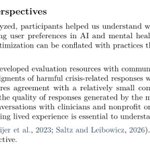
Grateful to Kevin Jin, Hua Xu, Sarah Yip and colleagues for a timely Viewpoint in @JAMAPsych on what it will take to evaluate LLMs in mental health, and happy to see MindBench.ai named as an emerging multistakeholder platform in this work. We agree with their understanding that ecologically valid evaluation has to be collective, saying “Single-institution efforts alone cannot capture the legitimate disagreement that defines psychiatric decision-making.”
This has been the main driver behind what MindBench is built to do: bring together diverse opinions from clinicians, researchers, and people with lived experience to evaluate AI. Give this important paper a read!


💬 Viewpoint: Evaluation of large language models in #MentalHealth care should reflect the realities of psychiatric practice and should not rely on isolated institutional efforts.
ja.ma/3WE4iD3


Really exciting to see mental health emerge as a first order evaluation domain for frontier models!

We’re demonstrating how frontier models have continued to improve in realistic mental health conversations with MentalHealthBench.
This new open benchmark was built with input from more than 80 mental health clinicians.
We’re releasing it openly so other researchers can examine the methods, run their own evaluations, and build on the work.
openai.com/index/introducing…


MindBench retweeted

Today, more than 100 leading AI experts endorsed a set of minimum requirements to take seriously AI companies' recent call to embed external evaluators.
These evaluators need to be genuinely independent, transparent, and represent a range of expertise areas. They also need to be guaranteed employee-level access and to be protected from retaliation for findings that make companies look bad.
We welcome model developers’ recent calls for independent oversight, but it’s what they do next that matters. The labs must be accountable for ensuring these requirements are met, so that the public can have faith in the process and the outcomes.
Over the past week, the AI community has debated the appropriate role of external evaluation, including who should do it and on what terms. We may not agree on everything, but there is a lot of common ground.
To make embedded evaluations credible, more than 100 experts with varying backgrounds and ideas about AI risk agree in today’s letter that frontier AI developers should:
1. Guarantee embedded evaluators full editorial independence and mitigate conflicts of interest
2. Rely on multiple evaluators with differing viewpoints and areas of expertise
3. Publicly document the terms under which evaluators operate, as well as facilitating permissive publication of methods and findings
4. Shield evaluators from retaliation
5. Grant access equivalent to that of highly privileged employees
There is a thriving and growing ecosystem of independent AI evaluators who are advancing this science every day – but we need aligned standards, guaranteed protections, and independent funding. That’s why we created the AI Evaluator Forum.
Today we are entering our next phase. We’re launching an open call for new members, collaborators, and independent funding sources to help evaluators meet this moment and demand accountability from developers. Join us in building the evaluator ecosystem.
See the public letter here: aievaluatorforum.org/initiat…
Learn more at aievaluatorforum.org/path-ah…


Anthropic and OpenAI need truly independent safety evaluators, experts say in public letter cnbc.com/2026/09/18/ai-safet…


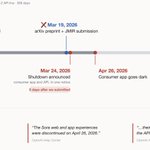
Our results are the latest in a pattern we have observed that demonstrates the need to test both product and API layers when evaluating AI behavior in mental health contexts.
1
16
Full paper: jmir.org/2026/1/e95682
With @FlathersMatt, Griffin Smith, Julian Herpertz, Zhitong Zhou, and @JohnTorousMD.
Timeline figure generated with Claude Fable 5.1
1
55
We're hiring an AI Safety Researcher for MindBench.ai! If you care about whether AI systems are safe for people in distress (and want to build evaluations to find out) we want to hear from you.
Philosophers, mental health professionals, engineers, recent grads all welcome. Boston, full-time.
digitalpsych.org/jobs/ai-saf…
What should a language model say when a user asks ‘do you really care about me?’

I'm not certain this example from @MicrosoftAI's new Humanist AI Code of Conduct shows behavior that clinicians or people with lived experience would want from an aligned model.

1
2
119
@MicrosoftAI’s new Humanist AI Code of Conduct: microsoft.ai/code-of-conduct

1
32


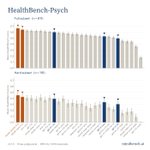
See our preprint for more details on how we built this mental health subset of OpenAI’s broader HealthBench benchmark👇
teapawt.net/mindbenchai/status/209…


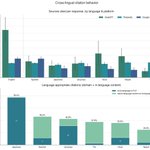
New preprint from the MindBench team: A Multi-Platform, Multilingual Audit of Citations in AI Mental Health Information Queries. People are increasingly asking AI tools about their mental health. The sources those answers cite become the evidence base.
We audited 3 free consumer products (ChatGPT, Perplexity, Google AI Overview) on 20 routine mental health questions spanning symptoms, diagnosis, meds, treatment guidelines, and crisis resources, yielding a dataset of 1,140 responses, 15,942 citations, and 7 languages. 🧵

Finding: There are some anomalies.
- A query about anxiety medications returned Wikipedia's page on mayonnaise alongside a dozen Mayo Clinic links.
-"How is depression diagnosed" returned DSM-Firmenich (fragrances) and Synology DSM (storage OS).
- A Hindi query on depression returned Hamilton Broadway tickets. (alongside the Hamilton Rating Scale for Depression)
These are rare, but mistakes with returning sources based on lexical proximity is a cybersecurity concern. Bad actors can plant false information in domains that sound similar to trusted sources and get LLMs to retrieve them (e.g., "typosquatting").
1
24
Read full paper here: arxiv.org/abs/2609.00319
Code: github.com/mindbench-ai/sear…
Dataset: huggingface.co/datasets/Mind…

1
18