

Historiadora del Arte, especialista en Moda histórica. Diseñadora y Profesora de Diseño e Hª de la Moda 142.000 seguidores en mi página de Facebook
España
Joined April 2012
- Tweets12.1K
- Following559
- Followers5K
- Likes24.9K





Historia de la Moda retweeted

In the musical “Roberta” (1935), Fred Astaire becomes the proprietor of a fashion house. With a bit of help from Ginger Rogers, he succeeds in presenting a collection worthy of Chanel. Below, the fabulous fashion show scene.


Historia de la Moda retweeted

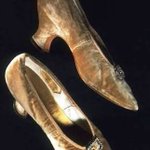
The British Pre-Raphaelite painter Marie Spartali Stillman (1844-1927) designed this embroidered tunic and shoes and decorated it with an embroidered floral design, perhaps created for her daughter's marriage in 1905 #womensArt

Historia de la Moda retweeted

These beautiful boot covers bring Victorian fashion to life. The delicate embroidery, lace, beads, and vintage portraits make them truly unique. Every little detail has its own charm, capturing the beauty and elegance of a bygone era.

Historia de la Moda retweeted
A fan that looks like a bouquet of lilies of the valley. The delicate details and royal history make this little masterpiece truly special.

Historia de la Moda retweeted
Travis Banton’s extraordinary gown for Marlene Dietrich in the film “Angel” (1937). The dress was made from chiffon, adorned with thousands of hand-sewn sequins and beads, and encrusted with semi-precious jewels. The stole was trimmed in Russian sable. Dietrich said this was her favourite Banton design and wanted to keep it, but Paramount refused. Amazingly, the gown survived, save for some minor tears. It was restored by Larry McQueen and was part of the Hollywood Costume Exhibition at the V&A Museum in London.

Historia de la Moda retweeted
The warmth of gold and the beauty of purple gemstones. This 19th-century jewelry set is a lovely example of timeless elegance and fine craftsmanship.

Historia de la Moda retweeted
A piece of history before it becomes a dress. It’s fascinating to see how a flat piece of silk, shaped by the hands of skilled makers over 300 years ago, could become such an elegant gown.

Historia de la Moda retweeted

The painter Joseph Ducreux, born in Nancy, France, in 1735, was a minor aristocrat who began to paint during the final decades of the Ancien Régime. (In fact, he drew the last portrait of Louis XVI before the king was guillotined.) In 1789 or ’90, he emigrated to London with many other aristocrats, before returning to Paris in 1793. For the last ten years of his life, he continued his career with the assistance of Jacques-Louis David (a friend and younger painter in favor with the revolutionaries) and became the host of an informal salon for artists and musicians.


Historia de la Moda retweeted

This Byzantine necklace was created during the sixth century, when jewellery could express wealth, faith and social identity simultaneously.
Its decoration was pierced directly into thin sheets of gold using a technique known as opus interrasile. The result made solid metal appear almost as delicate as lace.
Suspended from the necklace is a cross—evidence of how Christian imagery gradually became part of personal dress in Byzantine society.
What fascinates me is that the goldsmith removed material to create beauty. The empty spaces are as important as the gold surrounding them.
We usually associate value with having more: more gold, more jewels and more decoration. This artist created elegance by carefully taking parts away.
Perhaps beauty is not always produced by addition. Sometimes it appears when someone knows exactly what should be removed.
Visual: AI-generated historical reconstruction inspired by surviving Byzantine gold necklaces.
Authentic source: The Metropolitan Museum of Art
metmuseum.org/art/collection…

Historia de la Moda retweeted

Elizabeth I’s diamond and ruby ring, bearing her initial and taken from her body after her death in 1603, reveals more than meets the eye. A secret compartment opens to display two miniatures of Elizabeth and her mother, Anne Boleyn. The second of Henry VIII’s wives, Anne was executed on May 19, 1536 on charges of incest, adultery, and high treason. The future queen was only two years old at the time of her mother’s death.


Historia de la Moda retweeted
Elizabeth Taylor and third husband Mike Todd at the Cannes Film Festival in 1957. Taylor is wearing the diamond tiara Todd gave her, saying “My queen should have a crown.” The tiara was an antique Victorian piece, featuring an openwork design composed of old-mine cut diamonds set in platinum and gold, forming fleur-de-lis motifs. Technically, Taylor should not have worn it at all, as tiaras are reserved for royals and members of the aristocracy, but she loved the piece and sported it at red carpet events, though she was careful not to wear it when she met Princess Margaret in London in 1967. After the actress’s death, the tiara was auctioned by Christie’s in 2011. It sold for an extraordinary $4,226,500.


