

Geek et neuroradiologue. #médecine #neurosciences #informatique ... et un peu #droit aussi
Lyon-Strasbourg
Joined March 2011
- Tweets25.1K
- Following362
- Followers5.2K
- Likes85.9K





MrFDA retweeted

De "on bloque sans juge mais rassurez-vous, uniquement les cas les plus graves (terrorisme, pédop*rn)" à "on bloque sans juge dès que le gouvernement n'est pas content", en 10 ans.

MrFDA retweeted

Cette loi est totalement liberticide.
MrFDA retweeted

Un amendement empêche que les #streetmedics soient victimes collatérales de la loi casseur payeur. Le gouvernement veut supprimer cette exemption.
MrFDA retweeted

🔴🔴🗳️ Et c'est parti ! Le ministère de la Justice demande à l’Alaska de ne pas certifier l’élection sénatoriale si le candidat républicain perd. Autrement dit : un seul résultat serait valable, celui où le camp du président gagne.
🗃️ Les faits
Le 23 octobre 2026, à douze jours du scrutin, le ministère de la Justice a déposé une plainte visant la Division des élections de l’Alaska. Sa demande : que le résultat de l’élection au Sénat ne soit pas certifié si quelqu’un d’autre que le sénateur sortant, Dan Sullivan (républicain), l’emporte.
Le prétexte invoqué est scabreux. Deux candidats portent le nom de Dan Sullivan. Le sénateur sortant, et un homonyme, Daniel J. Sullivan, que la justice de l’Alaska a maintenu sur le bulletin. Le ministère plaide que cette confusion pourrait fausser le vote.
💬 "Un résultat électoral peut être affecté par la confusion des électeurs si le sénateur Sullivan ne gagne pas."
Tout est là. La condition déclenchant l’intervention est la défaite du républicain.
Car si la confusion entre deux homonymes était le vrai problème, elle jouerait dans les deux scénarios : elle vicierait le scrutin que Sullivan ou que sa concurrente démocrate perde. Or le ministère ne demande de bloquer la certification que dans l’hypothèse où le républicain sortant est donné perdant.
La veille, le ministre de la Justice Todd Blanche n’excluait pas, "dans un scénario catastrophe", d’empêcher des États de certifier leurs résultats.
L’Alaska fait face à ce type de scénario.
💡 Ce que cela dit
En posant que seule la victoire de son camp produirait un résultat "valable", l’administration confisque le vote par avance.
L'administration Trump annonce simplement, avant même le premier bulletin, qu'elle ne reconnaîtra le scrutin que s’il donne le bon vainqueur. La défaite devient, littéralement, une anomalie que la justice fédérale pourrait corriger.
Rien n’est encore tranché : un juge examinera cette plainte et pourra la rejeter. Mais le seuil où un gouvernement ose écrire que la défaite de son candidat serait un motif de ne pas certifier une électionest déjà franchi.

MrFDA retweeted

Un procureur a donc demandé un an de prison FERME pour le vol d'une paire de baskets... Un an de prison ferme, c'est aussi la peine que n'effectuera pas Marine Le Pen (cf bracelet électronique), après avoir détourné... 2,8 millions d'euros d'argent public liberation.fr/societe/police…

MrFDA retweeted

This post, from an AI researcher, and the reply by @JianWDong, a radiologist who knows AI, are required reading for all med students out there considering radiology. You should come away with an understanding why radiologists are not going to be drastically displaced by AI.

AI will not automate radiologists like you think
We have been talking for years now about AI automating jobs. Radiology has been a prime target, with Geoff Hinton once claiming, “people should stop training radiologists now, it’s just completely obvious that within five years, deep learning is going to do better than radiologists”, which is funny since he said that in 2016. There is now more demand for radiologists than ever, so clearly things did not turn out the way many thought. Here I will make a prediction that while radiology will change in the coming decade, radiologists will not be automated away any time soon. I will use radiology as an example but I think these principles will broadly apply to any field where demand can be elastic and quality can scale with increased intelligence.
First of all, we have seen in the short history of language models that there is a “jagged edge of intelligence”, where AI excels at verifiable tasks with a lot of data but is underwhelming on less common tasks. One thing most AI researchers underestimate about radiology is that it is actually extremely multi-task. There are at least a hundred conditions that can be diagnosed from x-rays alone, and thousands using CT and MRI. AI will first master common and easy-to-see conditions and it will not be as good as experts at less-common diseases just because there is less data for that. This jagged edge will certainly improve over time but this means that AI will certainly be used as a triage tool at first, rather than full automation in one go. I would guess that this process from solid triage tool to full automation would take 3-5 years in the best case scenario, because training AI to get all the edge cases right will be bottlenecked by data collection of rare diseases, and also because radiology isn’t currently a focus for frontier labs.
Second, there will be elastic demand for radiology as it gets cheaper per unit. I think elastic demand (“Jevons paradox”) is the most underrated phenomenon when people think about AI automation. In software, it is obvious that I have way more demand than before because Claude Code makes it so easy. These days I ask Claude Code to build a custom three-thousand line html viewer to help me visualize every little RL run that I do. The same thing will happen in radiology. If there is essentially no cost or latency of interpreting an MRI, a physician can order many scans preemptively to better diagnose a case. So with AI tools, a radiologist might have to read only 20% of inbound scans, but there might be 5x more scans inbound. Many developing countries have fewer than one radiologist per million people and they will also want to send a lot of radiology to be interpreted.
Longer term, cheap and fast radiology interpretation will also drive incentives to build cheaper radiology scanners. If an MRI had essentially no latency for interpretation, medical devices companies will want to build much cheaper MRI machines that can be used more frequently, perhaps even in the middle of a surgery. AI will accelerate the development of scanning technology, too. If a full body MRI was only $100 dollars I would totally want to get one every month instead of every two years. I can imagine a world where people get 10 or 100x the number of scans they do today, largely for preventative care, if radiology were 10-100x cheaper.
Third, even if we did have a model that could outperform the world’s best radiologists today, that would not be the end of all work on radiology. Medicine is a field of change. We may develop new treatment protocols that require reading radiology images in a way that radiologists currently aren’t used to. New scanners may reveal diseases that we cannot currently diagnose today with radiology alone. Some radiologists will change their work from reading scans to doing frontier research to advance our understanding of radiology and translate new knowledge into updated models.
Moreover, I am sure that we will ask for more out of our AI models than ever before. With a good flywheel, we may one day train AI models that can use radiology images to predict disease probabilities far into the future. With good prediction algorithms, cancer may be detected months earlier than we can detect it now. Society will invest a lot into this research and this will contribute even more to increased demand for radiology and the best AI around it.
On top of all of this, the medical system is typically slower to adopt new technology and has more regulation compared to technology companies. There is legacy infrastructure and medical centers need to constantly support patients which makes it hard to integrate new technology. This is even more true in developing countries. Moreover data access tends to be limited due to HIPAA, deidentification, IRBs, etc. So I think radiologists will be in demand for a while.
While some worry about radiology being totally automated, I think there is a more exciting future for radiology than ever before—one where there is more demand and we ask for more predictive power from our intelligence. This is similar to how many of us feel that programming will thrive more than ever before despite drastic change in the field. More generally, any domain where demand can be elastic and quality can scale with increased intelligence will, like radiology, similarly flourish with the development of AI. This is certainly a more exciting and nuanced future than what Hinton described in 2016!
(Finally, to be fair to Hinton, he did acknowledge in a recent podcast that he was wrong and also agrees with the elastic demand argument.)
Thanks @JayRothschild and @engyziedan for feedback on this post.
MrFDA retweeted

Même si les assurances remboursaient chaque centime de perdu (ce qu'elles ne font pas) et même si on enlevait l'impact émotionnel de voir sa vie pro détruite (ce qui est une illusion), il reste deux choses que personne ne semble comprendre.
1) un commerce achète (matière première, stocks, etc.) et vend (produits finis). J'étais avec un cousin, artisan boulanger, ce week-end, qui a acheté 1,5 tonne de chocolat. Le tarif est négocié bien en amont pour préparer les fêtes de fin d'année et anticiper le besoin.
S'il avait à repasser commande aujourd'hui parce que sa matière a été détruite, déjà pas sûr que le fournisseur puisse prendre sa commande et ensuite, pas sûr qu'il l'ait ni au même prix, ni au bon moment.
Et la marge, c'est pas sale, c'est ce qui fait vivre une famille et des salariés. Vous pouvez retourner le problème dans tous les sens, si vous ne margez pas, vous faites pas une activité commerciale, vous faites du passage de plat. Et construire une marge, ça s'anticipe.
2) Chaque jour perdu à reconstruire ou retrouver un stock, c'est du manque à gagner. Vous êtes indé, vous ne vendez pas une journée, c'est une journée de perte sèche. Vous vous souvenez le "pognon de dingue" qui a été dépensé pour soutenir tous les commerces pendant le Covid ? C'est ça compenser le manque à gagner, c'est une logique que seul un État peut encaisser à moyen ou long terme, les assurances s'en fichent.
Je sais que la France est mal éduquée financièrement, mais ce qui s'est passé samedi, ce n'est pas « pas grave car de l'argent magique va aider à payer une baie vitrée ».
Cela étant dit, je suis convaincu qu'il y avait 3 phénomènes samedi : des manifestations légitimes parce que le pays va mal et les gens en souffrent - et elles se sont plutôt bien passées -, des débordements violents politisés, côté manifestants et FDO, dont l'ampleur reste à mesurer mais que vous avez toutes et tous vus sur les RS... et un pillage pur et simple qui n'avait ni rapport avec la première manif, ni avec la seconde, ni avec « l'ultra-gauche ».
Brouiller les pistes en mettant tout le monde dans le même sac, c'est du travail d'amateur de politicien ou de plateau TV et ça n'arrangera rien.
Pour ma part, je ne partagerai aucune image de destruction, ce n'est pas la violence que je veux pour mon pays : force au personnel qui est en première ligne pour nettoyer ce carnage et qu'on applaudit jamais.

🔴 "Saccager une vie en 5 minutes". Dalida est la gérante d'un commerce dans le 10e arrondissement de Paris. Son établissement a été ravagé par des casseurs le 17 octobre. Elle nous fait part de son désespoir. #canal16
MrFDA retweeted
An outpatient undergoes CTA neck to follow up carotid artery stenosis. What happened?
Radiology Diagnosis Please, Case 335 (Nov 2024): doi.org/10.1148/radiol.24160…

MrFDA retweeted

Le fait que ces appels (profondément antidémocratiques & antirépublicains) proviennent de personnes qui s'auto-proclament « centristes » est d'autant plus consternant.
MrFDA retweeted
La rapidité avec laquelle certains appellent à « suspendre » les libertés démocratiques les plus basiques laisse pantois.
Interdire toute manifestation. Dissoudre des partis politiques. Poursuivre pénalement les opposants politiques.
C'est *littéralement* la Russie de Poutine.

MrFDA retweeted
Racisme dans la police & lanceur d'alerte : Le @Conseil_Etat juge que les sanctions infligées à un policier étaient bien illégales.
Il avait dénoncé publiquement le racisme & les violences de ses collègues policiers sur des personnes déférées.
Echec du pourvoi d'@Interieur_Gouv

MrFDA retweeted

Dis donc, c'est étonnant ça ! Quand les fermes de bots Russes sont détruites, la haine en ligne réduit !
Nos opinons s'ajustent en fonction de celles des autres, or une partie significative de la haine sur les réseaux sociaux est manufacturée pour nous influencer.
This quoted post is unavailable.
MrFDA retweeted
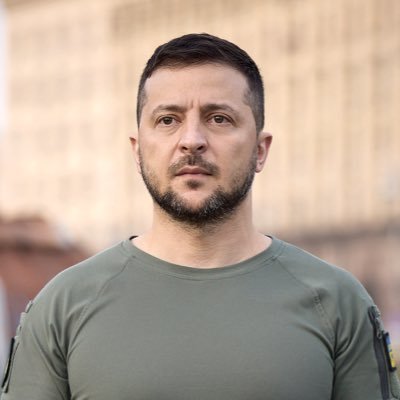
When we started responding to Russia’s operation against our data centers, and when our strikes reached Yandex’s data centers, it suddenly became a little easier to breathe on many social media platforms. A lot of people noticed it. There was less hate, less division, and fewer provocations.
Because there were fewer bots. And it’s pretty clear where those bots were coming from – if they disappeared when Yandex went offline. This proves, again and again, that Europe is not the source of the problems. Europe is not the one making everything more difficult.
Most importantly, we need people in America, every morning, when the day in Europe is already moving toward evening, to really see what is happening. To see the truth.
From a speech at the Warsaw Security Forum. (3/3)
MrFDA retweeted

⭐️ What is the most likely diagnosis in this 50 y/o F who initially presented with uveitis which did not respond to steroids? Over the course of months, she progressively declined and eventually developed encephalopathy.
🔷No significant PMH
🔷CT chest, abdomen and pelvis unremarkable
🔷No significant response to steroids or IVIG
🔷Pathergy testing and HLA-B51 negative
🔷Serum ACE & IL2-R negative
#futureradres #MedEd #radres #neurosurgery #ENT #Ophthalmology #Neurology @RadiologyACR @Radiopaedia


MrFDA retweeted

"La France ne manifeste pas beaucoup plus que les pays européens voisins. Ce n’est pas un phénomène français qu’il y ait des casseurs. En revanche, les policiers français ont accès à un arsenal qui est peu utilisé pour le maintien de l’ordre dans les autres pays". Gaëlle Macke
MrFDA retweeted

« Et tout de suite en direct nous avons un lycéen qui a discuté avec le gouvernement des revendications »
🤖 Made with AI


MrFDA retweeted

One day UK media, especially ! pro-EU papers are going to have to stop with the "𝒃𝒖𝒕" every time they talk about free movement
Millions of our, British people's lives benefitted massively for decades from it. Young Brits are now uniquely DENIED the right to live, study and work all over their own continent - rights their friends in the EU take for granted - and which our generation had
Movement in and out varies between different countries and times. Poland's GDP growth rate is now 3.6% so it's highly unlikely that many would want to come to the UK these days
UK media invariably treats free movement as just a one way issue - "them coming here" - but forgets the millions of 𝒖𝒔 who went the other way. Remind me how many Spanish and French people move to the UK to retire compared to the millions who went the other way over 40 or so years ?
And UK immigration was 𝐰𝐚𝐲 𝐥𝐨𝐰𝐞𝐫 before Brexit, it's quadrupled since the UK left the EU. Free movement, paradoxically, makes it easier to develop the international cooperation necessary to control illegal immigration. The "small boats" issue hardly existed before Brexit
So "free movement" is a fantastic right the UK chucked away and especially denied its young people. Being able to live freely all over Europe certainly gave this young man from a small Cornish village opportunities he'd never have had without it, and that's why I and so many others value it so much. So stop always preceding it with a "𝒃𝒖𝒕" !

MrFDA retweeted
New interns are starting soon. Here are my #TipsForNewDocs from a radiologist. 🧵
When your senior resident or attending tells you to order an imaging test, make sure you understand the purpose. If you don't, ask them! What are you hoping to answer with the study?