

Law professor @sjquinney, teaching criminal law and procedure, cyberlaw, AI, privacy. Views are my own. My writing is here: https://teapawt.net/t.co/ZYC0XOtLsd
Joined September 2009
- Tweets1.9K
- Following970
- Followers2K
- Likes7.3K







Pinned Tweet
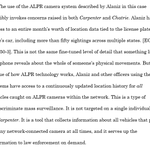
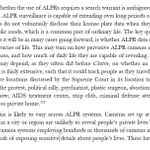
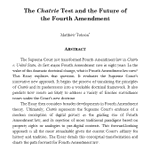
What is Fourth Amendment law now? My new essay, forthcoming in @NotreDameLRev, tries to answer that question.
papers.ssrn.com/sol3/papers.…

Thank you to Larry Solum for highly recommending my new paper!

Artificial Intelligence and Near-Total Law Enforcement: legaltheoryblog.com/?p=11467…

130
For the record, as someone concerned with AI's existential and other risks, I don't think AIs will achieve real RSI (recursive self improvement) in 2027 or anytime in the near future, and the very smart people arguing otherwise seem to be doing so on little actual evidence.

Barack Obama: AI is reaching the point where it no longer needs humans to teach it. The era of exponential intelligence growth is upon us.
“The machines are starting to be able to teach themselves. They don't have to wait for humans to start figuring things out.”
“We're now at a stage where it's 50-50, and if the trend lines continue, the expectation is it might be 90-10.”
“We're now hitting the hockey stick trajectory where the models are going to get smarter and smarter at an exponential pace.”
“If they start setting their own agendas, you may get a misalignment between what they want to do and what we want them to do.”
“And that gap can be dangerous.”
34
39
11,045


Matthew Tokson retweeted
Flock cameras and other license plate readers have sparked protests across the U.S. over near-constant surveillance. Defenders say they help solve crimes. But under recent Fourth Amendment doctrine, ALPRs might be unconstitutional after all, writes @mtokson

Matthew Tokson retweeted

Delighted to share that @YaleLJournal has published my piece, “The Power to Impose Method.” The piece explores whether the Supreme Court can require courts to use, for example, textualism or originalism in all statutory or constitutional cases. (Link below.)
Matthew Tokson retweeted
My new article, Artificial Intelligence and Near-Total Law Enforcement, is up on SSRN:
papers.ssrn.com/sol3/papers.…

SSRN crashed yesterday but it's working again

My new article, Artificial Intelligence and Near-Total Law Enforcement, is up on SSRN:
papers.ssrn.com/sol3/papers.…
My new article, Artificial Intelligence and Near-Total Law Enforcement, is up on SSRN:
papers.ssrn.com/sol3/papers.…
An example from today's NYT of panoptic AI cameras being used in law enforcement
nytimes.com/interactive/2026…

Now on SSRN!
My keynote article explores what law enforcement looks like in the future when AI + ubiquitous cameras can detect almost every crime committed outside of a residence. And why that future is increasingly close to reality.
papers.ssrn.com/sol3/papers.…
1
174
Now on SSRN!
My keynote article explores what law enforcement looks like in the future when AI + ubiquitous cameras can detect almost every crime committed outside of a residence. And why that future is increasingly close to reality.
papers.ssrn.com/sol3/papers.…
Matthew Tokson retweeted
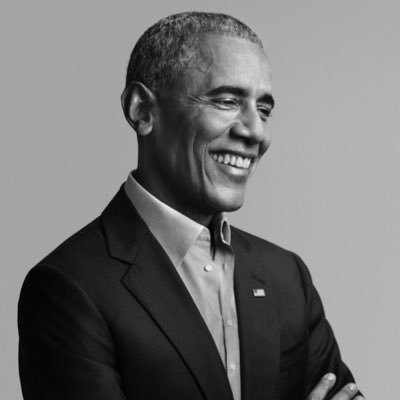
It is a basic principle of American democracy that the government can’t selectively target individuals simply because of their political beliefs or what they say. But that’s exactly what the Trump Administration is doing to Congresswoman Ilhan Omar of Minnesota.
To understand why this is so appalling, it’s important to know the facts. Congresswoman Omar came to this country with her father when she was 12 years old. Five years later, her father became a naturalized citizen. If Ilhan had been 18 at the time, she would have had to apply for citizenship separately. But because she was 17, she became a naturalized citizen automatically.
Congresswoman Omar went on to graduate from college, work as a community organizer, become the first Somali-American legislator elected to public office in the U.S., and win a seat in Congress. There, she has been one of the Trump Administration’s fiercest critics, which has led the president to repeatedly single her out as someone who he believes does not belong in this country.
Now the Administration is actively trying to deport Congresswoman Omar, seemingly based solely on the unsubstantiated theory that she was actually 18 when her father was naturalized, and therefore is not a citizen. Federal agents have raided her home, confiscated personal records, and seized her phone — all to try and uncover a nonexistent smoking gun from 20 years ago that will somehow make their case.
Think about that. The full weight of the federal government is being brought down on a law-abiding elected official because she has dared to criticize the president. And it’s not the first time this has happened. Under President Trump, the Justice Department has repeatedly gone after those he considers his political enemies — from the Attorney General of New York, to the former head of the FBI, to members of the Federal Reserve.
In those cases, the prosecutions either stalled or were dismissed for having no basis in law, and the same is likely to happen in this case. But not before Congresswoman Omar’s life has been turned upside down, her legal bills have piled up, and she’s been forced to spend time fighting unsubstantiated charges instead of serving the people of Minnesota.
The fact that any president, or any administration, is willing to engage in such transparent efforts to intimidate someone should outrage all Americans, regardless of how they feel about Congresswoman Omar’s political views. Because if this becomes the new normal, there’s no reason to believe it will stop with her — or that future presidents, in either party, won’t do the same.
Matthew Tokson retweeted

Scaling Laws' most recent episode was our second live recording of our Scaling Laws Roadshow. Matt Tokson (@mtokson) joined Kevin to discuss AI, the Fourth Amendment, and the promise of near-perfect surveillance:
shows.acast.com/arbiters-of-…

Honored to win the University of Utah's 2026 Faculty Research Excellence in Responsible AI Award. Stay tuned for more scholarship on AI & privacy and AI safety to come.

13
328
Matthew Tokson retweeted

We were honored to host @KevinTFrazier and @mtokson for the @scaling_laws podcast at the University of Nebraska! Great conversation on AI and civil liberties.

A federal district judge just declared that Flock camera systems violate the Fourth Amendment! Applying Chatrie, the court concludes that extensive camera networks engage in unlawful "indiscriminate mass surveillance." A major ruling. storage.courtlistener.com/re…


I was honored to give the Keynote Address at the Nebraska Law Review's annual symposium last week. I spoke about the future of surveillance and law enforcement, and I'll post my keynote article sometime later this fall.
It was a great event and I enjoyed it so much.

Matthew Tokson retweeted
@mtokson questions the possibility of "near perfect" law enforcement through AI. What is the socially optimal level of law enforcement? Which crimes and which people do we prosecute? What are the costs in privacy? Fascinating and sobering talk at the @UNLCollegeofLaw symposium.

The idea that the AI race isn't real is starting to catch on


Treasury Secretary Scott Bessent recently warned that “there is no day after tomorrow” if China pulls ahead in artificial intelligence; Americans receive this message from political leaders and from tech innovators. Yet, the first to cross the finish line is not always the one who wins a tech race. Take, for example, the long line of British inventors who helped bring electricity to the world in the 1800s. A betting man, at the cusp of the 20th century, would have been hard pressed to deny Britain its place in the future. But that’s not how the story goes. By 1912, America had become the world’s leading industrial power, and was producing five times more electricity, per person, than Britain. This logic—that it’s not always who is first who ends up cornering the market—may apply to A.I. today. Chang Che explores this way of thinking: newyorkermag.visitlink.me/NM…

My new paper forthcoming in the Notre Dame Law Review explains, among other things, how Flock cameras should be analyzed under Chatrie v. US.
Basically, it’s going to depend on how many cameras there are.
papers.ssrn.com/sol3/papers.…


Matthew Tokson retweeted

Here's why we should be worried about AI leiterreports.com/2026/09/17…
