

Forex Trader | 8 Year Of Experience | Edge Model
My Strategy, Trade With Me ↓↓
Joined January 2023
- Tweets862
- Following3
- Followers7.6K
- Likes76





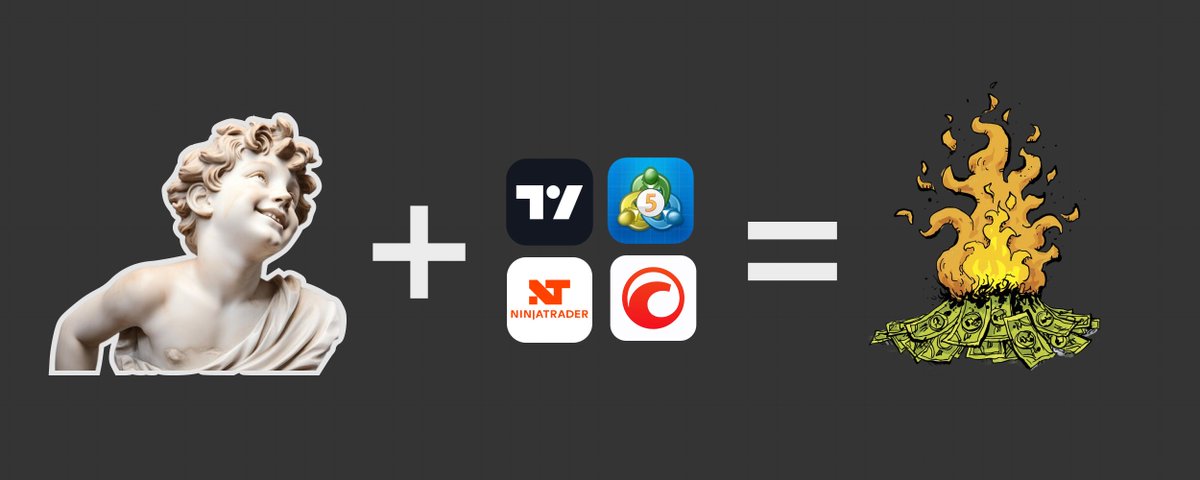
It seems like we are abou to see the downfall of @tradingview if they keep what they have done.
No real time data, limited drawings?? (This one is crazy) and more stupid things.
I hope you do something about it.. @tradingview ..
4
9
759
Something I have been teaching for years.. still most don't know about it 👇
youtu.be/v_MaLNHHeDI
1
360
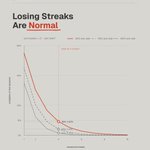
Magnus having bad days at chess (he's number 1) and some of you are questioning your entire trading career after 3 losses..
3
478
If You Only Have 15 Minutes a Day, Trade This 1 Candle 👇👇
youtu.be/raSy3BvWfWI


Day 29 of 30. One day left. Everything you have learned this month stands on one thing. Risk.
Think back over the challenge. Discipline. Patience. Certainty. Sizing. Emotions. Every idea has been sitting on top of one foundation, and that foundation is how you manage risk. It is the base block of the whole pyramid. Take it away, and everything above it falls.
Here is why. A great strategy means nothing if one bad trade can wipe you out. All the patience and discipline in the world cannot save an account that risked too much on one idea. But get risk right, and everything else has room to work. Your edge gets time to play out. Your mistakes stay survivable. You come back tomorrow and keep learning.
Risk is not the exciting part. Nobody posts about position sizing. But it is the reason you are still in the game to do anything else. It is what makes the market as a teacher even possible, because you have to survive the lesson to learn from it.
Protect the base first. Keep every single loss small enough that it can never end you. Do that, and you always live to trade again.
Reflection question
If your very next trade went completely wrong at its full size, would you be shaken but fine, or would it do damage you could not walk away from?
Going deeper
Risk is the foundation, because it is the only thing that keeps you in the game long enough for skill and patience to matter. Break it, and nothing else gets a chance to work. Make survival the first rule, before profit, before setups, before anything.
Fix: Check every part of your process for fragility. If one bad day could break it, rebuild that part smaller. Decide your max loss per trade and per day, and make those limits hard.

1
629
Day 28 of 30. Nearly there. Sit with something that will never change. In trading, the losses never stop.
Not one day of it will ever be completely clean. Every session brings something. A stop hit early. A setup that looked perfect and wasn't. A gap against you overnight. It doesn't end, and it was never going to. Most traders spend years waiting for the version of trading where the losses finally stop showing up. That version doesn't exist. The account isn't broken because you're still taking losses.
This is the reframe that saves people from quitting at the exact wrong moment. Losses are not a sign your system failed. They are the weather of the job, the same way rain is the weather of farming. You don't stop farming because it rained.
So stop waiting for the clean stretch. It's not coming, and it doesn't need to. The goal was never zero losses. The goal was always a system that keeps working while the losses keep happening, because they always will.
Reflection question
Are you still, somewhere in the back of your mind, waiting for the day the losses finally stop, and what would change if you accepted they never will?
Going deeper
Traders who expect losses to eventually stop treat every loss as new evidence something is wrong, so they keep tearing up working systems chasing a clean streak that isn't coming. The fix is to build your expectations around losses being permanent weather, not a temporary bug. A system doesn't need to eliminate losses. It needs to keep producing an edge while losses keep happening, forever.
Fix: Write down, in one sentence, that losses are permanent and not a signal your system is broken. Read it after your next loss before you touch anything in your plan.

525
Day 27 of 30. A quiet wiring problem behind your bad exits. A win feels good, but the same size loss hurts twice as much.
Lose a hundred dollars and it stings hard. Make a hundred dollars and it feels nice, but nowhere near as strong. Same money. Very different feeling. The pain of a loss is about twice the joy of an equal win, and this quietly warps every decision you make.
Because losing hurts so much more, you do everything to avoid feeling it. You hold losers too long, hoping to escape the pain of taking the loss. You grab winners too early, locking in the small good feeling before it can turn bad. Both moves feel like protection. Both wreck your results. You end up cutting winners short and letting losers run, the exact opposite of what works.
The fix starts with knowing the trap is in your head, not in the trade. That extra pain is not information. It is just wiring. Once you see that, you can act against it. Take the small loss even though it hurts double. Let the winner run even though holding feels risky.
The feeling lies. The plan does not.
Reflection question
Do you cut winners fast to grab the good feeling, and hold losers long to avoid the bad one, even though you know it should be the reverse?
Going deeper
Loss pain hurts double, so you build habits around dodging that pain instead of making money. That is why so many traders cut winners early and nurse losers. The way out is to decide exits before the feeling can hit, while you are calm and the money is not moving.
Fix: Set your stop and target at entry, in numbers, then follow them like a machine. When the loss comes, you are not choosing pain in the moment, you are just executing the calm decision you already made.

1
593