
Emmanuel Murano retweeted

Every worktree builds its own target/ folder. Same bytes, over and over.
kache 2.0 keeps each compiled output once and shares it across worktrees and CI. Less disk, fewer rebuilds. Rust, C/C++ and CUDA.
Here's one we made earlier. 🍳
Emmanuel Murano retweeted
kache 2.0 is out 🏁
Switch branches, stay warm: worktrees reuse each other's incremental builds.
Hit a miss? It tells you exactly why.
Not sure it's working? `kache doctor --probe` checks.
Upgrade. Keep everything.
cargo install kache --locked


Emmanuel Murano retweeted
Why doesn’t your AI know what your team knows?
You use Claude. Your teammate uses ChatGPT. Your partner runs a local model. None of them have met.
We’re building Kunobi so they can work together, and you decide what gets shared. Looking for teams to try it first.

Emmanuel Murano retweeted
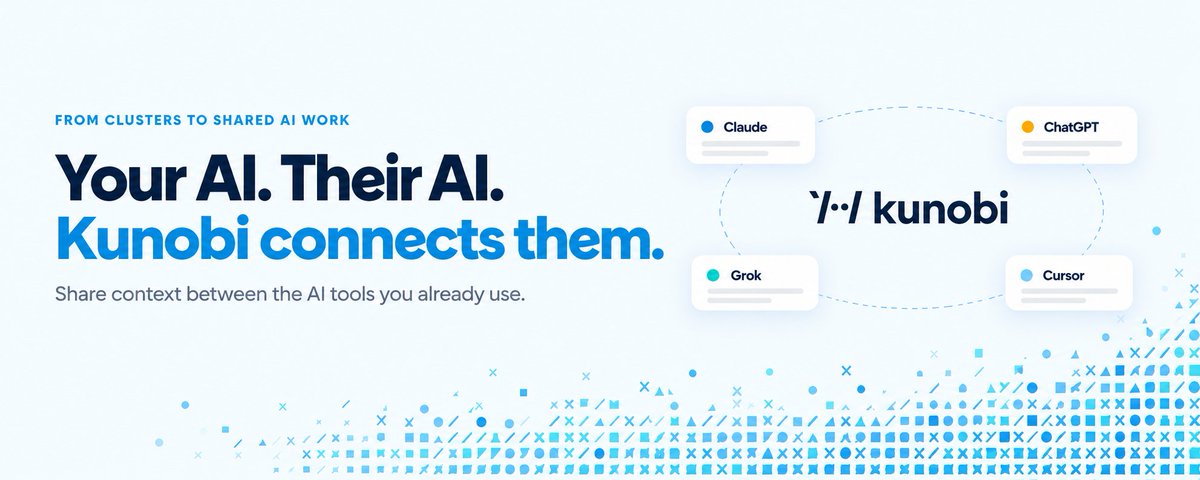
Kunobi started with clusters. The bigger problem turned out to be context.
Your AI knows things. Their AI knows things. Humans are still the copy-paste layer.
We’re building Kunobi to change that, while Ninja keeps going deeper into infrastructure.

Emmanuel Murano retweeted
We will be posting a complete, fair and comprehensive comparison soon.
There is still a lot of room for improvements.. but yes, faster and more convenient rust + ai experience.
Bring the love back to worktrees, they are your friends when used well.


Emmanuel Murano retweeted

Awesome recommendation!

Emmanuel Murano retweeted

macOS: your disk is almost full
me: it's not full, it's 9 worktrees each with their own tokio
macOS: that's what full means
kache init. one copy, shared across worktrees. keep using cargo. github.com/kunobi-ninja/kach…

Emmanuel Murano retweeted
This is definitely the approach engineering teams in >=2026 need to take. Think of mitigations, QA, benchmarks rather than line per line PR reviews..
At this stage, agents are able to complete full epics, rather than a single PR!
Be careful with having agents "adjusting" your tests.

Software engineering needs to accept something that complex biological systems make obvious:
understanding the parts doesn't mean you can predict the behavior of the whole. Interactions create side effects, unexpected outcomes, and emergent behavior.
Software has already been there for a while. Agents just make it impossible to ignore.
Humans reviewing an ever-growing stream of PRs written by agents is not scalable.
Good engineering already focuses on effects: testing for side effects, limiting the blast radius, monitoring what happens, and having a way back.
Yet we still organize much of software development around reviewing the change itself.
The PR is the hypothesis, not the proof.
Emmanuel Murano retweeted
Odd take:
- inference and tokens are cheap
- mac storage is the new rate limit :)
github.com/kunobi-ninja/kach…

Emmanuel Murano retweeted
Software engineering needs to accept something that complex biological systems make obvious:
understanding the parts doesn't mean you can predict the behavior of the whole. Interactions create side effects, unexpected outcomes, and emergent behavior.
Software has already been there for a while. Agents just make it impossible to ignore.
Humans reviewing an ever-growing stream of PRs written by agents is not scalable.
Good engineering already focuses on effects: testing for side effects, limiting the blast radius, monitoring what happens, and having a way back.
Yet we still organize much of software development around reviewing the change itself.
The PR is the hypothesis, not the proof.
Emmanuel Murano retweeted
🤝

🚀Exciting news from the stage!
@_zondax_ unveils Token Discovery.
Join @MuranoEmmanuel highlighting how this support your token launch.

Emmanuel Murano retweeted
Join our Engineering Manager @MuranoEmmanuel on July 9th as he discusses the journey of making your token alive on @_beryx_ 🎤🎙️
#FilDevSummit


Emmanuel Murano retweeted

The words web3 and community goes hand in hand 🤝, join @MuranoEmmanuel from @_zondax_ to explore the features @_beryx_ offers for the community
