NASA Ames retweeted
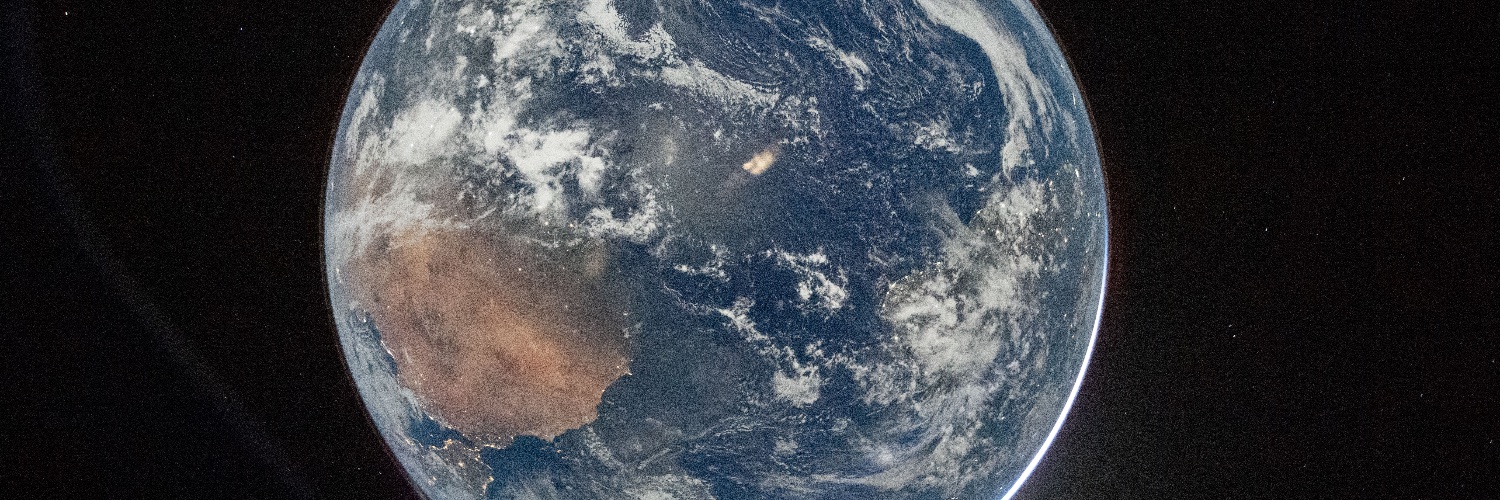
“We’ve never been in this vantage point in the history of humankind.”
The Artemis II solar eclipse was a lot. In a good way. (54 minutes of totality! That's way longer than we get on Earth.)
Explore more from the mission: go.nasa.gov/Artemis2LunarSci…
NASA Ames retweeted
One year. New heights. Faster speeds. ✈️
Since its first flight on Oct. 28, 2025, NASA's X-59 has continued pushing the boundaries of aviation.
See how far we've come in just one year!
go.nasa.gov/4jLT7Su
#NASAaero #Quesst
NASA Ames retweeted
Members of the media are invited to tour a new lunar landing simulation at @NASAAmes on Oct. 29 & 30.
Using simulators will give astronauts and engineering teams experience before crews pilot commercial human landing systems to the surface of the Moon.
🔗go.nasa.gov/47EhM4h
NASA Ames retweeted
Ready for an Artemis update?
Tune in Friday, Oct. 23, at 2 p.m. ET (1800 UTC) to hear our latest progress and accelerated plans for Artemis lunar missions.
Watch live: youtube.com/live/pAKqJxuxDgk
There's a lot of ground to cover when you're building a Moon Base.
During the first phase of @NASAMoonBase development, robotic rovers will gather new details about the lunar South Pole region, while lunar terrain vehicles will extend the reach of each Artemis mission.
NASA Ames retweeted
Post-flight analysis confirms the Artemis II Orion heat shield performed as expected during its Mach 39 reentry, protecting the spacecraft and the astronauts aboard as they returned from the 694,481-mile journey around the Moon. go.nasa.gov/4B7EWNT
NASA Ames retweeted
A huge library of Artemis II data just dropped! Science is a relay race, and today marks the latest in a long series of handoffs. 814 GB of observations. 996 new images. 521 min of never-before-released crew audio.
Dig in: go.nasa.gov/Artemis2LunarSci…
NASA Ames retweeted
ICYMI: Four People. Three SmallSats. Two Launches. Opposite Coasts. One Great Day for NASA! 🚀🚀
NASA teams supported two launches on Oct. 1. At 11:10 a.m. ET, the @SpaceX Crew-13 mission departed Florida for the @Space_Station, carrying @NASA astronauts Jessica Watkins and Luke Delaney, @csa_asc astronaut Joshua Kutryk, and Roscosmos cosmonaut Sergey Teteryatnikov on a science expedition to the orbital lab. Just over three hours later, three NASA SmallSats launched on SpaceX’s Transporter-18 mission from California to demonstrate new propulsion technologies, study how galactic dust and high-energy radiation move through galaxies, and advance capabilities for inspecting inactive satellites.
The three satellites were:
• APDM: ASCENT Propulsion Dual Mode CubeSat
• SPRITE: Supernova Remnants and Proxies for ReIonization Testbed Experiment
• SSPICY: Small Spacecraft Propulsion and Inspection Capability

ALT A SpaceX Falcon 9 rocket carrying the company's Dragon spacecraft is launched on NASA’s SpaceX Crew-13 mission to the International Space Station with NASA astronauts Jessica Watkins and Luke Delaney, CSA (Canadian Space Agency) astronaut Joshua Kutryk, and Roscosmos cosmonaut Sergey Teteryatnikov onboard, Thursday, Oct. 1, 2026, from Cape Canaveral Space Force Station in Florida.
NASA Ames retweeted
NASA has selected three new science investigations through its PRISM program to prepare for humanity’s first lunar outpost, @NASAMoonBase.
From monitoring hazards to finding natural shelters and mapping water ice, take a look at the science paving the way for lunar exploration: go.nasa.gov/4iS0h7k

ALT A view of the Moon from space, showing its crater‑covered surface in deep shadow along the lower half and illuminated along the top. Just above the lunar horizon, a thin blue crescent of Earth rises against the blackness of space, creating a striking contrast between the gray, textured Moon and the glowing curve of Earth.
25 years ago, the Sept. 11th tragedy left us forever changed. Today, we pause to remember the Americans who lost their lives — as well as the survivors and the heroes of that day.
We will never forget: go.nasa.gov/4r9kCai
Ad astra ⭐
At 7:26am ET (1126 UTC) on Aug. 30, @NASARoman took to the skies en route to its new home 1 million miles away from Earth. It should reach its final destination in one month: go.nasa.gov/4iDR2Hz
It's a great day to be a space fan! @NASARoman lifted off on its journey of discovery at 7:26am ET (1126 UTC) from @NASAKennedy.
A partial lunar eclipse will pass over the Americas—and parts of Europe and Africa—tomorrow night! It will reach its peak around 12:12am ET (0412 UTC) on Thursday, Aug. 28.
More info: go.nasa.gov/4qFpfIL
In under a week, @NASARoman is scheduled to launch 1 million miles away to help us see the big picture of the cosmos.
We’ll be broadcasting Roman’s launch live starting at 6:20am ET (1020 UTC) on Aug. 30. Save the date and set your alarm to join us here!
NASA Ames retweeted
Scientists may be able to spot new active regions on the Sun before they break through its surface.
A NASA-led team just built an AI model that flags these brewing regions up to 12 hours before they break through the Sun's surface, by "listening" for tiny shifts in the star's sound waves: go.nasa.gov/4xHkFfE
📸: Irina Kitiashvili/Spiridon Kasapis
NASA Ames retweeted
“As a kid, I looked up at night and imagined the possibilities. I thought flying airplanes would be the closest I would ever get to the stars.
My journey goes all the way back to kindergarten, from picture books to watching Top Gun, to Space Camp, to flying fighter jets in airshows, and eventually to walking in space.
When it comes to aviation, the adventure can take you quite literally anywhere.”
— @NASAAdmin, Jared Isaacman
✨ What sparked your love of aviation?
Share your Flight Spark through Aug. 19! Post a photo that captures your Flight Spark, a photo of where that journey has taken you today, and a short caption using #FlightSpark and #NationalAviationDay.
LIVE: It's eclipse day. Come watch with us.
Totality begins in Iceland at 1:45pm ET (1745 UTC) and in Spain at 2:28pm ET (1828 UTC). teapawt.net/i/broadcasts/1jGXgBgnN…
NASA Ames retweeted
"From a very early age I was fascinated by all things aviation and when I was around six years old, I knew I wanted to be a pilot. It wasn’t long after that I learned about engineering and test pilots at NASA, and I remember very clearly talking with my parents about that being my dream. I have been blessed to have had the help and grace of so many people throughout my life as I have pursued my ambitions and can plainly say I wouldn’t be here without them. Contributing to experimental and research programs like the X-59 at NASA is a remarkable privilege, and when I fly, I feel as though I am bringing every one of those people with me."
— Michael Lippert, NASA Pilot ✈️
✨ What sparked your love of aviation?
Share your Flight Spark through Aug. 19! Post a photo that captures your Flight Spark, a photo of where that journey has taken you today, and a short caption using #FlightSpark and #NationalAviationDay.