

Professor of Surgery,at MU, MSc in HCM, SEU, CSU.
Riyadh, KSA
Joined November 2020
- Tweets21.7K
- Following4.2K
- Followers1.7K
- Likes19.7K

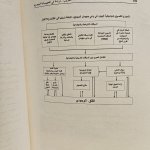


Pinned Tweet
أتقدم بجزيل الشكر إلى معالي وزير التعليم/ أ. يوسف بن عبدالله البنيان، سلمه الله، على منح الثقة،
و أشكر سعادة أمين مجلس شؤون الجامعات/ أ.د. بسام بن عبدالله البسام، سلمه الله، على الترشيح و الثقة،
و أشكر سعادة رئيس الجامعة/ أ.د صالح بن عبدالله المزعل، سلمه الله،
و سعادة وكيل الجامعة للدراسات العليا و البحث العلمي/ أ.د. محمد بن عبدالرحمن الشهري، على دعمهم و تمكينهم و ترشيحهم و ثقتهم،
حيث صدر قرار معالي وزير التعليم بتكليفي عضوا ممثلا لأمانة مجلس شؤون الجامعات في مجلس أمناء كليات العناية الطبية بمدينة الرياض،
و أسأل الله العون و التوفيق و السداد في النية و الرأي و القول و العمل، لآداء الأمانة.

Prof. Nasser Alzerwi retweeted

MASH cirrhosis is NOT an irreversible disease.
Paired liver biopsies showed cirrhosis regression in 40% of patients after bariatric surgery.
Published today in @AnnalsofSurgery
ovid.com/jnls/annalsofsurger… #TLM26

Prof. Nasser Alzerwi retweeted

Another medical dogma bites the dust!
Akero Therapeutics (now Novo) found that a medicine - an FGF21 analogue - can do this too.
Reversing cirrhosis takes a while, which makes sense - the effect is there at 96 but not 36 weeks.


MASH cirrhosis is NOT an irreversible disease.
Paired liver biopsies showed cirrhosis regression in 40% of patients after bariatric surgery.
Published today in @AnnalsofSurgery
ovid.com/jnls/annalsofsurger… #TLM26
Prof. Nasser Alzerwi retweeted

How did John Snow revolutionise modern epidemiology during a devastating wave of cholera in London in the 1800s? And how is cholera still a scourge today in many countries requiring a multisectoral response?
Find out more in an episode of the #LancetVoice: spkl.io/60127ZtAy

Prof. Nasser Alzerwi retweeted

Learning to Think: The Challenges
of Teaching Thinking
static1.squarespace.com/stat… via @RonRitchhart et al

Prof. Nasser Alzerwi retweeted

" You can't go back and change the beginning, but you can start where you are and change the ending."
C.S. Lewis

Prof. Nasser Alzerwi retweeted

As an exercise scientist, you’ll probably be surprised to hear I think we focus too much on the long-term benefits of exercise.
Not because improving your fitness, strength, muscle mass, or reducing your risk of chronic disease isn’t important - but because these benefits alone might not provide enough incentive for people to act on what they already know is good for them.
When you think about it, many of the benefits usually associated with exercise can take months, years, or decades to achieve, and some can be hard to appreciate personally (what does a 20% reduction in the risk of X chronic disease actually mean?).
And when the short-term costs of exercise (time, effort, fatigue) are so immediate and obvious, it’s easy to see why the distant and often abstract benefits struggle to compete.
Which is why I think we should pay more attention to what exercise can do for us today - and this great new review by James Fisher PhD helps us do exactly that.
It summarised the many benefits of just a single resistance training session, including:
🙂 Mood and anxiety: Reduced feelings of anxiety, sometimes within minutes of finishing.
🧠 Brain function: Improvements in certain aspects of cognitive performance.
🩸 Blood glucose: Increased glucose uptake by muscles and changes in glucose regulation that can persist into the following day.
🩺 Blood pressure: Temporary reductions in resting blood pressure during recovery.
What’s striking is the sheer range of responses triggered by just a single workout - which is of course well before any large changes in strength or muscle mass may be evident.
Some of these may be more noticeable (like changes in mood) but others occur behind the scences (such as blood pressure or glucose impacts).
But the important thing is they might just provide you with another reason to take action today. And the more reasons you have to value exercise might just keep you coming back for the longer-term benefits anyway.
-----
📸 Insights and image from:
Fisher JP. Beyond the pump: a narrative review of the acute molecular, metabolic, and neuropsychological responses to a bout of resistance exercise. PeerJ. 2026 Oct 16;14:e21827. doi: 10.7717/peerj.21827.

Prof. Nasser Alzerwi retweeted

It's important not to get so focused on what's happening in someone's brain that we forget to ask what's happening in their life.

Prof. Nasser Alzerwi retweeted

Exercise should be prescribed, not just advised. For brain health. genomicpress.kglmeridian.com…
@NTFabiano @CorlZhou

Prof. Nasser Alzerwi retweeted

Want to live a long time?
Be a multi sport athlete! 🏊🚴🏃🚶🏋️
Those with the highest amount of exercise variety had 19% lower all-cause mortality.
And make sure a good chunk of that volume is plain ol' walking! 🚶
bmjmedicine.bmj.com/content/…


Prof. Nasser Alzerwi retweeted
A new study tracking diets and wearable sleep data found that higher fibre intake was linked to:
1) More deep sleep
2) More REM sleep
3) Lower overnight heart rate
Another reason to prioritize fibre in your diet.

Prof. Nasser Alzerwi retweeted

Music reduces mental fatigue and restores related brain rhythms.
Press play, don’t push harder.

Prof. Nasser Alzerwi retweeted

Older endurance athletes have more plaque.
Master@Heart looked at 191 lifelong endurance athletes, 191 who started endurance training later in life, and 176 non-athletes, all middle-aged men with an average age of about 56.
The lifelong athletes were 1.86 times as likely to have at least one coronary plaque as the non-athletes. They were also 2.8 times as likely to have non-calcified plaque in the proximal arteries, the type and location that tend to worry cardiologists most. A lifetime of training didn't come with a healthier plaque mix either.
It is concerning? Maybe. Best to know your numbers. But athletes still tend to live longer and get CVD less.


Prof. Nasser Alzerwi retweeted

Here, 8 weeks of daily whey protein post exercise supplementation (30 g) attenuated exercise-induced increases in biomarkers of hepatic stress and muscle damage in trained athletes.

Prof. Nasser Alzerwi retweeted

Compared with metabolically healthy obesity, unhealthy obesity shows more visceral and ectopic fat, greater inflammation, and lower insulin sensitivity and fat storage capacity.
academic.oup.com/jcem/articl…

Prof. Nasser Alzerwi retweeted
One problem with medical school admissions is that interviews can reward confidence over character.
I know many incredibly kind, soft-spoken, humble doctors who struggled to get in because they sucked at interviewing.

Prof. Nasser Alzerwi retweeted
In people with a new diagnosis of coronary artery disease, no prior statin Rx (N=104), getting the LDL down to ~40 vs 70 mg/dL (via the 2 regimens, randomized, shown below) led to 20% more regression of atherosclerotic plaque in just 18 months @JAMACardio The lower the LDL, the more regression
jamanetwork.com/journals/jam…

Prof. Nasser Alzerwi retweeted
Muscles talk to the brain to delay neurodegeneration.
The gym bros were right.

Prof. Nasser Alzerwi retweeted

We trained Gemini via RL to conduct psychiatric intake with simulated patients.
In a double-blind study with 32 psychiatrists playing the role of patients, we show that multi-turn RL in simulation improves Gemini’s performance on structured text-based psychiatric intake. 🧵

Prof. Nasser Alzerwi retweeted

People who drank too little water had a bigger stress hormone surge.
Low drinkers (about 1.3 liters a day) had a cortisol rise of 6.2 versus 4.0 in high drinkers (about 4.4 liters a day). That is about 55% bigger.
Researchers put 32 healthy adults through the same stressful test: a speech and mental math in front of a silent panel. Both groups felt equally anxious, and their heart rates rose the same. Only the stress hormone was different.
The study was small, the groups were picked by their usual habits rather than assigned at random, and it was partly funded by a bottled water company. It measured one stressful moment, not long-term health.
What this means for you: if you usually drink little, your body may react harder to stress than you can feel. Drinking enough every day is a free, easy habit worth keeping.

Prof. Nasser Alzerwi retweeted

🫀 Can coronary atherosclerosis actually regress?
Our new randomized FLOWPROMOTE trial analysis, published TODAY in JAMA Cardiology, shows remarkable coronary plaque regression with intensive LDL-C lowering!
Atherosclerosis is not necessarily a one-way process.
📄 JAMA Cardiology:
doi.org/10.1001/jamacardio.2…
#Atherosclerosis #LDL #Cardiology #CCTA
