

I wish none but those who desire to be actively engaged. COME ON BOYS, IF YOU WANT A HEAP OF FUN AND TO KILL SOME YANKEES.
S.E. Louisiana
Joined July 2021
- Tweets11.4K
- Following701
- Followers9.8K
- Likes72K



Pinned Tweet
Help the Gordonsville Grays erect a new 14' monument to General Lee on private property in Virginia.
givesendgo.com/LeeRidesAgain

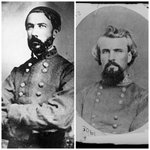
HBD Brigadier General Turner Ashby Jr. (October 23, 1828 – June 6, 1862)
Known as the "Black Knight of the Confederacy", he was the son of Colonel Turner Ashby who served during the War of 1812 and grandson of Captain Jack Ashby from the Revolutionary War. Educated by private tutors and his widowed mother, he grew up on the family farm "Rose Bank." As an adult, he became a successful and wealthy planter and businessman. Already an accomplished horseman, he competed in English style tournements which he rarely lost. In 1857 he raised a company of volunteers with the task of protecting those working on the railroad through the Blue Ridge Mountains at Manassas, Virginia. In 1859 his volunteer cavalry company went to Harper's Ferry during John Brown's raid and remained in Charles Town until after the trail. When the Civil War broke out he was commissioned a Captain in the Confederate Cavalry and returned to Harper's Ferry with his company as "Ashby's Rangers" of 7th Virginia Cavalry. Shortly after arriving in Harper's Ferry, his brother Richard Ashby was killed by a Union patrol along the Potomac River. In June of 1861 he was promoted to Lieutenant Colonel commanding ten companies and employeed the first use of horse artillery in the war. Early in 1862 he was promoted again to Colonel and then in May of the same year became Brigadier General of the Ashby Brigade under General Stonewall Jackson. President Lincoln once asked of Union General Nathaniel Banks why his 15,000+ troops were held up crossing a creek, Banks responded simply "Ashby is here." During a skirmish with Union infantry on Chestnut Ridge near Harrisonburg, Virginia in June of 1862 he had his horse, "Tom Telegraph," shot out from under him. Continuing to lead his cavalry on foot he was shot through the heart and died instantly. His body was taken to the Frank Kemper House in Port Republic for viewing, which included General Jackson as one of the mourners.
"As a partisan officer I never knew his superior; his daring was proverbial; his powers of endurance almost incredible; his tone of character heroic, and his sagacity almost intuitive in divining the purposes and movements of the enemy." - Jackson
Ashby was buried at the University of Virginia Cemetery, but in October, 1866, his body was reinterred at the Stonewall Cemetery in Winchester, Virginia next to the body of his younger brother Richard Ashby, who had died at Harpers Ferry in a skirmish with Union soldiers in 1861.
Turner Ashby High School in Bridgewater, Virginia and Ashby Hall at James Madison University are named in Ashby's honor.

"Gen Forrest, I wish to congratulate you and these brave men moving across that field like veteran infantry upon their magnificent behavior. In Virginia I made myself extremely unpopular with the cavalry because I said that, so far, I had not seen a dead man with spurs on. No one can speak disparagingly of such troops as yours." - D.H. Hill to Bedford Forrest
September 20, 1863 - Chickamauga – at United States

HBD to William Miller (August 3, 1820 – August 8, 1909.)
Biography
Miller was born in Ithaca, New York, but moved to Louisiana with his family while still a young child. He attended Louisiana College. He was a veteran of the Mexican-American War, serving in the army of Zachary Taylor and was awarded by the government for his service with 40 acres (160,000 m2) of land in Florida. He studied law, passed his bar exam, and engaged in a private practice in Santa Rosa County. He was engaged in the timber and lumber business in northwest Florida prior to the Civil War.
Miller formed a militia unit and was its major. He and his men eventually enlisted in the 1st Florida Infantry and became its first colonel in August 1862. Later that year, he fought at the Battle of Perryville, suffering a minor wound, and the Battle of Stones River, where he was severely wounded. He returned home to Florida to recuperate for several months. He was placed in charge of the Confederate Conscript Bureau for Alabama and South Florida.
On August 2, 1864, Miller was promoted to brigadier general and appointed to organize and coordinate the state's reserve troops as the new commander of the Florida District. He raised and commanded the 1st Florida Reserves, a regiment recruited to help defend the state, as most of the regular Confederate troops were serving elsewhere. His most prominent action came at the Battle of Natural Bridge in March 1865, where he served as the tactical field commander in defeating Union forces under John Newton. His men repelled three separate Union attacks during the 12-hour battle. The battle helped keep the state capital, Tallahassee, under Confederate control. It would prove to be the last state capital east of the Mississippi to remain in Confederate hands.
Miller and his men finally surrendered in Tallahassee in May 1865.
After the war, Miller returned to his timber business and also established a farm. He eventually settled in Port Washington in Walton County, where he became the justice of the peace. Miller served two terms in the Florida House of Representatives and the State Senate.
He was initially buried in Port Washington Cemetery, but in 1922, he and his wife were exhumed and reinterred in St. Johns Cemetery in Pensacola, Florida. – at Luling, LA

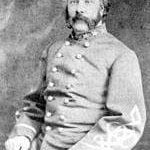
HBD to William Duncan Smith (July 28, 1825 – October 4, 1862)
Confederate Army Brigadier General. He graduated from the United States Military Academy at West Point, New York in 1846, was commissioned an officer in the 2nd United States Dragoons. He served in the Mexican-American War, and at the start of the Civil War he resigned his commission and excepted an appointment as a Major in the Confederate 1st Georgia Regular Infantry Regiment. He was promoted Colonel in command of the 20th Georgia Regiment in July, 1861 and was confirmed Brigadier General assigned to the 1st Brigade of the Confederate District of Georgia in the Department of South Carolina and Georgia in March, 1862. During this period, he led a brigade at the Battle of Secessionville and after was then given command of the First District of South Carolina, where served until his death from yellow fever. – at Luling, LA

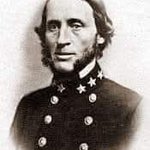
HBD to Thomas Lanier Clingman (July 27, 1812 – November 3, 1897)
Early life
Clingman was born in Huntsville, a small community in present day Yadkin County, North Carolina. His parents were Jacob and Jane Poindexter Clingman. He was educated by private tutors and in the public schools in Iredell County, NC. Clingman graduated from the University of North Carolina in 1832. He then studied law and was admitted to the bar in 1834 and began practice in Huntsville.
Political career
Clingman was elected to the North Carolina State house of commons in 1835. In 1836 he moved to Asheville, North Carolina. He was a member of the North Carolina State senate in 1840. In 1843 Clingman ran as a Whig and was elected to the 28th United States Congress, however he was defeated in his reelection bid in 1845. In 1845 he fought a duel with a fellow congressman William Lowndes Yancey of Alabama. In Yancey's maiden speech on the House floor, he had impugned his opponent's integrity. Both duelists had missed. In 1847 he regained the seat and won reelection in 1849, 1851, 1853, 1855 and 1857. On May 7, 1858, he resigned after becoming a United States Senator as a Democrat the previous day, replacing the resigning Asa Biggs. He was reelected but was expelled from the Senate for support of the Confederacy.
Civil War
When he first entered the War, Clingman was the commander of the 25th North Carolina Infantry and took part in the Peninsula Campaign. He later commanded a brigade of infantry. Clingman's Brigade consisted of the 8th, 31st, 51st and 61st North Carolina Infantry. Clingman's Brigade fought at Goldsboro, Battery Wagner, Drewry's Bluff, Cold Harbor, Petersburg, Globe Tavern, Fort Fisher and Bentonville.
Post-war career
After the Civil War, Clingman explored and measured mountains in western North Carolina and Tennessee. Tennessee's highest mountain, also partly in North Carolina, was named Clingman's Dome in his honor.
He died in Morganton, North Carolina and was buried in the Riverside Cemetery in Asheville, North Carolina.
He never married. – at Luling, LA

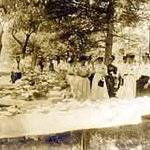
July 21, 1908 - Scottsville,Virginia
The Confederate Reunion Dinner Committee, consisting of 40 ladies led by Mrs. W. D. Patteson and Chairman Samuel R. Gault,served a bountiful feast to the 128 veterans and a hungry crowd of over 2000 spectators. More than 300 food baskets were donated for the dinner, some of which can be seen on the food-laden tables in this photo. – at Luling, LA

Morgan's first Kentucky raid.
Confederate Colonel John Hunt Morgan Reports of Col. John H. Morgan, Second Kentucky Cavalry (Confederate) commanding expedition. BRIGADE HEADQUARTERS, Tompkinsville, Ky., July 9, 1862. SIR: I have the honor to report that I arrived with my command at the Cumberland River and passed the ford at about 2pm yesterday, 8th instant. My forces consisted of Colonel Hunt's Georgia regiment cavalry, my own regiment, and a squadron of Texas Rangers; we were joined at the river by two companies under Captains Hamilton and McMillin. I received information that the enemy had passed the Cumberland River at Celina the day of my arrival with about 180 men, but did not deem it right to attack that force, as I was aware that a considerable body of cavalry, about 380 or 400 strong, were stationed at this town, and I thought by rapid night march I might succeed in surprising them. I left the river at 10pm on the 8th instant, and at 5am this day I surprised the enemy, and having surrounded them, threw four shells into their camp, and then carried it by a dashing charge. The enemy fled, leaving about 22 dead and 30 to 40 wounded in our hands. We have 30 prisoners and my Texas squadron are still in pursuit of the fugitives. Among the prisoners is Major Jordan, their commander, and two lieutenants. The tents, stores, and camp equipage I have destroyed, but a valuable baggage train, consisting of some 20 wagons and 50 mules is in my possession; also some 40 cavalry horses, and supplies of sugar, coffee, etc. I did not lose a single man in killed, but have to regret that Colonel Hunt, while leading a brilliant charge, received a severe wound in the leg, which prevents his going on with the command. I also had three members of the Texas squadron wounded, but not seriously. Very respectfully, JOHN H. MORGAN, Colonel, Commanding. – at Luling, LA

A Civilian Remembers the Battle of Monocacy
by Ryan Quint
The Battle of Monocacy, fought in 1864 between Maj. Gen. Lew Wallace and Lt. Gen. Jubal Early. Wallace’s badly-outnumbered Federals aligned themselves along the Monocacy River, hoping to hold off the Confederates in a last-ditch effort to slow the gray- and butternut-clad onslaught through Maryland. Fifty miles behind Wallace’s men lay the undefended Washington, D.C.
Beginning early in the morning of July 9, the two sides began to skirmish, the crackle of musketry and booming cannon continuing steadily through the day. As the armies came into contact, the civilians in the area took to basements for cover amidst the coming storm. One of those civilians was 18-year old Mary Addison ‘Mamie’ Tyler, a close friend of Alice Thomas, whose father’s property, the Thomas farm, soon became the epicenter of the battle. In 1913, for the battle’s 49th anniversary, Tyler, then Mrs. Ellicott Fisher, wrote the following letter subsequently printed in the Daily Frederick News on July 9, 1913. It stands as one of the best remembrances of the battle from a civilian’s perspective rather than a soldier’s or officer’s, though, as one might expect, has the dramatics of some 50 years added. Even with some of Mamie Tyler’s questionable additions, I figured the best way to remember the Battle of Monocacy on its 152nd Anniversary was through the thoughts of its 49th:
To Cellar For Shelter
At nine o’clock in the morning of July 9th 1864, Araby, the country seat of Colonel C. Keefer Thomas, where I was visiting his daughter. Alice, was a scene of restful beauty, under a cloudless sky. One hour later the scene had changed. Federal soldiers were assembling from every direction. Colonel Thomas was ordered to seek shelter at once, with his family in the cellar. It is needless to say we were not long obeying the command.
The Rebel line was near enough to be seen, and in a moment pieces of shell were flying too near to be pleasant. The battle had begun and continued six hours. Hours of suspense, anxiety, and at times, terror. There were some amusing episodes during those long hours of confinement. One of those seeking shelter, was an old colored “Mammy” who became quite indignant with the younger inmates for feeling the pangs of hunger. She remarked frequently, “Honeys, say your prayers, dis is no time to eat. Pray de good Lord to deliver us from this dreadful battle.”[1]
You can imagine how strange the sounds outside of those walls. Minie balls slashed the shrubbery, while the larger missiles of war’s fearful instruments twisted huge limbs from the trees, levelled down chimneys, and tore out an angle of the house. One of the Federal officers kindly brought us a bucket of ice water, and we conversed with him upon his ideas of the result of the battle. Of course he expected to drive the Rebels back in a short time, at which we very boldly expressed deep regret, and also requested him to let us have a wounded Confederate, who was lying outside the cellar window, between the fires, inside, with us. This he consented to do, perhaps in consideration of remark made by one of us, “Wouldn’t you rather have a live prisoner than a dead one?”[2]
This wounded man received our most devoted attention, our handkerchiefs were used in bathing the wounds with ice water. To him we were indebted for an explanation of the “Rebel Yell,” having once heard, never to be forgotten. A change came over his despondent face as he shouted, “There’s the cry of victory, raise me up.” A moment later the cellar door was opened by a comrade, who expressed deep sympathy for his condition, and carried him to the sunlight outside. Imagine if you can, the sight that greeted the eye when released from our prison cell. The soft carpet of grass had become the resting place of dead and dying soldiers, a battlefield in variety and truth. One poor soldier, as we passed, begged for a pillow to rest his dying brother’s head upon,.. – at Luling, LA

remarking “I am the last of five brothers, all slain in battle.”
Helping the Wounded
General J.S. B. Gordon was the first to greet us, with the exclamation, “What, women and children here?”[3] To Alice Thomas and myself he said, “Girls you must be brave, and do what you can for these poor men, we have not surgeons enough here.”
.
And we did what we could with loving hands, and eager feet, and when night descended on that camp, the scene was a novel one. All through the dark hours we heard the voices of dying men, some singing, some praying, and a few cursing in their delirium. Outside of our room we found a dead man lying but that was a small matter, at the close of so fearful a day. Excitement and enthusiasm had filled every move with courage and desire to help our cause.
At daylight next morning we arose from a sleepless bed to see what else we could do for our men. The first act was a most solemn one[,] General Gordon was looking for us to attend the burial of two of his staff officers, Colonel Lamar and Major Von Valkenberg.[4] He said it would comfort the families of those men to know that a little band of friends had gathered to witness the performance of so solemn a right. It was an impressive scene, the sun was rising in the east, “giving color to all manimate objects, as only Nature can.” The birds seemed to be chanting a requiem in the grand old tree under which we stood. The spot was selected to mark the graves of the two brave men whose remains would be removed later. Around those graves stood General Gordon, the chaplain, Alice Thomas and myself, and the body servant of Colonel Lamar, with the bullet-torn hat of his master pressed to his heart, weeping bitterly.[5]
Won General Gordon’s Approval
The most gratifying memory to our hearts, was General Gordon’s approval of our conduct. “You have been brave girls, I will never forget you.” The Confederates only held possession of that part of Maryland twenty-four hours, then returned to Virginia.
Child that I was I can never forget the scenes on that battlefield, and General Gordon’s surprise at seeing us come out of the cellar. I wore a short gingham dress and my hair was curled. Years later in a fashionable New York hotel, an evening dress and of course a different dressing of the hair, imagine my surprise when General Gordon came up and said, “Is this Mamie Tyler, the little heroine of Monocacy?” And then we enjoyed a long talk over that memorable July day on Monocacy field.
Soon the Confederates marched away from the Monocacy battlefield, leaving the plots of dead underneath freshly-turned soil. But the memories of the “Battle that Saved Washington” remained forever with the soldiers and civilians alike. – at Luling, LA

On July 7,1864, Sherman reported to his superiors in Washington... "I have ordered General Garrard to arrest for treason all owners and employees, foreign and native (of the Roswell Mills), and send them under guard to Marietta, whence I will send them North."
On July 7, 1864, Sherman wrote to General Garrard..."I repeat my orders that you arrest all people, male and female, connected with those factories, no matter the clamor, and let them foot it, under guard to Marietta, then I will send them by cars to the North."
A northern newspaper correspondent reported on the deportation... " only think of it! Four hundred weeping and terrified Ellens, Susans, and Maggies transported in springless and seatless army wagons, away from their loved ones and brothers of the sunny South, and all for the offense of weaving tentcloth."
On July 10, 1864 General Thomas reported the arrival of four to five hundred mill hands, mostly women, in Marietta. Other documents indicate that an undetermined number of children accompanied their mothers. – at Luling, LA

At Big Falls in North Carolina there lives a former Confederate soldier whose heroism will be sited by poets and orators as long as heroism is cherished by men. He was a color bearer of his regiment, the 13th North Carolina. In a charge during the first days battle at Gettysburg, his right arm with which he bore the colors was shivered and almost torn from its socket. Without halting or hesitating, he seized the falling flag in his left hand, and with his blood spouting from the severed arteries and his right arm dangling in shreds at his side,he still rushed to the front shouting to his comrades forward! Forward! The name of that modest and gallant soldier Is W.F. Posset.
Source : Reminiscences of the Civil War by : John Brown Gordon.
Below : battle flag of the 13th North Carolina infantry – at Luling, LA

A recollection of the 2nd day of Gettysburg
By : Major George B. Gerald
18th Mississippi Infantry, Barksdale's Brigade
When William Barksdale's Mississippi brigade charged into the Peach Orchard, Major Gerald lead a party of men to clear Federal marksmen from the barn of the nearby Sherfy farm. Gerald survived a wound at Cedar Creek in 1864 and settled in Waco, Texas, five years later. there he held the office of county judge and postmaster, and edited a local newspaper. In 1897 he killed the editor of a rival newspaper and his brother in a gunfight in Waco. He died in 1914 and his cremated remained were scattered in the Gulf of Mexico.
The order was given to "strip for the fight." The men carried their scanty change of clothing wrapped in their blankets and thrown over their shoulders; each regiment piled these in a heap and each left a man with the baggage. The field officers dismounted from their horses, the reason for this that an order had been issued some time before that no officer below the rank of brigadier or acting brigadier-general should ride into battle, because of the fact that government had a great deal of difficulty replacing the horses killed. I gave my horse and watch as well as some other belongings to my servant. After these orders had been complied with the order was given "Dress to the colors and forward to the foe!"
After moving through the woods a short distance, we came to a fence around a field of grain; the battle was progressing. Before us lay open fields dotted with houses and right in our front were some farm houses with a grove of trees to the left and he enemy drawn up in a double line of battle some five or six hundred yards distance and supported by artillery. We steadily advanced, driving the enemy before us until we reached the houses with the trees on the left, the trees proves to be a peach orchard. On the end of the orchard was a bard in which a part of the enemy had taken refuge. . . . I with most of the regiment was directly in front of the barn. . . . I called to the men that the barn must be captured and to fallow me and I would open the door. They fallowed m e with a rush and I forced the door open, and within less than two minutes we had killed, wounded or captured every man in the barn. The barn was filled with smoke so dense that it was very nearly impossible to distinguish a man's body in it, such a continuous fire had the enemy within kept up.
We left the barn and the brigade moved through the orchard towards the heights, still driving enemy before them. General Barksdale encountered the men by shouting, "Forward men, forward," which was the only command that I ever heard him give after the battle commenced. By this time we had been under heavy fire from two lines of battle and their artillery and our losses had been very heavy, and recognizing the impossibility of the breaking these fresh lines of battle, we fell back to the orchard, where we spent the night. – at Luling, LA

Private David Parker, 14th Vermont described General Barksdale's sentiment in the letter to the general's brother Ethelbert Barksdale.
Parker found Barksdale mortally wounded on July 2nd - Gettysburg.
I put his head on my lap and gave him coffee from a canteen, his mind was clear.... He commenced to tell me he was dying and that he was leaving a good and loving wife and two sons and said "Oh my wife. It will be hard for her. Tell her that my last words were words to love for her. But my boys, oh it seems that I cannot leave them. Their loss they will not fully comprehend. They need a father. Many times have I thought and planned for their future And oh I love them! So to leave them is the hardest struggle I ever knew. But tell them that I died like a brave man, that I led my men fearlessly in the fight. Tell them all, all my friends, my wife and children. I do not regret giving my life in a cause that I believe to be right, but one thing I do regret is that I could not have lived to have done more for the cause. Oh that I might again lead my men, but tell them that I died content that my last days work was well done. I feel that I am most gone, may God ever watch over and take care of my dear wife, and oh my boys, may God be a father to them. Tell them to be good men and brave always defend the right." – at Luling, LA

Soldiers describe the savage fighting in the Wheat Field 🌾
July 2, 1863.
“My aide, Lieutenant [John A. M.] Seitz … came back at a full run [his horse having been shot] … said that the enemy were in the woods on our right and … and in rear of the field … that we were surrounded … My men became engaged hand-to-hand with the enemy … I gave orders to fall back” – Colonel Jacob B. Sweitzer.
“We pitched into [the Yankees] with a piercing yell. We caught them after a short distance and the most terrific hand-to-hand fighting occurred” – Captain James L. Lemon, Company A, 18th Georgia.
“Our flag was seized by a Confederate who was bearing it off. Colonel Jeffords rushed after him and slew him … and seized the flag. A Confederate behind the colonel thrust his bayonet through him” – Lieutenant Robert H. Campbell, 4th Michigan.
“The rebels came up to the right wing of our regiment and one of the officers demanded them to halt and surrender, when one of my men … brought the butt [of his musket] down on the officer’s head” – Jacob B. Funk, Company A, 62nd Pennsylvania.
“The enemy … charged directly upon the flank of the 4th Michigan, curling it and the 62nd Pennsylvania up like a worm at the touch of fire and throwing them into the greatest confusion” – Historian, 32nd Massachusetts.
“Colonel Sweitzer, who was near the front of the 4th Michigan, gave the order about face, but I was so far to the left I did not hear the order … but soon found they were retreating so gave the order to about face, forward, when I was hit seven times all in less than a minute” – Colonel George L. Prescott, 32nd Massachusetts.
“The enemy … were coming in all directions; we were exposed to a galling fire” – Lieutenant Colonel Luther Stephenson, 32nd Massachusetts.
“The enemy … poured in a most destructive fire, almost decimating my regiment” – Major Arthur T. Lee, 2nd U.S. Regulars.
“The enemy became visible upon our right flank … While retiring, the fire of the enemy became very destructive” – Captain David P. Hancock, 7th U.S. Regulars.
“The enemy now opened a destructive upon our men, who were far inferior as to numbers” – Captain William Clinton, 10th U.S. Regulars.
“I received an order to move by the right flank a distance equal to my front” – Captain Thomas S. Dunn, 12th U.S. Regulars. – at Luling, LA

"The Grandest Charge Ever Seen by Mortal Man." Just the phrase alone seemed to demand a painting. General William Barksdale's Mississippi Brigade and their famous charge at Gettysburg on July 2, 1863 had so many exciting elements that it seemed hard to believe that no painting had ever been done of the scene.
Barksdale, a huge, balding man with long white hair, led the charge on a black horse, waving his hat and screaming orders through the din. Captain G.B. Lamar, Jr., an eyewitness to the advance, wrote of Barksdale, "He was in front of his brigade, hat off, and his long, white hair reminded me of the white plume of Navarre." In addition to this was the fact that the Mississippi Brigade made up of the 13th, 17th, 18th, and 21st regiments overran the 114th Pennsylvania, a Zouave unit like that, unlike most Zouave units, retained its original Zouave uniforms until the end of the war. This was certainly an opportunity for some dramatic use of color. But it was also an opportunity to show both forces in close hand to hand combat, something that occurred rarely throughout the war.
The late hour of the charge, 6:00 p.m. (7:00 p.m. E.D.T.), with its resulting low sun was also an important pictorial element that gave me the chance to use dramatic lighting effects that would not have been possible if it had taken place at an earlier hour. The sunlight catches Barksdale and the flag as well as the Sherfy barn in the left background, reconstructed on the present battlefield at its original location next to the Sherfy house. The men at the right charge up the hill from the west out of a small apple orchard and near a worm fence in the foreground that ran across the field at that time.
The rendering of the 13th Mississippi Regimental flag is based on the one that still survives at the Mississippi State Historical Museum in Jackson.
Mort Künstler's Comments
This is the sixth painting I have done of the Battle of Gettysburg, beginning with High Water Mark two years ago, and I hope it becomes a long lasting tribute to the men of both sides who fought for what they believed in on that fateful day.
@everyone – at Luling, LA

With Hoke's wounding at the Battle of Chancellorsville in May 1863, Colonel Isaac Avery temporarily assumed command of the brigade in time for the Gettysburg Campaign. The now 34 year old Avery led his troops forward on July 1 on a wide sweep north and east of the borough of Gettysburg. Union artillery fire from a knoll near Culp's Hill finally halted his advance. On July 2, Maj. Gen. Jubal A. Early ordered Avery along with the brigade of Brig. Gen. Harry T. Hays to assault eastern Cemetery Hill. Attacking in the early evening, Avery was struck in the neck by a musket ball and fell from his white horse, bleeding badly. Apparently he was alone at the time, and the brigade's attack was delivered without coordination. After the ill-fated charge, the partially paralyzed officer was discovered by several of his soldiers. His aide and former business partner, Maj. Samuel Tate of the 6th North Carolina, knelt by his side. Unable to speak from his mortal wound and with his right hand useless from the paralysis, Avery with his left hand scribbled a simple note and gave it to Tate. It said: "Major, tell my father I died with my face to the enemy. I. E. Avery."
Avery died the following day in a nearby Gettysburg field hospital. He was initially buried at or near Ball's Bluff National Cemetery near Leesburg. A servant named Elijah later carried his body in a cart to Williamsport, Maryland, where it was again buried. After 1871, he was reburied again, at Washington Confederate Cemetery, part of Rose Hill Cemetery, in Hagerstown, Maryland. – at Luling, LA
HBD to Junius Daniel Birthdate: June 27, 1828
Death: May 13, 1864 (35) (mortally wounded on 12 May 1864 during the Battle of Spotsylvania Court House
Confederate general, was born in Halifax, the son of John Reeves Jones Daniel (1802–68), attorney general of North Carolina and member of the United States Congress, and his wife, Martha Stith. He was educated at an elementary school in Halifax and at the J. M. Lovejoy Academy in Raleigh before receiving an appointment by President John Knox Polk to the U.S. Military Academy at West Point in 1846. Upon graduation in 1851, Daniel was sent to Newport, Ky., as assistant quartermaster; in the following year, he was stationed at Fort Albuquerque, N. Mex., where he remained for five years. In 1857 he resigned his commission to begin a career as a planter in Louisiana, joining his father who had moved there following his last term in Congress in 1851.
In October 1860 Daniel married Ellen Long, daughter of Colonel John J. Long of Northampton County, N.C. They had no children.
Though offered a commission by the state of Louisiana after Lincoln's call for troops in April 1860, Daniel returned to Halifax and offered his services to his native state. He was chosen colonel of the Fourth (later Fourteenth) Regiment and remained as the commanding officer until the period of enlistment expired. He was then offered command of the Forty-third and Forty-fifth regiments and the Second North Carolina Cavalry. He accepted the command of the Forty-fifth Regiment.
Daniel led four regiments from Raleigh to Goldsboro and organized them into a brigade; afterward, he organized two other brigades. In June 1862 he was ordered to Petersburg, Va., where his brigade joined General Robert E. Lee's Army of Northern Virginia before the Seven Days' Battles, though it took no active part in this battles.
He was commissioned brigadier general on 1 Sept. 1862, making him one of five men from Halifax County to serve as brigadier generals in the Confederate Army. He spent the fall of 1862 with his brigade at Drury's Bluff and subsequently served in North Carolina. After the Battle of Chancellorsville, he was transferred to General Robert E. Rodes's division of the Second Corps in Lee's army where he served with distinction in the Pennsylvania Campaign. His brigade was entrusted with the bearing of the "Corps Flag." In the Battle of Gettysburg, Daniel's brigade suffered the greatest losses of any brigade in the corps on the first day of the battle.
While leading his brigade at the "Horseshoe Bend" near Spottsylvania Court House, Va., on 12 May 1864, General Daniel was struck in the abdomen by a minie ball and died the next day. His body was taken to Halifax and buried in the old colonial cemetery, which is now a part of the Historic Site Area. – at Luling, LA

Today in 1862...
The Battle of Secessionville (or the First Battle of James Island) on June 16, 1862, was the defeat of the only Union attempt to capture Charleston, South Carolina, by land.
In early June 1862, Maj. Gen. David Hunter transported the Union divisions of Brig. Gens. Horatio G. Wright and Isaac I. Stevens, under the immediate direction of Brig. Gen. Henry Benham, to James Island, where they entrenched at Grimball's Landing near the southern flank of the Confederate defenses. Benham landed 6,500 men from the 3rd New Hampshire, 8th Michigan, 7th Connecticut, 28th Massachusetts, and 79th New York "Highlanders" on the southeastern end of James Island, and marched toward Charleston. However, Brig. Gen. Nathan "Shanks" Evans, who commanded less than half that number of Confederate forces, made up of troops from South Carolina, North Carolina, and Georgia, met the Northern troops at a fort at Secessionville commanded by Colonel T. G. Lamar and routed them.
The Union suffered 683 casualties (107 dead), compared to 204 (52 dead) by the Confederates. Although the battle was minor, it served as a powerful propaganda victory, increasing morale particularly in Charleston and offsetting recent Confederate losses in the Western Theater.
Benham had acted against orders in attempting to take James Island, and he was subject to a court martial after the loss. Although the numbers involved were small, the stakes were high. The Union would continue to attempt to starve and attack Charleston for the rest of the war, and, had they succeeded, the "Fort Lamar" at Secessionville (which had been named not for the secession of South Carolina, but for an earlier attempt of some plantation owners to rebel) would have controlled the harbor. – at Luling, LA
