

Making proteins in the lab and with AI 🔬💻 Wielder of petri dish and keyboard 🧫⌨️ Love heavy metal and the Arsenal 🎸🔴
London, England
Joined August 2015
- Tweets531
- Following355
- Followers214
- Likes416






Naail Kashif-Khan retweeted

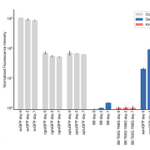
Optimizing Molecular Glues Using Free Energy Perturbation and Cofolding Methods
1. This study presents a comprehensive evaluation of Free Energy Perturbation (FEP) and Boltz-2 for predicting the binding affinity of molecular glues to protein complexes. The results show that FEP outperforms Boltz-2 in terms of correlation and RMSE, highlighting the need for more accurate high-throughput methods.
2. Molecular glues are small molecules that induce protein-protein interactions, offering access to new biology and protein targets. However, their rational design and optimization are challenging due to the dynamic nature of their binding sites. This study addresses this challenge by providing a detailed comparison of computational methods.
3. The study assessed 93 compounds across six diverse target/effector complexes, yielding 140 unique protein-compound measurements. This large-scale evaluation provides valuable insights into the capabilities and limitations of FEP and Boltz-2 in the context of molecular glue optimization.
4. FEP demonstrated good absolute predictability with RMSE values within 0.3-1.25 kcal/mol and strong correlations, making it a valuable tool for molecular glue optimization despite its higher computational cost. In contrast, Boltz-2 exhibited poor absolute predictability and generally poor correlations.
5. The poor performance of Boltz-2 suggests it is not suitable for high-throughput screening of molecular glues. This highlights the need for more accurate, high-throughput machine learning methods for pre-FEP screening to accelerate the discovery of molecular glues.
6. The study underscores the importance of accurate computational methods in the challenging field of molecular glue optimization. The findings provide a foundation for future research aimed at developing more efficient and accurate tools for drug discovery.
📜Paper: doi.org/10.26434/chemrxiv-20…
#MolecularGlues #FreeEnergyPerturbation #Boltz2 #DrugDiscovery #ComputationalBiology

So Ginkgo has just announced its own protein language model - my first question is, why would anyone want to use a closed-source proprietary pLM over one of the open-source and better understood models already out there?

@Ginkgo’s protein language model, built on @googlecloud technology, offers unprecedented insights for researchers, accelerating the development of life-saving medicines.
#DrugDevelopment #ProteinLLM #AIinBiotech #GinkgoBioworks #GoogleCloud
loom.ly/RGh0ORc

Why release the source code/weights yourself when skeptical scientists will reproduce it for you? 900 IQ plays from @GoogleDeepMind


People training biological "foundation" models - beware!

On GenAI model collapse with training sets of excessive #AI-generated content
nature.com/articles/s41586-0…
nature.com/articles/d41586-0…
@iliaishacked @yaringal @OATML_Oxford

5
460
Big news with the release of the new ESM3 protein models - looks like some exciting work but I can't help but feel skeptical about some of the hype already... evolutionaryscale.ai/blog/es…
2
18
6,630
The press release and preprint get all excited about generating a new fluorescent protein with low identity to natural proteins, but they very sneakily hide the fact that the chromophore takes a week to mature lol

2
5
565

This is why I'm struggling to get excited about AF3. Looks cool but a Nature paper with no code is a big disappointment. No way of really playing with the model or tinkering with anything, just point and click on a web server. Feels like this is just one big press release really


Finally got round to looking at this super cool recent paper from @ProfluentBio - using protein language models to design new Cas9-like gene editing proteins! + actual lab results which I always love to see in protein design/discovery papers. biorxiv.org/content/10.1101/…

7
334
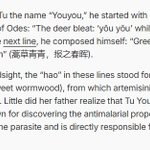
The single greatest example of nominative determinism ever to exist - from the brilliant @AsimovPress about the discovery of artemisinin press.asimov.com/resources/a…

3
155
Prompted by some protein discussion on Twitter today - I finally read the famous Studier 2005 paper (sciencedirect.com/science/ar…) on E. coli growth media and I'm absolutely blown away! A beautifully crafted, systematic scientific exposition 🔥
4
366


Super fun and interesting paper from the @CATH_Gene3D people! Turns out AFDB contains a wealth of new folds, and existing folds are found in completely new taxa too! And some exciting ways of classifying and identifying protein domains. Great read! biorxiv.org/content/10.1101/…
Or perhaps the MSAs are the same, but as the authors mention - the random MSA resampling steps during recycling push the structure network towards different conformations/models?
1
138