





Pinned Tweet
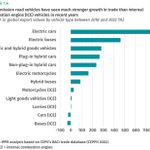
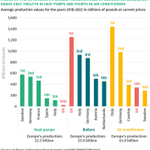
Today’s industrial strategy made some clear strategic choices for the future direction of the UK economy. IPPR found that there are opportunities for the UK in three key clean technology industries, all of which are featured in the strategy 1/8
Pranesh Narayanan retweeted

The collapse in violent crime over three decades has been one of the most striking developments of my lifetime.
News is about what’s going wrong, and rightly so. But the bigger picture also matters
From today’s figures:-

Pranesh Narayanan retweeted

@TheIFS did great analysis here, but the £35bn “black hole” reporting is misleading.
This is an “illustrative total” of extra spending in 2030/31, depending on policy choices and how pressures develop - not a fixed bill for the Autumn Budget.
Here’s why:

Pranesh Narayanan retweeted

1/ The high street has changed, but our tax system hasn't kept up.
When most shopping happened in physical stores, focusing business taxation on commercial property made more sense. But with nearly 3 in 10 sales now happening online, that logic is increasingly outdated.

🛍️| NEW BLOG: High street businesses face costs that online retailers can avoid by operating with a smaller physical footprint. We set out the case for a targeted online sales tax, with revenues used to cut business rates on the high street.
Read here 👇️
ippr.org/articles/bricks-vs-…

Pranesh Narayanan retweeted

Here’s how we can start levelling the playing field for high street businesses. 👇
Read our full blog
ippr.org/articles/bricks-vs-…


Pranesh Narayanan retweeted
I'm also concerned about UK borrowing costs and fiscal credibility, and it absolutely should be a cornerstone of the upcoming Budget.
But this framing I'm seeing feels a tad unfair to me.


Pranesh Narayanan retweeted

Why are the Right trying to stop people from joining the army? 🇬🇧🪖
Soldiers, sailors and airmen are disproportionately white, working-class men. But are they now turning against the military? Who is behind it? Why is it gaining traction? And what can be done about it? 🧵👇
Pranesh Narayanan retweeted
Since Brexit, many British exports need to be certified in the UK, and then again in the EU.
Our latest research found that a ‘mutual recognition agreement’ could increase British exports to the EU by £3.7 to £6.5 billion a year.
Here’s @jsassoon_econ explaining how 👇
This is what reindustrialisation should be about - using our existing industrial base to make things that are important for today's economy.
Government should find ways to support UK companies to find new business models
ft.com/content/ffb35fa4-b003…
Pranesh Narayanan retweeted
The next big right-wing talking point is already online. Progressives need to get better at spotting it.
I’ve written for @LabourList about the early-warning system progressives need to spot these arguments before they break into the mainstream. 🧵
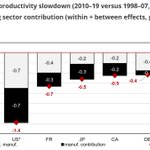
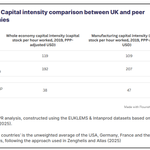
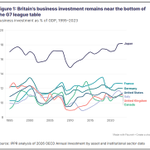
This is a pretty lazy take from the economist. Poor performance in manufacturing investment and productivity growth is what set our economy apart from the G7 in the post financial crisis period. Fixing this is an urgent task for building UK prosperity.


'Like it or not, Britain’s strengths lie in its knowledge-based services. Arty advertisers, pedantic lawyers and boisterous bankers keep the economy afloat.'
@TheEconomist explains why 'reindustrialisation' is at best pointless and at worst damaging: economist.com/britain/2026/0…
from an excellent bit of research from Bank of England economists bankunderground.co.uk/2026/0…

Pranesh Narayanan retweeted

Is this parody, @FT? Like, how many standard deviations of a usual daily move is this?

Electricity costs were not the root cause of our manufacturing ills until the 2020s - we had cheaper industrial energy than Germany for the entire post-financial crash era when productivity growth stalled, this is a culture war take not a serious economic analysis


Pranesh Narayanan retweeted
Equalising Capital Gains Tax (CGT) with Income Tax is a no brainer. Here's why:
👉 It would raise around £14bn a year.
👉 It is only paid by around 0.65% of the adult population (350,000 people), but most CGT revenue only comes from the 0.02% of the population who make gains of over £1 million.
👉 Politicians of all stripes believe it is fair to tax work and wealth the same. It was famously pro-growth Conservative chancellor Nigel Lawson who equalised CGT with income tax rates in the first place.
👉 A cleaner going to work should not pay more tax than someone who gets their income from shares or investments.
👉 It's a tax rise that wouldn't hamper growth, investment or entrepreneurialism. It is a tax rise supported by millionaires (@PatMillsUK).
British industry faces a double squeeze: companies are investing too little, and they face some of the highest electricity costs in Europe, and the two are related. Here's more about what this means for workers and one way government can help 👇
The government has an upcoming scheme to cut electricity costs for around 7,000 businesses. They should find out which companies are holding back investment due to high electricity costs, and prioritise support for them.
More details on the scheme and how I think its eligibility criteria should be designed here:
ippr.org/articles/turning-en…
