

Home of the best science(focusing physics, astronomy) and technology news since 2020. We are curious about universe are you?
Joined October 2019
- Tweets2.1K
- Following4.6K
- Followers22.7K
- Likes633




Pinned Tweet
The Devil Horns Solar Eclipse
Is one of the rarest sunrise ever photographed and was stunning.
Readers added context they thought people might want to know
The sunrise shot was snapped by photographer Elias Chasiotis while on vacation in Qatar during the eclipse in December, 2019. This post presents an AI generated video based on the photograph.
fox10phoenix.com/news/devil-hor…
🚨 Chinese Researchers Claim a Breakthrough in EM Drive Technology — Could Propellant-Free Space Travel Become Reality? 🚀
Imagine a spacecraft that can generate thrust without carrying fuel or expelling propellant. It sounds like science fiction, but researchers have been investigating a controversial concept known as the EM Drive.
Chinese research teams have previously reported experimental results involving this proposed propulsion system. However, an EM Drive that produces reliable thrust without expelling propellant has not been conclusively demonstrated, and the concept faces serious challenges under established physics.
🔬 If such a system could ever be proven to work, it would transform how we think about deep-space exploration. For now, independent verification remains essential.
🌌 Could the future of space travel look completely different — or will physics rule this idea out?


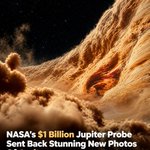
🚀 NASA’s $1 Billion Jupiter Probe Sends Back Stunning Images of the Solar System’s Largest Planet! 🤯
NASA’s Juno spacecraft continues to reveal the incredible beauty and complexity of Jupiter, capturing detailed images of its swirling cloud bands, massive storms, and powerful atmospheric systems.
Beneath those mesmerizing patterns lies a world of extreme winds, immense pressure, and mysteries that scientists are still working to understand.
🔭 Every new image helps researchers investigate Jupiter’s atmosphere, magnetic field, and the secrets hidden beneath its thick clouds.
🌌 The more we explore Jupiter, the more extraordinary our Solar System becomes!
Read more here:
news.sciandnature.com/2023/0…
#NASA #Jupiter #JunoMission #Space #Astronomy

🤯 What If the Big Bang Wasn’t the Beginning of the Universe?
A fascinating idea in theoretical physics suggests that the universe may have existed before what we call the Big Bang.
Some quantum cosmology models propose that the universe could have emerged from an earlier phase, while others explore the possibility of a universe that has no absolute beginning.
🔬 By combining quantum mechanics with cosmology, scientists are investigating whether the Big Bang was truly the start of everything — or simply a transition from an earlier state of the universe.
🌌 If the universe has always existed, what existed before the stars, galaxies, and even time as we know it?
The mystery remains unsolved, but these theories are challenging how we think about the origin of everything.


🚨 James Webb Telescope Detects a Possible Sign of Life on a Distant Planet! 🌎🔭
Could we be closer to discovering life beyond Earth?
NASA’s James Webb Space Telescope is investigating distant worlds for chemical signatures that could reveal whether conditions for life exist elsewhere in the universe.
One widely reported discovery involved possible chemical signals in the atmosphere of K2-18 b, an exoplanet located about 124 light-years away. However, the evidence remains debated, and scientists have not confirmed the presence of life.
🤯 A 99.7% statistical confidence does NOT mean there is a 99.7% chance that the planet contains life. The distinction is crucial as researchers continue investigating.
Are we finally getting closer to answering one of humanity’s biggest questions: Are we alone in the universe? 🌌


🚨 Voyager 1 Has Detected Something Strange in Deep Space!
Humanity’s most distant spacecraft continues to explore the space beyond our Solar System, sending back data from a region no other operating spacecraft has explored in the same way. 🌌
As Voyager 1 travels through interstellar space, scientists study its measurements of magnetic fields, plasma waves, and energetic particles to understand the mysterious environment between the stars.
But did Voyager 1 really encounter an unknown force? There is currently no verified evidence that it has made contact with an unidentified force or entity.
🔭 What secrets are still waiting to be uncovered in the vast darkness between the stars?


🚨 James Webb Telescope Discovers a Planet That Could Potentially Support Life!
Could we be closer to finding life beyond Earth than ever before? 🌎🔭
The James Webb Space Telescope is helping scientists investigate distant exoplanets by studying their atmospheres for chemical signatures that could offer clues about habitability.
But there’s a crucial distinction: potential signs of life are not proof that life exists. Scientists must carefully examine the evidence and rule out non-biological explanations before drawing conclusions.
🌌 Are we alone in the universe, or are we finally beginning to uncover the answer?
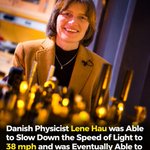
🤯 A Physicist Slowed Light Down to Just 38 MPH — And Even Managed to Stop It!
Danish physicist Lene Hau stunned the scientific world by slowing light from its usual speed of 300,000 km/s to just 17 meters per second (about 38 mph) inside an ultracold cloud of atoms.
In 2001, her team went even further, demonstrating how a light pulse could be stopped and later regenerated. 🔬
This groundbreaking research opened new possibilities for quantum information storage and our understanding of light and matter.
📚 Research: Hau et al., Nature (1999).
#Physics #Science #QuantumPhysics


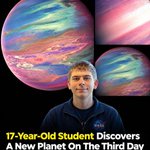
🚀 A 17-Year-Old Student Discovered a New Planet on Just the Third Day of an Internship at NASA!
Imagine starting your internship and discovering something that could change your life forever. 🤯
That’s the story behind a remarkable young student who reportedly identified a previously unknown planet just three days into an internship at NASA.
The discovery highlights how citizen science, astronomical data, and fresh perspectives can help uncover objects hidden in vast amounts of space observations.
🔭 The universe is full of surprises, and you don’t need to be a veteran astronomer to make a meaningful contribution to science.
Sometimes, one curious mind and a closer look at the data can make all the difference.
🌌 Could the next major astronomical discovery come from another young scientist?
#NASA #SpaceDiscovery #Astronomy #Science #Exoplanets #YoungScientists

For the first time, scientists have captured images revealing features of Venus’ surface using visible-light observations from space, offering a new way to explore one of the most mysterious worlds in our Solar System.
Venus is often called Earth's “evil twin."Despite being similar in size to our planet, its surface is an extreme environment, with crushing atmospheric pressure and temperatures hot enough to melt lead.
For decades, its dense clouds have made observing the surface in ordinary visible light incredibly difficult. Radar and infrared observations have helped scientists map and study the planet, but visible-light observations could provide a different perspective on its volcanic landscapes and ancient terrain.
🔭 The big question: What can these observations reveal about Venus’ geological history — and why did this world evolve so differently from Earth?
#NASA #Venus #Space #Astronomy #PlanetaryScience


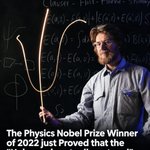
🤯 Did a Nobel Prize-winning physicist just challenge our understanding of reality?
In 2022, Alain Aspect, John Clauser, and Anton Zeilinger won the Nobel Prize in Physics for groundbreaking experiments involving quantum entanglement — a phenomenon that challenges our classical intuition about how the universe works.
Their work helped confirm that quantum mechanics cannot be explained by certain theories based on local hidden variables. But does that mean the universe is not real?
Not exactly. The experiments do not prove that reality itself is an illusion. Instead, they reveal that the universe behaves in ways far stranger than our everyday experience suggests.
🔬 The biggest mystery: At the quantum level, nature refuses to fit neatly into the picture of reality we once believed was complete.
So, what is reality really made of — and how much of our understanding of the universe is still missing?
Research paper: John F. Clauser and Stuart J. Freedman, Experimental Test of Local Hidden-Variable Theories, Physical Review Letters (1972). Read the research paper.


A scale comparison stating humans are roughly 400 million times closer in size to the observable universe (~8.8 × 10^26 m diameter) than to the Planck length (1.616 × 10^{-35} m).
Zooms logarithmically from cosmic structures through solar system, Earth, human body, cells, atoms, and subatomic particles down to Planck scale.