

AI drug discovery without the data tax. TERNIA finds better drug candidates from a single small assay. No pre-training, no million-dollar screen first.
Joined September 2025
- Tweets11
- Following20
- Followers2
- Likes11

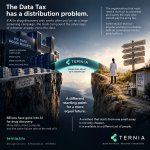


Before AI can tell you which molecules are worth making, somebody has to pay for the data that trains it.
That bill has a shape, and it lands in the same place every time.
#DrugDiscovery #TERNIA #TheDataTax #AIEngine

The standard route: run a large screening campaign, or buy access to millions of historical data points from somebody else's.
Then fit a model to it. The model is the cheap part.
#DrugDiscovery #TERNIA #TheDataTax #AIEngine
1
3
13
One question for any AI drug discovery vendor: What do I need to have already spent before your tool says anything useful? Ask it before the pilot, not during one.
Most answers involve a screening campaign, a historical dataset, or both.
#DrugDiscovery #TERNIA #TheDataTax

"Pharma-AI folks argue that general machine learning learns the underlying chemistry, which plainly speaking, is nonsense."
Our co-founder, on why curve-fitting and chemistry are not the same activity.
linkedin.com/pulse/beyond-cu…
#DrugDiscovery #TERNIA #TheDataTax #AIEngine

Before AI is useful in drug discovery, someone has to pay for the data.
Most models need the expensive screen to exist before they can tell you which compounds were worth screening.
We call it the Data Tax.
ternia.bio
#DrugDiscovery #TERNIA #TheDataTax #AIEngine


Over the past couple of weeks I've been working a natural language processing (NLP) system specifically designed around investment terminology. I called it "Ask Ben."
The aim of "Ask Ben" (Who is Ben? My youngest, super-clever son) is to integrate a pre-processing layer that efficiently maps natural-language queries into structured instructions with an LLM engine, to generate relevant investment recommendations. "Ask Ben" has schemas to post-validate LLMs answers and other guardrails for a seamless and safe user experience.
Why "Ask Ben"? Because despite all their shortcomings, LLMs can offer value if properly directed. NPS takes advantage of their vast information storage, training and computing power, with "Ask Ben" adding sophisticated prompt engineering into the mix.
Think of "Ask Ben" as the "steering wheel" of the LLM. It will even try to resolve any apparent contradictions in a query.
To my knowledge, there is NOTHING nowadays that comes close in terms of AI-based architecture tailored to the finance industry. This is not agentic AI BS.
We've tackled head-on a key brittleness of LLM engines, which simply reflects the mechanics of probabilistic inference at their heart. Translated: token generation by LLMs sample from probability distributions learned from their training data.
When an LLM is queried, there is a non-negligible chance the query traverses different regions of their knowledge set (the inevitable outcome of stochastic sampling). When queries are semantically loose, the risk of hallucinating increases in a non-trivial way (if you're drunk, you will likely slam a wall or trip on the kerb).
But let me be clear: hallucinations can even happen with point-sharp, properly structured queries. It's impossible to eliminate them fully, but one can attempt to remove degrees of freedom from the LLM to lower the risk of it going bananas... that's precisely what "Ask Ben" does.
So far, it works.
Interestingly, the differences between popular LLMs (Claude Sonnet 4.5, Grok 4, ChatGPT 5) is at times significant. It reflects the issue mentioned above, differences in their "learned" information, and in tokenization strategies.
Back to Ask Ben... it implements a three-tier hierarchical architecture. Briefly:
1. A pattern recognition layer: Comprehensive libraries covering investment intents (growth/income/preservation/balanced/speculation), risk tolerance levels (from very conservative to very aggressive), time horizons (immediate to long-term), and investment themes (technology/healthcare/energy/financial/consumer/infrastructure and others).
2. A linguistic processing layer: Sophisticated dictionaries, negation handling, proximity analysis, compound integrity and fuzzy matching with adaptive thresholds (semantic/contextual analysis). The system has also been designed for continuous improvement.
3. A confidence scoring layer: Using Gamma-function normalization, contextual multipliers, and weighted scoring across match types.
I have uploaded a short video showcasing "Ask Ben" using a simple query, written as anyone would normally do. This seemingly "simple" result requires some rather complex code across a few modules before the query hits the LLM.
Why the effort? NPS aims to democratize access to sophisticated quant tools in a simple, intuitive way, allowing anyone to test and build highly optimized investment portfolios. Hoping to help people build their financial freedom, free from intermediaries.
Video below.
vimeo.com/1124063821
@BurakYngn @ParrotCapital @wesnichols @INArteCarloDoss @TalmadgeOrion @JyrkiUurasmaa @stevehou @Scobleizer @maol
From tomorrow we'll be here daily answering questions about NPS, technical or otherwise. Whether you're a novice or experienced investor, our goal is putting quant methods in your hands in a simple, user-friendly way. Get to know NPS capabilities by joining the free Beta.
2
24
Launching NPS on X - A sophisticated investment tool for those wanting more than tips from investment shamans or media commentators. NPS gives you the ability to test multiple asset combinations and preferences. Learn more and sign up for the beta on nebulalab.ae

2
19