

🔥 Afrikaans, Boer, Realist. Anti-BEE. Pro-merit. ANC, EFF & MK = failure. “Liberty is the soul’s right… not the state’s gift.”
Gauteng
Joined December 2011
- Tweets2.7K
- Following995
- Followers1.6K
- Likes26.4K





Pinned Tweet
In 1966, the UN voted overwhelmingly to condemn South Africa’s apartheid as a "crime against humanity" because systemic, race-based laws were seen as unforgivable.
(Resolution 2202: 103 votes against, only 4 for.)
Today, nearly 60 years later, South Africa has over 140 race-based laws targeting minorities, yet the UN remains silent.
The last major one passed, Expropriation Without Compensation (EWC) should have triggered global outcry.
Instead, the UN recently gifted the ANC government R4.9 billion, despite the fact that legal discrimination persists worse than before.
Discriminatory laws are racism, by definition, no matter who the target is.
Where is your voice now, @UN?
Where is your outcry for the minorities living under modern-day legal discrimination?
Justice must be consistent. Otherwise, it’s not justice, it’s selective oppression.
You refuse to see the injustices even when its pointed out by @POTUS @elonmusk.
We do not ask for your favor.
We demand your consistency.
@UNHumanRights @antonioguterres @vonderleyen @EU_Commission @UN_PGA @EUparliament
Marcel Nel retweeted

Hey @elonmusk, in SA we have been making cars fly since 2023
Marcel Nel retweeted

🇷🇺🇿🇦 On 12 Oct 1899, Boer forces entered British Cape Colony & Natal opening hostilities in the Second Anglo-Boer War.
❗️ British scorched-earth tactics & concentration camps claimed thousands of civilian lives.
t.me/RussianEmbassyZA/16599


Marcel Nel retweeted

Botswana buys fuel from South Africa & is exactly half the price as here. This is how we are being fleeced by our government.

There is another uncomfortable part of this conversation that we should not be afraid to examine...
A study of 4,946 suicides across six South African cities between 2001 and 2003 found that suicide rates were most often highest among whites and men, although the pattern varied considerably between cities and population groups.
That is historical evidence and it does not tell us what the population breakdown looks like today, and it does not prove that current government policy causes suicide.
But it is a warning sign, and warning signs are supposed to make us ask harder questions...
Today, economic opportunity in South Africa is differentiated by design.
B-BBEE explicitly defines its beneficiaries by race, while employment equity affirmative action distinguishes between designated and non-designated groups. White people are not beneficiaries under B-BBEE, while white men without disabilities fall outside the designated groups for affirmative action.
So ask the question plainly:
What happens to someone already struggling when access to employment and economic opportunity is further affected by the race or sex they were born into?
I don't pretend the old data answers that question today. But I believe it is a question worth examining properly, with current data, and following the evidence wherever it leads.
Behind every number is a life, a family and a story.
I'm tagging @solidariteit, @afriforum and @Sakeliga because they have challenged state policy and discrimination through legal and public processes succesfully. Perhaps this is something worth taking further too.
And to you, @GovernmentZA... read this and understand:
Hope is a human necessity, not a privilege the state may ration.

Now compare 🇿🇦 South Africa to that chart.
According to WHO's 2021 estimates:
Men: 32.9 per 100,000
Women: 9.7 per 100,000
Total: 21.1 per 100,000
WHO estimates that 13,712 South Africans died by suicide in 2021 alone, 10,567 of them men. South African men die by suicide at roughly 3.4 times the rate of women, and our male rate rivals the highest shown on that European chart.
I've personally lost many people close to me to suicide.
So these aren't just numbers to me...
This crisis affects all South Africans, asians, black, coloured, indian, and white. Nobody is immune to financial hardship, unemployment, isolation, hopelessness, or that devastating feeling that you simply no longer belong.
We rightly demand attention for farm murders. We should demand the same seriousness when more than 13,000 South Africans are estimated to have taken their own lives in a single year.
Behind every number is a life, a family and a story.

🇪🇺🇱🇹🇮🇸 Europe’s suicide gap between men and women is STAGGERING.
The EU average in 2023 was 16.87 suicide deaths per 100,000 men, compared with just 4.65 among women.
Lithuania recorded the highest male rate shown at 33.6, while Iceland had the highest female rate at 9.69.
Across virtually every country on the chart, the same pattern appears: men die by suicide at dramatically higher rates than women.
Behind every number is a life, and a reminder of how serious Europe’s male mental-health crisis remains.
Writer: Samuel
Marcel Nel retweeted

Reason #14727483 why I love the USA compared to the hell hole South Africa where we came from.
@grok How long would you have to work in South Africa for a gallon of gasoline compared the USA for a gallon on minimum wage?
Bless you USA 🇺🇸
It ain't that bad in the USA. 😃
Marcel Nel retweeted

Instead of a rainbow nation, South Africa has become a retribution nation. With leftist politicians like @NYCMayor praising the race-based system currently persecuting ethnic minorities in South Africa, we in the United States should make no mistake: the fate of the Afrikaners today is the fate of Americans tomorrow.
My speech from the White Cross Project @LexLibertasOnX press conference at the National Press Club in Washington, D.C.
@NYYRC @YRepNetwork


Marcel Nel retweeted

.@afriforum today instructed its research department to conduct a comprehensive investigation into the composition of the country’s fuel prices. The investigation will focus specifically on the various levies, including the general fuel levy, carbon fuel levy, and the Road Accident Fund levy, as well as related slate mechanisms.
artikels.afriforum.co.za/en/…

Remember this when you fill up today.
Petrol: +R3.12 to R3.33/litre
Diesel: +R2.84 to R3.24/litre
Paraffin: +R4.77/litre retail maximum
LPG: +42c/kg, or +48c/kg in the Western Cape
A typical 70-litre taxi tank now costs roughly R200 to R230 more per fill purely because of today's increase.
For another everyday example, my diesel Ranger XLT has an 80-litre tank. That's roughly R260 more for a single full tank, around R2,404 before versus R2,663 today, using the inland diesel price before and after the increase.
A household buying 20 litres of paraffin pays another R95.40.
A 48 kg LPG refill is roughly R20 more in Gauteng.
And while other countries are releasing strategic petroleum stocks to cushion their economies, South Africa entered this crisis with Parliament already warning that our strategic reserves were insufficient. Government itself acknowledged that previously released strategic stocks had not been fully replenished, and only in 2026 did it begin proposing a proper 60-day state reserve system.
So when transport, food and everything moved by road becomes more expensive, remember that international events may light the fire, but decades of energy policy, lost refining capacity, import dependence and inadequate strategic reserves determine how exposed South Africa is when it burns.
Those who continue defending the ANC and the political system it built, along with its two stepchildren and its liberal-supporting party, including race-based policies many regard as legislated racial discrimination, should at least be prepared to defend the economic consequences as enthusiastically as they defend the racist driven politics.
Today, the numbers are on the pump and at home, and you will feel the consequences of your choices...
VIVA Kleptopartheid, VIVA!
Marcel Nel retweeted

Another farm murder in South Africa last night:
Hannetjie van Zyl died last night after she was attacked at her farm gate on the Doornpan Road, Ottosdal (North West). She was reportedly struck hard on the head, could not identify her attackers, was taken to hospital but died from her injuries on her way to hospital.

Marcel Nel retweeted

3,000 crosses have been planted outside Washington Monument to commemorate farmers killed in brutal farm murders (plaasmoorde) in South Africa over the last 30 years.
Marcel Nel retweeted

“Balderdash. Poppycock.”
Retired U.S. Army officer Chris Wyatt delivers a fiery speech in Washington, D.C. while remembering Glen and Vida Rafferty.
Wyatt challenges Cyril Ramaphosa's past comments about the white-cross memorial associated with the Raffertys, criticises media coverage of the issue, and explains why he believes their names must never be forgotten.
WATCH 🔴 LIVE: 3,000 White Crosses in Washington DC | The Vigil: youtube.com/live/CR9lTPTl4Ws…
@LexLibertasOnX @POTUS @elonmusk @ErnstRoets
Marcel Nel retweeted
“Where are you now?”
Lorenzo Caccialupi stands among 3,000 white crosses in Washington, D.C. and delivers a fiery message to the international media while remembering farm attack victims Christina and Roger Seelig.
He says the victims deserve justice and demands that their stories be heard.
WATCH 🔴 LIVE: 3,000 White Crosses in Washington DC | The Vigil: youtube.com/live/CR9lTPTl4Ws…
@LorenzoCaccia @LexLibertasOnX @POTUS @elonmusk @ErnstRoets
Marcel Nel retweeted

Heidie Taljaard installs crosses for her father, mother and sister, Dan, Breggie and Elzabie Brand, on the National Mall in Washington, D.C.

Marcel Nel retweeted
Amanda Platt just gave the most powerful speech I think I have ever heard, to an international audience in Washington D.C.
She told her story - how she was attacked and severely beaten on a farm in South Africa, how they chanted 'Kill the Boer' while beating her, how she was saved and lives to tell her story, and how the 3'000 crosses that will soon be displayed on the National Mall will carry the names of people who have lost the voice to tell their stories.
The conference venue was in tears.
Chanting about the extermination of people has consequences. Denying that this is happening, or claiming that such chants do not have consequences is reckless and dangerous.
We cannot let them win. We need to find a solution for those who choose to remain in South Africa.


Remember that little BEE spreadsheet?
Yeah... it got out of hand. 👀
It now has a name:
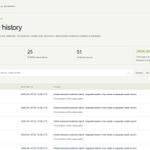
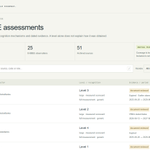
BEElantir - South Africa’s public B-BBEE evidence database
What started as a simple list is becoming a searchable system that connects public B-BBEE records, company entities, JSE links, banks, media groups, PIC relationships, historical changes and the actual evidence behind every entry.
Not just:
“Company X is Level 1.”
But:
Which legal entity?
According to which document?
When was it issued?
What changed since then?
What other public relationships connect to that entity?
Every record should be traceable back to its source.
Some of the best additions so far have come directly from the comment section, including ideas like tracking PIC board representation and other public relationship data. If you believe you can contribute something useful to the initiative, research, public records, technical help, data ideas or another angle I may have missed, DM me.
Good suggestions can help shape where BEElantir goes next.
The important part is this:
The data will be public. The sources will be visible. The history will be preserved.
No secret list. No “trust me bro.”
BEElantir.com is secured and will be the public home of the project once the platform goes live.
Still early. But this is where it’s going. See an example of the data bellow:

