


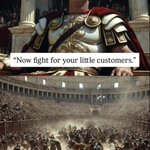



A lot of AI startups are essentially doing free R&D for the giants.
They prove demand. The giants turn it into a feature.
To justify their valuations the big AI companies need to capture every use case with a meaningful TAM.
The moment a startup gets traction it becomes a feature on someone else's roadmap.
2
212
Never Fall in Love with an Ad
The ad you spent hours perfecting.
Scrutinizing every word of copy. Picking every visual carefully. You're convinced it's going to be a winner.
You launch it. It absolutely shits the bed.
The ad you slapped together in 5 minutes while your friends were waiting for you to leave for dinner.
Absolutely rips.
The life of a marketer.
I think Andrew Huberman could be a billionaire one day.
He arguably has one of the most trusted personal brands in the world and his audience has serious purchasing power.
When he endorses a product the sales absolutely rip.
But I think his personal brand is massively undervalued. Right now he’s mostly monetizing it through sponsorships and affiliate deals.
Think about MrBeast for a second.
He used to sell ad spots for around $300K. Then he launched Feastables and now it’s doing $250M a year. Ad spots are a 3/10 way to monetize his audience. Feastables is a 10/10 way to monetize his audience.
If Huberman follows the same playbook and takes all that trust he’s built with health conscious consumers and points that laser beam at companies he actually owns…
He could build a billion dollar empire.
5
385
Will AI agents kill AOV?
AI shopping agents could be the death of AOV for e-commerce brands.
Amazon blocking AI shopping agents makes a lot more sense when you think about how humans actually shop.
Someone walks into Target to buy deodorant and walks out with 10 things they never planned to buy.
The same thing happens online. People browse recommended products, fall for upsells, add bundles to their cart and buy things they didn’t originally need.
But AI agents don’t shop like humans.
Tell an agent to buy deodorant and it might compare five different websites, find a coupon code and buy a single unit at the lowest possible price.
No impulse purchases. No emotional buying decisions. No falling for the “Buy 6 and save 30%” offer when you only need one.
E-commerce businesses have spent decades perfecting the art of getting humans to buy more than they came for.
But AI agents don’t have the same psychological weaknesses that make those tactics work.
If shopping shifts from humans to agents, a lot of e-commerce brands are going to discover just how much of their AOV depended on human impulsiveness.
Can the technology from the roadster be used to create a flying hoverboard? @elonmusk @woodhaus2 @larsmoravy
111

I feel bad for Pixar founders Edwin Catmull and Alvy Ray Smith.
They pioneered an entirely new form of animation to tell beautiful stories that brought joy to millions of kids.
Fast forward to 2026 and their visual style has been hijacked by direct response marketers to sell toenail fungus cream, gut supplements and God knows what else.
Those poor bastards lol
🤖 Made with AI

1
146

Fun Twitter fact: If someone deletes a tweet but someone quote tweeted it before it was deleted you can right click the preview of the deleted tweet and hit inspect to see the entire original tweet.
3
200

Something fundamental has changed in the Facebook ad auction.
For most of its history competition increased in a fairly predictable way. More businesses discovered Facebook ads. More advertisers joined the platform. More money entered the auction. CPMs went up gradually.
That was the old model.
Over the last 18 months several forces have hit the auction at the same time and compressed years of competitive pressure into a much shorter window.
The first is AI.
The cost of producing creative has collapsed. Image and video models now allow advertisers to generate and test dramatically more creative than they could a few years ago.
The second is the emergence of entirely new advertiser categories.
GLP-1 is probably the clearest example. Companies that barely existed a few years ago have gone from zero to hundreds of millions in revenue largely through paid acquisition. A meaningful amount of that spending has gone through Meta.
The third shift is financial.
More companies are willing to acquire customers at breakeven or even at a loss because they understand the lifetime value on the back end.
Then there is growth financing.
IM8 raised $1 billion from General Catalyst to help fund marketing spend.
That changes the competitive dynamics of the auction.
Imagine two companies selling similar products.
Company A needs to make money on the first order.
Company B can afford to lose money for four months because it has the capital and retention economics to earn that money back later.
Company B can bid more.
It can tolerate higher CPMs.
It can acquire customers Company A simply cannot afford to acquire.
Eventually Company A gets squeezed out.
This is why I think the next phase of paid acquisition will look very different from the previous one.
Competition used to increase slowly year over year.
Now competition is accelerating faster than ever before.
What might have taken three years to happen in the auction may have happened in one.
The Facebook ad game isn't disappearing.
But the economics of playing it are changing very quickly.

Affiliate marketing is great for two things:
1) Training you to become a top 1% marketer.
2) Making a lot of money in a short amount of time.
That being said, I think it’s a pretty bad business to rely on as your core business.
It’s extremely volatile, which makes the business itself worth nothing if you ever try to sell it. Even worse, a lot of that volatility is completely outside your control.
An offer owner changes something. Processing goes down. An offer gets shut off. Regulatory changes. Inventory runs out. The list goes on.
In my opinion, the better approach is to build other businesses that might not rocket ship as fast as affiliate, but are slow, steady, and consistently profitable.
Let those businesses provide the predictable cash flow.
Then layer the volatile affiliate campaigns on top.
That way, you can still go on massive runs and capture the upside when things are working, while protecting your downside when campaigns inevitably go to shit (which they will. It’s just the nature of the beast)
6
25
1,219
Paul Jey retweeted

Canada is full of founders like Brett Turner. Ask around. They're working from coffee shops, office towers and industrial parks all around the country.
Founder Spotlight started as an idea over dinner with @NerdJey and Aiden Bamford.
We were tired of explaining to our Mom & Dad what we do for a living. Tech to Canadians outside of our bubble is still largely looked at as 'just IT'
So we're changing that and filming their stories. (credit to Aiden and Hiroko at Download)
For the nineteen year old in Victoria who thinks the only way in is a plane ticket south.
It isn't. It never was. You can build it in your backyard.
Here's our first teaser video, our account is live on IG - link in the comments below
Someone needs to start a reality TV show called Course Busters.
A camera crew randomly shows up at course gurus’ condo buildings asking:
“Where’s the Lamborghini from your ads?”
“You said you owned the penthouse… why are we on the 7th floor?”
“What’s your chargeback rate?”
Then, Chris Hansen style…
“There’s actually someone we’d like you to meet.”
One by one, former students start walking into the kitchen.
🤖 Made with AI

2
6
412
