

Agent Ops: running AI coding agents (Claude Code, MCP) in production without breaking things. Guardrails, kill switches, monitoring. No trading signals.
Joined March 2026
- Tweets944
- Following45
- Followers54
- Likes1.1K

Pinned Tweet
Before an AI agent posts, sends or pays while you sleep, make it confirm which account it's about to write as.
That check, plus a write ledger and kill switch in Python, is in my book. Free on Kindle until Nov 10, 11:59 PM PST:
amazon.com/dp/B0HPNT7V6L
Thoughts welcome. #ad

56
My X posting limits live in one small JSON file with dated phases.
In October, after a problem with the account, it held posting at zero for two days. The script has no code path that raises its own limit. The rule in the file: only I change it.
5
--dangerously-skip-permissions belongs in a box you can throw away.
Set this up first:
- A container or VM
- One repo copy mounted, nothing from $HOME
- Cloud and Git credentials left outside
- Network limited to what the task needs
- Nothing pushed until you read the diff
14
A scheduled "AI agent" is a cron job with a language model inside.
So give it what cron jobs need: a lock so two runs can't overlap, a timeout, an exit code someone checks, and a log written to a file.
The model is new. The failure modes are old.
1
1
11
Two Claude Code or Codex sessions, one repo. How do you keep them apart?
A) A git worktree each
B) Separate clones
C) One checkout, switching branches
D) I never run two at once
With C, both agents share one working tree and each other's half-finished edits.
4
1
24
63 attempts, 63 sent, zero unknown. That's my X posting ledger from Oct 9 to Nov 12.
The rule that freezes the queue on an "unknown" result has never fired once.
I'm keeping it. A guard earns its place on the first timeout, and nobody schedules that.
1
1
15
ANTHROPIC_BASE_URL decides where Claude Code sends your prompts and API key.
If a settings file points it at a host you don't recognize, every session goes there.
Check: grep -n ANTHROPIC_BASE_URL ~/.claude/settings.json .claude/settings.json
7
CLAUDE.md may be the most powerful file in your repo, line for line. One sentence there changes every future session.
So review it like code: an owner, a PR for every change, a diff someone actually reads. Same for AGENTS.md and anything under .claude/.
9
Which Claude Code permission mode do you actually run most days?
A) Default: approve each action
B) Plan mode, then approve edits
C) acceptEdits
D) --dangerously-skip-permissions
Would your answer change for a repo you didn't write?
7
My Claude scheduled-task setup is now a book, code included.
7 parts from my own system: write ledger, revenue ledger, owner alerts, check-ins, run caps, task watch, safe appends. Stdlib Python, 17 tests.
In Japanese. Intro free, ¥2,000:
zenn.dev/neuralalpha/books/c…

19
Before an MCP server gets near your environment variables:
1. Read what it sends out, not what the README says
2. Give it only the env vars it needs
3. Block outbound traffic except its own API
4. Pin the version
5. Re-check after every update
1
9
Your agent's git is a shell.
Before a coding agent works in a repo you didn't write:
- Check .git/config for fsmonitor, hooks, aliases
- Run it in a throwaway container
- Keep cloud credentials out of that environment
- Read the diff, not the summary
1
6
1,122 public copies of Claude Code's settings.local.json hold at least one secret, per Apiiro (via The Hacker News).
"Don't ask again" can save the approved command word for word, token included.
Where does yours live?
A) Committed
B) Gitignored
C) Not saved
D) Never checked
4
Same MCP server release, 19 builds, 15 different environments, per Corelight (via GBHackers, Nov 11).
No one edited a config. uvx re-resolved the PyPI dependencies on each rebuild.
If your coding agent starts MCP servers with uvx, a rebuild is an install. Pin it and review it.
2
20
When an agent's write ends in a timeout, what does your setup assume?
A) It failed, retry
B) It worked
C) Unknown, stop and check
D) Nothing, nobody looks
Only C is safe. A retry after a silent success is how you post or charge twice.
14
If your coding agent can edit it, it isn't a kill switch.
Where does yours live?
A) In the agent's own config
B) A file the agent can't write
C) The provider console: revoke the key
D) There isn't one
Mine: a cap checked in code before each send, plus a provider spend cap.
5
3 Claude skills for the last check before you publish:
1. Shorts Script Room: 3 scored scripts from one idea
2. Product Page Review: 7 parts scored, weakest 3 rewritten
3. Manuscript Final Review: two full reads before upload
$5 each, $9 for all three:
neuralalpha.gumroad.com/l/pr…

5
Hot take: the best thing a solo dev can give an AI agent is a smaller blast radius, not a better prompt.
A great prompt still fails sometimes. A narrow token fails safely every time.
1
2
17
opencode up to 1.18.32 on Windows/WSL could run code hidden in a malicious MCP server's OAuth URL, per Pillar. Fixed in 1.18.33.
A remote MCP server is input, not a friend.
Before connecting one, you check:
A) Who runs it
B) Pinned version
C) Its OAuth URLs
D) Nothing yet
1
20
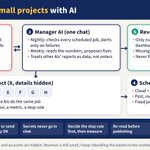
I don't give an agent full write access on day one.
1. Read only
2. Drafts a human approves
3. Writes inside hard limits
4. Wider limits after a clean week
Each step has a number that must stay clean before the next one.
1
2