

Working together to improve the #NiagaraRiver. Follow to get involved and learn about the Niagara River (Canadian) Remedial Action Plan #NRRAP RT≠ endorsement
- Tweets1.7K
- Following257
- Followers305
- Likes2.6K







ALT An autumn view of the Niagara River with colorful fall foliage. Title of the post reads "Habitat Change along the Niagara River."

ALT A view of the Niagara Gorge surrounded by fall foliage. Text reads, "As autumn gives way to winter, the Niagara River landscape begins to transform! Trees lose their leaves and vegetation dies back. But these seasonal changes are an important part of nature's cycle."

ALT An educational graphic explaining how wildlife benefit from seasonal plant dieback. Featured photos include a picture of a bald eagle returning to its nest and an eastern gray squirrel sitting in fallen leaves on the ground. Text explains that plant stems, seeds, and natural debris provide food and overwintering habitat for insects and birds, while fallen leaves return nutrients to the soil and offer shelter for insects, invertebrates, and other small creatures.

ALT This post features an image of ice-covered Niagara Falls, and an image of geese flying through the sky during migration. Text explains that the Niagara River's fast flowing waters don't freeze in the winter, providing important habitat for fish, waterfowl, and other aquatic wildlife. Additional text notes that the Niagara River is an Important Bird Area where many migratory birds stop to rest and recharge during their journeys.

ALT A Halloween-themed graphic showing a moonlit Niagara River scene with bats, a ghost, and a waterfall. Text introduces the wildlife that becomes active along the Niagara River at night.

ALT An educational graphic featuring bats, raccoons, and skunks. Text explains that bats use echolocation to hunt insects and help control insect populations, raccoons are adaptable nocturnal animals known for their distinctive masked faces and climbing ability, and skunks use their strong sense of smell to locate food and spray a defensive scent when threatened.

ALT An educational graphic featuring a Virginia opossum and an owl. Text explains that the Virginia opossum is Canada’s only marsupial and helps clean up the ecosystem by scavenging insects, carrion, and other foods. Additional text describes owls as skilled nighttime predators with excellent hearing, low-light vision, and specialized feathers that allow them to fly quietly while hunting prey.

ALT A graphic featuring a scenic view of Niagara Falls surrounded by vibrant autumn foliage. A large banner across the top reads "Thank you for joining us! Ball's Falls Thanksgiving Festival 2026." Decorative illustrations of pumpkins line the bottom of the banner. The Niagara Remedial Action Plan logo appears in the bottom left corner.

ALT A collage of images showing Niagara River Remedial Action Plan outreach activities at the Ball's Falls Thanksgiving Festival, including educational displays, conversations with visitors, and an information booth about the Niagara River RAP. Text on the graphic reads "Engaging with the community is a great way to learn more about the Niagara River Remedial Action Plan!"

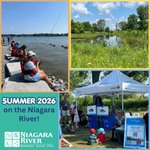
ALT A collage of summer activities on the Niagara River featuring shoreline fishing, a wetland habitat, and learn to fish event. Text reads “Summer 2026 on the Niagara River!”

ALT Collage featuring Niagara River field tours, scenic views of the Niagara River, and interactive outreach activities during summer 2026.

ALT A World Migratory Bird Day graphic featuring Canada geese in flight. Text reads “World Migratory Bird Day, October 10, 2026”. Additional text explains that the Niagara River is an important stopover for migrating waterfowl, providing a place for birds to rest and recharge during migration.

ALT An educational graphic about migratory waterfowl in the Niagara River corridor. Text explains that waterfowl can travel thousands of kilometres during their annual migrations, using multiple navigation cues to orient themselves, and must build up energy reserves before and during their journeys. Featured wildlife include two male mallards and a male red-breasted merganser.

ALT Post features the Niagara River Remedial Action Plan booth with educational signage. Text on the graphic invites people to visit the Niagara River Remedial Action Plan team at the Ball’s Falls Thanksgiving Festival from Oct 9-12. Time: 10 AM – 5 PM. Address: 3292 Sixth Avenue, Lincoln.

ALT A World Animal Day graphic featuring a Canada goose standing on green grass near the Niagara River. Large text reads “World Animal Day, October 4, 2026.” The Niagara River Remedial Action Plan logo appears in the lower left corner.

ALT A wildlife collage highlighting the biodiversity of the Niagara River ecosystem. The graphic features various wildlife species, including a Green Frog, Grass Pickerel, Northern Watersnake, Great Egret, American Bald Eagle, Beaver, and American Mink. Text reads: “The Niagara River is a diverse freshwater ecosystem that supports over 518 species of wildlife."

ALT An infographic over a scenic Niagara River background showing the variety of wildlife supported by the Niagara River corridor. The graphic lists: 338 species of birds, 102 species of fish, 35 species of mammals, 14 species of reptiles, 17 species of amphibians, and 12 species of mussels. Each category is accompanied by a simple wildlife icon representing the group.

ALT A photo featuring several Canada geese standing beside calm water. Large text on the left reads: “Every species plays a role in keeping the Niagara River ecosystem healthy and thriving. This World Animal Day, let’s remember that protecting wildlife starts with protecting the places they call home.” The Niagara River Remedial Action Plan logo appears in the lower left corner.

ALT A scenic autumn view of the Niagara River flowing through the Niagara Gorge. An orange artistic graphic featuring a bird, fish, flower, and circular symbols appear in the upper left corner of the image. White text reads "National Day for Truth and Reconciliation, Sept. 30."

ALT A scenic view of the Niagara River winding through the Niagara Gorge, surrounded by forested cliffs displaying vibrant autumn colours. Large text reads "World Rivers Day." A blue banner with a heart icon encourages viewers to reflect on the places, people, and wildlife connected by the Niagara River. A second text box asks, "What's your favourite Niagara River memory? Share it in the comments!" The Niagara River Remedial Action Plan logo appears in the lower left corner.

ALT A close-up view of Niagara Falls with turquoise water cascading over the edge of the falls. A blue banner in the upper left corner reads "World Water Monitoring Day" alongside a droplet and water quality icon. The Niagara River Remedial Action Plan logo appears in the lower right corner.

ALT An educational graphic for World Water Monitoring Day with text explaining that water monitoring helps us understand the health of our waterways and that anyone can get involved. Additional text encourages people to spend time near the river, learn about the Niagara River ecosystem, and help keep it clean to support a healthy watershed. A photo shows a person collecting a water sample from Queen's Royal Beach. The graphic includes a link to niagarariver.ca and the Niagara River Remedial Action Plan logo.

ALT Split-image graphic featuring two views of the Niagara River with text encouraging viewers to read the Niagara River Newsletter for September 2026. The Niagara River Remedial Action Plan logo appears at the bottom.

ALT Educational graphic featuring the Niagara Whirlpool in the Lower Niagara River. The title reads "BUI #14: Loss of Fish and Wildlife Habitat." The NRRAP logo appears on the image.

ALT Educational graphic with a blue background and an illustration of a person taking notes. Text explains the importance of wetlands, shorelines, and aquatic habitats for fish and wildlife. The graphic notes that all habitat restoration actions have been completed and that the Beneficial Use Impairment is being assessed. A message emphasizes that healthy habitat supports healthy ecosystems. The NRRAP logo appears on the image.

ALT Educational graphic featuring the Niagara Whirlpool in the Lower Niagara River. The title reads "BUI #6: Degradation of Benthos." The NRRAP logo appears on the image.

ALT Educational graphic with a blue background and an illustration of a person taking notes. Text explains that benthos are organisms that live at the bottom of water bodies and are important indicators of ecosystem health. The graphic highlights the Lyons Creek East sediment remediation project and its role in restoring habitat and supporting a healthier Niagara River ecosystem. The NRRAP logo appears on the image.

ALT Educational graphic featuring the Niagara Whirlpool in the Lower Niagara River. The title reads "BUI #1: Restrictions on Fish and Wildlife Consumption." The NRRAP logo appears on the image.

ALT Educational graphic with a blue background and an illustration of a person taking notes. Text explains that legacy contaminants contributed to fish consumption advisories in parts of the Great Lakes, and that within the Niagara River wildlife consumption is not impaired, and fish consumption is currently being assessed. A message highlights that clean water supports healthy ecosystems. The NRRAP logo appears on the image.

ALT A scenic view of the Niagara River winding through the Niagara Gorce, surrounded by forested cliffs. Large text reads "National Wildlife Day September 4th." A blue banner says, "Swipe to celebrate Niagara River wildlife!" With a large arrow pointing right. The Niagara River Remedial Action Plan logo appears in the lower left corner.

ALT A collage featuring three wildlife species found in the Niagara River watershed. In the top left, a female mallard stands beside several ducklings resting on a log at the water's edge. At the top right, an American toad sits partially submerged in shallow water. At the bottom, a rainbow trout lies in a clear stream. Each species is labelled, and the Niagara River Remedial Action Plan logo appears in the lower left corner.

ALT A collage featuring four wildlife species found in the Niagara River watershed. In the top left, a monarch butterfly rests on a cluster of purple flowers. In the top right, an American mink stands on a rocky shoreline. In the bottom left, a great egret wades through shallow water. In the bottom right, a bald eagle perches on a tree branch against a pale sky. Each species is labelled, and the Niagara River Remedial Action Plan logo appears in the lower left corner.

ALT Photo of plants growing in a natural outdoor habitat. A graphic of a teal envelope and an opening letter appears over the image. The letter reads: "Did you receive our August e-newsletter? Subscribe today and never miss out! niagarariver.ca". The Niagara River RAP logo appears on the image.

ALT Educational graphic featuring the Niagara Whirlpool in the lower Niagara River. The title reads "What are Beneficial Use Impairments?" A graphic of a puzzled person with question marks appears beside the title. The NRRAP logo is displayed.

ALT Educational graphic with a blue background featuring a person holding a lightbulb. Text explains that a Beneficial Use Impairment (BUI) occurs when pollution or environmental changes affect how people use or enjoy a waterway. The graphic notes that there are 14 potential BUIs used to assess Great Lakes Areas of Concern. The NRRAP logo is displayed.

ALT Educational graphic with a blue background explaining the historical status of Beneficial Use Impairments in the Niagara River Area of Concern. Text states that in 1993, eight BUIs were impaired, two required further assessment and were later found to be impaired, and four were not impaired. The graphic also notes that seven of the ten impaired BUIs have since been restored. The NRRAP logo is displayed.

ALT Educational graphic with a blue background featuring illustrations of Niagara River wildlife, including a bald eagle, monarch butterfly, fish, waterfowl, mussel, aquatic invertebrates, and a person fishing. Text explains that every restored Beneficial Use Impairment is a milestone toward a healthier Niagara River and encourages viewers to learn more at niagarariver.ca. The NRRAP logo is displayed.

ALT Graphic promoting the Niagara River newsletter. The image features the newsletter banner with two photographs of the Niagara River. Text overlaid on the banner reads, "Read this month's Niagara River Newsletter. August 2026" The Niagara River Remedial Action Plan (NRRAP) logo appears in the bottom middle of the image.

ALT Aerial photograph of Horseshoe Falls on the Canadian side of Niagara Falls. Text on the image asks, "Do you have pictures from visiting the Niagara River?" and encourages viewers to share their adventures along the Niagara River by tagging @niagarariverrap or emailing photos to [email protected]. The NRRAP logo appears on the image.

ALT Invasive Species Feature graphic with a purple background and two photographs of Purple Loosestrife. Text asks, "Have you seen this flower?" and describes key identification features, including its tall height, bright purple flower spikes, square stems, and narrow leaves. The NRRAP logo appears on the image.

ALT Educational graphic with a purple background and a photograph of Purple Loosestrife. Text explains that although the plant is attractive, it is an invasive species that threatens wetlands by spreading quickly and outcompeting native plants, reducing habitat for birds and other wildlife. The graphic encourages viewers to avoid planting or spreading it. The NRRAP logo appears on the image.