

SEO-specialist | B2C & B2B | E-commerce SEO | SEO content | Technical SEO | AI
Den Haag, Nederland
Joined June 2015
- Tweets3.1K
- Following1.5K
- Followers680
- Likes2.9K





Nick Seitzinger retweeted

Mocht de URL niet werken (je moet daarvoor ingelogd zijn op Insta in de browser), dan kun je het ook via de apps doen.
Instagram: Instellingen > Info > Privacybeleid en dan bezwaar maken.
Facebook: Instellingen > Privacybeleid en dan bezwaar maken.
🫡

Nick Seitzinger retweeted

Interested in the impact of Apple's Link Tracking Protection? This post is for you -> iOS17 Link Tracking: The End of URL Parameters
But... "UTM tagging hasn’t (yet) been removed by Apple. So you can still use it to track campaign results using a last-click attribution model." lunio.ai/blog/strategy/ios17…

Nick Seitzinger retweeted

The September 2023 helpful content update is rolling out with an improved classifier. It will take about two weeks to complete. We'll update our ranking release history page when the rollout is complete: status.search.google.com/pro…
Nick Seitzinger retweeted

Today we heard from Google re: the total removal of HowTo rich results from search. Doing schema solely for rich results may not be ideal in the long run.
Glad to hear from @daveojeda on the value of schema markup in the context of entities & Google's evolved ranking algorithms!

Rankable is back! 🏆
@daveojeda stops by the show to talk about the value and future of Schema.
🔵 Entities in the Context of Schema
🔵 Common Mistakes People Make With Schema
➕ more!
View the full episode: ipullrank.com/schema-dave-oj…
Nick Seitzinger retweeted

My top tip for everyone in marketing:
Don't sell an item, sell an outcome.
Features < benefits.
Nick Seitzinger retweeted

If you are a modern professional, focus on mastering the art of skimmable writing.
Skimmable doesn’t mean short.
It means well-organized, logical, and visually not an eye sore.
It means reducing cognitive load for your reader.
This skill is an investment you’ll use daily.
Nick Seitzinger retweeted

Google published a set of rules (checklist) for #GA4 UTM tracking, but most people continue to ignore this checklist and tag URLs however they please. Then, they complain about the unassigned traffic appearing in their reports.
.
.
Unassigned traffic in GA4 refers to the website traffic that is not attributed to any one of the following default channel groups:
Affiliates
Audio
Cross-network
Direct
Display
Email
Mobile Push Notifications
Organic Search
Organic Shopping
Organic Social
Organic Video
Paid Other
Paid Search
Paid Shopping
Paid Social
Paid Video
Referral
SMS
.
.
Google uses certain rules (called ‘channel rules‘) to group similar website traffic sources (usually that all belong to the same traffic medium).
For example,
Consider the following traffic sources:
google (as in google / organic)
yahoo (as in yahoo / organic)
bing (as in bing / organic)
aol (as in aol / organic), etc.
Since they all have the same traffic medium, ‘organic’, they will be grouped together under the channel group ‘organic search’.
Google does not have any pre-defined channel rules to group traffic sources that have either user-defined sources and mediums or they are (not set).
So what it will do is group these traffic sources under the ‘unassigned’ channel group.
.
.
Your UTM parameters should strictly follow the channel rules for manual traffic (check the screenshot below) wherever you can so that your website traffic is attributed to one of Google‘s default channel groups.
For example, consider the following URL of a Facebook ad:
https :// www. abc .com/book-maths-and-stats/?utm_source=facebook&utm_medium=paid-fb-ad&utm_campaign=pdf-book-campaign&utm_content=ad1
Here, ‘paid-fb-ad’ is not a system-defined traffic medium.
So Google will label all the website traffic from this URL under the ‘unassigned’ channel group.
But this is not what you want. You want this traffic to be grouped under the ‘paidsocial‘ channel.
To do that, rewrite the UTM parameters like the one below:
https :// www .abc .com/book-maths-and-stats/?utm_source=facebook&utm_medium=paid&utm_campaign=pdf-book-campaign&utm_content=ad1
Here, paid is a system-defined traffic medium.
.
.
Use system-defined traffic sources and system-defined traffic mediums wherever possible.
A system-defined source is one that is already defined/recognized by GA4 as a traffic source.
Similarly, a system-defined medium is one that is already defined/recognized by GA4 as a traffic medium.
The more user-defined traffic sources and/or medium you will use, the higher will be the unassigned website traffic in GA4.
Memorize channel rules and definitions for accurate tagging.
It is very important to know how Google groups similar traffic sources and how it defines a particular marketing channel.
This knowledge will help you tremendously in tagging URLs that follow GA4 default channel rules.
Share this information with all those who tag URLs in your organization. Everybody needs to be on the same page.

Nick Seitzinger retweeted

I had the honor of being interviewed by @TheodoraPetkova; a truly wonderful experience and I hope you will enjoy the end result just as much.

Right from the schema ninja's mouth :) @JarnoVanDriel has our structured markup backs :) teodorapetkova.com/dialogues…
@essentialskill , @DavidAmerland , @cyberandy , @hoijnet , @daveojeda - enjoy the vibes! We need more Jarnos :)
Nick Seitzinger retweeted

How SEOs and UX Designers Can Work Better Together — Whiteboard Friday dlvr.it/SvFBg3

Nick Seitzinger retweeted

6 steps to writing a great value proposition statement:
•Revisit your company’s mission
•Research your target audience
•Analyze your competitors
•Define your brand’s Tone of Voice
•Compile your research
•Brainstorm with a value proposition template
social.semrush.com/45HXkw9.

Nick Seitzinger retweeted

Want to easily spot if your sites have been likely affected by Google's Core Updates for free? 📈 Use GSC Guardian! The free Chrome extension from @DasfNYC highlighting Google Updates over your Search Console Performance report 👀 Check it out 👇 chrome.google.com/webstore/d…

Nick Seitzinger retweeted

A few thoughts on Google core updates based on 15 yrs of studying and advising on Google algorithm/system changes.
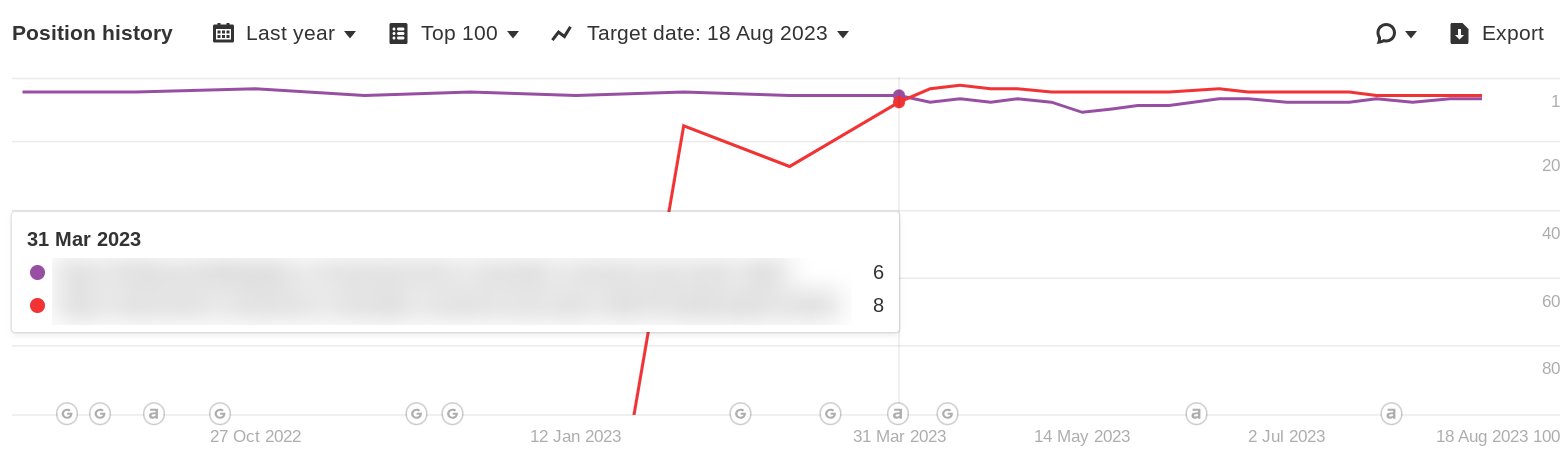
1) In most cases, if a site is going to be impacted, the brunt of the impact is felt a day or two into the update. Here is an example of a site affected by the March Core update.
2) Not sure if it was the update or something else? Check other traffic sources like Bing and direct. If those are wildly down as well, you may have something else going on.
3) If affected, it's not a penalty. It's not because you've built unnatural links. It's not because you've broken Google's guidelines. It's not because you have technical issues with your site. You are not going to fix this with a technical audit.
4) Core updates represent Google improving their algorithms and systems to better present helpful and reliable results. If your site did not do well following a core update, it means that Google's systems feel that other sites' content is better to put in front of searchers.
5) How do you know what it is that Google's algorithms changed to make them prefer other sites over yours? There's no way to know for sure.
Here's what I do. I look for examples of keywords that dropped in rankings.
Then I use @ahrefs keyword tool to find which competitors improved.
Then, I put myself in the shoes of a searcher and ask:
-What is their main reason for going to this page?
- Why would the page Google elevated be better to meet that need?
Searchers tend to skim and want fast answers. Often I find that content that suffers has loads of words that searchers just skip over until they find the part that truly answers their question. That is the "main content". Your goal should be to make the main content incredibly helpful and also, easy to find.
I compare pages using the criteria Google says to consider here:
developers.google.com/search…
There's a lot you can do with this info. Here's a workbook I created that gives you many exercises you can go through to figure out what & how to improve.
mariehaynes.com/product/crea…
You can use Claude/ChatGPT to some extent to compare pages, but really, you really need to do this manually. There are components of page experience that a text based AI tool won't be able to compare.
Sometimes you'll find things that can be improved. Perhaps you can be more clear and concise in how you meet searcher need. Perhaps you can add better supporting references. Or maybe you can work on adding more truly original, helpful insight - based on your experience - and removing pages that are simply regurgitating what everyone else says.
But sometimes the issue is not fixable. For example, if you're a blog writing about a topic and you're being consistently outranked by real world businesses who advise people on that topic in real life, that's going to be hard to remedy.
6) What about E-E-A-T?
Yes, core updates assess E-E-A-T. But know that E-E-A-T is not as simple as just having author bios. It's so much more. E-E-A-T represents signals Google can use to determine your authenticity. Don't worry about understanding E-E-A-T. Instead, focus on the helpful content questions. Reputation is key - not necessarily reviews, but really having evidence that people on the web consider your site as one of the go-to places for your topic. Popularity - being known as a topic expert - is important.
I think the most important of the helpful content questions is this:
◾️Does the content provide substantial value when compared to other pages in search results?
Hope this helps! And I wish you the best of luck with your rankings! (Which reminds me...I need to do another podcast on core updates!)



Nick Seitzinger retweeted

HOW TO CREATE CONTENT THAT SPREADS
Take a look at what already exists on a topic & ask yourself 2 questions:
1) What would people be left wondering after reading everything here?
2) What can you do to make a resource on this topic worth bookmarking?
Then create it.
Nick Seitzinger retweeted
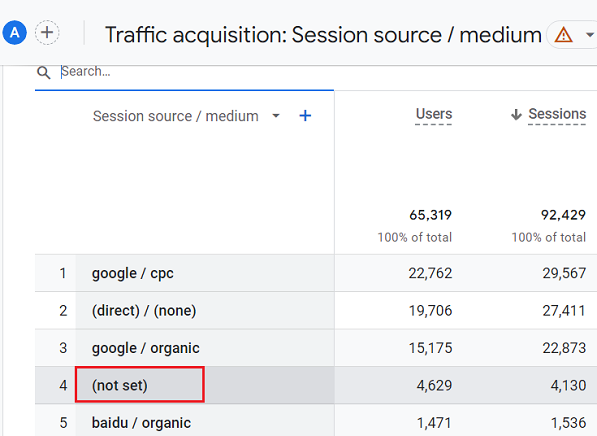
These are the top three reasons for (not set) appearing in your #GA4 reports and how to fix them...
GA4 uses a placeholder called (not set) whenever it does not receive any information for a particular dimension.
There are many reasons to have (not set) values in the reporting, and these reasons vary from report to report depending upon the dimension selected.
.
.
1) The number 1 reason for (not set) appearing in your GA4 reports is that you are not tagging ad URLs correctly.
Tag ad URLs using the UTM tracking parameters (manual tagging) or the auto-tagging feature.
Regularly monitor and validate your tagged URLs to identify and fix any (not set) issues that may impact your GA4 data.
.
.
2) The second most common reason for (not set) appearing in your GA4 reports is using measurement protocol (MP) to send data.
When using MP, you may not always provide all the data the standard GA4 tracking code collects automatically.
If certain data is not included in the MP request, GA4 will use the placeholder (not set) in your reports.
Make sure the parameter values are formatted correctly, as GA4 may not be able to process incorrectly formatted values, leading to (not set) entries.
Regularly monitor your MP requests to identify and fix any (not set) issues that may impact your GA4 data.
.
.
3) The Server side tracking can also result in (not set) data in GA4 reports if not implemented correctly.
If your server-side tracking implementation is not complete or does not track all user interactions, GA4 might not receive the necessary data for certain dimensions, leading to (not set) values in your reports.
When using server-side tracking, you must include all relevant parameters in your requests to GA4.
If the values for the parameters you send from the server are not formatted correctly or don’t match GA4’s expected format, GA4 might not be able to process the data, resulting in (not set) values.
Regularly monitor your server-side tracking implementation to identify and fix any (not set) issues that may impact your GA4 data.
Nick Seitzinger retweeted
If you want to save your historical Universal Analytics (GA3) data from being deleted, then one of the options is to backup Universal Analytics data to #BigQuery.
Google will delete all of your historical universal analytics data on July 1st, 2024.
By backfilling Universal Analytics data in #BigQuery, you can backup Universal Analytics data.
.
.
However, there are certain challenges associated with exporting Universal Analytics data to BigQuery.
When you backfill historical data from GA3 into a BigQuery project, the data will be stored in a raw, unprocessed format.
The data tables in BigQuery will contain the same data as was collected by GA3, but the data will be stored as individual rows in a tabular format rather than being aggregated into reports as in GA3.
Once the data is imported, a lot of formatting work may be required to make it usable or viewable in the same way as it was in the GA3 user interface.
The amount of formatting work will depend on your specific tracking needs and the complexity of your data.
Then joining and correlating the GA3 and #GA4 data is another beast because both GA3 and GA4 use different measurement models and data structures.
We could be looking at several months of additional work here.
.
.
Instead of taking a backup of everything in Universal Analytics, I recommend that you save only the data you really need in Google Sheets.
However, you may have specific tracking requirements which could be met only by exporting Universal Analytics data to BigQuery.
Learn more >> optimizesmart.com/how-to-bac…

Nick Seitzinger retweeted
Google’s Search Generative Experience and the future of eCommerce SEO by @MagnificentDuke reddico.co.uk/insights/sge-a…

Nick Seitzinger retweeted
One of the most overused (and bad) pieces of advice given by marketing gurus is:
“Content is king. Just create content and the work will take care of itself...”
Very bad advice.
I’ve learned:
You need to know your audience. How to create great content & embrace distribution.
Nick Seitzinger retweeted

Google cares about the quality of content; not how it is produced
If it’s quality, the ranking systems look to reward that. Quality is the common denominator
AI content is only spam if you’re only using it to rank in search engines
@searchliaison @dannysullivan – at San Francisco, CA

Nick Seitzinger retweeted
Sites need to meet the requisite level of E-E-A-T to be included in SGE - Google wants to learn from good data.
They also need to show consistency across the content and topics they produce.
Only then are you considered for SGE.
@Suzzicks @EngagePDX #enagepdx – at Portland, OR

Nick Seitzinger retweeted
New from Google:
"We're reducing the visibility of FAQ rich results, and limiting How-To rich results to desktop devices."
Finishes rolling out globally, to all languages next week.
FAQ rich results will only be shown for "well-known, authoritative government and health websites."

To provide a cleaner and more consistent search experience, we're changing how some rich results types are shown in Google's search results, and reducing the visibility of FAQ and HowTo rich results. Find out more: developers.google.com/search…

ALT Sample mobile search result showing a page with and without FAQ rich results