
Data science leadership; @NorthwesternSPS, @MSU_EPET, and @MichiganRoss Graduate; Chief Learning Officer for @NHAschools; Data Science Lecturer for @UMSI
Grand Rapids, MI
Joined January 2011
- Tweets963
- Following221
- Followers205
- Likes170



Pinned Tweet
The only meaningful definition of a generalist is a specialist who can relate his own small area to the universe of knowledge.
Peter Drucker
Nick Sheltrown retweeted

The one thing I’d want everyone to know about Direct Instruction is that the methods, materials and routines are far less important than the underlying drive behind it: the unswerving belief that EVERY child can achieve, regardless of circumstance.
DI is based on a deeply held conviction that if a child didn’t learn, it was because the teacher (or curriculum) didn’t teach them properly. In that sense, it is a movement rooted in social justice but one which takes responsibility for outcomes.
In the 60s and 70s, there was a view in the education academic establishment that formal academic work was premature for 4-year-olds, and doubly so for poor ones; so what they needed was enrichment and play.
Worse still, in the early 70s, some academics described DI as a racist enterprise*. Engelmann's own memoir notes that he and Bereiter were called “Nazis” and “kid-haters.”
Despite this, Engelmann taught disadvantaged 4 year olds to factor and to solve simultaneous equations, and filmed it. Bereiter and Engelmann’s argument, set out in ‘Teaching Disadvantaged Children in the Preschool’, was that the disadvantaged child was not “behind” in some general developmental sense but behind in specific, teachable things, that all kids could learn with the right scope and sequence.
The preschool they opened in the mid 60s ran for two hours a day, with three twenty-minute lessons in language, arithmetic and reading, taught to small groups by a teacher following a specific DI sequence. Those kids made huge gains which faded when they went to normal public schools.
DI has its limitations like everything but the drive behind it is sincere. As #SoldAStory season 2 will show, it has been portrayed as something very different to what it actually is and the animating principles behind it.
*Baratz and Baratz, ‘Early childhood intervention: the social science base of institutional racism.’
Nick Sheltrown retweeted

If you want to work in AI or Data Science, read this.
O’Reilly published a 533-page book teaching the real analytical skills behind AI.
Topics inside:
• statistical learning
• regression models
• clustering
• Monte Carlo methods
• data visualization
Basically the foundation of modern AI systems.
I’m giving it away FREE.
To get it:
1. Follow me
2. Like + RT
3. Comment AI
I’ll DM the book.

Nick Sheltrown retweeted

I’m 54, a physicist, have spent decades using mathematics to study the universe, solve problems, and build things.
If your work touches numbers, now or in the future, and you want to learn math properly, this thread shows a from-the-ground-up math you’ll actually need:
Nick Sheltrown retweeted

Incredible work by the Wells Fargo analyst who ordered the same burrito bowl 75 times at eight different Chipotles in NYC to prove the portion size inconsistency 🤣

Nick Sheltrown retweeted

Ever feeling like that when you're doing your conference presentations?

ALT Great PhD comic on conference presentations.


Nick Sheltrown retweeted

On the topic of null results, this paper is absolutely fascinating. Holding all else constant (precision, p-values, etc.), studies are deemed much less publishable, *lower quality* and less important when results are null vs. significant 😳
CC: @carlislerainey


Nick Sheltrown retweeted

Source: static1.squarespace.com/stat…
You’re unable to view this Post because this account owner limits who can view their Posts. Learn more
Nick Sheltrown retweeted

Bayes Rules! By Alicia Johnson, @Miles_Ott, and @MineDogucu is the closest thing out there to the Bayesian textbook I would write, if I wrote one😍
And you can read it for free!
bayesrulesbook.com/
Nick Sheltrown retweeted

"No one ever made a decision because of a number. They need a story." — Daniel Kahneman, 2002 Nobel Laureate in Economic Sciences (shared with Vernon Smith, who was in my #ComputationalSciences dep't at GMU)
His books: amzn.to/48bVdSe
#DataStorytelling #DecisionScience


Nick Sheltrown retweeted

Choosing a distribution in classic statistical modeling has a beautiful equivalent in machine learning: choosing a loss function.
Read more about this connection on the forbidden website.

Nick Sheltrown retweeted

1/ Phew! Finally finished all 68 Python notebook exercises for "Understanding Deep Learning " book.
Draft and notebooks at at: udlbook.com
Pre-order your copy via: tinyurl.com/3yxs4hc6
Instructors can request an exam/desk copy via: tinyurl.com/mts4e3a6

Nick Sheltrown retweeted

i'm teaching linear regression in the spring
First thing we'll do: highlight the two *very* different motivations for linear models
1) for causal inference
2) for prediction
Breiman's "two cultures" paper is too advanced for mid-undergrads... are there any easier readings?
Bayesian Statistics Overview and your first Bayesian Linear Regression Model by Akashkadel in @TDataScience towardsdatascience.com/bayes…

ggdist-paper/template.pdf at main · mjskay/ggdist-paper · GitHub github.com/mjskay/ggdist-pap…
Nick Sheltrown retweeted

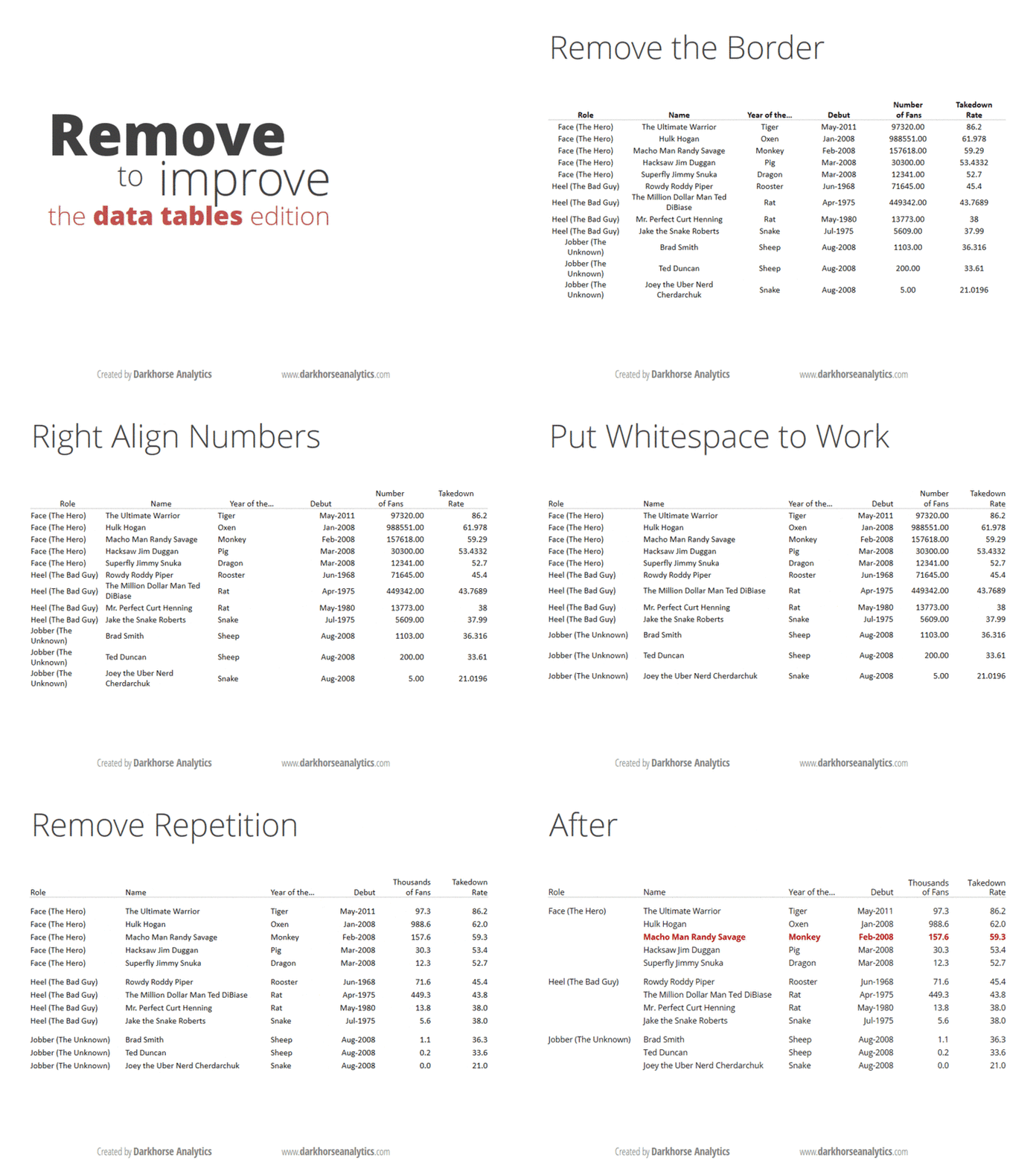
Statistician: How come you didn’t report the 95% CI in your paper?
ML researcher: So sorry I left it out. Didn’t realize you cared about that. The 95% CI is 3.8.
Statistician: … ?
ML: Well I’m using 4 GitHub Actions for CI. And 95% of that is…
Statistician: Get out.