

North African Legacy. This page aims to talk about everything related to North Africa. History, Culture, Genetics.
Morocco - North Africa
Joined September 2021
- Tweets6.1K
- Following13
- Followers4.5K
- Likes3K




Pinned Tweet
Quelques threads les plus pertinents en ce qui concerne le Maghreb, les Maghrébins et les Berbères/Imazighens.
Les threads sont référencés/sourcés (via des encyclopédies, des articles scientifiques et/ou des sources provenant d'historiens).
À dérouler 🧵

Don't make the mistake of believing that Pan-Arabism is a harmless ideology.
Not even 15 years ago, people were killed in the Maghreb for teaching their Berber history or for speaking their language.
Reference: books.openedition.org/cjb/13…

No one realized the lie and the ideological goal of dragging the Berbers through the mud behind these kinds of false assertions.
This parameter should encourage the greatest caution when talking about the Berbers, especially when the goal is to deconstruct them.
Indeed, the greatest weakness of the Berber people is that they have not preserved writings or opinions concerning their vision of themselves. So Pan-Arabist ideologists such as Ramzi Rouighi benefit from it.
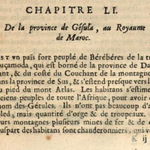
For example, the Jazula, a Berber group reported from the Middle Ages, claimed to be descendants of the ancient Gaetulians, the Gaetulians were considered to be of Libyan origin.
Fact reported in the 16th century.
Reference: L'Afrique de Marmol, Volume 2, d'Ablancourt


Regarding the fact that the term "Berber" would originally come from the Horn of Africa, this is his opinion.
We know that certain Amazigh groups began to be called by this term at the end of Antiquity.
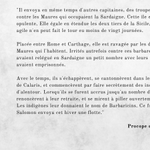
Reference: Procope, Histoire de la guerre contre les Vandales, Livre IV

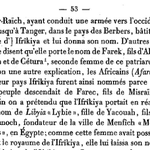
In fact, the Berbers of the Middle Ages still had a vague memory of the names "Libyans" or "Libya" as designating their country or their people.
Reference: Description de l'Afrique septentrionale / par El-Bekri ; traduite par Mac Guckin de Slane

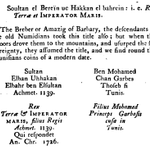
Long before colonization, as we saw above, the Berbers or Amazighs were seen as the descendants of the ancient Libyan peoples (Numidians, etc.).
This connection was obvious to the authors of the time, even pre-colonial ones.
Reference: Collectanea de Rebus Hibernicis, Vol. IV

Just like “Berber”, “Libyan” took on the “origin” meaning for ancient authors.
For example, often the Maurusii or Gaetulians were described as being of "Libyan origin" but not the Phoenicians/Carthaginians.
Reference: Strabon, Géographie, Livre 17, Chap. 3


At this point, you will understand how far Ramzi Rouighi went in omitting and distorting facts in his book but also in his articles.
He has a specific goal: “Erasing the Berbers”, that’s what his book should have been called.

