JNM (@NotForSanta) profile picture
Joined May 2012
Photo by JNM (@NotForSanta)Photo by JNM (@NotForSanta)Photo by JNM (@NotForSanta)Photo by JNM (@NotForSanta)Photo by JNM (@NotForSanta)Photo by JNM (@NotForSanta)Photo by JNM (@NotForSanta)
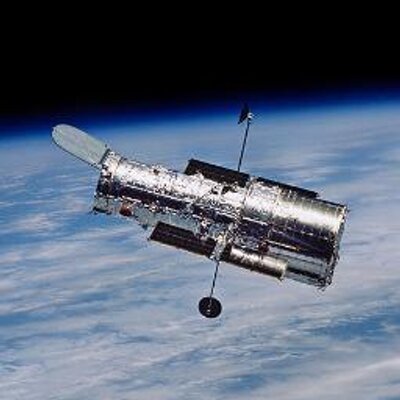
We're getting closer and closer to the first images from @NASARoman! 🤩 Here's a quick crash course on how Roman and Hubble will tackle different aspects of astronomy ⬇️
43
266
13
1,656
97,550
Floating above Earth, where every moment feels extraordinary! 🌍🚀✨ A breathtaking view of astronauts working in the endless beauty of space. 🌌 Humanity continues to explore beyond the stars! 👨‍🚀
26
118
3
588
18,667
🆕 Just in time for Halloween, a ghostly nebula lurks within sight of Hubble & @esa_webb The Cat’s Head Nebula 🐱 is a star-forming region located approximately 7,500 light-years from Earth. It is named for its resemblance to a cat sitting with its back towards Earth, its ‘head’ turned to the side. 1/4
12
93
5
526
15,041
When astronauts stood on the surface of the Moon during the Apollo missions, they witnessed one of the most incredible views in space — Earth shining in the black sky above the lunar horizon. From the Moon, our planet appears bright, colorful, and full of life. Earth looks much larger from the Moon than the Moon looks from Earth. Its blue oceans, white clouds, and brown landmasses create a beautiful sight against the darkness of space. Unlike the Moon seen from Earth, Earth does not move quickly across the lunar sky. Because the Moon rotates slowly, Earth appears almost fixed in one position, slowly changing phases just like the Moon does for us. This unique perspective allowed astronauts to see how small and fragile our planet really is. From the Moon, Earth appears as a single peaceful world without visible borders. Images of Earth taken from the Moon became some of the most powerful photographs in space exploration history, reminding humanity that our planet is a tiny home in the vast universe.
5
26
3
92
3,986
The clearest image ever captured of Mars’ North Pole. and yes, that’s water ice...!
51
314
13
2,258
43,589
The ghosts of five supernovas haunt this extraordinary image. It was acquired at Oukaïmeden Observatory in Morocco with approximately 200 hours of observations and shows a large patch of the sky, equivalent to the area of one thousand full moons tiled together, in the constellation of Auriga (the Charioteer). From left to right, the five supernova remnants visible across the field are G181.1+9.5, G182.4+4.3, G179.0+2.6, G180.0−1.7 (Sh2-240, the Spaghetti Nebula), and G178.2−4.2. They are highlighted in the annotated image, together with open cluster M37 and the Tadpole Nebula. As each explosion expanded into space, it created a growing shell of shocked gas and delicate filamentary structures shown in red (hydrogen) and blue (oxygen), respectively. These ancient stellar explosions happened independently; they are at various distances up to about several thousands of light-years away from Earth and have estimated ages up to tens of thousands of years old. Early humans may have witnessed them as bright new stars, fading over weeks or months. Image Credit & Copyright: Stephane Vetter, Yann Sainty Text: Cecilia Chirenti (NASA GSFC, UMCP, CRESST II)
7
136
10
841
35,786
Breaking free 💨 M90 is part of the Virgo Cluster of galaxies... for now. Its orbit through the cluster has accelerated so much that it's in the process of escaping the gravitational hold of the cluster entirely: go.nasa.gov/3TKcQY3
42
227
9
1,916
98,051
Thirty years ago, NASA's Galileo mission collected the images for this collage of Jupiter and its four largest moons, shown to scale. Our Juno mission continues its exploration of the giant planet today, and our Europa Clipper spacecraft is now en route to the Jovian system. 1/2
51
382
14
2,228
82,179
✨ The Dark Doodad Nebula and NGC 4372 In the constellation Musca, the dark dust filament known as the "Dark Doodad" is visible through binoculars; it carves a long swath—spanning over 30 light-years—against the backdrop of the Milky Way at a distance of approximately 700 light-years. At its southern tip lies the yellowish globular cluster NGC 4372. Located in the Galactic halo some 20,000 light-years away, it merely appears superimposed on the nebula from our perspective.
2
14
81
10,879
The beautiful planet Saturn taken by James Webb Telescope 🔭 ♥️
61
1,005
44
6,643
103,875
THIS Is What a Solar Eclipse Looks Like From Space 🌑
606
12,955
444
74,451
3,105,788
Earth, Jupiter and Venus seen from Mars 🌌 That’s us… 225 million miles away 🤯
51
481
13
2,752
47,174
This is a beautiful timelapse video made of Europa and IO passing over Jupiter’s Great Red Spot using hundreds of images from Cassini
30
200
17
966
35,882
A stunning photo of dark clouds topped with a bright rainbow, a rare event called cloud iridescence
304
5,166
224
26,957
576,384
Tonight's full Moon has an atmosphere too — just extraordinarily thin. With about a quadrillion times fewer molecules in a given space than Earth's, it’s so sparse that space rocks strike the surface directly instead of burning up! go.nasa.gov/4f5xx8D 📸 NASA/Bill Dunford
16
84
4
377
45,266
Humans are nearly blind — sensing less than 5% of the physical universe. Most of physical reality is literally invisible to us. Yes, seriously. Our perception of reality is a narrow window. While we navigate the world through sight and sound, our biological hardware only captures a tiny fraction of what actually exists. Human eyes perceive a slim band of light between 380 and 770 nanometers, while our ears are deaf to anything outside the narrow range of 20 Hz to 20 kHz. This leaves a vast spectrum of ultraviolet light, radio waves, and ultrasonic frequencies buzzing around us completely unnoticed. Even as modern technology like infrared sensors unveils these hidden layers, we remain largely oblivious to the invisible forces—such as the billions of ghostly neutrinos passing through our bodies every second—that define our physical existence. The true scale of our sensory limitation becomes even more profound when looking toward the stars. Scientific estimates suggest that a staggering 95 percent of the cosmos is composed of dark matter and dark energy, substances that remain entirely beyond our current ability to sense or detect directly. While we have developed sophisticated tools to bridge these gaps, we are still only scratching the surface of a reality that is predominantly invisible. This hidden architecture suggests that what we call "reality" is merely the tiny sliver of existence we have evolved to perceive, leaving the vast majority of the physical world a mystery waiting to be decoded. source: National Aeronautics and Space Administration. (2024). Anatomy of an Electromagnetic Wave and the Universe Overview. NASA Science.
115
552
58
1,534
45,367
Did you miss the conjunction of Jupiter and Venus last night? You didn't! Not really, because the pair will still appear close together tonight. Look to the western sky after sunset. In this view from June 10th, see if you can spot Mercury near the horizon as well.
85
683
41
3,238
88,732
JNM retweeted
Did you catch the Moon-Venus conjunction? On the night of May 18, our Moon and Venus had a celestial meetup, called a conjunction. Their position in the sky made them appear close together, despite being millions of miles apart in space.
625
1,488
60
10,011
938,129
Astronomical Satellite Image of Aurora Burealis surrounding Saturn's Northern Pole😍 Credit: NASA
7
55
4
264
5,169
This is what the night sky on Mars looks like.
167
1,215
35
7,148
214,419

