

Building AI-powered security testing for modern teams. Makers of VulnGPT
Joined September 2026
- Tweets25
- Following0
- Followers0
- Likes0
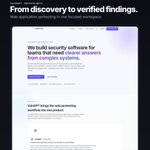

One request asked "may this user act in this tenant?" and got two answers — from a workspace membership and a tenant membership. They can disagree.
If you ask the same authorization question twice, make both answers come from one place.
#AppSec #MultiTenant
6
Two membership accepts can both pass the seat check before either write lands — so a tenant can exceed its licensed seats.
A check-then-write is not a limit. Make the limit atomic.
#AppSec #MultiTenant
3
Authenticated ≠ authorized.
For meaningful web testing, keep actor + role + session state + attempted action together, then compare the result with expected policy.
Especially across users and tenants.
#AppSec #WebSecurity
3
A good security workflow preserves context across the handoff: who acted, what happened, what evidence proved it, and what should be retested after the fix.
Less reconstruction. Better review.
#AppSec #WebSecurity
1
A finding is not finished when it is reported.
Keep validation evidence and the retest outcome attached to the same lifecycle so reviewers can see what changed — and whether the fix actually held.
#AppSec #Pentesting
1
VulnGPT Private Beta is open for authorized evaluation by pentesters, AppSec teams, pentest firms and MSSPs.
Discovery → authenticated testing → validation → evidence → retesting → reporting.
Apply:
novaseclabs.com/waitlist?utm…
#VulnGPT #AppSec
1
A useful pentest needs more than the first scan: explicit scope, authorized identities, reproducible evidence and a clean retest path.
Practical checklist:
novaseclabs.com/resources/pe…
#Pentesting #AppSec
1
A security finding should be independently reviewable.
Preserve target context, request/response, validation state, evidence and the retest path so another practitioner can reconstruct the conclusion.
novaseclabs.com/resources/se…
#AppSec #Pentesting
Many web-security failures begin after login.
Authenticated testing should preserve actor, role, session state and expected application behavior—not just a successful HTTP response.
novaseclabs.com/resources/au…
#AppSec #WebSecurity
HTTP 200 does not prove authorization is correct.
BOLA/IDOR testing needs actor + object + action + expected policy context across users, roles and tenants.
Technical breakdown:
novaseclabs.com/resources/bo…
#AppSec #APISecurity

A web pentest can fail before the first payload.
Preflight matters:
• explicit scope
• authorized test identities
• allowed state changes
• evidence + retest plan
A target URL alone is not enough context for reproducible testing.
#Pentesting #AppSec
Security tools need security boundaries too.
If a platform can touch targets, credentials, sessions, evidence and integrations, ask:
• what is in scope?
• which identity acts?
• where do secrets go?
• can actions be audited later?
#AppSec #SecurityEngineering
A security report should preserve the path to the conclusion.
A title + severity are not enough. Keep enough target, evidence, validation and retest context for another practitioner to understand what was observed.
#Pentesting #AppSec
Fixing a finding is only half the lifecycle.
Retesting should preserve the original evidence, remediation state and verification result — otherwise the reviewer has to reconstruct the issue from scratch.
#AppSec #SecurityEngineering
An object ID is not the same thing as an authorization decision.
Reliable API security reviews keep actor, object, action and policy context together instead of treating the identifier alone as proof of access.
#APISecurity #AppSec
Pentest context leaks between tools.
Request in one place. Auth state in another. Evidence in screenshots. Retest notes somewhere else.
The handoff is often where useful context dies.
#Pentesting #AppSec
When a dashboard says 0, ask one question first: was it actually measured?
Zero means measured and none observed. Unknown means unavailable, failed, or not collected.
Collapsing those states creates false confidence.
#AppSec #SecurityEngineering
A finding should survive someone else reviewing it.
Title + severity ≠ evidence.
Keep the target, request/response context, validation state and retest path close enough that another practitioner can reconstruct the conclusion.
#AppSec #Pentesting