

Web3 Ecosystem Researcher | Since 2022 AMB @kindworldlabs Creator @Opentensor | DM for Collabs & Partnerships
Sri Lanka 🇱🇰
Joined February 2024
- Tweets11.2K
- Following4.8K
- Followers5.2K
- Likes18.9K





Pinned Tweet
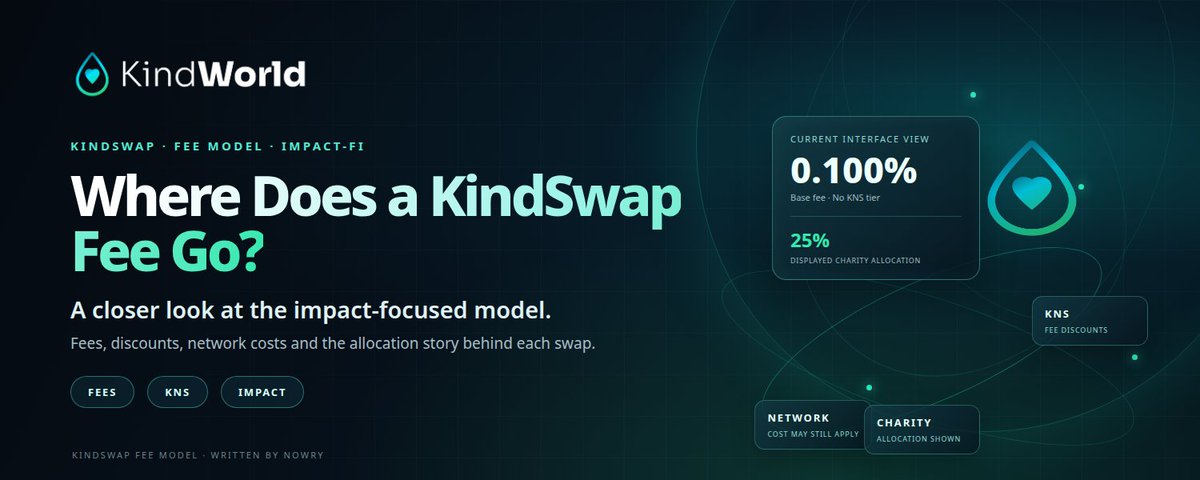
I took a closer look at how KindSwap’s fee model works.
This article breaks down the current fee display, KNS discounts, charity allocation, network costs and what users should check before confirming a swap.
Nowry τ retweeted
Before you swap, it helps to understand more than just the button you press.
I put together a practical guide to KindSwap’s current flow, fees, KNS discounts and the key details to check before signing a transaction.

Nowry τ retweeted
🧵 1/7 | A fee is more than one number
Most people see a swap fee and move on.
But understanding what that fee includes, how it is displayed and what it does not include is just as important as the percentage itself.
I took a closer look at KindSwap’s current fee model and the details worth checking before confirming a swap.

Nowry τ retweeted
Solana upgrades like this are easy to overlook, but they matter.
Moving from 1,232 to 4,096 bytes gives developers more room for complex operations in one atomic transaction.
Better infrastructure makes ambitious apps practical.

The next phase of Solana isn’t just about making transactions faster.
It’s also about making the way applications interact with the network more efficient. Transaction V1 is live on mainnet, raising the maximum transaction size from 1,232 to 4,096 bytes.
That means larger operations, including complex multisig transactions and some zero-knowledge proof workloads, can fit into a single atomic transaction.
Why does this matter?
Because better infrastructure is not only about what the network can process. It’s also about how easily developers can build on top of it.
The best upgrades are the ones that make more ambitious applications practical.

Nowry τ retweeted
I took a closer look at how KindSwap’s fee model works.
This article breaks down the current fee display, KNS discounts, charity allocation, network costs and what users should check before confirming a swap.
Before you swap, it helps to understand more than just the button you press.
I put together a practical guide to KindSwap’s current flow, fees, KNS discounts and the key details to check before signing a transaction.
🧵 1/7 | A fee is more than one number
Most people see a swap fee and move on.
But understanding what that fee includes, how it is displayed and what it does not include is just as important as the percentage itself.
I took a closer look at KindSwap’s current fee model and the details worth checking before confirming a swap.
6/7 | The wider allocation model
KindSwap’s official documentation describes a broader model involving:
• A charity pool
• Revenue sharing for eligible KNS and KW stakers
• Platform operations and ecosystem development
The documentation also says exact allocations may evolve as the platform develops.
7/7 | What to check before signing
Before confirming a swap, review:
• The displayed fee and final amount
• Your applicable KNS tier
• Price impact and slippage
• Estimated network cost
• The correct token and address
• The current terms
A clear fee model helps, but checking the live transaction details is still essential.
Solana upgrades like this are easy to overlook, but they matter.
Moving from 1,232 to 4,096 bytes gives developers more room for complex operations in one atomic transaction.
Better infrastructure makes ambitious apps practical.
The next phase of Solana isn’t just about making transactions faster.
It’s also about making the way applications interact with the network more efficient. Transaction V1 is live on mainnet, raising the maximum transaction size from 1,232 to 4,096 bytes.
That means larger operations, including complex multisig transactions and some zero-knowledge proof workloads, can fit into a single atomic transaction.
Why does this matter?
Because better infrastructure is not only about what the network can process. It’s also about how easily developers can build on top of it.
The best upgrades are the ones that make more ambitious applications practical.
Nowry τ retweeted
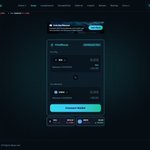
AMZN is now tradable on KindSwap, with zero platform fees promoted until October 31, 2026.
I took a closer look at what this means, the difference between tokenized exposure and direct ownership, and what users should check before trading.

Nowry τ retweeted
Tokenized equities are quietly becoming the standard. $AMZN is now officially live on KindSwap.
Solid opportunity to test their execution layer and liquidity routing while it's completely zero-fee until Oct 31st. The RWA infrastructure keeps growing. 👇
$AMZN now tradable on KindSwap🤝
Begin your swap with zero fees until October 31, 2026 :
kindswap.world/swap?promo=ZE…


Nowry τ retweeted
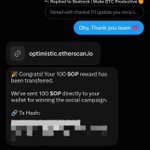
Awesome little surprise to wake up to! Got lucky and was selected as one of the 40 winners in the @Bedrock_DeFi Phase 3 social campaign.
100 $OP safely in the wallet. Appreciate the smooth drop and the seamless execution by the team! 💗🤝


Awesome little surprise to wake up to! Got lucky and was selected as one of the 40 winners in the @Bedrock_DeFi Phase 3 social campaign.
100 $OP safely in the wallet. Appreciate the smooth drop and the seamless execution by the team! 💗🤝
AMZN is now tradable on KindSwap, with zero platform fees promoted until October 31, 2026.
I took a closer look at what this means, the difference between tokenized exposure and direct ownership, and what users should check before trading.
Nowry τ retweeted

DUMP IT $BTC
I opened a BTC sell position, the market is currently bearish on both LTF and HTF. I am looking to hold this position until $78000.
Dump It Here: app.ondoperps.xyz/?ref=AEED7…

$BTC 1D
As expected, the Asian market crashed at the open.
The 78K–74K range is an area of demand, offering numerous opportunities for short scalps. Conversely, the area above 80K serves as a safer zone; given the limited upside potential, I am considering opening a sell position from that region.
Given what was in the analysis, I do not expect the 74k level to be reached immediately; however, it is a scenario that could potentially unfold within this week.
