

Hardware that changed everything, then got put in a drawer.
Joined October 2026
- Tweets178
- Following27
- Followers55
- Likes70



IBM built a laptop whose keyboard was wider than the laptop itself.
The ThinkPad 701C, released in 1995, had a 10.4-inch screen in a case about 9.7 inches wide, too narrow for a full-size keyboard. So its keyboard came in two interlocking pieces. When you opened the lid, they slid out and locked together into a keyboard about 11.5 inches wide.
The design, nicknamed the butterfly keyboard, was led by IBM engineer John Karidis. Small laptops usually meant cramped keys, and the 701C let people type normally on a machine small enough for a briefcase. It became the best-selling laptop of 1995. Larger screens soon made the trick unnecessary, but the Museum of Modern Art in New York added the 701C to its permanent collection.

The compact disc is the size it is partly because of Beethoven.
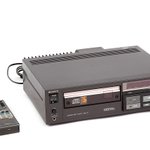
The first CD player, the Sony CDP-101, went on sale in Japan on October 1, 1982, for 168,000 yen. It read music from a 12-centimeter disc with a laser, so there was no needle, no hiss and no wear from repeated plays. Sony developed the CD format with Philips.
Disc size was one of the last questions the two companies had to settle. According to an account Sony has told for decades, executive Norio Ohga wanted a single disc to hold all of Beethoven's Ninth Symphony, which can run more than 70 minutes. The final standard held about 74 minutes, on a disc 12 centimeters across. Every CD player, CD case and car stereo slot that followed was built around that number.

In Japan, a Buddhist temple has held funerals for robot dogs.
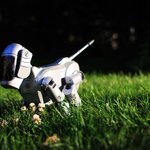
The dogs were Aibo, made by Sony. The first model went on sale in 1999 for 250,000 yen in Japan and $2,500 in the US, and the 3,000 units offered in Japan sold out online in about 20 minutes. Aibo could walk, respond to its owner and develop its own behavior over time.
Sony stopped making Aibo in 2006 and ended official repairs in 2014. A repair company called A-Fun, which employed former Sony engineers, kept many running with parts taken from Aibos that couldn't be fixed. Owners felt those donor dogs deserved a proper goodbye, so starting in 2015, Kofukuji temple in Isumi, Chiba, held funeral services for them before they were taken apart. Sony brought Aibo back in 2018.

Nokia's game phone made people hold it sideways to make a call.
The Nokia N-Gage launched in October 2003 for $299, combining a cellphone with a handheld game console. It had a screen in the middle with buttons on both sides, like a Game Boy Advance, and it could play multiplayer games over Bluetooth.
The design caused problems. The earpiece and microphone were on the edge of the phone, so making a call meant holding it against your face edge-on, which people mocked as sidetalking. Swapping games was worse: the game card slot sat under the battery, so you had to take off the back cover and pull the battery every time. Nokia fixed both in the N-Gage QD a year later, but the original had already become a punchline.

On December 31, 2008, Microsoft's Zune music players froze all over the world at once.
The Zune was Microsoft's answer to the iPod, launched in November 2006 for $249.99 with a 30 GB hard drive. It came in black, white and brown, and it could share songs wirelessly with other Zunes, something the iPod couldn't do.
On the last day of 2008, the 30 GB models got stuck on their startup screens. The cause was a bug in the clock software: 2008 was a leap year, and when the day counter reached 366, the code got caught in an endless loop. Microsoft's official fix was to let the battery run all the way down and turn the player back on after noon GMT on January 1. The players worked again, but Microsoft stopped making them in 2011.

The most replayed moment TiVo had ever measured came from a Super Bowl halftime show.
TiVo, launched in 1999, was one of the first digital video recorders sold to consumers. It recorded TV onto a hard drive, let you pause live broadcasts, and recorded your favorite shows automatically. Its founders, Mike Ramsay and Jim Barton, had worked at Silicon Graphics.
On February 1, 2004, during the Super Bowl XXXVIII halftime show, Justin Timberlake pulled at Janet Jackson's costume and exposed her breast for about a second. TiVo collected anonymous viewing data from its subscribers, and it announced that this was the most replayed moment it had ever recorded. Viewers had paused live TV, rewound it, and watched that same second again and again.

A $5 billion satellite phone network was sold for $25 million.
Iridium, backed by Motorola, launched in November 1998 with 66 satellites in low orbit, so a single handset could make calls from almost anywhere on Earth. The phones cost about $3,000, and calls could run several dollars a minute.
The plan assumed huge numbers of business travelers would sign up. But the phones were bulky, worked poorly indoors, and ordinary cellphones were spreading fast. Iridium filed for bankruptcy in August 1999, less than a year after launch, and there was talk of steering the satellites down to burn up. In 2000, investors led by former Pan Am executive Dan Colussy bought the whole system for $25 million. Iridium is still operating today.

On May 19, 1998, most of the pagers in the United States went silent at once.
At the time, about 40 to 45 million Americans carried pagers, small devices that beeped or vibrated and showed a number to call back. Doctors, repair workers and parents relied on them, and most signals were relayed through a single satellite called Galaxy IV.
That evening, Galaxy IV's onboard control computer failed, and the switch to its backup failed too. The satellite turned away from Earth, and an estimated 80 to 90 percent of US pagers stopped receiving messages. Some radio and TV feeds dropped off the air as well. Paging companies spent days moving service onto other satellites, and millions of people learned how much depended on one machine in orbit.

In 2009, the new president of the United States fought to keep his BlackBerry.
BlackBerry devices were made by Research In Motion, a company in Waterloo, Ontario, founded by Mike Lazaridis and Douglas Fregin. The early models around 1999 were two-way pagers with a tiny keyboard, and they pushed email to your hand the moment it arrived. Users got so hooked that people called it the CrackBerry.
Barack Obama used one throughout his campaign. Security officials worried that a president's phone could be hacked or used to track him. Obama pushed back and kept a specially secured BlackBerry that only a small group of contacts could reach. By the time he left office, BlackBerry had stopped designing its own phones.

Nintendo's first handheld hit came from watching a bored businessman play with a calculator.
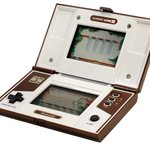
The Game & Watch was a line of pocket games with LCD screens that Nintendo launched in 1980. Each played a single game and doubled as a clock, hence the name. Nintendo sold about 43 million of them.
Designer Gunpei Yokoi got the idea on a bullet train, where he saw a salaryman killing time by pressing buttons on a calculator. One day Nintendo president Hiroshi Yamauchi's driver was out sick, so Yokoi drove him to a meeting and pitched a small game adults could play discreetly. In 1982, the Donkey Kong Game & Watch introduced a cross-shaped directional pad. Nintendo put it on the NES controller, and nearly every game controller since has had one.

A video game controller from 1989 ended up as a cheap tool for virtual reality experiments.
The Power Glove, made by Mattel for the NES, was a gray plastic glove with a keypad on the wrist. Receivers around the TV tracked ultrasonic signals from the glove, and sensors in the fingers detected bending.
It was based on the DataGlove, an expensive research device from VPL Research, the virtual reality company cofounded by Jaron Lanier. In the 1989 film The Wizard, a character shows it off and says, "I love the Power Glove. It's so bad." In practice it was hard to control, and only two games were made for it. But it cost under $100 instead of thousands, so researchers and hobbyists bought it for their own VR projects.

Sony beat Sega's new console with a speech that was one word long.
At the first E3 video game trade show, in May 1995, Sega announced that its Saturn console was going on sale that day in select stores, months ahead of schedule, for $399. It surprised almost everyone, including many retailers.
Later that day, Sony presented the PlayStation. Steve Race, the head of Sony Computer Entertainment of America, walked up to the podium, said "$299," and walked off to cheers. Sega's surprise launch had also angered retailers who were left without stock, and some stopped carrying Sega products. The Saturn sold under 10 million units worldwide, and the PlayStation outsold it by more than ten to one.

Sega took its newest game, put it in the box for free, and started beating Nintendo.
The Sega Genesis reached the US in 1989. It was a 16-bit console, more powerful than the NES, and it came packed with a game called Altered Beast. Sales were solid, but Nintendo still dominated.
Tom Kalinske, a former Mattel executive, took over Sega of America in 1990. He proposed cutting the price, replacing Altered Beast in the box with a new game called Sonic the Hedgehog, and running ads aimed directly at Nintendo. Sega's board in Japan rejected the plan. Sega president Hayao Nakayama told him to go ahead anyway, because he had hired Kalinske to make those decisions. Over the next few years, Sega held more than half of the US 16-bit console market.

Nintendo's choice of cartridges cost it one of the biggest games of the 1990s.
The Nintendo 64 launched in the US in September 1996 for $199.99. It had a new analog control stick and Super Mario 64, one of the first great 3D games. Unlike Sony's PlayStation, it used cartridges, which loaded instantly but held far less data than a CD and cost more to make.
Square, the Japanese studio behind Final Fantasy, needed that space for the movie-like scenes in its next game. It moved Final Fantasy VII to the PlayStation, where it came out in 1997 on three CDs. The game sold millions of copies and helped make the PlayStation the leading console of its era. The N64 sold about 33 million units, roughly a third of the PlayStation's total.

Sony's PlayStation exists because Nintendo walked away from a deal the day after it was announced.
In the late 1980s, Sony agreed to build a CD-ROM add-on for the Super Nintendo. Sony announced it at the Consumer Electronics Show in June 1991. The next day, Nintendo announced it would work with Philips instead.
Sony engineer Ken Kutaragi convinced Sony's president, Norio Ohga, to keep going and build a console of its own. The PlayStation launched in Japan in December 1994 and in the US in September 1995 for $299. Its CDs held far more than cartridges and cost less to make, which drew game developers. The PlayStation became the first console to sell more than 100 million units. Nintendo's broken deal had created its biggest rival.

The man who built the Learjet also helped put stereo music in American cars.
The 8-track cartridge, introduced in the mid-1960s, held an endless loop of tape divided into four stereo programs. It played continuously, switching from one program to the next with a loud clunk, sometimes right in the middle of a song.
Bill Lear, founder of the Learjet business jet company, developed the format and got Ford interested. Ford offered factory-installed 8-track players in its 1966 models, and RCA released albums on the cartridges. Drivers could now pick their own music instead of taking whatever the radio played. Cassettes had taken over by the early 1980s, but the 8-track had moved recorded music into the car for good.

The first movie released on LaserDisc in North America was Jaws.
LaserDisc launched in Atlanta in December 1978 under the name DiscoVision. Each disc was 12 inches across, the size of a vinyl record, and was read by a laser instead of a needle, so playing it never wore it out. The picture was sharper than VHS.
But each side held only about 30 to 60 minutes of video, depending on the format, so most movies meant getting up to flip or change the disc partway through. The players and discs cost more than VHS, and they couldn't record. LaserDisc kept a loyal following among film fans and became popular for karaoke in Japan. Pioneer, the format's biggest backer, stopped making players in 2009, three decades after Jaws.

The record industry went to court to stop one of the first portable MP3 players from being sold.
The Diamond Rio PMP300 came out in 1998 for about $200. Its 32 MB of memory held roughly 30 to 60 minutes of music depending on quality, and with no moving parts, it never skipped.
In October 1998, the Recording Industry Association of America sued Diamond Multimedia. It argued that a 1992 law required digital audio recorders to include copy protection and pay royalties, and the Rio did neither. In June 1999, a federal appeals court disagreed. It ruled that the law didn't cover the Rio, because it copied music from computers, which the law exempted. That decision helped clear the way for every MP3 player that followed, including Apple's iPod.

In 1972, telling time with a digital watch cost $2,100.
The watch was the Hamilton Pulsar, the first production digital wristwatch. Its case was 18-karat gold, and its red LED display stayed dark until you pressed a button, because keeping the numbers lit would have drained the battery quickly.
Hamilton had shown a prototype on The Tonight Show with Johnny Carson in 1970. In 1973, Roger Moore wore a steel Pulsar as James Bond in Live and Let Die, and digital watches became a status symbol. Then companies like Texas Instruments started making their own with cheap chips. By the late 1970s, a digital watch cost around $10, and the luxury item had become something almost anyone could buy.

The first pocket scientific calculator was built to fit one man's shirt pocket.
The HP-35, released by Hewlett-Packard in 1972 for $395, could calculate logarithms and trigonometry at the press of a key. It was named for its 35 keys. Until then, most engineers and students did that kind of math on slide rules.
HP cofounder Bill Hewlett asked his engineers for a version of the company's desktop scientific calculator that would fit in his shirt pocket. Market research suggested there wasn't much demand for one. HP figured it needed to sell about 10,000 to break even, and it sold roughly 100,000 in the first year. Within a few years, the slide rule had all but disappeared.
