

7-a-side fiend
Joined October 2011
- Tweets11.7K
- Following1.3K
- Followers626
- Likes46.6K







Pinned Tweet
For investigative purposes only I have made the transition to an iPhone
As a lifelong android fan boy, I thought it would be cool to tweet about my experience so here goes....


🇳🇬 Oga Disco 🇯🇲 retweeted

Quand tu te rends compte que « J’ai fait toutes mes études sans ChatGPT » est en train de devenir la nouvelle version de « Je marchais 10 km pour aller à l’école », dont les parents se vantent.
The one thing I will say is that this at least this design looks like it'll be more magsafe friendly. On my S25 Ultra the cameras sometimes get in the way...


223


🇳🇬 Oga Disco 🇯🇲 retweeted

A physicist put 22 cars on a circular track and asked every driver to hold a steady 30 km/h, about 19 mph. No lights, no lanes, no obstacles. Within a minute the cars started bunching, and soon a full stop appeared out of nowhere, then drifted backward around the loop.
This was Yuki Sugiyama at Nagoya University in 2008. His team spaced the cars evenly on a 230-meter ring and filmed them from overhead. For a while the flow stayed smooth. Then the tiny differences no human can avoid, one driver a hair slower, the next a hair too close, began to feed on themselves.
One car eases off slightly. The driver behind sees the brake lights, reacts a fraction of a second late, and brakes a little harder to be safe. The next driver brakes harder still. A dozen cars back, someone is stopping dead. The squeeze rolls backward through the line like a compression running down a Slinky, and it keeps going long after the first driver has sped up again.
Car count was the tipping point. With fewer than 22 on that track, the bunching sorted itself out. At 22, a jam formed every time. Engineers call that a critical density, the point where a road holds just enough cars that one small tap can snowball into a standstill.
These waves are eerily consistent. Measured on highways around the world, the jam rolls backward against the traffic at roughly 20 km/h, and that speed barely shifts from one country to the next. Different drivers, different roads, same number.
The same setup later became the cure. In 2017, a US team rebuilt Sugiyama's ring with 22 cars and turned just one of them into a self-driving car running a program to smooth its own speed. That single car soaked up the small slowdowns instead of passing them back, and the waves died. Fuel use across every car fell by up to 40 percent. Fewer than 5 percent of the vehicles had to be automated to steady the whole group.
In 2022 the idea moved onto a live highway. Researchers ran 100 cars with cruise control guided by AI into the morning rush on Interstate 24 near Nashville, mixed into normal traffic. Early numbers pointed the same way: a small share of smoother-driving cars, up to 40 percent less fuel for everyone around them.
The jam you sat in this morning likely had no crash and no cause you could see. It was a few hundred drivers, each braking a moment too late.


Starting a thread of highlights from the dancery.
Starting off with this absolute slammer from Ivory at Lost Village 2025
1
203
@djoppidan dropping the Nori/Kori G6 mix ‼️
Would post the whole set from this weekend cause it was nuts
1
76


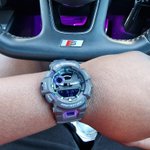
G-Shocks forever!


I Was Supposed To Do A Watch A Day For 60 Days But I’m Burnt Out With That Shit Already lmao .
Full Collection .
Somebody Tell @GShock_US Make Me A Brand Ambassador !
#HoldYaWristUp

1
1
162


