

Companies are becoming tech stacks. We are all becoming companies. Operator and Harvard economics nerd decoding the future of companies.
Joined June 2025
- Tweets1.5K
- Following382
- Followers167
- Likes865





Intel's CTO on why Elon wants his own fab: "We either build the Terafab or we don't have the chips." Tools are the bottleneck, so a new fab doesn't add silicon to the world. It guarantees the owner gets some. When supply is scarce, ownership decides who waits.
@firesidealpha, Dwarkesh Podcast
IBM's Arvind Krishna on why the mainframe has lasted 65 years: it was vertically integrated. In the '60s IBM went "all the way to dirt," from sand to wafers to fabs to chips. Today it does everything but the fab. His rule: own the layers where you have an edge, and buy the commodity. Nikesh Arora adds the payoff: control the stack and you decide where the profit sits.
@theallinpod, All-In Interview
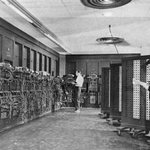
Our grandparents watched computers become companies.
Our children will watch people become companies.
Look at this timeline.
Roughly 75 years of people turning the seemingly impossible into something the next generation takes for granted.

We are all becoming more capable of building companies.
And the most exciting part of this infographic is everything that hasn't been added yet.
Somebody reading this will help write the next row.
Make small tests cheap and repeated mistakes expensive.
"Make the barrier to small tests low and the barrier to repeating known errors high." Three more practices for companies that get stronger under stress:
Track buffer coverage: how long the company can operate if inflows stop, split by cash, inventory and capacity.
Change what you reward. "Reward intelligent failure. Celebrate subtraction. Praise people who call time on sunk costs."
The full antifragile operating playbook: operatingbyjohnbrewton.com/p…

Bending Spoons closed Miro in an all-cash deal, then announced about $1.5 billion of secured notes due 2032 to buy more apps like it. When AI can rebuild what an app does, the app gets cheap. Buy it, finance it with debt, run it lean.