





Pinned Tweet
Which modeling to choose for text-to-music generation?
We run a head-to-head comparison to figure it out.
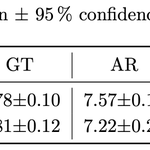
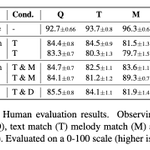
Same data, same architecture - AR vs FM.
👇 If you care about fidelity, speed, control, or editing see this thread.
🔗huggingface.co/spaces/ortal1…
📄arxiv.org/abs/2506.08570
1/6

Or Tal retweeted

1/6 Diffusion models are scaling up, but deploying a massive, monolithic network uniformly across the entire generative timeline is inherently inefficient.
Introducing Complexity-Balanced Splitting (CBS): a principled framework that allocates capacity exactly where needed!👇🧵
Or Tal retweeted

🚨 New paper alert! 🚨
Millions of neural networks now populate public repositories like Hugging Face 🤗, but most lack documentation. So, we decided to build an Atlas 🗺️
Project: horwitz.ai/model-atlas
Demo: huggingface.co/spaces/Eliahu…
🧵👇🏻 Here's what we found:


Or Tal retweeted
Excited to share this has now been accepted at #NeurIPS2025 as a position paper (<6% acceptance)!🎉
We advocate for systematically studying entire model populations via weight-space learning, and argue that this requires charting them in a Model Atlas.
@NeurIPSConf #NeurIPS
🧵👇

ALT Position overview: With millions of public models, it becomes important to move beyond individual models and study entire populations (left). The Model Atlas formalizes this shift by representing models as nodes in a graph, with directed edges denoting weight transformations (e.g., fine-tuning). Node size and color, as well as edge color, encode node and edge-level features; light blue indicates missing or unknown information. The atlas enables a range of applications, including model forensics, meta-ML research, and model discovery (center). In practice, most edges and features are unknown. This motivates ML methods that take models as input and infer their properties, thereby completing the missing atlas regions (right).

🚨 New paper alert! 🚨
Millions of neural networks now populate public repositories like Hugging Face 🤗, but most lack documentation. So, we decided to build an Atlas 🗺️
Project: horwitz.ai/model-atlas
Demo: huggingface.co/spaces/Eliahu…
🧵👇🏻 Here's what we found:
Or Tal retweeted

Excited to share our work Set Block Decoding!
A new paradigm combining next-token-prediction and masked (or discrete diffusion) models, allowing parallel decoding without any architectural changes and with exact KV cache.
Arguably one of the simplest ways to accelerate LLMs!
Or Tal retweeted

Many modern SpeechLMs are trained with Speech-Text interleaving. How does this impact scaling trends?
In our new paper, we train several dozen SLMs, and show - quite a lot! So there is room for optimism 😊
Key insights, code, models, full paper 👇🏻

Or Tal retweeted
🎉Thrilled that our paper on "scaling analysis of interleaved speech-text LMs" was accepted to #CoLM2025
It gives room for optimism when scaling SpeechLMs *right* - with large TextLMs (in place of more data), interleaving, and synth training data💪

Or Tal retweeted

Happy to announce that our paper “EditInspector: A Benchmark for Evaluation of Text-Guided Image Edits” was accepted to #ACL2025 🎉
📄 arxiv.org/abs/2506.09988
🌐 editinspector.github.io/
💣Introducing PAST: a speech tokenizer that jointly model phonetics and acoustics (No SSL involved).
Past demonstrates great reconstruction as well as semantic capabilities in the form of ABX and sWUGGY.
🤗 huggingface.co/slprl/PAST
Check out Nadav's post👇@NadavHarTuv @adiyossLC


🚨 New paper alert!
PAST: phonetic-acoustic speech tokenizer – just got accepted to Interspeech 2025 🎉
It learns phonetic + acoustic tokens jointly, with no SSL babysitter or external vocoder.
🔗pages.cs.huji.ac.il/adiyoss-…
👇 If you’re into speech LMs, keep reading!

Or Tal retweeted

Auto-Regressive vs Flow-Matching: a Comparative Study of Modeling Paradigms for Text-to-Music Generation. arxiv.org/abs/2506.08570

Or Tal retweeted
🎵💬 If you are interested in Audio Tokenisers, you should check out our new work!
We empirically analysed existing tokenisers from every way - reconstruction, downstream, LMs and more.
Grab yourself a ☕/🍺 and sit down for a read!

Or Tal retweeted

🚨 New Paper: "Time to Talk"! 🕵️
We built an LLM agent that doesn't just decide WHAT to say, but also WHEN to say it!
Introducing "Time to Talk" - LLM agents for asynchronous group communication, tested in real Mafia games with human players.
🌐niveck.github.io/Time-to-Tal…
🧵1/7
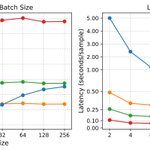
What if training steps are capped at 500k?
FM reaches near-topline quality with small batches.
It’s compute-efficient and forgiving.
AR needs larger batch sizes to recover performance.
It benefits more from large-scale training.
See📉 below by model duration + batch size:
6/6

Read the full paper!
🔗huggingface.co/spaces/ortal1…
📄arxiv.org/abs/2506.08570
@FelixKreuk @adiyossLC

Or Tal retweeted

We’ve been exploring the trade-offs between Autoregressive and Flow-Matching models for music generation. We share our findings in this latest paper led by @Or__Tal. Many interesting take-aways and practical advice on training generative models for music! 🎶🧠

Which modeling to choose for text-to-music generation?
We run a head-to-head comparison to figure it out.
Same data, same architecture - AR vs FM.
👇 If you care about fidelity, speed, control, or editing see this thread.
🔗huggingface.co/spaces/ortal1…
📄arxiv.org/abs/2506.08570
1/6
Or Tal retweeted

🚨 Happy to share our #Interspeech2025 paper!
"WhiStress: Enriching Transcriptions with Sentence Stress Detection"
Sentence stress is a word-level prosodic cue that marks contrast or intent.
WhiStress detects it alongside transcription—no alignment needed.
Paper, code, demo 👇