

Eastern Orthodox of Copt Descent. ☦️ Old Rite Orthodox Respecter. St. Augustine is Orthodox. GOARCH. Sit Nomen Domini Benedictum. Reader (11/25/2022)
Joined September 2021
- Tweets2.6K
- Following169
- Followers652
- Likes19.2K




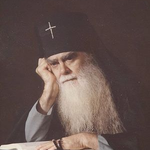
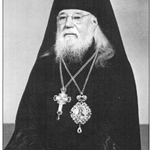


"Many people who think that they love God, in reality only love their own fancies, loving only themselves, delighting in their own emotions and sensations."
+Archbishop Averky (Taushev) of Syracuse & Holy Trinity Monastery


Peter retweeted

‘..if there is no sin, then everything is possible. Thus, the foundation of crimes and the associated cruelty, heartlessness, and malice among people is unbelief, the denial and trampling of every divine law, lawlessness. And there will never be love and compassion for a country where divine law is denied. Christ the Saviour indicated love as the norm of human life. A new commandment I give to you, That you love one another... By this will all know that you are My disciples, if you have love for one another (Jhn. 13:34-35)”.’
–St. Onuphry (Gagaluk), In Defence of the Christian Faith

Peter retweeted

"He is a true patriot who, among his own people, erects a true altar to the Living Lord."
- St. Nikolai Velimirovich

Peter retweeted

“I do not believe that men evolved from apes, the further back in time I go, the more superior a man I see. The man of the past had an understanding of mystery, of mysterious things. Those who wrote the Bible are far wiser than those of today; are people today capable of writing such a thing?”
-Saint Dumitru Staniloae

Peter retweeted

ENGLEWOOD, NJ — In a reflection on St. Maria Skobtsova, Metr. Saba (@SabaIsper) highlights how her life embodied Christian love through self-sacrifice, care for the vulnerable, and courage in the face of persecution. Her story illustrates how faith can be expressed not only through prayer and monastic devotion, but also through concrete acts of service to those in need. Even under the threat of death, she remained committed to protecting others, demonstrating that Christian compassion may demand the greatest personal sacrifice. Her example continues to challenge believers to consider what it means to love their neighbors without counting the cost.


Peter retweeted
Saint Paisios the Athonite on Man’s hereditary inclinations:
Anon: ‘Geronda (Γέροντας/Elder), some people think that they don't have what it takes to develop a spiritual life. And so they say you cannot receive from one who does not have. And if they also justify themselves by saying that they are burdened by inherited passions, that is even worse. Geronda, what if someone is indeed burdened with such passions?’
Paisios: ‘Look, let me tell you. Each person has hereditary qualities, both good and evil. One must struggle to be delivered from his weaknesses and cultivate what is good in him in order to become a true grace-filled image of God.
The negative inherited traits are not a hindrance to spiritual progress. For when one is struggling, even slightly but with great philotimo (φιλότιμο/love of honour)—then he’s moving in the spiritual realm, in the miraculous, and all the unpleasant inherited traits are dispelled by the grace of God.
God is greatly moved and indeed helps the one who may have inherited negative traits, but is struggling with philotimo to fly heavenwards using an atrophied wing—the bad inheritance.
I know many people who, with their own small amount of effort and the great help of God, were delivered from their legacies. In God's eyes, these people are great heroes. For what moves God is the work we do on the old man within.’
Anon: ‘Geronda, aren't the bad inherited traits removed by holy baptism?’
Paisios: ‘Holy baptism delivers us from the curse of the ancestral—original—sin, and from all sins. When a person is baptised, he is vested with Christ, delivered from the ancestral sin, and the grace of God abides in him. However, the bad inherited traits remain. Perhaps you don't think that God can remove those as well through holy baptism. He can, but he allows them to remain so that we may struggle and be crowned with victory.’
Anon: ‘Geronda, when I keep falling into some passion, I say, “This is how I was born. This is who I am.”’
Paisios: ‘That's all we needed to hear. The next thing you'll tell us is that your parents have given you all the weaknesses you have. From forefather to forefather, all of the family's weaknesses came down to you and all the gifts went to the others. Are you also blaming God?
Whoever says, “This is my personality. This is how I was born. I have inherited repulsive traits. I grew up under these conditions, and therefore I cannot correct myself,” is like saying “Not only are my father and mother to blame, but also God himself!” Do you know how troubled I am when I hear such things? This is how one reviles both their parents and God. The moment one begins to think this way, the grace of God ceases to act.’
Anon: ‘Geronda, some people say that when a weakness is in the very structure of a person it cannot be corrected.’
Paisios: ‘Do you know why they say that? Some people find it advantageous to say that a particular weakness of theirs is a part of their makeup, who they are, just so they can justify themselves and make no effort to be delivered from it.
Such people say, “God has not granted me any gifts. It's not my fault. Why do people expect things from me that are beyond my capabilities?”
That's how they take advantage of opportunities. They justify themselves content with their thinking, and living their life as they always have. If we keep on lamenting, “These weaknesses are inherited, the other ones are part of my character,” How can we ever correct ourselves? This kind of thinking dispels our spiritual leventiá (λεβεντιά/dignity).’
–Spiritual Counsels, Vol. V: Passions and Virtues

Peter retweeted

Mobilized UOC priest dies in the war
orthochristian.com/181084.ht…
Clergy of the canonical Ukrainian Orthodox Church aren’t exempt from mobilization, which is part of the state’s campaign against the Ukrainians of the UOC.


Peter retweeted

1) St. Mark didn’t sign it; neither did Metropolitan Gregory of Tbilisi or Bishop Isaiah of Stavropol. Some sources include Metropolitans Isaac of Nitria and Sophronius of Gaza. Serbia and Ochrid refused to send a delegation at all.
2) They were absolutely coerced; of the above non-signers, one fled the council in secret and another feigned madness to avoid being forced to sign. And SHOCKER not a single Synod ratified it once the delegates returned home.
Not. One. Jerusalem, Alexandria, Antioch, Moscow, Serbia, Georgia, and Ochrid ALL rejected it.
It wasn’t even proclaimed in Constantinople for years, and eventually even they repudiated it.
The Orthodox Church never accepted Florence. Pushing that narrative is a lie, and you should stop doing it.
Peter retweeted

Άγιος Δημήτριος ο Μυροβλύτης.
Άγιε του Θεού, πρέσβευε υπέρ ημών.☦️

ALT Άγιος Δημήτριος ο Μυροβλύτης ☦️


Peter retweeted

“Many people who think that they love God, in reality only love their own fancies, loving only themselves, delighting in their own emotions and sensations.”
Archbishop Averky of Syracuse and Holy Trinity Monastery (+1976)


