

_“Open letters to history’s loose ends. Public records. Logic gaps. No claims — just questions.
Joined November 2025
- Tweets6.9K
- Following219
- Followers418
- Likes2.6K






Pinned Tweet
Vitellius’s Gluttonous Fall
Vitellius entered Rome unopposed, only to squander his authority on extravagant feasts and political negligence.
Meanwhile, the eastern legions—who controlled Egypt’s vital grain shipments—backed Vespasian, a seasoned commander campaigning in Judea. Vespasian’s forces invaded Italy, crushing Vitellius’s army and dragging the fallen emperor from hiding to his death.
#RomanEmpire #AncientHistory #History #Rome


8
Otho’s Short Reign
Backed by the mutinous guards, Otho seized power next—but his rule lasted barely ninety days.
On the German frontier, battle-hardened legions had already proclaimed their own general, Vitellius, emperor and marched south. Defeated in northern Italy, Otho chose suicide over prolonging a bloody civil war, hoping his death would spare Roman lives.
#MilitaryHistory #RomanHistory #AncientWorld #ImperialRome

9
Galba’s Fatal Mistake
Galba, an aging general from Spain, took the throne first. Obsessed with repairing Rome’s bankrupt treasury, he refused to pay the elite Praetorian Guard the cash bonuses promised in his name.
His stinginess cost him his life. In January 69 CE, the Praetorians turned on him, cutting him down in the Roman Forum and parading his head on a pike.
#RomanEmpire #AncientRome #History #PraetorianGuard #Rome


21
Rome's year of 4 Emperors
The Vacuum After Nero
In 69 CE, the Roman Empire erupted into a brutal twelve-month civil war known as the Year of the Four Emperors.
When Nero died by suicide in 68 CE without an heir, the Julio-Claudian dynasty collapsed—exposing a fatal truth to the Roman world: emperors were no longer made in Rome, they were made by the legions.
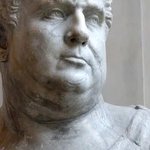
Below: a pair of busts that are supposed to be Nero.
#RomanHistory #AncientRome #RomanEmpire #HistoryThreads #AncientHistory


23
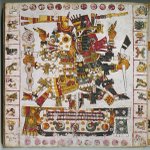
Page 56 of the pre-Columbian Codex Borgia illustrates the ultimate Mesoamerican concept of cosmic duality.
Back-to-back stand Mictlantecuhtli (the skeletal lord of death and the underworld, left) and Quetzalcoatl (the wind god and creator of life, right). Framed by sacred calendar glyphs, this striking mirror-image symbolizes the eternal, inseparable cycle of life, death, and renewal.
#Mesoamerica #CodexBorgia #AztecHistory #Mythology #PreColumbianArt #AncientHistory

48
Two faces of the Feathered Serpent from the 16th-century Codex Telleriano-Remensis, an early colonial manuscript preserving Aztec calendrical lore. In this first illustration, Quetzalcoatl wears his signature priestly regalia—a conical ocelot-skin cap, quetzal plumes, and the sliced conch-shell "wind jewel" pectoral—while grasping a smaller figure by the hair. In Mesoamerican visual tradition, this posture signifies conquest, authority, and the taking of a captive during a sacred 13-day ritual period. (1/2)
#AztecHistory #Quetzalcoatl #Mesoamerica #Codex #AncientHistory

1
1
78
In this companion panel, the deity appears in his wind-god aspect, Ehecatl-Quetzalcoatl. Wearing a red bird-beak mask and carrying an elaborate back-frame of ritual banners and arrows, he holds a ceremonial serpent incense burner in one hand and green quetzal feathers symbolizing wind and breath in the other. Surrounding both paintings are handwritten 16th-century Spanish annotations added by friars attempting to translate and document Aztec mythology. (2/2)
#AztecMythology #History #ArtHistory #PreColumbian #Mexico

36
The Trials and the Throne
Terrified by the prophecy, the king summoned the dwarf and issued lethal challenges to spare his life. First, the ruler demanded he build a pyramid taller than any structure in Uxmal before dawn. Through his mother's magic, the massive elliptical monument stood finished at sunrise.
In a final deadly trial, the king ordered baskets of rock-hard cocoyol nuts to be smashed over the dwarf’s skull with a stone hammer, promising to endure the same test afterward. Secretly protected by an enchanted flint plate hidden beneath his hair, the dwarf survived without a scratch—while the king perished on the very first blow, making the magician the new ruler of Uxmal.
#MayaHistory #Archaeology #PyramidOfTheMagician #Yucatan #AncientArchitecture


36
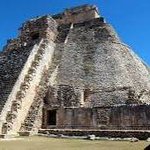
According to traditional Maya legend, Uxmal’s iconic Pyramid of the Magician did not take centuries to construct—it rose in a single night.
The folklore begins with an elderly healer who lived alone near the city and longed for a child. She kept a lone egg warm by her hearth until a baby boy hatched. Within a single year, he grew into a man with the small stature of a dwarf, possessing sharp intelligence and deep magical abilities.
While his mother was away one day, he uncovered a ceremonial gong she kept hidden beneath the earth. When he struck it, the thunderous sound echoed across the entire kingdom, fulfilling an ancient prophecy that the reigning king of Uxmal would be overthrown. (1/2)
#MayaFolklore #Uxmal #AncientMexico #History #Mythology

1
1
41
This polished stone mask stands apart from the ceramic figures we’ve looked at. While those were modeled in clay and fired, this was carved from hardstone (serpentine or similar) and finished to a high sheen. Stone carving like this demanded far more time, specialized tools, and skill — grinding, cutting, and polishing a hard material by hand over days or weeks rather than shaping soft clay in hours.
The controlled, idealized features and refined surface are characteristic of Teotihuacan-style (or related) stone face plaques. These were prestige objects, rarer and more labor-intensive than the more numerous ceramic tomb figures of West Mexico. One reflects skilled pottery production; the other reflects the slower, more exacting work of elite stone carving.
#Teotihuacan #StoneMask #PreColumbian #Mesoamerica #AncientArt #Archaeology #Lapidary #Hardstone #Craftsmanship

1
59
Two Pre-Columbian standing ceramic figures, likely West Mexico (Nayarit/Jalisco style).
Both wear long garments and appear to me to be holding rattles — one with only a single arm left, the other with both arms up and a more elaborate headdress. The objects have handles and aren’t fully flat, and the smiling faces fit the common motif of musicians or ritual participants rather than warriors.
Figures like these were typically placed in shaft tombs as companions for the dead, capturing scenes of music, dance, and ceremony.
#Nayarit #Jalisco #WestMexico #PreColumbian #Mesoamerica #AncientArt #Archaeology #Rattles #ShaftTomb


1
72
Two Pre-Columbian pieces from the Oaxaca region, different media and roles:
Left: Small stylized head (ceramic or stone), likely Zapotec. Bat- or animal-like features with prominent projecting ears — bats were tied to caves, the underworld, and leadership. These heads often came from larger funerary urns or served as adornos.
Right: Stone seated figure with arms resting across the body. Classic ancestral/idol form (Zapotec, Mixtec, or related). The lower half of the face shows a distinct treatment, as if something is worn or layered over the mouth and cheeks. Compact, powerful posture used for personal amulets, tomb offerings, or household ancestors.
One is more zoomorphic and vessel-related; the other is more human but with that unusual lower-face detail, and more portable and ancestral. Both reflect the same world of elites, tombs, and supernatural intermediaries.
#Zapotec #Mixtec #Oaxaca #PreColumbian #Mesoamerica #AncientArt #Archaeology


2
78
Pre-Columbian stone relief plaque, likely Zapotec or Mixtec from Oaxaca.
Low-relief carving of a stylized serpentine or abstract figure on a square slab. Serpents in this tradition often connect to rain, earth, water, or calendrical symbolism, and pieces like this appear as architectural elements, tomb markers, or ritual objects (Classic–Postclassic periods).
Solid example of Oaxacan stone carving.
#Zapotec #Mixtec #MonteAlban #PreColumbian #Mesoamerica #Oaxaca #AncientArt #Archaeology #StoneRelief

1
61
Ever seen a "Deified Eagle Warrior"?
This striking polychrome ceramic artifact from the Aztec Empire depicts a warrior merging with the sacred eagle—a symbol of the sun and elite military prowess. Displayed at the Guggenheim Museum, pieces like this show just how vibrant and complex Tenochtitlan's artistry really was.
#AztecEmpire #AncientCivilizations #Museum #History #PreColumbianArt

1
1
106
The Piercing Gaze of Ancient Ritual Masks
Some of the most captivating objects from ancient Mesoamerica are masks designed not just to be looked at, but to transform the wearer into a spiritual force. This hand-shaped ceramic mask brings that ritual intensity straight to life.
The Dramatic Expression: With its bared, individual teeth, flared nostrils, and deep-set eye sockets, the mask captures an intense, powerful emotional resonance.
Perforated Details: Notice the small holes pierced along the upper brow and outer edges—these were used to stitch or tie organic materials like hair, feathers, or a textile headdress directly onto the piece during ceremonies.
The Power of Transformation: In many pre-Columbian traditions, putting on a mask like this was a literal act of stepping outside of oneself, allowing priests or dancers to embody deities, ancestors, or cosmic forces during sacred rituals.
It's a haunting and masterfully crafted piece that makes you feel the living energy of ancient ceremonies!
#PreColumbianArt #AncientMasks #MesoamericanHistory #Archaeology #Artifacts #TraditionalCraft

1
68
Watching from Another Realm: The Goggled FigurineAncient Mesoamerican pottery never ceases to surprise with its brilliant symbolism. Take a look at this remarkable clay figure, featuring a seated posture and some truly unforgettable headgear. The Goggles on the Brow: Those large, circular ring-like ornaments resting above the forehead instantly draw the eye. In ancient iconography, prominent goggle-eyes are often linked to rain, storm, and water deities (like Tlaloc), signaling a watcher from another realm. The Seated Stance: The figure is captured in a grounded, cross-legged or crouched pose with hands gesturing outward, holding a centered focus that draws you right into the composition.
Hand-Sculpted Character: Every ridge, texture, and applied clay element shows the direct imprint of the ancient artisan's hands, making it feel just as alive today as it was centuries ago.
#PreColumbianArt #AncientCeramics #MesoamericanHistory #Archaeology #Artifacts #TraditionalCraft

51
The Flayed Mask Tradition
Throughout our look at these ancient Mesoamerican masterpieces, one powerful theme keeps emerging: the sacred act of transformation. This ceramic fragment provides another striking look at the imagery of Xipe Tótec and the ritual use of flayed skin masks.
The Double-Eyed Mask: Notice the prominent, rounded eye openings and stitched edges around the face—the hallmark visual cues of a ritual mask overlaying the wearer's features.
The Metaphor of the Seed: To the ancient cultures of Mexico, peeling back an outer layer wasn't a symbol of macabre horror, but of natural cycles. Just as corn husks split to let new shoots emerge, these ritual garments represented the earth shedding its old skin for spring renewal.
Mastery in Clay: Even in fragment form, ancient potters captured the distinct tension of a human face stretched and bound to serve as a divine vehicle.
It’s an incredible journey through how ancient art translated the deep cycles of life, death, and rebirth into tangible form.
#PreColumbianArt #MesoamericanHistory #XipeTotec #AncientCeramics #Archaeology #TraditionalCraft

The Golden Art of XiuhtecuhtliWhen you look at these two gold artifacts together, you get a front-row seat to the staggering skill of Aztec goldsmiths. Both pieces depict Xiuhtecuhtli, the Aztec God of Fire, heat, and the hearth—but from two totally different artistic angles. The Expressive Face (First Image): The first piece zooms in on the deity's facial features, capturing an expressive, smiling mouth, detailed ears, and textured borders that make the gold look almost alive. The Full Regalia (Second Image): The second piece shows the god wearing his massive, radiating fire-crest helmet, framed by intricate geometric filigree and openwork that looks almost like woven thread made of solid gold.
Lost-Wax Masterpieces: Crafted using advanced lost-wax casting, these surviving treasures offer a rare glimpse into the sacred jewelry worn by the Aztec high elite before the Spanish Conquest. Seeing them together shows how an ancient artisan could capture both the human emotion and the towering majesty of the exact same god!
#PreColumbianArt #AztecGold #Xiuhtecuhtli #AncientMetalwork #MesoamericanHistory #MuseumArtifacts


60
What Do You Make of This Figure?
#PreColumbianArt #Archaeology #AncientSculpture #MesoamericanHistory #MuseumArtifacts #MysteryInArt

27
The Skull Beakers of Ancient CholulaIn ancient Mesoamerica, ceramic art frequently confronted the profound balance between life and death. This polychrome hourglass-shaped vase (Catalog No. 11.0-05388) from the Cholulteca culture is a striking example of that philosophy. The Central Skull: A detailed, modeled human skull protrudes directly from the center of the vessel, serving as a powerful focal point that speaks to ancestral reverence and cosmic cycles.
Masterful Polychrome Paint: The vase is wrapped in intricate geometric bands and earth-toned pigments, showcasing the advanced ceramic painting techniques of the Puebla-Tlaxcala region.Ritual Purpose: Vases and beakers of this shape were often used in elite rituals, feasts, or offerings, embedding deep symbolic meaning into everyday sacred objects.
It’s an incredible reminder of how ancient artists wove themes of mortality directly into their finest craftsmanship!
If you could, would you drink from them?
#PreColumbianArt #MesoamericanHistory #AncientCeramics #Cholula #Archaeology #TraditionalCraft


60