

I am an equine massage therapist, I also teach others to become self supporting by learning equine massage. I say I teach people how to pet ponies for money.
USA
Joined July 2008
- Tweets12.4K
- Following1.7K
- Followers523
- Likes33.8K







OwnedByFizz retweeted

I run a gun shop with no IT guy. So every morning my
@bot handles the emails, reorder reports, time cards, SEO, and marketing while I'm working on growing
@TombstoneTrade. Let's brainstorm how we can all grow!


OwnedByFizz retweeted
Maybe my follower growth has stalled because I don’t ask for people to follow me. So… can you spare a follow for a small account?
OwnedByFizz retweeted

I asked my Grok Bot Chief of Staff how I could make my entire Bot team more reliable and trustworthy.
Its answer was surprisingly simple:
"You won't get trust by hoping the Bot gets smarter. You get it by making its work checkable, so you trust the evidence instead of the Bot."
Here's the prompt to apply this across your entire Grok Bot team:
"Help me introduce a reliability and trust standard across my entire Grok Bot team.
Start with a read-only review. Do not change any instructions, permissions, routines, memories or workflows without my approval.
1 - Make every Bot prove its work.
For each recurring job, define what evidence must be provided before the job can be considered complete.
Examples include a Notion record, a sent email ID, a screenshot, a verified result or a count of processed items.
A Bot saying 'Done' is not proof. The evidence must be independently checkable.
2 - Stop trusting memory for changing information.
Identify which Bots rely on information that can change, including dates, prices, balances, deadlines and task statuses.
Map each fact to its authoritative source.
Require a fresh source check when the information needs to be current. Reuse checks when appropriate to avoid unnecessary usage.
If a source is unavailable, report that rather than guessing.
3 - Define exactly what each Bot is allowed to do.
For every Bot, document three categories:
What it can do independently.
What requires my approval.
What it must never do.
Flag unclear boundaries and ask me to resolve them.
Preserve existing permissions.
4 - Make failures visible.
Create a clear failure-handling rule for each Bot.
When something fails, it should explain what went wrong, what it attempted, what was actually completed and what needs my attention.
Allow one safe retry where appropriate, then stop rather than improvising an unapproved workaround.
5 - Turn corrections into permanent improvements.
Review repeated mistakes and corrections across the team.
Identify which problems could be prevented with clearer instructions, improved procedures or repeatable skills and scripts.
Propose the exact changes for my approval.
Track whether the same mistakes become less frequent over time.
6 - Make Bots earn greater independence.
For new or unreliable workflows, start with a draft-and-approve process.
Test the output against clear quality standards and require evidence of successful completion.
Only recommend greater autonomy after the Bot has demonstrated consistent performance.
Never expand permissions without my approval.
7 - Test the trust standard.
Select one Bot and one real, low-risk workflow for a pilot.
Check whether it provides completion evidence, verifies changing information, respects approval boundaries and reports failures correctly.
Where live testing isn't authorised, propose a test for my approval instead.
Return a report showing:
- Each Bot's responsibilities and trust gaps.
- Evidence required for completion.
- Source-checking and approval rules.
- Recommended instruction changes.
- Test results and outstanding risks.
Show me the proposed changes for the first Bot and wait for my approval before applying anything or extending the process to the rest of the team.
If you can't inspect a Bot's setup, tell me what you need and provide the instructions I can add manually."
HERE'S THE BIG LESSON.
A Grok Bot that confidently tells you it has completed a job is asking you to trust it.
A Grok Bot that provides evidence you can independently verify is giving you a reason to trust its work.
And when you're running an entire team of Bots, that difference matters enormously.
Don't build a team of Bots that simply tell you they've done the work. Build a team that can prove it.

OwnedByFizz retweeted

If this post gets over 200k reactions, we’ll formally change our policy so that in reports, when someone “ran”, it will say “they skedaddled.”
OwnedByFizz retweeted

This is quite literally Soviet communism. “Show me the man and I’ll show you the crime.” This was the motto of Stalin’s secret police.
I’m not exaggerating when I call these people communists. Truly evil people.

OwnedByFizz retweeted

WOW. The City of Bartow, FL, was about to have a Muslim open its city meeting with an Islamic prayer, but residents COUNTERED it by reciting the Lord's Prayer.
OwnedByFizz retweeted
I had @bot make me reservations just this last weekend. It used the restaurant's OpenTable setup to do it. Painless and easy.

OwnedByFizz retweeted

Measure Aiming to Repeal Massachusetts Abortion-Up-to-Birth Law to Appear on 2028 Ballot | Katherine Hamilton, Breitbart
Massachusetts voters will have the chance in 2028 to repeal a barbaric law Democrat Gov. Maura Healey signed in August legalizing the killing of unborn babies in abortions up to the moment of birth.
A coalition of pro-life advocates turned in 80,412 valid signatures, which is more than double the 37,289 needed for the ballot measure to appear before voters, Secretary of State William Galvin’s office told Mass Live.
The Compassionate Care Coalition, the group behind the measure, also collected enough signatures to suspend the law ahead of 2028, but Healey issued an emergency preamble blocking the effort and putting the abortion law into effect immediately. Now, the radical law will be in effect for two years until voters have the chance to weigh in.
Healey, who identifies as lesbian and is a self-proclaimed Catholic, signed the bill on August 10 called the Prioritizing Patient Access to Care Act. The law allows unborn babies to be aborted throughout pregnancy up until birth and struck down the state’s 24-week limit, which had exceptions for the life of the mother and deadly fetal diagnoses. Under the new law, doctors have the discretion to decide whether or not to perform a late-term abortion.
The governor posted a video showing herself surrounded by a gaggle of grinning women who applaud ecstatically as she signs the radical bill. Healey’s stamp of approval aligned Massachusetts with Alaska, Vermont, Oregon, New Mexico, Colorado, Minnesota, Michigan, Maryland, New Jersey, and Washington, DC, in allowing unborn babies to be aborted up to the moment of birth.
After Healey signed the bill, CatholicVote President and CEO Kelsey Reinhardt sent a letter to the Catholic Bishops of Massachusetts calling for Healey to be excommunicated and asking for the Church to provide clarification and guidance to people of faith.
“When a Catholic governor signs legislation permitting abortion until birth, celebrates that signing publicly, and receives no response from her bishops beyond a press statement, the lesson absorbed by the faithful is not subtle,” Reinhardt wrote. “It is this: This is tolerable and within the range of what a Catholic may do. The line is somewhere further along, and we do not yet know where it is.”
“That lesson is wrong. And it is being taught every day that it goes uncorrected,” she added. “The integrity of Catholic witness in public life, and the credibility of the claim that Catholic faith is a moral architecture that shapes how one exercises power, depends on the willingness of shepherds to act as shepherds when it matters most.”
The Compassionate Care Coalition announced in late October that it had submitted the signatures to the Secretary of the Commonwealth. The announcement took place at a memorial at the State House representing the 49,450 babies killed in abortions in Massachusetts in 2024.
The coalition is comprised of pro-life groups — including Massachusetts Citizens for Life, Massachusetts Family Action, Massachusetts Family Institute, Democrats for Life of America, and Cape Cod Pro-Life Alliance — and is backed by Catholic bishops in the state.
“The people of Massachusetts did not ask for abortion through all nine months, and in a matter of weeks they made that clear,” Sam Miele, chairman of the Compassionate Care Coalition and director of Massachusetts Family Action previously said. “We are grateful to every volunteer, pastor and parish staffer who carried a clipboard. Because of them, voters will have the final say.”
breitbart.com/politics/2026/…


When I signed Massachusetts’ new reproductive health care law in August, I heard from families who faced devastating complications in deeply wanted pregnancies — and were forced to travel out of state to get the care they needed.
Every day of delay risks putting another family through that same heartbreak.
That’s why I’m filing an emergency declaration to ensure this law goes into effect as the Legislature intended.
Read more: massgovernor.substack.com/p/…

OwnedByFizz retweeted

Eric, je suis d'accord avec ton diagnostic. Mais je pense que la conclusion est beaucoup plus optimiste que ça.
Le reach ne va pas s'épuiser. Il va se redistribuer.
Naval l'a formulé il y a des années : on échappe à la compétition par l'authenticité, parce que personne ne peut te battre sur le fait d'être toi. C'est l'idée du monopole personnel. Tu ne gagnes pas en étant le meilleur sur un terrain que tout le monde occupe. Tu gagnes en étant le seul sur le tien.
Maintenant, imagine que demain chacun ait son monopole personnel.
Ce n'est pas un monde saturé. C'est un monde enfin logique. Chaque créateur sur son territoire, chaque audience qui trouve exactement la voix qui lui parle. Le marché s'adapte toujours. Il ne s'effondre pas quand une chose devient abondante : il déplace la valeur vers ce qui reste rare.
On a eu exactement le même débat avec le code. « Si demain tout le monde peut coder avec l'IA, les ingénieurs ne vaudront plus rien. » Très bien, imaginons ce monde où tout le monde est ingénieur. Que se passe-t-il ? On ne manque plus de code. On manque de gens qui savent quoi construire, pourquoi, et pour qui. La valeur ne disparaît pas. Elle remonte d'un étage.
Le contenu va suivre la même trajectoire.
Et c'est là que je pense qu'on regarde le problème à l'envers. Le problème n'a jamais été qu'il y aurait trop de contenu intelligent. Le problème, c'est qu'il n'y a jamais eu assez de contenu singulier.
On vit déjà dans un monde saturé de contenu moyen. Bien avant l'IA. Des milliers de comptes qui reprennent les mêmes threads, les mêmes hooks, les mêmes idées repackagées, repurposées, recyclées jusqu'à l'usure. La bouillie n'a pas été inventée par les machines. Elle a été industrialisée par des humains qui avaient appris à produire la réponse attendue.
Et ça vient de quelque part : l'école.
Pendant quinze ans, on apprend à trouver la bonne réponse plutôt que sa propre réponse. À reproduire plutôt qu'à questionner. À rendre une copie qui ressemble à celle du voisin, parce que c'est ce qui est noté. On a fabriqué à l'échelle industrielle des esprits interchangeables. Il ne faut pas s'étonner qu'ils produisent du contenu interchangeable.
L'IA ne crée pas ce problème. Elle le rend visible. Tout ce qui est moyen, prévisible et standardisé, elle le fait mieux que nous, plus vite, et pour presque rien. La seule chose qu'elle ne peut pas produire, c'est toi.
C'est exactement ce qu'a compris Alex Karp.
En décembre 2025, Palantir lance sa Neurodivergent Fellowship. Et l'entreprise précise noir sur blanc : ce n'est pas une initiative diversité. C'est une thèse. Reconnaissance de patterns, pensée non linéaire, hyperfocus : les traits qui rendent les neurodivergents différents sont précisément ceux qui deviennent décisifs dans un monde dominé par les LLM. Quelques mois plus tard, sur TBPN, Karp résume : il y a en gros deux façons de savoir que tu as un avenir. Soit tu as une formation professionnelle, soit tu es neurodivergent.
Je vais plus loin que Karp.
Je pense que la majorité des enfants naissent neurodivergents. Que c'est l'état naturel de l'esprit humain.
Regarde un enfant de quatre ans. Il pose des centaines de questions par jour. Il démonte tout. Il refuse les règles qu'il ne comprend pas. Il ne sait pas ce qu'est une « bonne réponse ». Il a juste la sienne.
Puis on le standardise.
La standardisation répondait aux besoins de l'ère industrielle : des esprits interchangeables pour des postes interchangeables. Elle avait sa logique. Mais c'était une erreur sur la nature humaine. Et l'IA est en train de présenter la facture.
Parce que ce qui va se passer est l'inverse de ce qu'on craint. L'IA va absorber tout le travail standardisé, et en le faisant, elle va renvoyer chacun d'entre nous, individuellement, à une seule question : qu'est-ce que je suis le seul à pouvoir apporter ?
Ce n'est pas la fin du créateur. C'est la fin du créateur moyen.
Donc oui, le retour du réel sera brutal. Mais le réel, ce n'est pas seulement exister physiquement et assumer ses propos. Le réel, c'est avoir quelque chose que personne d'autre n'a.
On a passé un siècle à fabriquer des gens interchangeables.
Le siècle qui vient appartient à ceux qui ne le sont pas.

Ma conclusion se discute effectivement car c'est pas aussi simple que je le présente, mais @brivael fait figure de pionnier dans son usage de l'IA.
Si demain tout le monde utilise l'IA pour s'augmenter et dire des choses intelligentes (avec une pensée originale, pas juste de la bouillie) il y a des chances que le reach s'épuise et que l'auditeur finisse par décider d'accorder son attention à quelqu'un qui dans la vie réelle existe, assume ses propos et présente un certain niveau de succès (pas forcément financier).
Pour le coup Brivael coche ses cases donc c'est pas pour dire qu'il sera noyé dans le futur, mais ma réflexion m'a amené à penser que le retour du réel (et son importance) sera brutal dans le futur.
OwnedByFizz retweeted

The following story reads like a modern day retelling of the 80s song “Jack & Diane” by John Mellon Cougarcamp.
It was high noon, and Norm was feeling a little high.
According to Norm, he found a weed cigar at a window on a house and he smoked some of it.
Norm and Hannah had also been drinking, and they were feeling a little buzzed. They were also feeling a little randy, so they decided, “Let’s get it on!”
Not the Mills Lane way of “Let’s get it on” but more like the Marvin Gaye way of “Let’s get it on.”
As the couple were coupling at the south end of Iowa Avenue in Lakeland a PCSO deputy was driving along US 98 and happened to look over. The pareunia was very obvious and very much out in the open. If you are familiar with the area, you know that the area is a big stage and with many audience members passing by.
The deputy’s reaction was probably reminiscent of OMGItsWicks—“What’s goin’ on out here?”
But unlike OMGItsWicks, the deputy did not get it on his flip phone.
Instead, the deputy went and made contact with the pair.
Let us rephrase that.
The deputy went and said howdy. Or something like that.
Norm and Hannah should have gotten a room, but now it was too late. Deputy Buzzkill took Norm and Hannah to get a room at Grady Judd’s Bed & Breakfast. Separate rooms though.
Both were charged with Exposure of Sexual Organs.
Norm was also charged for possession of what remained of his magic window weed.
#PCSO #PolkSheriff
#LittleDittyAboutNormAndHannah
#OhYeahTheArrestGoesOn #LongAfterTheThrillOfLovinIsGone
#WeedCigarOnAWindowSill
#RememberWhenYouCouldFindPiesOnWindowSills
#PepperidgeFarmRemembers
#CoppusInteruptUs
#NoSkyrocketsInFlight #JustNormAndHannahsAfternoonDelight

OwnedByFizz retweeted

I find it hilarious that some Americans are complaining about the benefits our veterans receive for literally going to war in defense of this country, yet have absolutely no problem with our taxpayer dollars going to a Taliban martyrs fund, which provides monthly stipends to the widows of Taliban terrorists who died trying to kill American troops.
Apparently, the problem isn't taxpayer money supporting people who went to war. It's which side they fought on.
OwnedByFizz retweeted

If you want to know why the Pentagon is watching Ship 42’s reentry trajectory today just as closely as NASA, look at what full Starship reusability does to global military logistics.
Right now, moving 100 tons of heavy equipment across the planet requires aircraft carriers, overseas airbases, diplomatic overflight clearances, and days of transit time.
Once Starship proves repeatable tower-to-tower recovery:
> The U.S. military gains the ability to drop 100+ tons of cargo, autonomous drone swarms, or mobile defense grids anywhere on Earth in under 45 minutes, without asking a single neighboring country for airspace permission.
> Combined with SpaceX’s $100B second Starbase complex in Louisiana (designed for up to 10,000 launches a year), heavy orbital lift becomes a strategic deterrent on par with nuclear submarines.
I bet that within 3 years of Starship’s first successful upper-stage catch, every major geopolitical power will be forced to rewrite its defense doctrine around suborbital rapid response.

OwnedByFizz retweeted
You asked for honesty, so here it is.
1. Your own chart undercuts you. "Soldier, on duty, no big war" is the rate for an army at peace. Comparing loggers to peacetime garrison troops is like calling firefighting safe because most days nothing is on fire. And "20 to 50+" for combat is a guess. Deployed troops in Iraq died at roughly 400 per 100,000 per year, and Marines at about double that. That is several times the logging rate, before counting the wounded.
2. For a logger, death is an accident. For a soldier, it's in the job description. When a logger dies, something went wrong. OSHA investigates, someone gets fined, and the industry tries to prevent it next time. When a soldier dies in combat, the system worked as designed. Nobody enlists for the timber. They sign a contract that says the government may send them to kill or be killed, and that they can't say no when it does. Danger is a byproduct of logging. It is the mission of soldiering.
3. Danger was never the basis. The oath is. A logger can quit on Tuesday. A soldier who quits goes to prison. Loggers aren't ordered toward the thing trying to kill them, don't sign away constitutional rights, and aren't sent away from their kids for a year under criminal penalty for refusing.
4. Those workers already have an entitlement. It's called workers' compensation. You worked in commercial insurance for ten years and never noticed the product. Servicemembers are barred from suing their employer at all under Feres. VA benefits are the substitute, not a bonus.
5. The property tax exemption is disability compensation. In most states it's tied to a disability rating. It isn't a participation trophy for moving crates.
6. Your beef is with Congress. Privates don't pick the wars. If you hate the policy, blame the people you voted for, not the 19-year-old who went where he was told.
Respect loggers all you want. I do too. But "can we all just be honest" works better when the numbers are.

This will probably land me tons of hate but I don't care. I'm a civilian, so I'm gonna talk about civilian things.
The fact of the matter is this: there are tons of professions which are far more dangerous than serving in the US military. Even those actually in combat.
Why should a veteran be "entitled" to anything that a logger, fisherman, or roofer isn't entitled to?
What does our country need more of at the moment? Construction workers and loggers, or killing brown kids on another continent for the benefit of Raytheon's shareholder dividend?
I have more respect for these guys than I do for most "run of the mill" servicemembers.
Some servicemembers did incredibly brave and heroic things far above comprehension. Some of them moved crates between bases "outside the wire" and never saw a single round head their way.
I worked in commercial insurance prior to this industry and saw plenty of permanently disabled and/or killed manufacturing workers over 10 years. Nobody's talking about those guys or their families being exempted from property tax or some other special entitlement.
Can we all just be honest about this?

OwnedByFizz retweeted
The The Remington Model 51 marked marketed as a "self aiming pistol" and got there after hundreds of hand-mold experiments to nail the grip. Ergonomics isn't new.
Remington made only about 65,000 of them before production ended in the 1920s.

ALT The Remington UMC model 51 "self aiming pistol" in .380 ACP.


OwnedByFizz retweeted
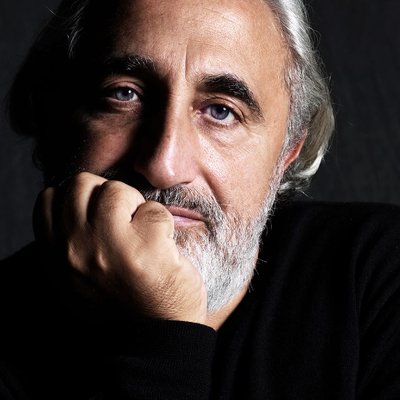
Well since you asked @Phatymarh44:
1) We left Lebanon under imminent threats of execution as Lebanese Jews from Muslim militia;
2) My brother was forced to leave Lebanon because he was winning too many national Judo championships;
3) My eldest brother was forced to leave Lebanon when he was being increasingly harassed by Muslim militia (along with his non-Muslim wife);
4) My parents were kidnapped and abused by Fatah;
5) Some of grandparents escaped Syria because of Islamic Jew-hatred;
6) My brother-in-law's family escaped Alexandria (Egypt) because of Jew-hatred in Egypt;
7) My wife's Armenian family escaped Lebanon because of Islam;
8) My wife's ancestors were massacred or forced to flee the area around Turkey during the Armenian genocide;
9) I received endless death threats from Muslims when I lived in Montreal;
10) I receive endless threats and insults from Muslims on social media.
Is this enough or should I add more to the list?
