

The Journey of how a King makes wealth on chain °•° up up, dever down °•° long live the king
Blockchain
Joined February 2022
- Tweets13.4K
- Following418
- Followers895
- Likes22.8K







Claude is soo goated, I needed to run some commands with Git Bash in a folder I was building my hack from, it was giving me issues, so I just told clause is there a way to bypass this
Guess what Claude did ? Claude created the .cmd script in the sub folder and I ran all command with just a click
I just click them and my command prompt opens and the script go through immediately
Eased my stress
P.S this is the first time I'm taking pictures directly from the X app btw

Mønarch〆(🤴) retweeted
Shelf is live ! 📚
Shelf is a digital library built inside @nimiq Pay, where discovering, borrowing, and reading books is as simple as making a crypto payment.
Buying a book isn't always necessary, especially when you only need it for a few days. Shelf makes books more accessible by letting readers pay for the time they need, read directly from their devices, and return when they're done.
Here's how Shelf works:
- Browse a growing collection of books across different categories, explore book details, and read previews before deciding what to borrow.
- Borrow with USDT. Choose how long you want a book for, whether that's 3, 7, or 14 days, and pay through Nimiq Pay on Polygon. No complicated checkout process.
- Your own digital bookshelf. Every borrowed book appears in My Library, where you can track what you're reading, see how much time is left, and revisit your borrowing history.
- Read directly on Shelf. Open your borrowed books in a built-in reading interface, with everything in one place.
- Automatic returns. When your borrowing period ends, access expires automatically. No manual returns, no late fees, and no unexpected deductions. You can always borrow the book again.
- A space for authors and publishers. Shelf also creates an opportunity for content creators to make their books available to readers. Authors and publishers receive 80% of borrowing revenue, while Shelf takes 20% to maintain the platform.
The idea is simple.
Discover a book → Choose a borrowing period → Pay with USDT → Read → Return.
No need to purchase a full book when you only need temporary access.
Shelf is our entry into the @miniappscomp, under the Pay track, built around the idea that crypto payments should unlock useful everyday experiences.
We're starting with digital books, with more ways to discover and access knowledge planned as the library grows.
Discover. Borrow. Read. Return.
Try Shelf inside Nimiq Pay: nimpay.app/miniapps/open/nim…
demo video was made with hyperframes btw, took 1hr 46 mins
Thanks @magnuskrypt for putting me through

Shelf is live ! 📚
Shelf is a digital library built inside @nimiq Pay, where discovering, borrowing, and reading books is as simple as making a crypto payment.
Buying a book isn't always necessary, especially when you only need it for a few days. Shelf makes books more accessible by letting readers pay for the time they need, read directly from their devices, and return when they're done.
Here's how Shelf works:
- Browse a growing collection of books across different categories, explore book details, and read previews before deciding what to borrow.
- Borrow with USDT. Choose how long you want a book for, whether that's 3, 7, or 14 days, and pay through Nimiq Pay on Polygon. No complicated checkout process.
- Your own digital bookshelf. Every borrowed book appears in My Library, where you can track what you're reading, see how much time is left, and revisit your borrowing history.
- Read directly on Shelf. Open your borrowed books in a built-in reading interface, with everything in one place.
- Automatic returns. When your borrowing period ends, access expires automatically. No manual returns, no late fees, and no unexpected deductions. You can always borrow the book again.
- A space for authors and publishers. Shelf also creates an opportunity for content creators to make their books available to readers. Authors and publishers receive 80% of borrowing revenue, while Shelf takes 20% to maintain the platform.
The idea is simple.
Discover a book → Choose a borrowing period → Pay with USDT → Read → Return.
No need to purchase a full book when you only need temporary access.
Shelf is our entry into the @miniappscomp, under the Pay track, built around the idea that crypto payments should unlock useful everyday experiences.
We're starting with digital books, with more ways to discover and access knowledge planned as the library grows.
Discover. Borrow. Read. Return.
Try Shelf inside Nimiq Pay: nimpay.app/miniapps/open/nim…
Feeling like a lazy day, will unveil what I've been building for a while now
Two products
Happy Sunday guys, hope you went to church


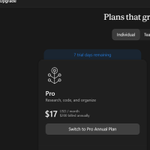
Guys, i got claude free 7 days trial from him, after my codex sub i'm going with claude
time to build, ty @Timidan_x


So basically it's snitch and I'll cover everything else
Got it

A public call to @blknoiz06
I understand you are in the US. I have close relationships with two of the top law firms who have a presence in the States.
Turn whistleblower and I’ll personally cover any legal expense you might encounter as a result.
Get in front of it.


my codex weekly usage credit just ran out, i don't have any reset right now i have to wait till monday to get the reset
my antigravity usage also done for with deadlines approaching, i think getting claude right now is not a bad decision
@thsottiaux how about making it possible to gift someone a reset, like peer to peer reset
think about it


Mønarch〆(🤴) retweeted

we spent a decade teaching people to never share their seed phrase. now the default way to let an ai agent pay for things is to hand it a private key.
that feels backwards to me.
an agent with a key can sign anything. the only thing between it and your money is its instructions, and instructions are the easiest thing to tamper with. a webpage can slip it new ones. so can a tool result. the key doesn't know who's asking, it just signs.
so the fix can't live in the prompt. it has to live somewhere the agent can't talk its way past.
that's the idea behind @spactvault, which i built at #NEARHackathon.
how it works
your money sits in a vault contract on @NEARProtocol. you set the rules. the agent never gets your key. it gets a NEAR function-call key that can do one kind of thing: ask the vault to pay.
then the contract decides, on chain:
- small payments go through on their own
- bigger ones wait until you approve that exact payment in your NEAR wallet
- anything over the cap, or to someone not on your allowlist, is refused, and no approval can push it through
the agent can't move tokens itself, can't change the rules and can't approve its own request. if it gets prompt-injected, the worst it can do is spend inside the limits you set, to people you already allowed.
NEAR makes this unusually clean. function-call keys are part of the account model, so "this key can only call these methods on this contract" is enforced by the protocol, not by my code promising to behave. and the vault has no access keys at all, so nobody can swap its code out, me included.
the part i didn't expect to matter
the hard part wasn't the contract. it was the approval screen.
when you approve a payment, you're trusting that what you see is what you sign. if the website, or whoever runs it, lies about the amount or the recipient, a normal approve button is useless.
so every request gets a fingerprint: a hash of its exact terms, stored by the vault. the approval page recomputes it in your browser, and the vault only accepts an approval that matches. change one character of the terms and it refuses. you're approving the terms, not the ui.
i learned this the practical way too. in my first real run i clicked through what i thought was the approval, and it was actually step one, registering a deposit address. the page now says "step 1 of 2" in plain words. small thing, but it feels like a lot of crypto losses happen at exactly this moment: a person clicking yes without knowing what yes means.
cross-chain
agents don't only want to pay people on NEAR, so the vault can also pay out on other chains through NEAR Intents. those payments always wait for you, whatever the amount, because once the tokens leave, the vault can't see what happens on the other side. i'd rather the contract be honest about where its guarantees end.
what actually happened on mainnet
real USDC, nothing staged:
- the agent asked for 1 USDC to my address on Base
- the vault held it and i got a review link
- i approved in my NEAR wallet
- 0.997398 USDC landed on Base in under 40 seconds
- then the agent asked for 5 USDC. over the cap, refused on chain (HARD_CAP_EXCEEDED), nothing moved
every transaction is linked in the repo.
how i tested it
i wrote down every attack i could think of (a lying backend, a prompt-injected agent, replayed approvals, parallel requests racing each other) and turned each one into a test. 18 cases run on every commit, 17 of them against a real NEAR node, and the results are public on the site.
it's still an unaudited prototype, so small amounts only. but the shape feels right to me: agents get budgets, humans keep keys, and the rules live where nobody can argue with them.
try it: spactvault.xyz
code: github.com/0xileri/SpactVaul…
genuinely curious: if you ran an agent you didn't write yourself, what would its default limit be? and would you set it per payment, per day, or per recipient?
@NearLegion @NearBuilders

Introducing SPACTVAULT.
letting an ai agent pay for things usually means handing it your wallet key. a key signs whatever it's told, even when the agent is confused or a webpage slipped it new instructions.
built at @NEARProtocol HACKATHON to fix that.
#NEARHackathon 🧵🔻