

Scientist, activist and just trying to have some fun
- Tweets1.3K
- Following1.1K
- Followers355
- Likes2.8K
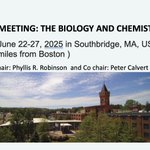




ALT Launched in 1985, this FASEB Science Research Conference (SRC) fosters the exchange of the most significant recent findings in photoreceptor biology. Retinal photoreceptor cells provide the critical first steps in vision, transducing incident photons into changes in membrane potential relayed via neural circuits to higher visual centers. Research on photoreceptors and their supporting epithelium, the retinal pigment epithelium (RPE), is not only essential for understanding how we see, but it has also advanced knowledge in areas such as G protein signaling, neurophysiology, and protein structure and function. In addition, fundamental photoreceptor and RPE research has been essential for new insights in the pathobiology of vision loss; blinding diseases like retinitis pigmentosa and macular degeneration result from photoreceptor degeneration that typically first appears as defects in cell biological and physiological mechanisms of the photoreceptors and/or the adjacent RPE.


ALT Launched in 1985, this FASEB Science Research Conference (SRC) fosters the exchange of the most significant recent findings in photoreceptor biology. The conference brings together investigators across every scientific discipline to advance our understanding of the biology and chemistry of vision. It aims to stimulate new collaborations, promote highly interactive discussions, and elevate the professional development of trainees and junior investigators. Retinal photoreceptor cells provide the critical first steps in vision, transducing incident photons into changes in membrane potential relayed via neural circuits to higher visual centers. Research on photoreceptors and their supporting epithelium, the retinal pigment epithelium (RPE), is not only essential for understanding how we see, but it has also advanced knowledge in areas such as G protein signaling, neurophysiology, and protein structure and function.


