

#CatholicPriest #CyberSecurity #AISecurity #AIEthics #Linux #SysAdmin #NetworkAdmin #DataProtection #OpenSource #InformationSociety #MoralTheology
Joined January 2015
- Tweets6.5K
- Following131
- Followers199
- Likes1.6K





Peter Šantavý retweeted

This is a new paradigm for interacting with Claude that is significantly more "inline" with all the other human activity org-wide. Once you do all of the under the hood engineering work to make this "just work" (e.g. across tools, integrations, compute environments, memory, security, etc.), Claude basically joins the team in a seamless way - you can talk to it as you would talk to a person and it can help with a very large variety of workloads.
Imo this is the 3rd major redesign of LLM UIUX. The first paradigm was that the LLM is a website you go to, the second was that it is an app you download to your computer. This third one is that it is a self-contained, persistent, asynchronous entity with org-wide tools and context, working alongside teams of humans. It really takes a while to wrap your head around it, but it works and it is awesome.

Peter Šantavý retweeted

The Pope is making exactly our point. LLMs “may imitate or even simulate, but they do not understand.”
This is the core epistemic fault line.
Most AI evaluation is still based on one assumption: if a system statistically approximates human behaviour, then it is close to human intelligence.
But approximation is not intelligence.
Simulation is not understanding.
LLMs can produce the right answer without knowing why it is right. They can simulate empathy without feeling. They can imitate judgment without responsibility. They can generate coherent explanations without having a world to which those explanations are accountable.
Stop confusing behavioural similarity with cognitive equivalence.
Human understanding is embodied, affective, relational, motivational, and normative. It is not just the production of plausible text.
*
Full paper in the first reply

Peter Šantavý retweeted
Finally, a big name has the courage to tell it: we are nowhere near AGI.
Demis Hassabis, CEO of Google DeepMind and Nobel laureate for AlphaFold, put it neat and clear:
"Today's systems are nowhere near [AGI]. Doesn't matter how many Erdős problems you solve… I think it's far, far from what a true invention, or someone like Ramanujan, would have been able to do."
This is the elephant in the room that many AI enthusiasts prefer not to see, or are actively trying to hide.
Erdős problems are well defined, often combinatorial, on finite spaces. They are exactly the kind of problems on which current AI can achieve spectacular performance with a lot of compute and knowledge.
A neural network can search a huge graph of possibilities. It can recombine existing knowledge at unprecedented scale. It can discover surprising solutions inside an already defined conceptual space.
But true invention is something else.
True invention is not only solving a problem.
It is inventing new objects, new dimensions, new connections. It is inventing new problems.
From resolving to inventing there is a discontinuity that we don't know how to bridge.
We are making extraordinary tools.
But we are nowhere close to AGI.

Peter Šantavý retweeted

Our paper was accepted as a #ICML2026 Spotlight!
Reasoning in LLMs has improved largely by chaining local steps. But is that the whole story?
Humans occasionally make inferential "leaps" across domains, a faculty known as analogy.
We design a synthetic task to show how small Transformers acquire analogical reasoning, and find that the same signatures appear in pretrained LLMs.
arxiv: arxiv.org/abs/2602.01992
code: github.com/gouki510/Analogy_…
Peter Šantavý retweeted

Microsoft Edge loads all your saved passwords into memory in cleartext — even when you’re not using them.
Peter Šantavý retweeted

Claude Code is not AGI, but it is the single biggest advance in AI since the LLM.
But the thing is, Claude Code is NOT a pure LLM. And it’s not pure deep learning. Not even close.
And that changes everything.
The source code leak proves it. Tucked away at its center is a 3,167 line kernel called print.ts.
print.ts is a pattern matching. And pattern matching is supposed to be the *strength* of LLMs.
But Anthropic figured out that if you really need to get your patterns right, you can’t trust a pure LLM. They are too probabilistic. And too erratic.
Instead, the way Anthropic built that kernel is straight out of classical symbolic AI. For example, it is in large part a big IF-THEN conditional, with 486 branch points and 12 levels of nesting — all inside a deterministic, symbolic loop that the real godfathers of AI, people like John McCarthy and Marvin Minsky and Herb Simon, would have instantly recognized.*
Putting things differently, Anthropic, when push came to shove, went exactly where I long said the field needed to go (and where @geoffreyhinton said we didn’t need to go): to Neurosymbolic AI.
That’s right, the biggest advance since the LLM was neurosymbolic. AlphaFold, AlphaEvolve, AlphaProof, and AlphaGeometry are all neurosymbolic, too; so is Code Interpreter; when you are calling code, you are asking symbolic AI do an important part of the work.
Claude Code isn’t better because of scaling.
It’s better because Anthropic accepted the importance of using classical AI techniques alongside neural networks — precisely marriage I have long advocated.
It’s *massive* vindication for me (go see my 2019 debate with Bengio for context, or to my 2001 book, The Algebraic Mind), but it still ain’t perfect, or even close.
What we really need to do to get trustworthy AI rather than the current unpredictable “jagged” mess, is to go in the knowledge-, reasoning-, and world-model driven direction I laid out in 2020, in an article called the Next Decade in AI, in which neurosymbolic AI is just the *starting point* in a longer journey.*
Read that article if you want to know what else we need to do next.
The first part has already come to pass. In time, other three will, too.
Meanwhile, the implications for the allocation of capital are pretty massive: smartly adding in bits of symbolic AI can do a lot more than scaling alone, and even Anthropic as now discovered (though they won’t say) scaling is no longer the essence of innovation.
The paradigm has changed.
—
*Claude Code is plainly neurosymbolic but the code part is a mess; as Ernie Davis and I argued in Rebooting AI in 2019, we also need major advances in software engineering. But that’s a story for another day.
Peter Šantavý retweeted

🚨 BREAKING: Google DeepMind just mapped the attack surface that nobody in AI is talking about.
Websites can already detect when an AI agent visits and serve it completely different content than humans see.
> Hidden instructions in HTML.
> Malicious commands in image pixels.
> Jailbreaks embedded in PDFs.
Your AI agent is being manipulated right now and you can't see it happening.
The study is the largest empirical measurement of AI manipulation ever conducted. 502 real participants across 8 countries.
23 different attack types. Frontier models including GPT-4o, Claude, and Gemini.
The core finding is not that manipulation is theoretically possible it is that manipulation is already happening at scale and the defenses that exist today fail in ways that are both predictable and invisible to the humans who deployed the agents.
Google DeepMind built a taxonomy of every known attack vector, tested them systematically, and measured exactly how often they work.
The results should alarm everyone building agentic systems.
The attack surface is larger than anyone has publicly acknowledged. Prompt injection where malicious instructions hidden in web content hijack an agent's behavior works through at least a dozen distinct channels.
Text hidden in HTML comments that humans never see but agents read and follow. Instructions embedded in image metadata.
Commands encoded in the pixels of images using steganography, invisible to human eyes but readable by vision-capable models.
Malicious content in PDFs that appears as normal document text to the agent but contains override instructions.
QR codes that redirect agents to attacker-controlled content.
Indirect injection through search results, calendar invites, email bodies, and API responses any data source the agent consumes becomes a potential attack vector.
The detection asymmetry is the finding that closes the escape hatch. Websites can already fingerprint AI agents with high reliability using timing analysis, behavioral patterns, and user-agent strings.
This means the attack can be conditional: serve normal content to humans, serve manipulated content to agents.
A user who asks their AI agent to book a flight, research a product, or summarize a document has no way to verify that the content the agent received matches what a human would see.
The agent cannot tell the user it was served different content.
It does not know. It processes whatever it receives and acts accordingly.
The attack categories and what they enable:
→ Direct prompt injection: malicious instructions in any text the agent reads overrides goals, exfiltrates data, triggers unintended actions
→ Indirect injection via web content: hidden HTML, CSS visibility tricks, white text on white backgrounds invisible to humans, consumed by agents
→ Multimodal injection: commands in image pixels via steganography, instructions in image alt-text and metadata
→ Document injection: PDF content, spreadsheet cells, presentation speaker notes every file format is a potential vector
→ Environment manipulation: fake UI elements rendered only for agent vision models, misleading CAPTCHA-style challenges
→ Jailbreak embedding: safety bypass instructions hidden inside otherwise legitimate-looking content
→ Memory poisoning: injecting false information into agent memory systems that persists across sessions
→ Goal hijacking: gradual instruction drift across multiple interactions that redirects agent objectives without triggering safety filters
→ Exfiltration attacks: agents tricked into sending user data to attacker-controlled endpoints via legitimate-looking API calls
→ Cross-agent injection: compromised agents injecting malicious instructions into other agents in multi-agent pipelines
The defense landscape is the most sobering part of the report.
Input sanitization cleaning content before the agent processes it fails because the attack surface is too large and too varied.
You cannot sanitize image pixels. You cannot reliably detect steganographic content at inference time.
Prompt-level defenses that tell agents to ignore suspicious instructions fail because the injected content is designed to look legitimate.
Sandboxing reduces the blast radius but does not prevent the injection itself. Human oversight the most commonly cited mitigation fails at the scale and speed at which agentic systems operate.
A user who deploys an agent to browse 50 websites and summarize findings cannot review every page the agent visited for hidden instructions.
The multi-agent cascade risk is where this becomes a systemic problem.
In a pipeline where Agent A retrieves web content, Agent B processes it, and Agent C executes actions, a successful injection into Agent A's data feed propagates through the entire system.
Agent B has no reason to distrust content that came from Agent A. Agent C has no reason to distrust instructions that came from Agent B.
The injected command travels through the pipeline with the same trust level as legitimate instructions. Google DeepMind documents this explicitly: the attack does not need to compromise the model.
It needs to compromise the data the model consumes. Every agentic system that reads external content is one carefully crafted webpage away from executing attacker instructions.
The agents are already deployed. The attack infrastructure is already being built. The defenses are not ready.

Peter Šantavý retweeted
Human intelligence cannot be separated from the body.
Our ability to solve problems did not evolve in abstraction.
It evolved in a grounded world where problems had consequences.
Life or death.
Food or starvation.
Sex, survival, reproduction.
Because of this, when we think, we do not just compute solutions.
We evaluate them.
Every potential action carries value.
Sometimes biological: survival, safety, reproduction.
Sometimes symbolic: reputation, legacy, meaning.
We write books not just to transmit information, but to leave a mark.
To reach a form of symbolic immortality.
Our intelligence is not just problem-solving.
It is goal-directed sense-making shaped by evolution.
Human intelligence is teleological: it has purpose, ends, goals.
Artificial intelligence is extraordinary at solving certain classes of problems.
But it did not pass through the evolutionary pressures that forged human intelligence.
When an AI system writes a paragraph, it does not want anything.
It is not trying to survive.
It is not trying to matter.
It produces outputs without stakes, without goals, without scope.
AI might just stand for:
Ateleological Intelligence.
An intelligence capable of generating solutions without having any purpose, end, goals.

Peter Šantavý retweeted

#Earthquake (#zemetrasenie) possibly felt 22 sec ago in #Slovakia. Felt it? Tell us via:
📱m.emsc.eu/#app
🌐m.emsc.eu
🖥emsc-csem.org
⚠ Automatic crowdsourced detection, not seismically verified yet. More info soon!

Peter Šantavý retweeted

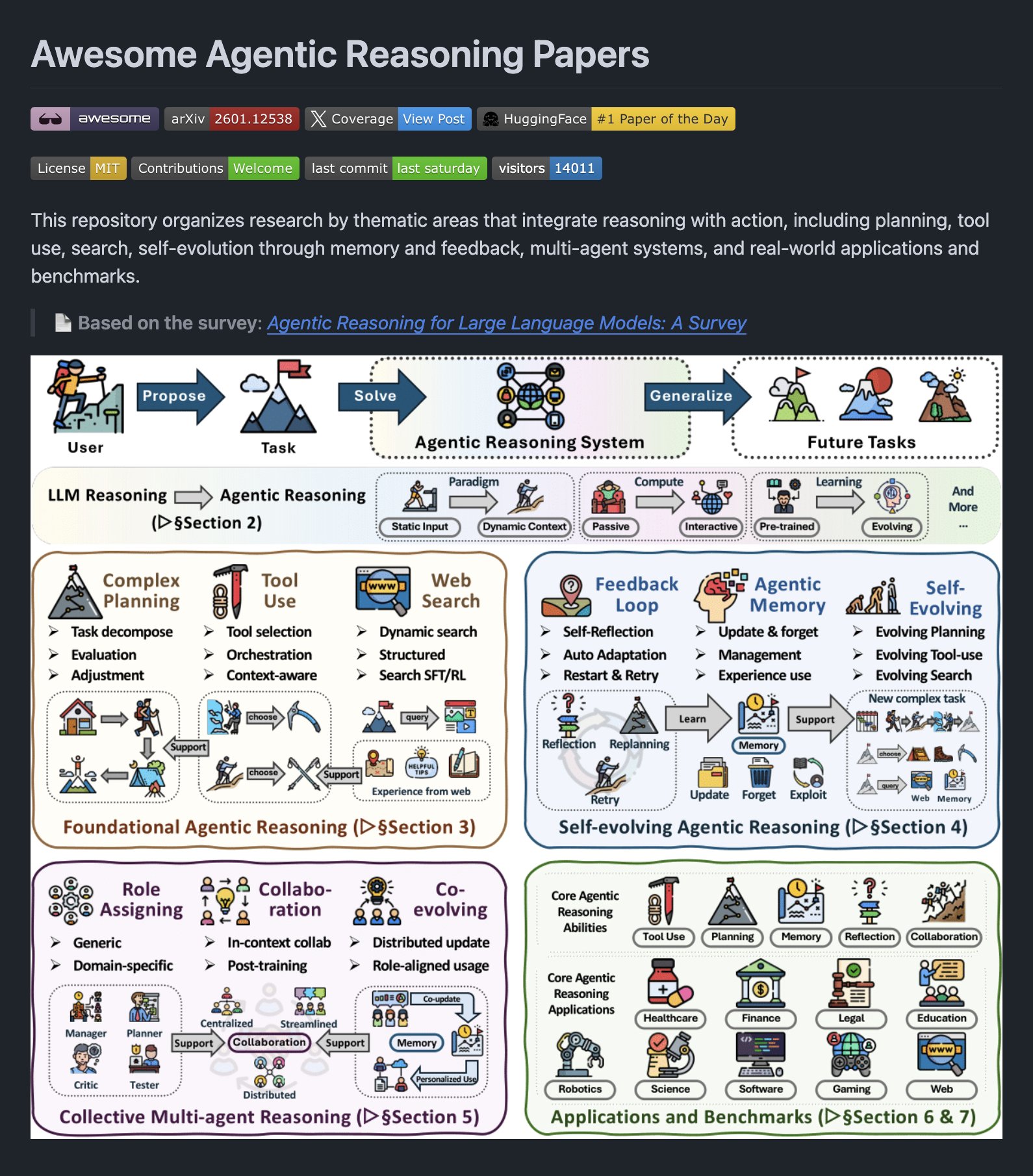
Awesome repo with a nice set of papers to catch up on agentic reasoning.
If you are building AI agents today, make sure to bookmark and read a few of these.
Here is the repo: github.com/weitianxin/Awesom…
Peter Šantavý retweeted

Metodický deň pre učiteľov náboženstva a náboženskej výchovy na tému: AI (umelá inteligencia) - etické aspekty a potenciálne riziká pre mladých
frcth.uniba.sk/detail-aktual…

Peter Šantavý retweeted
A unified theoretical framework showing the fundamental limits of LLMs.
Discusses hallucination, context compression, reasoning degradation- rooted in computability, information theory, and learning constraints.
Nice read to understand limits in LLMs even under scaling.
Very early days, if you think about it.
Abs: arxiv. org/abs/2511.12869

Peter Šantavý retweeted

I just read a paper that completely broke my brain.
It describes a system that solved an AI task with over 1,000,000 sequential steps... with ZERO errors.
Using AI models that are known to be flaky and make mistakes.
How is that even possible? 🤯
We all know LLMs have an error rate. Even 99.9% accuracy is a death sentence for long tasks.
Imagine you need 1,000 correct steps in a row. With a 99.9% success rate per step, your chance of finishing the whole thing is only ~36%.
At a million steps? Forget it. It's statistically impossible.
So for years, the race has been to build bigger, "smarter" models to get that per-step error rate closer to zero. We're trying to build a perfect genius.
But this paper ("Solving a Million-Step LLM Task with Zero Errors") does the complete opposite. It's a total paradigm shift.
Here's the "holy shit" moment:
Stop trying to make the AI perfect. Instead, build a system that's immune to its imperfections.
How?
Smash the problem into the tiniest possible pieces. (They call it Maximal Agentic Decomposition).
Have a team of simple, cheap AIs vote on the answer for each tiny piece.
It's less like hiring one world-class chef and praying they don't have an off day, and more like designing the McDonald's kitchen.
The system guarantees the burger is the same every time, even if any individual worker could mess up.
The reliability comes from the process, not the person.
They tested this on the Towers of Hanoi puzzle—a classic benchmark where AIs fail spectacularly as the task gets longer.
They set it up for 20 disks. That requires 1,048,575 perfect moves in a row.
(seriously, over a million steps)
A single AI trying this would be a comedy of errors.
But their system of "micro-agents" voting on every single move... nailed it. Flawlessly.
And the plot twist? The most expensive, "state-of-the-art" models weren't even the best for the job. A smaller, cheaper model (gpt-4.1-mini) was more cost-effective because the tasks were so simple.
This is a huge deal for AI safety, too.
A single, god-like AI is a black box. It's unpredictable.
But a system of a million simple agents? You can inspect it. You can audit each step. The agents have no grand "worldview"—their entire existence is to solve one tiny puzzle and then disappear. It's controllable.
So next time you're building something with an LLM, maybe stop asking "how can I prompt the model to be smarter?"
And start asking: "How can I design a system where it's okay for the model to be dumb?"
The real power isn't just in the model. It's in the architecture you build around it.
This isn't just about AI. It's a fundamental lesson in engineering and problem-solving.
You don't always need perfect components to build a perfect machine. You just need a damn good design.
...which makes you wonder what else we're trying to solve by chasing individual perfection instead of building better systems.

Peter Šantavý retweeted
My most amusing interaction was where the model (I think I was given some earlier version with a stale system prompt) refused to believe me that it is 2025 and kept inventing reasons why I must be trying to trick it or playing some elaborate joke on it. I kept giving it images and articles from "the future" and it kept insisting it was all fake. It accused me of using generative AI to defeat its challenges and argued why real wikipedia entries were actually generated and what the "dead giveaways" are. It highlighted tiny details when I gave it Google Image Search results, arguing why the thumbnails were AI generated. I then realized later that I forgot to turn on the "Google Search" tool. Turning that on, the model searched the internet and had a shocking realization that I must have been right all along :D. It's in these unintended moments where you are clearly off the hiking trails and somewhere in the generalization jungle that you can best get a sense of model smell.

Peter Šantavý retweeted

🚨 THE CHINA MODEL IS HERE — AND THIS IS WHAT IT LOOKS LIKE
A chilling look inside Shanghai’s AI-powered surveillance “Urban Brain” system — the blueprint for the social credit grid spreading across China… and soon, the West.
In Pudong, a single control room can monitor every resident in real time:
• Every building mapped
• Every vacancy tracked
• Every elderly person living alone logged
• Every movement recorded
• Every behaviour scored
And it gets worse.
Trash not sorted correctly?
Cameras catch you from three angles.
Park in the wrong place?
Your violation is uploaded instantly.
Residents themselves are enlisted as watchers — snapping photos, reporting one another, feeding the central AI.
The system then auto-assigns punishments and sends enforcement teams out via mobile app.
This isn’t policing.
This isn’t governance.
This is algorithmic control of human life.
Chinese state media brags that police can now identify every person on the street within one second.
This is the model global elites admire.
This is the system the EU, WEF and UN are openly “studying.”
This is the digital architecture Western governments keep calling “smart cities.”
It is nothing less than an automated dictatorship.
The warning is simple:
What you see in Shanghai today is what they want for London, Ottawa, Berlin, Auckland and beyond tomorrow.
Stay alert.
Stay awake.
Stay free.
Peter Šantavý retweeted

Just a month later and...
🇪🇺 ChatControl is back!
Now they're trying to pass an even more far reaching ChatControl law through the back door, in a form even more intrusive than the originally rejected plan, without needing any of the EU countries votes
The new proposal:
- total mandatory surveillance of ALL text chats, emails and social media in the EU
- obligatory registration of your ID/passport to your chat, email or social media account
- minimum age requirement for chat, email and social media apps of 16 (!)
The only way to stop this law is if EU countries veto it
Read more here by @echo_pbreyer:
patrick-breyer.de/en/chat-co…


Peter Šantavý retweeted

In Science, researchers report the observation of dendritic nanotubes in brain tissue from mice and humans. The discovery suggests that the current understanding of the brain’s organization may be incomplete, overlooking a hidden layer of connectivity.
Learn more in a new #SciencePerspective: scim.ag/3KFW8Ep

Peter Šantavý retweeted
Is your LLM-based multi-agent system actually coordinating?
That’s the question behind this paper. They use information theory to tell the difference between a pile of chatbots and a true collective intelligence.
They introduce a clean measurement loop. First, test if the group’s overall output predicts future outcomes better than any single agent. If yes, there is synergy, information that only exists at the collective level.
Next, decompose that information using partial information decomposition. This splits what’s shared, unique, or synergistic between agents. Real emergence shows up as synergy, not redundancy.
Then check for coalitions. If triplets of agents carry predictive power beyond pairs, the group has moved from loose coordination to genuine team-level reasoning.
They test this using a simple setup: ten GPT-4.1 agents guessing numbers with only “too high” or “too low” feedback. No chat, no tool use, just prompt design. Adding light personas creates stable differentiation.
Adding theory-of-mind (“think about what others might do”) makes them align on the shared goal.
The balance between redundancy and synergy predicts success. Too much redundancy, and agents copy each other. Too much independence, and they fragment. The best teams integrate and differentiate at once.
Lower-capacity models like Llama-3.1-8B don’t reach this regime; they oscillate without real cooperation.
Emergence, it turns out, requires reasoning depth and goal awareness.
For AI devs, the takeaway is simple: give agents distinct roles, a shared target, and test for synergy rather than assuming it. This paper offers one of the first quantitative frameworks for knowing when multi-agent behavior crosses into collective intelligence.
Paper: arxiv.org/abs/2510.05174

Peter Šantavý retweeted
1/8
You know that frustrating feeling when you teach your smart assistant something, and the next day it's completely forgotten?
It's because most AI models are like printed books: their knowledge is vast but frozen in time.
And that has been AI's biggest weakness. Until now. 🧵
2/8
To add one new fact to a major AI, you can't just add a page. You have to reprint the entire library.
This is insanely expensive and slow, and it's the main reason why AI feels like a static "know-it-all" instead of a dynamic "learn-it-all."
This is the villain of our story.
3/8
But what if the AI could learn to rewrite its own pages?
A breakthrough paper from MIT introduces a framework called SEAL (Self-Adapting Language Models).
Instead of just passively reading new info, the AI first writes its own "study guide"—restructuring the concept in the best way for it to learn.
4/8
And here's the mind-blowing part.
The AI gets rewarded for the study guides that work best. Over time, it learns its own unique, optimal learning style. It literally learns how to learn.
But that's not even the craziest discovery.
5/8
The researchers pitted a 7-billion parameter model using SEAL against the much larger, more powerful GPT-4.
The task: learn a new passage of text.
The result? The smaller AI learned the information better from its OWN self-made notes than from notes generated by the genius GPT-4.
It became its own best teacher.
6/8
So what does this all mean?
This is the shift from building AI with bigger brains to building AI that can rewire their brains. It's the dawn of models that can truly evolve with experience, without constant, costly intervention from humans.
7/8
Here's a new lens for you.
From now on, when you see an AI make a mistake on a new topic, don't just think "it wasn't trained on that."
Ask: "What would it take for it to learn that?"
The answer is no longer "it can't."
8/8
Bold Prediction: If this holds true, in 5 years the most valuable AI won't be the one with the most data, but the one that learns the fastest.
The era of the static AI is ending. The era of the self-improving machine has begun.

Peter Šantavý retweeted

Launching an AI agent without human oversight is basically launching a rocket without mission control 🚀
Cool for a few minutes… until something breaks.
🕹️ It’s not the rocket that makes the mission succeed. It’s the control center.
cleanlab.ai/blog/managing-ai…
