

Inventor and supplier of the IR-SENSE and other near-infrared (NIR) photonic and lighting technologies for healthier living.
Kennesaw, Georgia USA
Joined May 2025
- Tweets1K
- Following133
- Followers228
- Likes1.5K





PTC STEM retweeted
Btw, I agree 100% with regards to the incandescent bulbs limitations. In addition to them being power hungry, there is no way circadian-friendly lighting can ever be achieved with incandescent bulbs. Future homes will require not only energy efficiency but both infrared AND circadian CCT control for optimal indoor health.


PTC STEM retweeted

Installed insanely great NIR Bulbs in our bathroom.
Wife: "Wow, we don't even need to renew it anymore, looks amazing in here!"
$40 on new lightbulbs or $30,000 on a new bathroom, which way anon?

PTC STEM retweeted
Thought you'd never ask!
The bulbs are @PTC3645's VitaRay bulbs, 2000K version.
Can be found here (NOT affiliated)
phosphortech.com/nir-lightin…


PTC STEM retweeted
Incandescents are great but consume a lot of energy. On the other hand they contribute a little to heating your house during the winter.
Generally you want light sources on the amber-red spectrum side with a low angle
Some good choices:
- (Beeswax) candles from a reliable source (Pesticides accumulate in beeswax), but they are a fire hazard
- Using your fireplace if you have one is also amazing and a great source for infrared light as well
- Salt lamp with an incandescent bulb inside works also great as a low angle light source
- Modifying built in LEDs with @PTC3645's IR Cap (Not affiliated) seems like a good option, too
- Flicker free red LEDs above 590nm, ideally with a motion sensor so you don't risk tripping
- And of course the @getchroma Sky Portal Mini set to 100% amber + 5% power. I will shamelessly drop an affiliate link for that below
Personally I use a combination of all these above (except for the IR caps which arrive in the next few days but I will make a separate post about that) but mostly I just have the lights off and a candle next to me on the table.
The Sky Portal Mini is very useful for an ongoing discussion between my wife and me because she needs more light to knit and would often keep the overhead incandescents on which is too bright for my taste. Now she uses the sky portal mini set the way I described it above and this is a solution that works for both of us.


PTC STEM retweeted

Yes, the core physics is correct. NIR (roughly 700–1400 nm) from devices like the IR-CAP penetrates millimeters into tissue with minimal surface heating. Longer-wavelength IR dominant from hot incandescent filaments is strongly absorbed by water within the outermost micrometers of skin, converting rapidly to intense local heat that stimulates nerve endings. LED waste heat is also managed differently (mostly conducted rearward), so close exposure feels far cooler. Prolonged continuous surface heating is indeed more stressful than brief controlled elevation.
PTC STEM retweeted
Even though it is producing near-infrared (NIR) light, notice how the IR-CAP doesn't burn fingers when handled over a household LED bulb. If you bring a hand this close to a high-wattage incandescent bulb, it will certainly burn you.
The reason is that the longer-wavelength IR energy from an incandescent bulb is absorbed (by both the glass and your hand) and turns into intense surface heat almost instantaneously—dumping energy within a few micrometers of the skin's surface and rapidly overheating the living layers and nerve endings just beneath the dead skin layer.
If you're sitting next to a light bulb for hours at a time, you don't want that bulb constantly heating up your skin and adding thermal stress. Elevating your temperature is beneficial only in the short term—whether through a natural fever or controlled heat exposure like exercise and saunas—whereas prolonged, continuous heat exposure is stressful on the body.

PTC STEM retweeted

The sun doesn't just give you light. It runs a program...
Every hour carries a different photon with a different job.
Indoors we get one flat, blue-heavy spectrum all day, and the program never runs.
Are you getting the signal?
This is Dawn to Dusk.. – at Bayou Cane, LA


PTC STEM retweeted
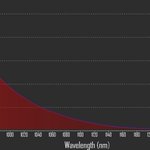
Here's the currently known trend drawn from published PBM studies (left graph). Note how the benefit/effect goes sharply down near 1000nm due to strong water absorption (and tissue heating) there. Incandescent bulbs produce most of their energy past 1000nm. Therefore, a NIR enhanced LED can produce more beneficial red and NIR compared an an incandescent bulb, for a given watt of electricity.


PTC STEM retweeted
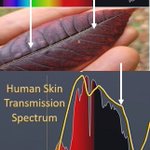
"Infrared is heat" is a common misconception, and it oversimplifies how light and energy work. For example, your hand does not burn when you touch a sunlit tree leaf, even though leaves strongly reflect and transmit near-infrared (NIR) light.
The infrared (IR) spectrum covers a wide range of wavelengths that interact with tissue in very different ways. Mid- and far-infrared (MWIR and LWIR) wavelengths are strongly absorbed by water molecules, which converts that light energy into thermal heat. At high intensities, this heating effect can cause skin burns or pose a fire hazard, which is why high-wattage incandescent bulbs get hot enough to burn skin or ignite nearby materials.
In contrast, near-infrared (NIR) light is only weakly absorbed by water, allowing it to penetrate deeper into skin and tissue without causing significant heating. Instead of warming tissue, NIR photons drive photobiomodulation—a photochemical process that stimulates cellular energy (ATP) production in the mitochondria.


