

Retired US Senate Staff & Coast Guard Aux. Former Press Secretary. Tesla since 2015. Strategic utility investor. Constantly learning. Conservative. Married 1979
Oregon, USA
Joined September 2008
- Tweets48.5K
- Following860
- Followers5.5K
- Likes32.8K







Misty retweeted

🇺🇸 America — stop scrolling.
In 72 hours, YOU vote.
November 3. 2026.
Every House seat. 35 Senate seats. 39 governors.
The ONE issue tying every race together?
IMMIGRATION.
Listen carefully:
What Brussels did to Poland from OUTSIDE —
Is being done to America from INSIDE.
🚨 Sanctuary cities openly defying federal law.
🚨 Judges blocking ICE at the border.
🚨 Blue-state mayors handcuffing their own police.
🚨 Millions of unvetted migrants placed in YOUR schools, YOUR hospitals, YOUR counties — WITHOUT your vote. WITHOUT your consent.
Poland has Karol Nawrocki.
He stands between his people and the EU migration machine.
America — who stands for YOU?
Only the Congress YOU elect on November 3.
If the House flips Tuesday night —
ICE gets defunded within 90 days.
Deportations stop.
The border reopens.
Every policy keeping your family safe gets gutted by the same ideology that handed London its no-go zones and Malmö its grenade attacks.
This is NOT a story about Europe.
Warsaw tonight.
Washington Tuesday.
Same war.
Different battlefield.
Same enemy — the ones who think YOUR border is negotiable and YOUR vote is optional.
🇺🇸 November 3 is YOUR courtroom.
🇺🇸 YOUR ballot is the firewall.
🇺🇸 YOUR vote decides whether America stays America — or becomes the next casualty on the map.
They sent riot police into a Polish courtroom.
They can't send them into YOUR ballot box.
Unless you don't show up.
VOTE.
NOVEMBER 3.
LIKE YOUR COUNTRY DEPENDS ON IT.
Because it does. 🇺🇸

Misty retweeted

This is insane
A federal judge in SDNY just ordered that this video of Trump offering $5000 if Republicans win the elections had to be DELETED
It would sure be a shame if we all made it go viral again!
Misty retweeted

Last month, Elissa Slotkin brags about how she went to Poland and Hungary and "brought home the playbook to get out of 'authoritarian' governments." WTAF. 🤯
The Deputy Foreign Minister of Poland, Radosław Sikorski is celebrating the globalist coup. Here he is last month alongside Elissa Slotkin.
Are you awake yet?!

Misty retweeted

Something big is happening with $XRP and Ripple.
And I think things are about to accelerate even faster.
You ready?


Misty retweeted
Everyone's asking if $QNT can reach $1,000.
THINK HIGHER.
LOOK AT WHAT'S HAPPENING IN U.S. BANKING.
The Clearing House is owned by 25 banks.
Its CHIPS network has 43 participants and settles over $2 TRILLION every single day.
In August 2026, TCH made it clear that tokenized deposits need to work with existing banking rails.
Then in September, TCH selected Quant for interoperability, orchestration, and tokenized deposits as a service.
And there's already progress in the UK.
7 banks were live in the UK proof by September 2026.
The U.S. network is targeted for the first half of 2027.
I've been bullish on $QNT for years, and developments like these are exactly why I'm thinking long term.
Watch my full breakdown 👇

Most people look at $QNT and ask, “How high can the price go?”
I start with a completely different question: what happens if banks in different countries start issuing tokenized money on different systems and all of those systems need to talk to each other?
Warning: this one is LONG.
Probably one of my deepest $QNT posts yet. Give me a few minutes and read the whole thing. It’ll be worth it.
That question led me straight back to The Clearing House.
And once you understand the architecture The Clearing House is building, the entire Quant thesis starts making a lot more sense.
The Clearing House is one of the most important pieces of U.S. banking infrastructure.
It is owned by 25 banks.
Its CHIPS network has 43 direct participants.
CHIPS settles more than $2T in average value each business day.
During 2025 it processed around $2.014T in average daily payments.
Its liquidity efficiency was around 26:1.
So when I talk about The Clearing House moving toward tokenized deposits, understand the scale.
This is not a crypto company trying to get banks interested.
These are banking rails banks already use.
Now they are preparing those rails for tokenized commercial bank money.
On August 24, 2026, The Clearing House published a discussion with Chief Strategy Officer Sal Karakaplan.
The message was simple but extremely important.
Banks using CHIPS and RTP already have their settlement infrastructure.
They already maintain funds.
They already have liquidity processes.
They already have payment connectivity.
So tokenized deposits should not force them to rebuild everything.
Instead, tokenized transactions can be tightly connected with the systems they already use.
That one idea is massive.
Because the biggest obstacle to institutional blockchain adoption has always been disruption.
Banks do not want to throw away working infrastructure.
They want new capability without destroying the old system.
Now fast-forward one month.
September 24, 2026.
The Clearing House selects Quant.
Quant becomes the announced technology provider for:
Interoperability.
Orchestration.
Transaction management.
Quant also brings Tokenized Deposits-as-a-Service.
So imagine the future banking system.
Bank A issues tokenized dollars on one ledger.
Bank B uses another private network.
Bank C wants programmable deposits but has not built its own blockchain system.
A tokenized-securities platform needs cash settlement.
A treasury platform needs programmable payments.
A public blockchain contains tokenized assets.
CHIPS remains the regulated high-value dollar settlement network.
RTP handles real-time payments.
These systems are different.
But the money still needs to move between them.
Quant’s job is to coordinate that complexity.
I think this is much bigger than “blockchain interoperability.”
This is financial-system interoperability.
And the banks around The Clearing House initiative show how serious it is.
JPMorgan Chase.
Citi.
Bank of America.
HSBC.
BNY.
Wells Fargo.
Santander.
TD Bank.
Then:
BMO.
Citizens.
Fifth Third.
Huntington.
KeyBank.
PNC.
Regions.
Truist.
The comments from these institutions focused on exactly the problems Quant wants to solve.
Tokenized-deposit clearing.
Interbank connectivity.
Trusted financial infrastructure.
Interoperability.
Programmable payments.
Connecting blockchain capability with existing payment rails.
The Clearing House subsequently chose Quant.
That gives Quant a completely different distribution opportunity.
Instead of selling software one bank at a time, Quant is now inside an initiative connected to an institution already serving major banks.
That can shorten the path to institutional adoption dramatically.
Then look at what Quant has already done in Britain.
The Great British Tokenised Deposit initiative gives us a preview.
Quant was selected in September 2025.
One year later, seven banks had completed live customer transactions.
The names:
Barclays
HSBC UK
Lloyds Banking Group
Monzo
Nationwide
NatWest
Santander
These transactions involved real money.
Mortgage completions.
A marketplace purchase.
Funds could be reserved and released when conditions were met.
This is programmable commercial bank money doing actual work.
Now compare the timeline.
UK Quant selection: September 2025.
UK live customer transactions: September 2026.
U.S. Quant selection by The Clearing House: September 2026.
U.S. network targeted for availability: H1 2027.
I see a pattern.
Quant builds.
Banks test.
Transactions go live.
Then the model expands to another market.
Now layer international interoperability on top.
In October 2026, Quant participated directly in the UK Finance Tokenised Markets and Money Conference.
The discussion involved how tokenized-deposit initiatives from countries including the UK, Japan, the U.S. and Germany could connect.
The industry is talking about:
Standards.
Rulebooks.
Overlapping bank participation.
Commercial corridors.
Synchronized settlement.
Payment-versus-payment.
That is the future Quant has been preparing for.
People sometimes think tokenization will simplify finance because everything moves onto one blockchain.
I think the opposite can happen.
Tokenization can create even more systems.
Every major bank may have its own approach.
Countries may build national frameworks.
Central banks may support separate settlement infrastructure.
Private asset ledgers will exist.
Public blockchains will exist.
Commercial bank deposit tokens will exist.
Stablecoins will exist.
Digital securities will exist.
The technology becomes more diverse.
The need for coordination becomes bigger.
That is where a “network of networks” becomes valuable.
Think about U.S.-UK payments.
The U.S. bank has tokenized dollars.
The UK bank has tokenized sterling.
Both have domestic rules.
Both have their own settlement rails.
Both need foreign exchange.
Both need confirmation.
Both need compliance.
Both need the cash and asset legs synchronized.
Quant already has technology connected to both banking environments.
I think that gives it an incredibly interesting strategic position.
And I am not stopping at deposits.
Look at Murex.
Murex runs MX.3, widely used in institutional trading, risk management and post-trade operations.
In March 2026, Murex and Quant announced an integration.
Quant’s programmable money infrastructure can work alongside MX.3.
Now banks can potentially handle tokenized deposits and digital bonds without changing the core institutional workflow they already use.
This matters because tokenized assets need money.
A digital bond cannot settle itself.
A tokenized fund still needs subscriptions and redemptions.
Tokenized collateral still needs financing.
Tokenized securities still need delivery-versus-payment.
If the asset moves but the cash cannot move with it, the system is incomplete.
Quant is working across both sides.
Asset systems.
Money systems.
Institutional software.
Interoperability.
That creates more commercial opportunities.
Now I want to talk about token utility because this is where a lot of crypto research gets lazy.
The Clearing House settling $2T does not mean $2T buys QNT.
I care about a different mechanism.
QNT is documented as an access and licensing token.
Overledger subscribers can pay platform fees in USD or QNT.
Historical licensing models used QNT for annual mainnet licensing.
The 2026 MiCA disclosure also describes QNT utilization and locking in licensing arrangements.
So institutional growth can potentially create token demand through access rather than through the gross dollar value of payments.
That model makes more sense to me.
If one bank moves $100B using Quant infrastructure, QNT does not need to absorb $100B.
Quant needs commercial contracts.
Licensing.
Platform access.
Network services.
Potential token commitments.
If the number of institutions keeps increasing, those commitments can compound.
I care even more about locking.
One-time purchases can come back to market.
Locked tokens cannot.
If enterprise arrangements require QNT to remain committed for periods of time, liquid supply can tighten.
Then incoming demand has fewer freely available tokens to compete for.
And QNT supply is already small.
Roughly 14.56M circulating.
Around 14.61M total supply in the data used for this research.
That scarcity matters.
Then add Fusion.
Fusion launched on mainnet in June 2026.
It initially connected 74 networks.
Its Trusted Node Program gives institutions more control around who processes transactions.
QNT has a documented staking role.
So now I can see a second demand channel.
Overledger and enterprise licensing create one path.
Fusion execution and staking create another.
If both scale together, QNT becomes much more interesting.
Think of the potential progression.
Bank joins Quant infrastructure.
Bank or service provider needs platform access.
Access creates licensing economics.
Some licensing arrangements involve QNT usage or locking.
Meanwhile, institutional networks connect through Fusion.
Trusted nodes stake QNT.
Network execution grows.
More QNT becomes tied to productive use.
Supply stays around 14.6M.
That is the flywheel I want.
We are not fully there yet.
The exact QNT economics attached to The Clearing House contract have not been publicly disclosed.
But the general utility already exists.
That makes public confirmation of recurring institutional QNT demand one of the biggest catalysts I am waiting for.
Now do the valuation math.
Using about 14.61M tokens:
$5B valuation = ~$342 QNT
$10B = ~$684
$20B = ~$1,369
$30B = ~$2,053
$50B = ~$3,422
Again, these are valuation scenarios.
They are useful because they show what QNT’s scarcity does when the market cap expands.
The question becomes:
What valuation would investors assign to a token if Quant becomes recurring infrastructure for bank-issued digital money?
I think $10B becomes much easier to discuss if we see meaningful commercial bank onboarding, recurring QNT-linked revenue, rising activity and token commitments.
Higher scenarios need even more.
International usage.
Multiple national banking systems.
Cross-border network connectivity.
Large-scale Fusion adoption.
Material staking.
Recurring institutional contracts.
That is what I want to watch.
And the catalysts are already lined up.
1. The Clearing House network opening in H1 2027.
The partnership moves closer to real commercial usage.
2. U.S. bank onboarding.
More institutions can mean more Quant products being used.
3. Tokenized Deposits-as-a-Service.
Banks that do not want to build token infrastructure themselves can still participate.
4. QNT-linked enterprise licensing.
This is where institutional adoption can begin translating more directly into token demand.
5. Great British Tokenised Deposit expansion.
The UK already has live transactions.
More banks and more use cases would strengthen the proof.
6. U.S.-UK interoperability.
Both national banking environments already have Quant technology involved.
7. Fusion trusted-node adoption.
More nodes can mean more staking.
8. Fusion transaction growth.
More execution can increase ongoing QNT utility.
9. Murex MX.3 integration.
Tokenized bonds and institutional settlement open another market.
10. Delivery-versus-payment.
Tokenized cash and tokenized securities can move together.
11. Corporate treasury automation.
Conditional payments and programmable liquidity become real business use cases.
12. International network-of-networks development.
This is the monster opportunity.
Multiple national financial systems using Quant to coordinate transactions.
Now zoom out globally.
Britain already has live tokenized-deposit customer transactions.
The United States has The Clearing House preparing its initiative with Quant.
Europe has launched the first phase of Pontes for wholesale tokenized-asset settlement using central bank money.
And international banking discussions are focusing on cross-border connectivity.
Pontes is not currently an announced Quant project.
I am not claiming it is.
But Europe moving in the same broad direction matters.
Because every new financial network increases the need for interoperability.
The future is not going to be one giant blockchain.
It will probably look more like the internet.
Different networks.
Different systems.
Different protocols.
Different organizations.
Still able to communicate.
Quant wants to become part of the layer making that possible for financial institutions.
And the thing I like most is that Quant is approaching banks without asking them to abandon what already works.
That is a huge advantage.
Banks already have CHIPS.
They already have RTP.
They already have Murex.
They already have internal ledgers.
They already have compliance systems.
Quant can sit between those systems.
That is a much easier institutional pitch than saying:
“Throw away your current infrastructure and put everything on our chain.”
This is why I think Quant has a chance to scale differently from many crypto networks.
It is not competing to be the one ledger every bank uses.
It is monetizing the fact that banks will use many ledgers.
More fragmentation can actually increase the value of Quant.
Think about that.
If JPMorgan has one system.
Citi has another.
HSBC has another.
A public blockchain hosts an asset.
A central bank runs the final settlement layer.
Murex manages trading.
The Clearing House manages interbank payment infrastructure.
Every connection between those pieces becomes an interoperability problem.
Quant sells the solution to that problem.
That is the business.
Now think about $QNT.
If those commercial connections increasingly require QNT for access, licensing, locking, execution or staking, the token begins reflecting that business growth.
That is the bridge between the technology thesis and the investment thesis.
And because QNT supply is small, the potential asymmetry is what keeps me interested.
A lot of people saw QNT at $60.
Then $100.
Then $200.
Then over $300.
They only started asking questions after price moved.
I prefer studying the infrastructure before the crowd starts chasing the chart.
Right now I’m watching the next phase.
Can The Clearing House deliver the H1 2027 network?
How many banks participate?
How much transaction activity appears?
Does TDaaS expand the customer base?
Does the UK system grow?
Does cross-border interoperability become commercial?
Does Murex bring Quant deeper into digital bonds and securities?
Does Fusion gain institutional trusted nodes?
Does QNT staking grow?
Do enterprise licenses create recurring QNT demand?
Those are the questions that matter.
And if several of those answers become “yes,” the QNT story gets much bigger.
I see Quant’s future in three steps.
First:
Become infrastructure banks trust.
The UK and U.S. partnerships are doing that.
Second:
Become infrastructure banks repeatedly use.
Commercial tokenized deposits, settlement, securities and treasury activity can do that.
Third:
Convert that usage into measurable QNT economics.
Licensing.
Locking.
Execution.
Staking.
That final step is where I think the market could dramatically reprice QNT.
I am bullish today because stage one is no longer imaginary.
Quant has already delivered the UK banking infrastructure.
The Clearing House already selected Quant.
Murex already partnered with Quant.
Fusion is already live.
QNT utility is already documented.
The banking industry is already talking about a network of networks.
Everything does not need to happen tomorrow.
I am looking years ahead.
I want Quant sitting in the middle as more commercial bank money becomes digital.
I want Quant helping banks move between networks.
I want Quant coordinating tokenized cash and tokenized securities.
I want recurring licensing.
I want more QNT locked.
I want institutional Fusion activity.
I want trusted nodes staking QNT.
Those are the things that can turn institutional adoption into sustainable token demand.
And if Quant gets there, I think the upside could be much larger than people expect today.
The Clearing House already moves trillions. Britain already has live tokenized-deposit transactions. The banks are already building programmable money. Quant is already inside the infrastructure.
Now I’m watching how much of that institutional growth eventually reaches $QNT itself.
That’s the part that could make the next QNT cycle very different from the last one.
Misty retweeted

I often hear, 'That AI tool you're using will be obsolete in six months.'
Ok. So what? The project you finish, the business you help, the customers you serve, even the skills you develop along the way WON'T BE!
Stop worrying about whether things survive, and focus on what you're building with them.

Misty retweeted
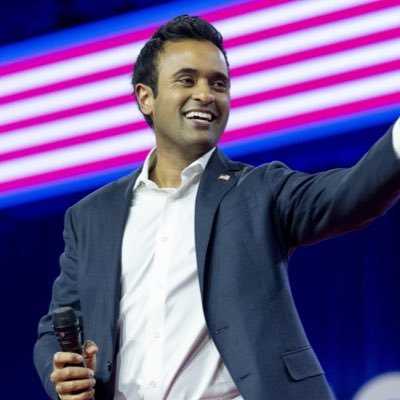
I’m signing Executive Orders on Day 1 to launch an inter-agency task force, reporting directly to the Governor, to comprehensively review all state contracts and root out all forms of fraud & abuse - Medicaid fraud, child care fraud, visa fraud, CDL fraud, all of it. This is the first step towards lasting affordability relief. We need a governor who’s actually competent to do it.
Misty retweeted

The Peltola cheating scandal is even deeper and more terrible than you imagine.

EXCLUSIVE: Daniel J. Sullivan left his Alaska hometown days before reports about his ties to Peltola's campaign, sources say. cbsn.ws/4itY4x4

Misty retweeted

Just wanted to apologize to all el-sayed supporters for referring to him as a terrorist…I meant to say jihadist…my mistake 🤙🏼
Misty retweeted

When did so many of you become such pussies?
Trump and the US MIL are not going to be “tricked” or “baited” into doing anything.
They know EXACTLY what they are doing, and if you heard about something on the Internet, Trump/US MIL knew about it LONG before you did.
Trump and the US MIL already decided long ago, that the ongoing decades-long Deep State coup/insurrection must be brought to an end. We are already pot-committed. The process of exterminating the Deep State and their global assets, is already well underway. We cannot stop now.
Everyone just relax, and trust Trump.

Misty retweeted

I’m currently early voting. The line wraps through the building and pushes outside. It’s also raining outside.
Staying in line.
Misty retweeted

🚨 WOW! President Trump just dropped this message for every American and it hits hard:
"WAKE UP AMERICA"
The barbarians are inside the gate and knocking on the door.
The only way they get inside is by electing DEMOCRATS.
Vote red to save America, it's that simple 🇺🇸
🤖 Made with AI


Misty retweeted

🚨🚨 THE DEMOCRACY FILES / THE INSURRECTION PLAYBOOK, PART 12: IS NORM EISEN CALLING THE SHOTS? 🚨
First, sorry for the absence of drops; I had to go on a last minute trip to DC and back.
@nataliegwinters has been releasing many drops adjacent to the Democracy Files, including materials on ESRN and Norm Eisen.
The Democracy Files, while significant, are told through the lenses of a mid-to-high level operatives group of ex-USAID workers, a group called DRG (Democracy Renewal Group). DRG, in these videos, collaborate with other groups, receive briefings from others such as Rear Admiral Mike Smith (RET), participate in and host working groups, and so forth.
But DRG are not the shot-callers. They explicitly do not decide when a mass protest has to happen. They do not have a final say in what has to occur before mass mobilization occurs. Erica Chenoweth isn't personally secretly running things. Mike Smith is a high level operational leader, not a shot-caller.
So who calls the shots?
Put together the Democracy Files and Winters' drops, and a larger hierarchical picture emerges: ESRN, Election Safeguards Response Network, which is mentioned in @nataliegwinters reporting. The Democracy Files heavily suggests that ESRN is who ultimately calls the shots when it is time to mobilize United Democracy Alliance (UDA).
And that particular trail leads directly to none other than Norm Eisen.
Now, this does not mean Eisen is the unilateral mastermind. Most likely, that belongs to yet another mysterious small coalition of elites - we can only speculate on who else is in that club; ESRN is financed under State Democracy Defenders Action, EIN 93-1524544.
But Eisen's hands are on a great many levers, and we can reasonably infer he is one of the key decision-making figures.


Misty retweeted

“The snowball…” 😎🚀


My full conversation with Tom Alaerts, who spent over 27 years at SWIFT working on the standards the global payment system runs on.😶🌫️
Every technical difficulty has been cut out. What is left in this video below is the complete conversation from start to finish, for anyone who wants to watch the entirety of the Spaces and catch every massive piece of confirmation in full. 🎙️
During this conversation, Tom addressed several popular topics in the regulated financial space. 🗣️
Here are a few of the major takeaways from this insightful conversation:
0:09:51 — SWIFT is not going anywhere. ✅
Tom explains that SWIFT's position is backed by decades of trust, security, and governance that the global banking system already relies on, and any new network has to work with that reality instead of pretending it can be replaced overnight.
0:31:25 — ISO 20022 and digital assets have a strong relationship. ✅
Tom walks through how the ISO standards world and digital assets are already connected, and why that connection is structural, built into how the standards themselves were designed, not a recent experiment.
0:32:01 — ISO-compliant fintechs and digital currency networks have a higher likelihood of integration into central bank payment systems and SWIFT. ✅
Tom confirms that because they already speak the same language those systems are being built on, they become better candidates to partner with banks.
0:54:44 — SWIFT and ISO 20022 are not just messaging. ✅
Tom makes clear that the standard reaches far beyond moving messages from one bank to another. It extends into how value, data, and settlement connect across the entire system.
That level of firsthand insight is almost never shared this openly in public, which is exactly what makes this conversation so important.
FULL CONVERSATION TIMESTAMPS
0:00 — SMQKE's welcome
0:03:31 — Tom's introduction
0:08:14 — SWIFT's role and staying power
0:35:34 — Early blockchain discussions at SWIFT
0:40:46 — ISO 20022 transition
1:01:44 — Compatibility: which networks get adopted
1:13:07 — pacs.crypto and agentic finance
1:30:03 — The next 12 months: the snowball
1:34:22 — Final remarks
Enjoy🍿


Misty retweeted

This is another great article from @TomWigand. I love how so many are tuned into the truth! Thank you, Tom!

