

Vaccines & Dendritic Cells Lab @unicomplutense
Madrid, España
Joined August 2018
- Tweets245
- Following313
- Followers481
- Likes517



Tezepelumab Reverses TSLP-Driven Immunometabolic Rewiring in Human cDC2s youtu.be/uzNdr0N-ovg?si=S7xq… a través de @YouTube
We are delighted to share our latest work published in Allergy pubmed.ncbi.nlm.nih.gov/4253…
Tezepelumab reverses TSLP-driven immunometabolic rewiring in human cDC2s underlying pathogenic Th2 and dysfunctional Treg responses.
Many thanks to all the co-authors and collaborators!!

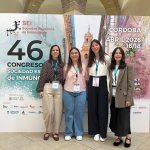
Palomares' Lab at SEI2026 in Córdoba!! Alba Angelina ("Peanut allergoid-mannan conjugates for food allergy IT"), Leticia Martín ("Tumoral Ca10 and Tregs), Natalia Cuervo ("Cannabinoids in keratinocytes"), Isabel Peñalver ("TSLP-induced metabolic rewiring in cDC2s"). Well done!!

It was a great pleasure to contribute to the 20th anniversary of the WIRM! We presented our data on MV130 preventing allergic eosinophilic asthma, and cannabinoids generating tolerogenic extracellular vesicles. Congratulations to Ángel Maldonado on receiving his award!


Oscar Palomares' Lab retweeted

We welcome Prof. Palomares as new Associate Editor.
Oscar Palomares is a professor and head of the research group “Vaccines and Dendritic cells” in the Biochemistry and Molecular Biology Department, Chemistry School, at Complutense University of Madrid. The major focus of Dr. Palomares’ research group is the study of the role of human dendritic cells, epithelial cells and other hematopoietic and non-hematopoietic cells in the context of immune-mediated inflammatory diseases, including allergy, asthma, infections and cancer, to identify potential novel biomarkers and therapeutic targets for such diseases. The group is also interested in the understanding of the MoA of biologicals, next-generation vaccines for allergen-specific immunotherapy and trained immunity-based vaccines for infectious and allergic diseases. Professor Palomares’ research has so far generated 170 publications in world leading, peer-reviewed international journals and 9 book chapters. He has been invited to participate in more than 120 conferences at national and international meetings and has received 10 awards. He has undertaken the role of Chairperson on more than 100 occasions during scientific sessions and has been involved in the organization of 50 international congresses. Prof. Palomares is currently member of the Board-of-Officers (Vice-President for Science) of the European Academy of Allergy and Clinical Immunology (EAACI) and Editor-in-Chief of EAACI Knowledge Hub.
You can find a biographical description of other Allergy Editors at the “Who are We” page on our website! journalallergy.com/Who-are-W…
#Allergy_journal @Palomares_Lab

Oscar Palomares' Lab retweeted
Congratulations to Prof. Dr. Palomares receiving Allergy’s Top Reviewer Award.
journalallergy.com
#Topreviewer #Allergy_journal @Palomares_Lab

Oscar Palomares' Lab retweeted

👇No os perdáis hoy, a las 19:00h a @Palomares_Lab hablará en Allergotrends (@inmunotek ) sobre los"Avances en inmunidad innata entrenada en inmunoterapia específica de alérgeno: Vacunas bacterianas para la prevención y tratamiento del asma alérgica". eventos.quodem.com/allergotr…

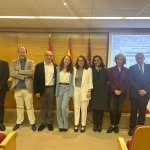
Palomares’ Lab members at an exciting meeting on the challenges and opportunities in immunology to fight antimicrobial resistance at Hospital Clínico San Carlos. Congratulations to the organizers and all the speakers for the excellent talks and discussions! Truly enjoyable!


Oscar Palomares' Lab retweeted
Durante décadas, el concepto de “células supresoras”o "reguladoras"fue controvertido. Muchos investigadores desconfiaban de la existencia de células cuya función específica principal fuera suprimir respuestas inmunes.
35 años después, sus descubridores reciben el premio Nobel.

Mary Brunkow, Fred Ramsdell and Shimon Sakaguchi have been awarded the 2025 Nobel Prize in Physiology or Medicine for their groundbreaking discoveries concerning peripheral immune tolerance that prevents the immune system from harming the body.
The Nobel Prize laureates identified the immune system’s security guards, regulatory T cells, thus laying the foundation for a new field of research. The discoveries have also led to the development of potential medical treatments that are now being evaluated in clinical trials.
The hope is to be able to treat or cure autoimmune diseases, provide more effective cancer treatments and prevent serious complications after stem cell transplants.
#NobelPrize

Oscar Palomares' Lab retweeted

💉En @inmunotek se está investigando la vacuna MV130, una vacuna para prevenir el desarrollo del asma.
🗣️Nos lo cuentan @Palomares_Lab investigador en @unicomplutense y Laura Conejero, investigadora en inmunología.
🔗 A las 10.30 horas en
@ree_rne
rtve.es/play/radio/radio-ext…

Entrevista de Maria López a Oscar Palomares:”Una puerta abierta a la vacuna del asma” en el programa Buenos Dias Madrid de TeleMadrid drive.google.com/file/d/16wj…
Muy contentos de que nuestros hallazgos con la vacuna bacteriana MV130 de Inmunotek pueda mejorar la vida de los pacientes asmáticos! Seguimos trabajando para ello!! elconfidencial.com/salud/202…

Muy contentos de que nuestros hallazgos con la vacuna bacteriana MV130 de Inmunotek pueda mejorar la vida de los pacientes asmáticos! Seguimos trabajando para ello!! telemadrid.es/noticias/madri…

Oscar Palomares' Lab retweeted

Una #vacuna española abre una nueva vía en la prevención del #asma
La investigación dirigida por @Palomares_Lab en colaboración con Laura Conejero y José Luis Subiza (@inmunotek), demuestra por primera vez que la #vacunaMV130 previene el desarrollo de asma alérgica eosinofílica en modelos animales, con un efecto protector que se mantiene hasta nueve semanas después de finalizar el tratamiento.
@ucc_complutense

ALT Una vacuna española abre una nueva vía en la prevención del asma (Investigación complutense)

Happy to share our last findings published in @NatureComms: nature.com/articles/s41467-0…
showing that MV130, a polybacterial mucosal vaccine, prevents allergic eosinophilic asthma development, conferring protection up to 9 weeks after vaccination by regulating DCs functional features
Happy to share our last findings published in @NatureComms: nature.com/articles/s41467-0…
showing that MV130, a polybacterial mucosal vaccine, prevents allergic eosinophilic asthma development, conferring protection up to 9 weeks after vaccination by regulating DCs functional features
A step forward to keep exploring MV130 mucosal interventions aimed at reducing the risk of allergen-induced asthma development.
A special thank you and gratitude to Carmen Sevilla, Alba Angelina, Leticia Martin, Mario Pérez, Angel Maldonado and all the members of the "Vaccines and Dendritic Cells" ucm.es/grupos/grupo/1042 for their outstanding work and dedication to this project!!
