Willie Aaron Lewis (@Parsec44) header
Willie Aaron Lewis (@Parsec44) profile picture

Let's Go Explore some Exoplanets!

The Laniakea Supercluster
Joined August 2014
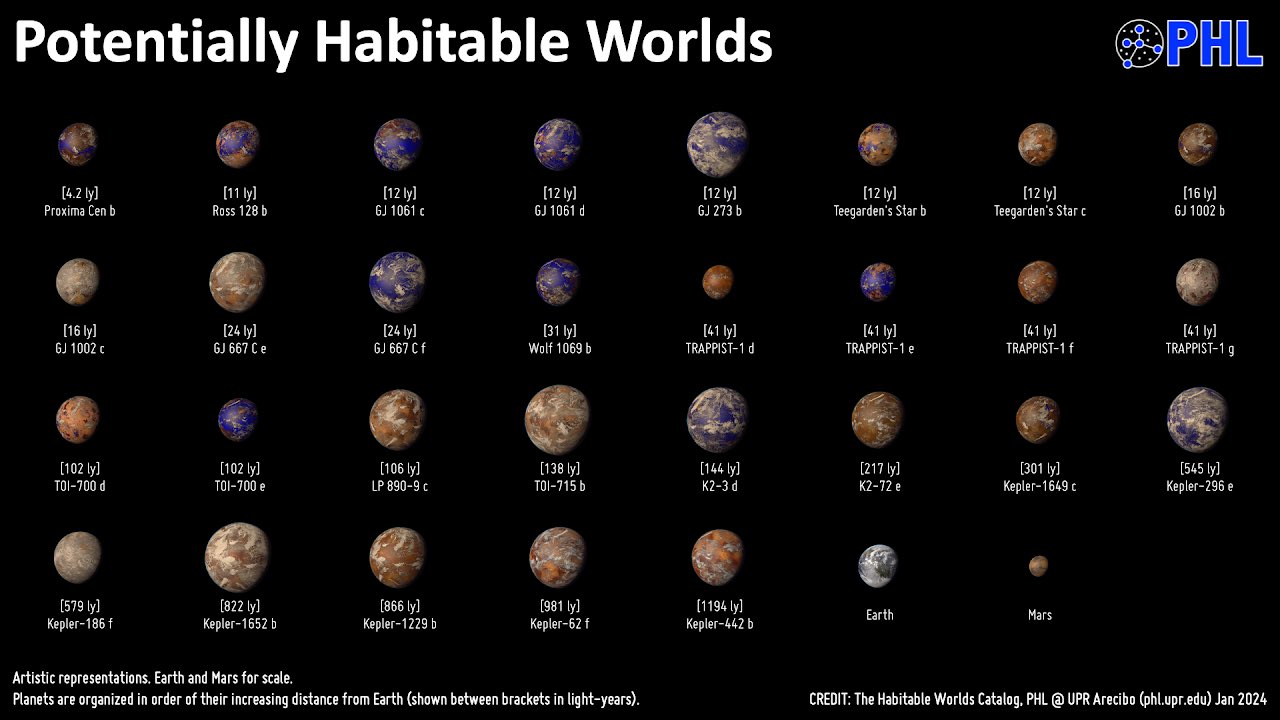
Potentially Habitable Worlds CREDIT: PHL @ UPR Arecibo
5
6
34
3,524
What’s Happening in Space Policy November 15-21, 2026 spacepolicyonline.com/news/w…
2
3
53
A breathtaking close-up flyby of two of Saturn’s moons, followed by a stunning pullback revealing the planet’s magnificent ring system in all its glory. 🪐✨
67
315
15
2,319
145,959
Willie Aaron Lewis retweeted
Tiny “water bears" woke up in space — and calmly came home. For the first time, scientists ran a full cycle of experiments with multicellular animals directly in orbit. Tardigrades in a state of cryptobiosis were sent to the ISS. On the sixth day, an Indian astronaut added water to the samples — and about an hour later, 106 of the 180 observed individuals began to move. After the 18-day mission, the samples were returned to Earth. Rehydration showed that roughly 45% of the space-faring tardigrades successfully survived the entire 64-day experiment: two cycles of “hibernation — awakening,” microgravity, elevated doses of cosmic radiation, and prolonged lack of food and water. The survivors didn’t just revive — they retained the ability to reproduce fully, laid eggs, and produced healthy offspring. These microscopic creatures once again proved that they can switch their metabolism almost to zero and turn it back on when conditions become favorable — even in open space.й
16
35
4
268
46,168
Willie Aaron Lewis retweeted
#PPOD: A 4.1-Billion-Year-Old Piece of Mars ☄️ This slice of a Martian meteorite holds clues to the Red Planet's earliest history. Named Teghaza 001 after the region of Mali where it was discovered in 2022, the meteorite formed more than 4.1 billion years ago, making it one of the oldest known pieces of Mars on Earth. This reflected-light image reveals a variety of minerals, including iron-titanium oxides, pyroxene, and plagioclase transformed by the intense pressures of an impact. Scientists use images like this to identify minerals for detailed laboratory analysis. Teghaza 001 preserves evidence of Mars' ancient volcanic crust and its interactions with water. Researchers determined that Martian water altered the rock about 4.1 billion years ago, suggesting it formed even earlier. Eventually, a powerful impact blasted it off Mars, sending it on a journey through space before it landed on Earth. By studying its mineral composition and age, scientists can reconstruct conditions on early Mars and investigate how the planet's water and geology evolved. Credit: @NASA @NASAJPL @Caltech #planetaryscience
2
17
3
82
4,368
NASA Looking for New Ways to Return Perseverance Samples From Mars spacepolicyonline.com/news/n…
2
41
NGC 206 and the Star Clouds of Andromeda Credit & Copyright: David Cruz
2
4
58
Willie Aaron Lewis retweeted
NASA Kick-starting New Look at Mars Sample Return leonarddavid.com/nasa-kick-s…
1
8
1
29
2,633
Willie Aaron Lewis retweeted
Our paper "Rethinking the practice and rhetoric of planetary ‘colonization’ from an astrobioethics perspective" was the third-most-read article in the journal Earth Science, Systems and Society for the month of October 🥳 Check it out ⬇️ lyellcollection.org/doi/full…
2
8
384
Astronomers Find Hints of Star Population That Failed to Explode caltech.edu/about/news/astro…
2
1
9
621
Willie Aaron Lewis retweeted
The collective intelligence of ants solving the “piano movers” puzzle. 📽️: Dreyer et al., PNAS 2025
323
2,219
477
37,446
4,522,115